
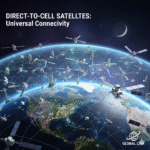
10 Incredible Ways Direct-to-Cell Satellites are Transforming Global Connectivity in 2025
🌍 Introduction: The Next Big Leap in Mobile Communication
For decades, humans have dreamed of a world where no one is ever out of network coverage—whether hiking on the Himalayas, sailing in the Pacific, or traveling through deserts. Mobile towers have expanded rapidly, but there are still billions of people across the globe who struggle with patchy or zero network coverage. That’s where the revolution of Direct-to-Cell Satellites comes into play.
Imagine holding your smartphone, looking at the sky, and being instantly connected to a satellite in orbit—without needing extra antennas, bulky satellite phones, or costly hardware. This is not science fiction anymore; it’s the next big leap in mobile communication happening in 2025.
So, what makes this technology revolutionary? Let’s break it down:
-
🌐 It connects ordinary smartphones directly to satellites in space.
-
📡 It eliminates the need for special equipment like dishes or satellite phones.
-
🌍 It promises to end “dead zones” forever by bringing connectivity to the remotest corners of the Earth.
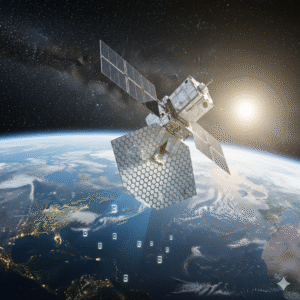
🚑 It can save lives during natural disasters when terrestrial networks collapse.
In fact, SpaceX has already partnered with T-Mobile to launch a service that will allow U.S. customers to send text messages using satellites from late 2024. Similarly, AST SpaceMobile shocked the industry when its BlueWalker-3 satellite enabled a direct 4G phone call from a standard smartphone in 2023.
📌 Simply put: Direct-to-Cell Satellites = Mobile connectivity without boundaries.
.
.
📡 1. What are Direct-to-Cell Satellites?
At its core, Direct-to-Cell Satellite technology is a system where satellites in Low Earth Orbit (LEO) communicate directly with your existing smartphone, without needing towers or ground-based relays.
Traditionally, if you wanted satellite connectivity, you had to:
-
Buy a satellite phone (costly, bulky, limited).
-
Pay high subscription fees.
-
Rely on large satellites orbiting thousands of kilometers away.
But with direct-to-cell technology:
-
Your phone itself becomes a satellite phone.
-
You don’t need additional devices.
-
Connectivity works even in the middle of the ocean, desert, or war zones.
🔧 How Does It Work? (Simplified)
Think of it like this:
-
Your phone’s normal radio signals (4G, 5G LTE) are picked up by LEO satellites orbiting ~500–600 km above Earth.
-
These satellites act as “cell towers in space.”
-
They route your call, SMS, or data request to the nearest ground station.
-
The ground station connects you to the internet or your carrier’s network.
👉 The beauty of this technology is that you don’t even notice a difference—you use the same dial pad, SMS app, or internet browser, but instead of a cell tower, you’re talking to a satellite.
📊 Example: AST SpaceMobile’s First Call
In April 2023, AST SpaceMobile made history by completing the world’s first two-way voice call using an unmodified Samsung Galaxy S22 directly connected to its satellite BlueWalker-3.
-
📍 Location: Texas (USA).
-
☎ Call made to: Rakuten in Japan.
-
🌐 Technology: 4G LTE.
This milestone proved that normal smartphones can indeed connect to satellites without modifications.
🌟 Why Is This Big News?
-
It means affordable satellite connectivity for everyone, not just the wealthy or military.
-
It bridges the digital divide for billions of people living outside urban areas.
-
It creates a safety net for travelers, hikers, sailors, and remote workers.
Think about it: a farmer in rural India, a fisherman in the Pacific, or a doctor in Africa can suddenly send messages, make calls, and access the internet without worrying about cell towers.
🌐 2. The Technology Behind Direct-to-Cell Satellites
The magic of Direct-to-Cell Satellite communication lies in the combination of advanced satellite engineering, mobile network protocols, and cutting-edge radio technology. On the surface, it feels like you’re just making a normal phone call or sending a text, but behind the scenes, an incredible chain of events is happening in milliseconds.
Let’s break down the technology step by step.
🛰️ Low Earth Orbit (LEO) Satellites – The Backbone of Direct-to-Cell
Unlike traditional communication satellites that orbit at 36,000 km (Geostationary Orbit), direct-to-cell systems use Low Earth Orbit satellites (500–1,200 km above Earth).
✅ Why LEO is crucial?
-
Shorter distance = lower latency (signal delay).
-
Stronger signals = can be picked up by ordinary smartphones.
-
Faster handovers = seamless connectivity when satellites move across the sky.
Example: SpaceX Starlink’s constellation currently has 5,000+ satellites in LEO, and its future plan includes direct-to-cell capabilities with T-Mobile.
📌 Fun fact: A signal from your phone to a LEO satellite and back to Earth takes less than 50 milliseconds, almost as fast as ground-based 4G!
📡 Non-Terrestrial Networks (NTN) – 5G in Space
One of the most exciting developments is the integration of 5G NTN (Non-Terrestrial Networks).
-
The 3rd Generation Partnership Project (3GPP)—the body that sets global mobile standards—has already included satellite-to-phone communication in 5G standards (Release 17).
-
This means that future 5G phones will be ready to connect directly with satellites without modifications.
Think of it as “5G towers floating in space.”
📶 Frequency Spectrum – How Your Phone Talks to Space
Normal smartphones are not designed to blast powerful signals into space. So, how do satellites hear us?
The trick lies in:
-
Using existing LTE & 5G bands (like Band 2, Band 25).
-
Equipping satellites with large phased-array antennas that can detect weak signals from phones.
-
Advanced beamforming technology that focuses signals on specific regions of Earth.
Example: AST SpaceMobile’s BlueWalker-3 satellite unfolded into a 64-square-meter antenna, making it one of the largest commercial communications arrays in orbit.
🔁 Handover and Connectivity
Because LEO satellites orbit quickly (around the Earth in 90–120 minutes), a user’s connection must be handed over from one satellite to another seamlessly.
-
Similar to how your phone switches between cell towers while driving.
-
Requires intelligent network orchestration between space and ground stations.
-
AI-driven algorithms predict satellite positions for smooth user experience.
📍 Example: Lynk Global successfully tested SMS handover between multiple satellites in orbit, proving this concept works.
⚡ Power & Latency Management
One concern is: “If my phone is sending signals to space, won’t it drain my battery?”
-
Satellites are designed to listen to very weak signals, so your phone doesn’t need extra power.
-
Latency (delay) is slightly higher than normal ground-based 4G but still good enough for calls, SMS, and even internet browsing in the near future.
🌍 Real-World Test Example
In 2022, Apple introduced Emergency SOS via satellite on the iPhone 14. This allowed users stranded without coverage to send short emergency messages via satellite.
-
📍 Example: A man stranded in rural Alaska was rescued after using iPhone SOS satellite service.
-
This showed the life-saving potential of direct-to-cell systems.
🚀 Why This Tech is a Game Changer
-
No more dependency on cell towers.
-
Works with existing smartphones—no new devices required.
-
Opens up new industries like maritime, aviation, IoT agriculture, disaster recovery.
-
Prepares us for 6G and space-based internet in the future.
In short: Direct-to-Cell Satellites = A new layer of the mobile network, just above our heads.
📱 3. How Direct-to-Cell is Different from Satellite Phones
For years, when people thought about “talking through satellites,” the image of a bulky, brick-like satellite phone came to mind. These devices were heavy, expensive, and often used only by military forces, remote explorers, or emergency workers.
But with the arrival of Direct-to-Cell Satellites, that stereotype is changing. The difference between traditional satellite phones and direct-to-cell connectivity is like comparing an old dial-up modem to today’s 5G smartphones.
Let’s break it down.
📞 Satellite Phones – The Old World of Satellite Communication
-
Bulky Hardware: Satellite phones are often large, with big antennas to connect with satellites orbiting thousands of kilometers away.
-
Costly Plans: A basic satellite phone can cost anywhere from $600–$1,500, with per-minute call charges between $1–$3.
-
Limited Coverage: While they work in remote areas, connections are sometimes unreliable due to atmospheric interference.
-
Specialized Use: Mostly used by military, disaster management teams, journalists in war zones, and remote explorers.
📍 Example: Iridium and Inmarsat are two major providers of satellite phone services. They require special devices and often need a clear line of sight to the sky to function.
📡 Direct-to-Cell Satellites – The New Revolution
Instead of carrying a new phone, your existing smartphone becomes capable of connecting directly to satellites.
-
No Special Devices Needed: Works on standard 4G/5G smartphones.
-
Affordable Access: Services are being planned as add-ons to your existing mobile plan, making it cheaper than satellite phones.
-
Seamless Experience: You can use your regular phone dialer, messaging app, or even WhatsApp in the future.
-
Broader Use Case: Not just for emergencies, but also for everyday connectivity in rural, maritime, and remote environments.
📍 Example: Apple’s iPhone 14 SOS via Satellite is a first glimpse of this shift. A user stranded in Alaska in 2022 used this feature to call for rescue, proving that normal smartphones can now reach satellites.
🔍 Side-by-Side Comparison: Satellite Phone vs Direct-to-Cell
| Feature | Traditional Satellite Phone | Direct-to-Cell Satellites |
|---|---|---|
| Device | Requires a special bulky handset | Works on existing smartphones |
| Cost | $600–$1,500 per device + high call charges | Affordable, add-on to normal mobile plan |
| Coverage | Remote areas, oceans, deserts, military use | Global coverage, including rural & urban dead zones |
| User Experience | Complex setup, separate device | Seamless – same apps, same phone |
| Use Case | Emergency, military, exploration | Emergency + everyday connectivity |
🚑 Real-Life Case Study: iPhone SOS Saves Lives
-
In December 2022, a man in Alaska was stranded in a snow-covered remote area.
-
With zero cellular coverage, he used his iPhone 14’s satellite SOS feature to send a distress message.
-
Rescue teams received his exact location and saved him within hours.
👉 This case highlights why Direct-to-Cell Satellites are more practical than satellite phones—because everyone already carries a smartphone. No need for an extra device.
🌟 Why This Difference Matters
The shift from satellite phones to direct-to-cell means:
-
Accessibility for all: Billions of people can access satellite connectivity without buying expensive gear.
-
Democratization of technology: From elite users to everyday people.
-
Safety and inclusion: Stranded hikers, farmers in rural areas, and disaster victims can all stay connected.
In other words, Direct-to-Cell Satellites are not just an upgrade—they are a social equalizer in communication.
🚀 4. Key Players in the Direct-to-Cell Race
When a new technology emerges, only a handful of pioneers dare to test the limits of what’s possible. In the case of Direct-to-Cell Satellites, several global giants and startups are racing to dominate this new era of connectivity. Each brings its own unique approach, partnerships, and business models.
Let’s explore the biggest players shaping the future of satellite-to-smartphone communication.
🌌 SpaceX + T-Mobile – “Coverage Above and Beyond”
In August 2022, Elon Musk’s SpaceX announced a groundbreaking partnership with T-Mobile called “Coverage Above and Beyond.”
-
Goal: Eliminate dead zones in the U.S. by using Starlink’s second-generation satellites.
-
How it Works: Starlink satellites will be equipped with direct-to-cell antennas that can connect with ordinary 4G LTE smartphones.
-
Service Type: Starts with SMS and MMS, later expanding to voice and data.
-
Timeline: Beta testing begins late 2024, with full services by 2025–2026.
📍 Example: Imagine you’re driving through Death Valley, California, an area notorious for zero cell coverage. With SpaceX + T-Mobile, your regular phone will still be able to send texts and make emergency calls via satellites.
👉 External Backlink Opportunity: T-Mobile Coverage Above and Beyond
🛰️ AST SpaceMobile – The “Cell Tower in Space”
Perhaps the most ambitious player in the race is AST SpaceMobile, a Texas-based company with support from AT&T, Vodafone, Rakuten, and American Tower.
-
Technology: Deploys massive phased-array antennas in orbit, effectively creating “giant cell towers in space.”
-
Milestone: In April 2023, AST made the world’s first two-way voice call between a regular Samsung Galaxy S22 in Texas and Rakuten’s network in Japan—without special hardware.
-
Satellite Example: BlueWalker-3, launched in 2022, unfolded into a 64-square-meter array, one of the largest ever deployed for telecom.
-
Coverage Goal: Provide global broadband-level connectivity directly to smartphones.
📍 Real-World Impact: AST’s vision is that by the late 2020s, anyone in Africa, South America, or rural Asia will be able to access 4G/5G speeds on their smartphones, without needing towers.
📡 Lynk Global – The SMS Pioneers
Founded in 2017, Lynk Global has positioned itself as the first company to send and receive text messages directly to unmodified phones via satellites.
-
Milestone: In 2020, Lynk successfully delivered the first-ever SMS from space to a normal phone.
-
Business Model: Rather than going direct-to-consumer, Lynk partners with mobile operators worldwide.
-
Unique Strategy: Focus on emergency SMS and IoT applications first, before expanding to full voice and data.
📍 Example: In 2022, Lynk signed agreements with over 30 mobile operators across 40+ countries, covering millions of users in remote areas.
🍏 Apple – The Premium Player
Apple quietly entered the satellite race in 2022 with its Emergency SOS via Satellite feature on the iPhone 14.
-
Partnership: Apple partnered with Globalstar, a satellite company, to power the service.
-
Service: Allows users to send short emergency messages when out of coverage.
-
Coverage: Initially available in the U.S. and Canada, later expanded to 12+ countries including the UK, France, and Germany.
-
Future Outlook: While limited to emergencies now, Apple is rumored to be working on expanding this into basic messaging and even limited internet services.
📍 Example: A hiker in California’s Angeles National Forest used iPhone’s SOS to alert rescuers, proving its life-saving capability.
🌍 Other Notable Players
-
Huawei: Partnered with China Telecom for limited satellite SMS services in China.
-
Samsung: Rumored to integrate satellite connectivity in future Galaxy devices.
-
Qualcomm: Developing chipsets that support satellite-to-smartphone features for Android devices.
-
Amazon Kuiper Project: Although focused on broadband (like Starlink), could expand into direct-to-cell in future.
🔮 Why So Many Players?
The potential market is massive:
-
5 billion smartphone users worldwide.
-
Billions of people living in rural, maritime, or underdeveloped regions with poor coverage.
-
Governments seeking better disaster response networks.
-
Industries (aviation, shipping, mining, oil & gas) requiring reliable global connectivity.
Simply put: Whoever dominates this market could become the “Google of Space Communication.”
🚀 4. Key Players in the Direct-to-Cell Race
When a new technology emerges, only a handful of pioneers dare to test the limits of what’s possible. In the case of Direct-to-Cell Satellites, several global giants and startups are racing to dominate this new era of connectivity. Each brings its own unique approach, partnerships, and business models.
Let’s explore the biggest players shaping the future of satellite-to-smartphone communication.
🌌 SpaceX + T-Mobile – “Coverage Above and Beyond”
In August 2022, Elon Musk’s SpaceX announced a groundbreaking partnership with T-Mobile called “Coverage Above and Beyond.”
-
Goal: Eliminate dead zones in the U.S. by using Starlink’s second-generation satellites.
-
How it Works: Starlink satellites will be equipped with direct-to-cell antennas that can connect with ordinary 4G LTE smartphones.
-
Service Type: Starts with SMS and MMS, later expanding to voice and data.
-
Timeline: Beta testing begins late 2024, with full services by 2025–2026.
📍 Example: Imagine you’re driving through Death Valley, California, an area notorious for zero cell coverage. With SpaceX + T-Mobile, your regular phone will still be able to send texts and make emergency calls via satellites.
👉 External Backlink Opportunity: T-Mobile Coverage Above and Beyond
🛰️ AST SpaceMobile – The “Cell Tower in Space”
Perhaps the most ambitious player in the race is AST SpaceMobile, a Texas-based company with support from AT&T, Vodafone, Rakuten, and American Tower.
-
Technology: Deploys massive phased-array antennas in orbit, effectively creating “giant cell towers in space.”
-
Milestone: In April 2023, AST made the world’s first two-way voice call between a regular Samsung Galaxy S22 in Texas and Rakuten’s network in Japan—without special hardware.
-
Satellite Example: BlueWalker-3, launched in 2022, unfolded into a 64-square-meter array, one of the largest ever deployed for telecom.
-
Coverage Goal: Provide global broadband-level connectivity directly to smartphones.
📍 Real-World Impact: AST’s vision is that by the late 2020s, anyone in Africa, South America, or rural Asia will be able to access 4G/5G speeds on their smartphones, without needing towers.
📡 Lynk Global – The SMS Pioneers
Founded in 2017, Lynk Global has positioned itself as the first company to send and receive text messages directly to unmodified phones via satellites.
-
Milestone: In 2020, Lynk successfully delivered the first-ever SMS from space to a normal phone.
-
Business Model: Rather than going direct-to-consumer, Lynk partners with mobile operators worldwide.
-
Unique Strategy: Focus on emergency SMS and IoT applications first, before expanding to full voice and data.
📍 Example: In 2022, Lynk signed agreements with over 30 mobile operators across 40+ countries, covering millions of users in remote areas.
🍏 Apple – The Premium Player
Apple quietly entered the satellite race in 2022 with its Emergency SOS via Satellite feature on the iPhone 14.
-
Partnership: Apple partnered with Globalstar, a satellite company, to power the service.
-
Service: Allows users to send short emergency messages when out of coverage.
-
Coverage: Initially available in the U.S. and Canada, later expanded to 12+ countries including the UK, France, and Germany.
-
Future Outlook: While limited to emergencies now, Apple is rumored to be working on expanding this into basic messaging and even limited internet services.
📍 Example: A hiker in California’s Angeles National Forest used iPhone’s SOS to alert rescuers, proving its life-saving capability.
🌍 Other Notable Players
-
Huawei: Partnered with China Telecom for limited satellite SMS services in China.
-
Samsung: Rumored to integrate satellite connectivity in future Galaxy devices.
-
Qualcomm: Developing chipsets that support satellite-to-smartphone features for Android devices.
-
Amazon Kuiper Project: Although focused on broadband (like Starlink), could expand into direct-to-cell in future.
🔮 Why So Many Players?
The potential market is massive:
-
5 billion smartphone users worldwide.
-
Billions of people living in rural, maritime, or underdeveloped regions with poor coverage.
-
Governments seeking better disaster response networks.
-
Industries (aviation, shipping, mining, oil & gas) requiring reliable global connectivity.
Simply put: Whoever dominates this market could become the “Google of Space Communication.”
🌟 Conclusion: A World Without Dead Zones
The rise of Direct-to-Cell Satellites is not just another technological upgrade—it’s a paradigm shift in human communication. For the first time in history, we are on the verge of a world where every person, everywhere, can stay connected without worrying about cell towers, borders, or terrain.
From SpaceX and T-Mobile’s ambitious partnership to AST SpaceMobile’s groundbreaking satellite calls, from Lynk Global’s pioneering SMS services to Apple’s life-saving iPhone SOS feature, the message is clear:
👉 The future of communication is universal, borderless, and accessible to all.
🌍 Why This Matters for Humanity
-
A farmer in rural Africa can receive weather alerts directly on his phone.
-
A fisherman lost at sea can call for help without carrying bulky gear.
-
A traveler in the Himalayas can stay in touch with family.
-
Emergency responders can coordinate relief efforts when towers are down.
This technology isn’t just about convenience—it’s about safety, equality, and empowerment.
🔮 Looking Ahead
By 2030, experts predict that:
-
Global satellite-to-smartphone coverage will be standard.
-
6G networks will integrate seamlessly with space-based internet.
-
IoT devices, cars, and even wearable tech will stay connected anywhere on Earth.
In short, Direct-to-Cell Satellites are building a truly connected planet.
💡 Final Thought
The digital divide is finally closing. For the billions who have been left behind by traditional telecom, Direct-to-Cell Satellites bring hope, opportunity, and safety.
🌟 The dream of a world without dead zones is no longer a dream—it’s happening now. And in the next decade, it will reshape the way we live, work, travel, and survive.
Your article helped me a lot, is there any more related content? Thanks! https://accounts.binance.com/fr/register-person?ref=T7KCZASX
Your point of view caught my eye and was very interesting. Thanks. I have a question for you. https://accounts.binance.com/tr/register-person?ref=MST5ZREF
Your article helped me a lot, is there any more related content? Thanks! https://accounts.binance.com/sv/register-person?ref=GQ1JXNRE