
Introduction: What is Room for Error?

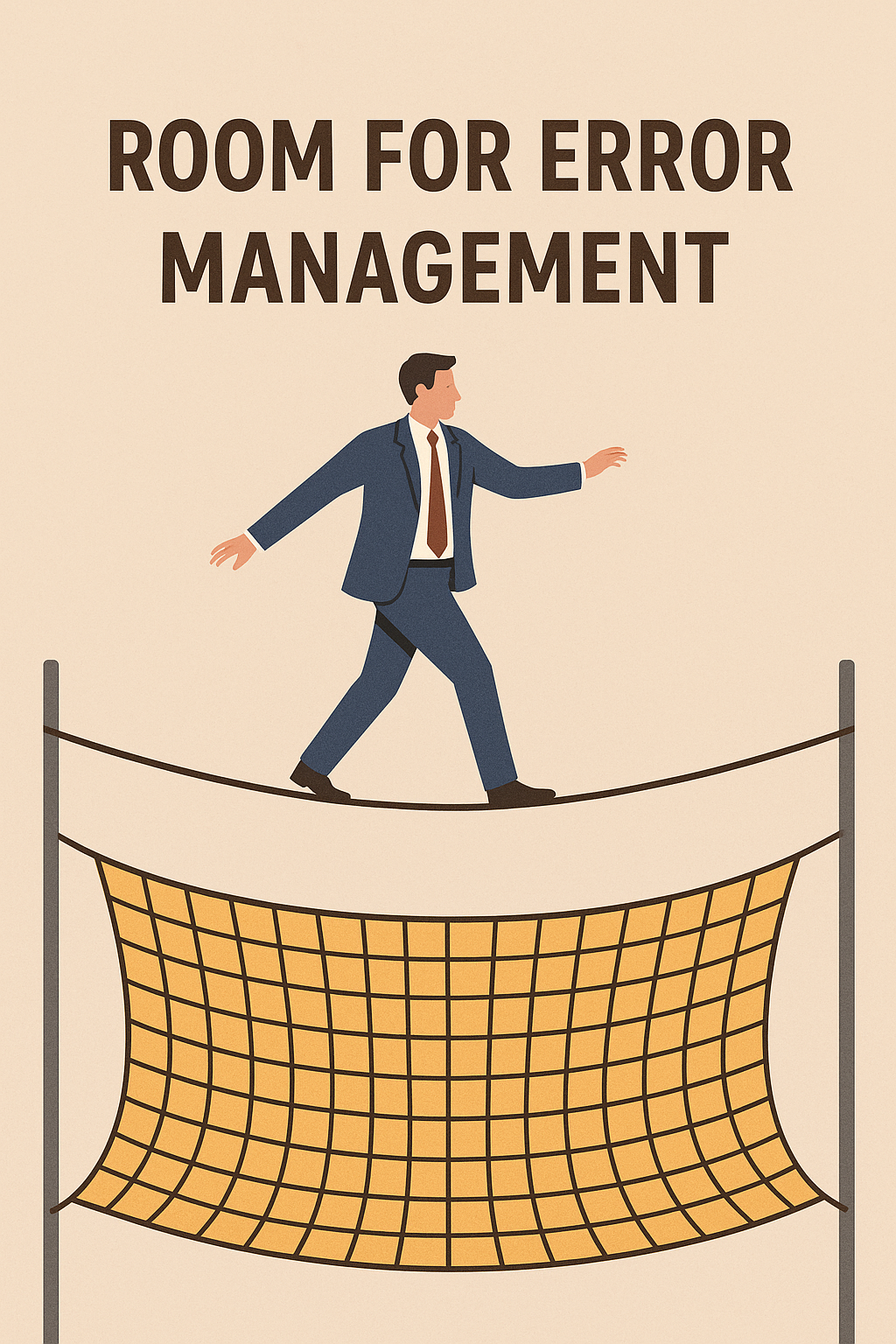
We often hear the phrase, “There’s no room for error.” But in reality, that mindset can be dangerous. Human beings are not perfect machines—we are bound to make mistakes. And in management, leadership, or even personal life, denying the possibility of error is like walking on a tightrope without a safety net.
Room for error management means designing systems, plans, and strategies in such a way that when mistakes happen (and they will), the damage is minimized, and lessons are maximized. It is about anticipating imperfection, preparing backup options, and creating an environment where small failures act as learning tools instead of catastrophic collapses.
Think of it like driving with brakes, airbags, and seatbelts. We don’t plan to crash, but if we do, the safety measures keep us alive. The same applies to management.
Table of Contents
1.Why Room for Error is Essential in Management
- Human Error is Inevitable
No matter how skilled, experienced, or disciplined people are, errors will happen. Fatigue, distractions, miscommunication, or unforeseen circumstances can lead to mistakes. Room for error ensures these mistakes don’t destroy everything. - Prevents Overconfidence
When managers assume nothing will go wrong, they often overlook risks. Having room for error acknowledges uncertainty and prepares organizations for the unexpected. - Encourages Innovation
Employees perform better when they know mistakes won’t end their careers. A culture of fear kills creativity. Allowing controlled mistakes fosters innovation. - Builds Resilience
Organizations with room for error recover faster from setbacks. It creates flexibility instead of rigid systems that collapse under stress.
2.Examples of Room for Error in Real Life
- Aviation Industry: Airplanes are designed with multiple backup systems—two engines, redundant controls, and safety checks. If one fails, the other ensures safety. This is room for error at its finest.
- Financial Planning: Smart investors don’t put all money into one stock. They diversify. This way, even if one investment fails, the others balance losses.
- Software Development: Agile methodology encourages small, frequent testing instead of one big launch. This way, small errors are caught early before they cause massive damage.
- Health & Medicine: Hospitals use double-checking systems in prescriptions and surgeries. These redundancies prevent life-threatening mistakes.
- Personal Life Example: Imagine leaving home early for an interview. If traffic is heavy, you still arrive on time. That buffer time is your room for error.
3.The Dangers of Zero Room for Error
- Burnout Culture: When employees fear mistakes, they overwork and burn out. Productivity decreases over time.
- Rigid Systems Collapse: A company without flexibility may thrive in calm waters but will sink during storms.
- Fear-Based Management: Employees stop taking risks and become order-followers. Innovation dies.
- High Turnover Rates: Talented individuals leave workplaces that punish mistakes severely.
4.How to Implement Room for Error in Management
1. Plan with Buffers
Don’t schedule projects with zero flexibility. Always add extra time and resources to deal with unforeseen problems.
Example: If you think a project will take 30 days, plan for 35–40. So make a “Room for error management”.
2. Encourage Small Failures
Allow employees to experiment and fail in low-risk situations. This prevents bigger failures later.
Example: Tech companies run pilot projects before mass production.
3. Use Redundancy
Have backup systems in place. This applies to technology, people, and processes.
Example: In IT, having data backups prevents loss during system crashes.
4. Focus on Learning, Not Blame
When a mistake happens, shift from punishment to learning. Ask, “What went wrong, and how do we fix it?”
Example: Toyota uses the “5 Whys” technique to get to the root cause instead of blaming workers.
5. Stress-Test Your Plans
Simulate worst-case scenarios. Ask, “What if this fails? What’s Plan B?”
Example: Banks regularly conduct stress tests to see if they can survive financial crashes.
6. Foster Open Communication
Employees should feel safe reporting mistakes without fear. This prevents hidden errors from growing into disasters.
5.Room for Error in Leadership
Leaders who give room for error:
- Build trust within teams.
- Inspire loyalty because employees know they won’t be crucified for small mistakes.
- Encourage risk-taking that leads to breakthroughs.
- Develop problem-solving skills instead of dependency.
On the other hand, leaders who demand perfection at all times end up micromanaging and creating toxic environments.
So make a “Room for error management”.
6.Case Studies of Room for Error Management
Case Study 1: NASA and Apollo 13
Apollo 13 was a failed mission turned into a success because NASA had prepared for errors. When the oxygen tank exploded, backup systems and creative problem-solving brought astronauts home safely.
Case Study 2: Netflix’s Chaos Monkey
Netflix built a tool called Chaos Monkey that randomly shuts down parts of its system to test resilience. By creating room for error intentionally, Netflix ensures their streaming service rarely goes down.
Case Study 3: Toyota Production System
Toyota encourages workers to stop production if they spot an error. Instead of rushing and risking massive defects, they fix small problems immediately. This small tolerance saves millions.
7.Personal Growth and Room for Error
This principle doesn’t just apply to organizations. Individuals need room for error too.
- In Studies: Students who fear mistakes avoid tough subjects. But those who accept small failures learn faster.
- In Careers: Taking risks with room for error (like trying a side business while keeping a stable job) increases success chances.
- In Relationships: Allowing partners to make mistakes builds stronger bonds.
8.Steps to Build a Culture of Room for Error in Organizations
- Redefine Mistakes as Data – Every mistake is information.
- Train Teams in Resilience – Workshops on stress management and problem-solving.
- Introduce Feedback Loops – Regular reviews instead of annual reviews.
- Reward Transparency – Appreciate employees who report errors quickly.
- Avoid Over-Optimization – Leave safety margins in finance, operations, and staffing.
- So make a “Room for error management”.
9.Room for Error in Different Fields
- Business: Flexible contracts, financial reserves, and testing before scaling.
- Healthcare: Double-check systems, teamwork, and backup equipment.
- Education: Allowing students to retry exams or assignments.
- Sports: Training with scenarios of failure to prepare athletes mentally.
- Engineering: Safety margins in bridges, buildings, and machines.
10.Famous Quotes that Reflect Room for Error
- “Failure is simply the opportunity to begin again, this time more intelligently.” – Henry Ford
- “A person who never made a mistake never tried anything new.” – Albert Einstein
- “It’s fine to celebrate success, but it is more important to heed the lessons of failure.” – Bill Gates
Conclusion: Make Room for Error, Make Room for Growth
Perfection is an illusion. The best organizations, leaders, and individuals understand that mistakes are part of progress. By designing systems with room for error management, we reduce risks, encourage innovation, and build resilience.
Instead of fearing mistakes, we must plan for them, learn from them, and grow through them. After all, success is not built by avoiding errors, but by managing them wisely.
Your article helped me a lot, is there any more related content? Thanks! https://www.binance.com/id/register?ref=UM6SMJM3
Your point of view caught my eye and was very interesting. Thanks. I have a question for you.