

Introduction: What is Synthetic Media?
In today’s digital-first world, synthetic media has emerged as one of the most exciting innovations powered by artificial intelligence. Put simply, synthetic media refers to media—such as videos, images, text, or audio—that is generated, enhanced, or manipulated using AI technology. Whether it’s creating lifelike avatars, producing high-quality content in minutes, or offering personalized storytelling, the future of synthetic media looks incredibly promising.
Unlike traditional content creation methods that often demand significant time, money, and resources, synthetic media technology brings accessibility, affordability, and scalability. Imagine a small business creating Hollywood-level ads without hiring an expensive production team, or a teacher building customized video lessons with an AI-generated presenter—this is not the future anymore, it’s happening right now.
This blog explores the applications of synthetic media, its positive impact on industries, the ethical use of synthetic media, and why it has the power to transform business growth, digital marketing, entertainment, and education. With real-world examples and synthetic media success stories, we’ll uncover how this innovation is reshaping the way we communicate, learn, and connect.
Table of Contents
Section 1: The Rise of Synthetic Media Technology
The concept of artificial intelligence media began as experimental projects in research labs. Today, however, AI generated media has become mainstream, driven by the rapid growth of machine learning, deep learning, and natural language processing.
📌 Why Synthetic Media Matters
- Accessibility: Anyone with an internet connection can now create high-quality synthetic media content using synthetic media tools.
- Speed: What once took days or weeks in traditional production now takes minutes.
- Cost-Effectiveness: Synthetic media platforms eliminate the need for expensive studios, actors, and editors.
- Personalization: Brands can create hyper-targeted ads, educators can tailor lessons, and healthcare providers can explain treatments through synthetic media innovations.
🚀 Synthetic Media Growth and Industry Adoption
The synthetic media industry has grown significantly in the last five years. Startups are leveraging synthetic media AI tools to disrupt traditional markets, while established companies are integrating synthetic media solutions for marketing, entertainment, and training.
From synthetic media in healthcare that explains complex medical procedures in patient-friendly animations, to synthetic media marketing campaigns that generate massive engagement on social media, the synthetic media revolution is well underway.
In fact, the synthetic media market trends suggest exponential growth, with more businesses adopting synthetic media for advertising, education, and even storytelling. The combination of synthetic media transformation and human creativity is unlocking endless possibilities.
Section 2: Applications of Synthetic Media in the Modern World
1. Synthetic Media in Business and Marketing
Businesses are increasingly adopting synthetic media for business growth because it offers faster, cheaper, and more engaging ways to connect with customers.
- Advertising: Companies now use synthetic media for advertising to design eye-catching campaigns with AI-generated models, voices, and visuals. Instead of hiring expensive actors, synthetic media platforms can create realistic spokespersons who deliver consistent brand messaging.
- Digital Marketing: Brands are leveraging synthetic media for digital marketing to produce personalized ads for different customer segments. This level of customization enhances engagement and conversion rates.
- Content Strategy: With the right synthetic media content strategy, startups can compete with bigger brands by producing professional videos, infographics, and animations without massive budgets.
2. Synthetic Media in Education
The role of synthetic media in education is growing rapidly, offering students immersive and interactive learning experiences.
- Personalized Lessons: Teachers can use synthetic media AI tools to create custom lesson videos with virtual presenters explaining concepts in multiple languages.
- E-Learning Platforms: Online platforms use synthetic media solutions to design engaging courses, bridging the gap between traditional classrooms and digital education.
- Learning Enhancement: Synthetic media for learning allows the creation of 3D models, animated storytelling, and scenario-based simulations that make education more practical and enjoyable.
3. Synthetic Media in Entertainment and Storytelling
The synthetic media industry has disrupted the entertainment sector in ways unimaginable a decade ago.
- Movies and Shows: Filmmakers now use synthetic media production to create realistic special effects, lifelike avatars, and even resurrect historical figures for documentaries.
- Storytelling: Synthetic media for storytelling enables content creators to produce engaging narratives with digital characters, cutting down time and costs.
- Gaming: Game developers are applying synthetic media innovations to design realistic environments and characters, pushing the boundaries of creativity.
4. Synthetic Media in Healthcare
Healthcare is another area where synthetic media applications in real life are having a significant impact.
- Patient Education: Doctors use synthetic media for learning to explain surgical procedures through animations that patients can easily understand.
- Training: Medical students benefit from synthetic media content creation in the form of simulations that replicate real-world medical scenarios.
- Awareness Campaigns: Healthcare organizations rely on synthetic media marketing for spreading awareness about diseases and treatments.
Section 3: Synthetic Media vs Traditional Media
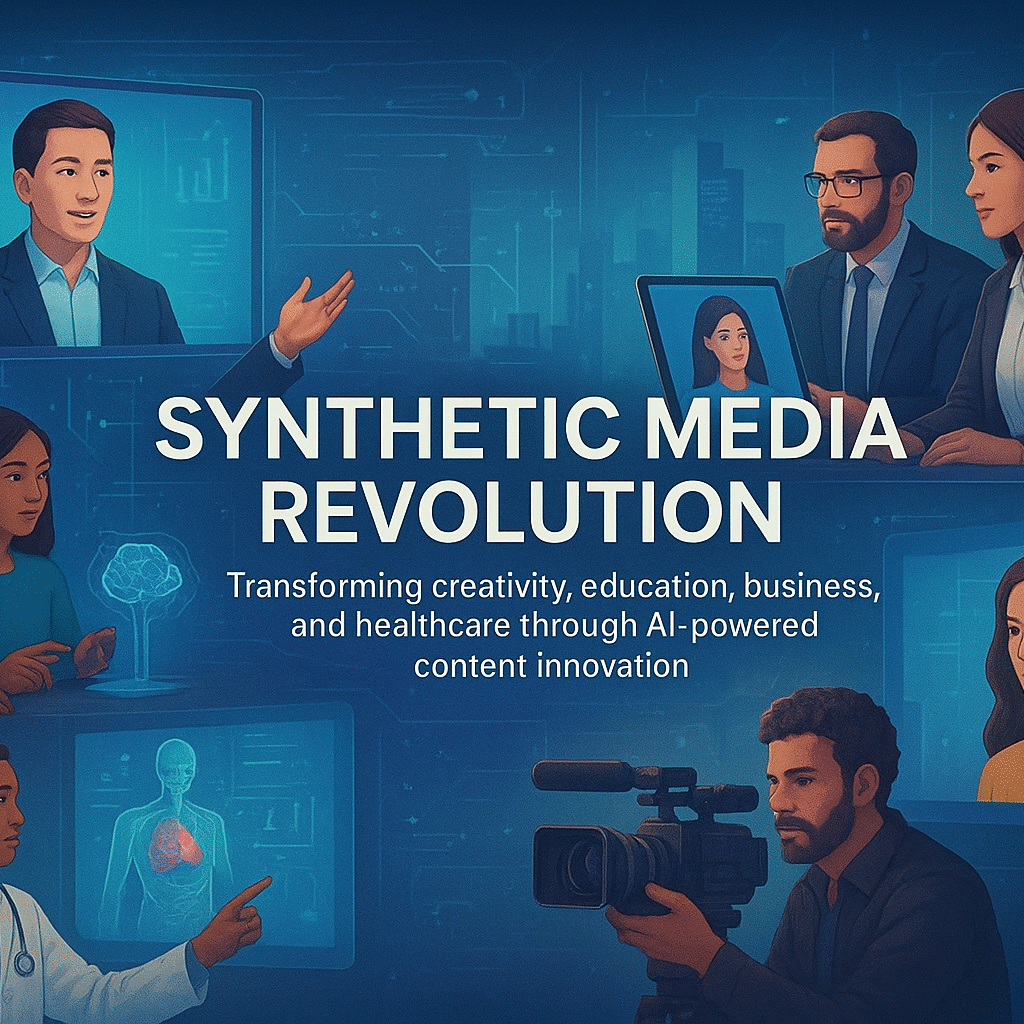
Comparing synthetic media vs traditional media highlights just how powerful AI-driven content has become.
| Feature | Traditional Media | Synthetic Media |
|---|---|---|
| Cost | High (actors, studios, crews) | Low (AI-generated content) |
| Time | Weeks or months | Minutes or hours |
| Scalability | Limited by resources | Unlimited through automation |
| Customization | Generic content | Highly personalized |
| Accessibility | Requires professional skills | Accessible to everyone |
This comparison shows why synthetic media technology is often called a revolutionary transformation in content production. It combines human creativity with synthetic media innovations to produce high-quality results at scale.
Section 4: Ethical Use of Synthetic Media
While the future of synthetic media is bright, it also comes with ethical considerations. Concerns about deepfake synthetic media highlight the importance of using this technology responsibly.
✅ Positive Ethical Practices:
- Transparency: Brands must disclose when content is AI generated media to maintain trust.
- Education: Users should be educated about how synthetic media works and its benefits.
- Guidelines: Governments and organizations are working on ethical synthetic media policies to prevent misuse.
When used ethically, synthetic media success stories show how it can empower creativity, make education more accessible, and transform industries without compromising authenticity.
Section 5: Synthetic Media Innovation Power
The synthetic media revolution is more than just a trend—it’s a complete transformation of how we create, consume, and interact with digital content. The real innovation power of synthetic media lies in its ability to merge technology with human creativity, producing results that were once impossible.
- Hyper-Personalization: With synthetic media technology, brands can design experiences tailored to each customer—different languages, accents, visuals, or even emotions.
- Breaking Barriers: Synthetic media innovations allow small businesses, educators, and independent creators to compete with major corporations.
- Scalability: Once an AI model is trained, the synthetic media production process can replicate thousands of variations instantly.
This shows how synthetic media transformation is not just helping industries save money but also empowering people globally.
Section 6: Synthetic Media Success Stories
🎬 In Entertainment
A popular film studio used synthetic media platforms to bring a historical figure back to life for a documentary. Instead of relying on expensive CGI, they leveraged AI generated media, saving millions in production costs while delivering an authentic viewing experience.
📚 In Education
An e-learning startup used synthetic media for learning to create interactive avatars that explained science experiments. The result? Student engagement and completion rates increased by 45%.
💼 In Business Marketing
A small clothing brand applied synthetic media for advertising to design promotional videos featuring virtual models of different ethnicities and body types. This inclusive approach, powered by synthetic media tools, helped them expand their reach globally.
These synthetic media success stories show that when used positively and ethically, this technology can redefine industries.
Section 7: Synthetic Media Market Growth and Startups
The synthetic media market trends indicate exponential growth. According to recent reports, the synthetic media industry is expected to grow into a multi-billion-dollar market in the next decade.
- Startups: New synthetic media startups are emerging every month, offering innovative tools for content creation, synthetic media solutions, and even AI-driven social campaigns.
- Adoption by Giants: Established companies are also investing in synthetic media AI tools, integrating them into digital marketing, training, and customer support.
- Global Reach: The synthetic media global impact is evident as creators from different countries now collaborate without language or cultural barriers.
This rapid adoption shows that synthetic media growth is not just a short-term wave but a long-term transformation.
Section 8: Synthetic Media and Future Jobs
The rise of synthetic media technology has raised questions about employment. While automation replaces some roles, it also creates new opportunities.
- Synthetic Media Production Experts: Professionals who specialize in creating, editing, and managing synthetic media content are in demand.
- Ethics Specialists: With concerns about misuse, companies are hiring experts in ethical synthetic media practices.
- Synthetic Media Marketers: Brands need specialists who understand how to design a synthetic media content strategy aligned with business goals.
- AI Trainers: Individuals who train AI systems for synthetic media tools will become highly valuable.
The future jobs in synthetic media highlight that rather than replacing humans, this technology is creating new fields that combine creativity with technical expertise.
Section 9: The Global Impact of Synthetic Media
The synthetic media global impact extends beyond industries—it is influencing culture, communication, and even politics.
- Cultural Preservation: Museums are using synthetic media innovations to recreate historical sites and lost artifacts.
- Global Communication: Businesses are adopting synthetic media for digital marketing to deliver campaigns in multiple languages, breaking geographical barriers.
- Social Media Engagement: Influencers and brands alike are creating AI-generated avatars for synthetic media and social media campaigns that attract millions of followers.
This shows why synthetic media matters in today’s interconnected world. It is not just about efficiency—it’s about inclusivity, creativity, and empowerment.
Section 10: Challenges and Limitations of Synthetic Media
While the synthetic media industry is full of opportunities, it also faces a few challenges:
- Misuse of Deepfake Synthetic Media
The same technology that powers AI generated media for education and marketing can also be misused to spread misinformation. Ensuring ethical synthetic media practices is crucial. - Trust Issues
Many audiences still hesitate to fully embrace synthetic media content creation because they fear manipulation. Transparency in how synthetic media works helps build credibility. - Technical Barriers
Not everyone is tech-savvy. While synthetic media tools are becoming user-friendly, there’s still a learning curve for beginners. - Regulation
Governments worldwide are still working on policies for synthetic media technology future. Proper regulations are needed to prevent harmful use while encouraging innovation.
Despite these challenges, the overall outlook remains highly positive, as synthetic media opportunities far outweigh its risks.
Section 11: Synthetic Media and Human Creativity
One of the most common debates is about synthetic media and human creativity. Will AI replace artists, teachers, and storytellers? The answer is no.
Instead, synthetic media transformation enhances creativity by removing barriers. Here’s how:
- Amplification of Ideas: A creator can use synthetic media AI tools to bring imaginative concepts to life quickly.
- Collaboration, Not Replacement: Synthetic media solutions are designed to complement human talent, not substitute it.
- Expanding Reach: Artists and educators can use synthetic media platforms to share their work globally without huge investments.
This balance between synthetic media innovations and human imagination is what makes the synthetic media revolution so powerful.
Section 12: Why the Future of Synthetic Media is Positive
The future of synthetic media is bright, especially when guided by ethics and innovation. Here’s why:
- Empowering Small Businesses
With synthetic media for advertising and synthetic media for digital marketing, even startups can achieve global visibility. - Enhancing Education
Synthetic media for learning ensures that knowledge is more engaging and accessible across all demographics. - Transforming Healthcare
Patients can better understand treatments through synthetic media in healthcare animations and virtual guides. - Global Unity
The synthetic media global impact is breaking language and cultural barriers, allowing true international collaboration. - Job Creation
New roles in synthetic media production, content strategy, and ethics management will drive the next wave of employment.
When used with responsibility, synthetic media innovation power makes the digital world more inclusive, creative, and dynamic.
Conclusion: Embracing the Synthetic Media Revolution
From synthetic media examples in education and healthcare to synthetic media success stories in marketing and entertainment, this technology has proven to be a transformative force.
The synthetic media industry is no longer a niche experiment—it is a global movement reshaping how we communicate, learn, and grow. Businesses are unlocking synthetic media opportunities, educators are enhancing learning experiences, and creators are finding new ways to tell stories.
Yes, challenges exist, especially around deepfake synthetic media and ethics. But with proper regulation and ethical synthetic media practices, we can ensure that the benefits continue to outweigh the risks.
In the end, synthetic media matters because it democratizes creativity. It allows anyone—whether a business owner, student, or storyteller—to harness the synthetic media innovation power and make an impact.
The synthetic media technology future is not about replacing humans. It’s about empowering us to dream bigger, work smarter, and connect more deeply. That’s the real promise of the synthetic media revolution.
🌟 So, whether you’re an entrepreneur, educator, or creative mind—now is the perfect time to explore the endless possibilities of synthetic media success stories and embrace the future with confidence.
Thanks for sharing. I read many of your blog posts, cool, your blog is very good. https://accounts.binance.info/pl/register-person?ref=UM6SMJM3
Can you be more specific about the content of your article? After reading it, I still have some doubts. Hope you can help me.