
Introduction
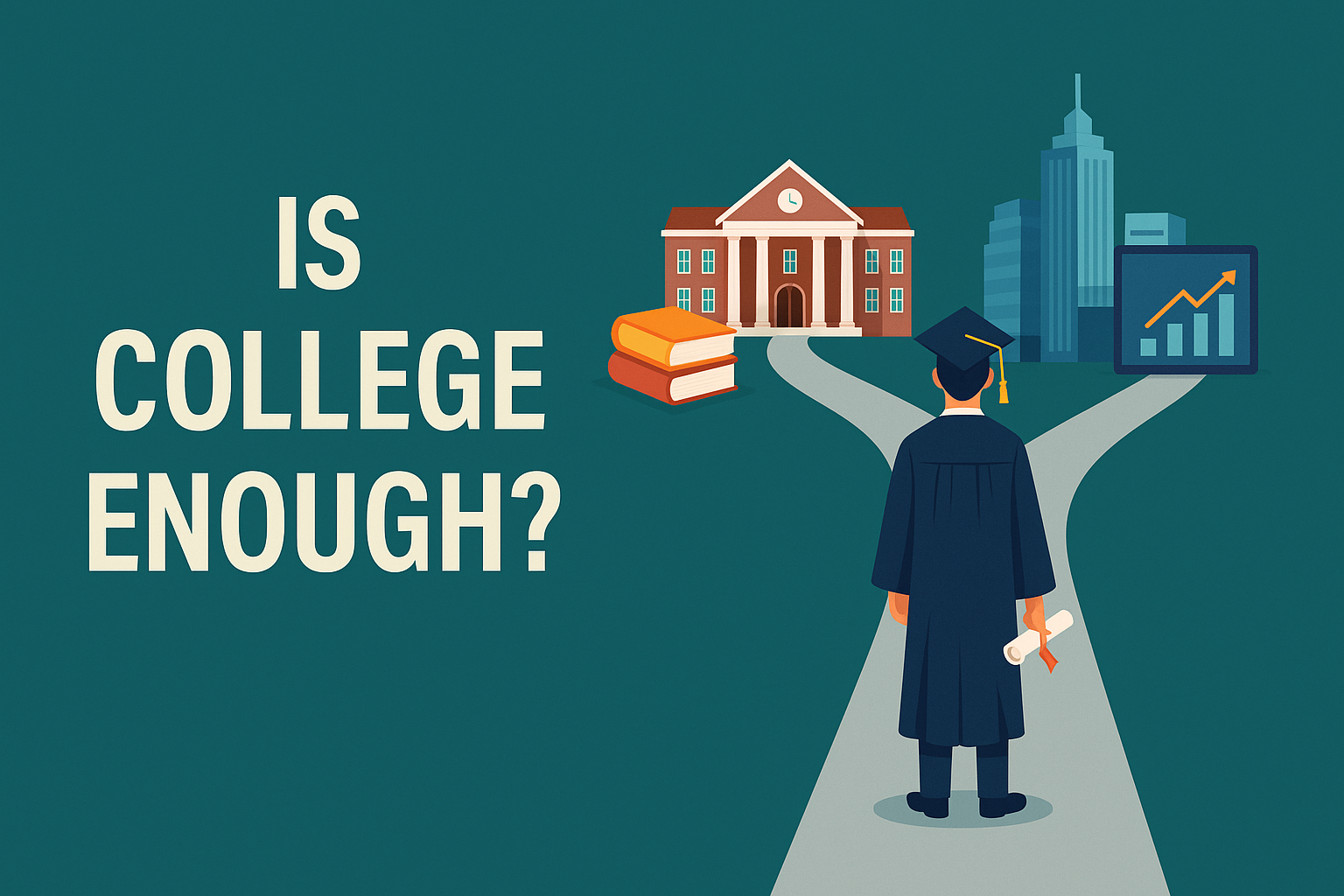
The question “Is college degree enough?” has been debated for decades — and it’s more relevant today than ever.
Many graduates walk across the stage, degree in hand, believing the hardest part of their journey is over. But reality often hits fast — job applications go unanswered, workplace challenges feel overwhelming, and the “real world” seems like a completely different planet compared to the classroom.
The truth? College is a foundation, not the full building.
Yes, it equips you with valuable academic knowledge, but it doesn’t guarantee job security, financial success, or personal happiness. In fact, many of life’s most important skills are learned outside the lecture hall.
This blog will take you through 20 powerful steps that go beyond the classroom, blending career mastery, personal growth, and real-world readiness.
Step 1: Understand What College Actually Gives You
College provides you with structured learning, a set curriculum, and exposure to new subjects and people. It teaches discipline through deadlines, teamwork through group projects, and perseverance through exams.
However, it’s important to recognize its limitations. College often focuses more on theory than practice, preparing you to think but not always to act.
Example:
A computer science graduate may understand algorithms perfectly, but without experience coding real-world applications, they can struggle in the job market.
Key takeaway: See college as a launchpad, not the entire rocket.So “Is college degree enough?”
Step 2: Recognize the Gap Between Theory and Practice
The workplace doesn’t function like a classroom. Deadlines are stricter, mistakes can be costly, and success depends on more than just correct answers.
Example:
An MBA graduate might have mastered the 4 Ps of marketing, but running a live campaign with a limited budget and unpredictable audience behavior is an entirely different challenge.
Bridging this gap means seeking practical exposure while you study — through internships, simulations, or real-world projects.Therefore “Is college degree enough?”
Step 3: Develop Marketable Skills
Degrees often tell employers what you know, but skills show them what you can do.
Skills like coding, graphic design, sales pitching, copywriting, project management, or data analytics can make you stand out — and they’re not always taught in college.Hence “Is college degree enough?”
Actionable tip: Spend an hour a day learning on Coursera, Udemy, or LinkedIn Learning. Even a basic knowledge of Excel or Photoshop can make you more employable.
Step 4: Build Financial Literacy
Many graduates know how to solve complex equations but can’t create a monthly budget. Financial literacy — budgeting, saving, investing, and understanding taxes — is non-negotiable in the real world.
Example:
Imagine earning ₹50,000 a month but spending without tracking expenses — within a year, you could be drowning in credit card debt.
Practical step: Follow the 50-30-20 rule — spend 50% of your income on needs, 30% on wants, and save/invest 20%.
Step 5: Cultivate Emotional Intelligence
Emotional intelligence (EQ) — the ability to understand and manage emotions — often outweighs raw intelligence in career growth.
Example:
Two candidates may be equally skilled, but the one who can handle workplace conflicts gracefully often gets promoted faster.
How to build EQ:
- Practice active listening
- Develop empathy
- Learn stress management techniques like meditation.
- Think “Is college degree enough?”
Step 6: Gain Practical Work Experience
Employers value experience because it proves you can apply knowledge in real settings.
How to get it:
- Internships (paid or unpaid)
- Freelancing on platforms like Fiverr or Upwork
- Volunteering for NGOs or student organizations
Example:
A journalism student who writes for local newspapers during college will have a stronger portfolio than one who only submits assignments.
Step 7: Master Communication Skills
Communication isn’t just speaking — it’s how you write emails, give presentations, and negotiate deals.
Example:
In job interviews, the ability to express your ideas clearly can matter more than your GPA.
Tip: Join public speaking clubs like Toastmasters or practice storytelling techniques to make your messages memorable.
Step 8: Learn Time Management
College life offers flexible schedules; the workplace doesn’t. Poor time management can lead to missed deadlines and lost opportunities.
Practical tools:
- Google Calendar for planning
- Trello/Asana for task tracking
- Pomodoro Technique for focus
Example:
Breaking a large project into smaller daily goals can reduce stress and increase productivity.
Learn “Is college degree enough?”
Step 9: Develop Networking Skills
It’s not just what you know, but who you know. Networking opens doors that degrees alone cannot.
Example:
A recommendation from a mentor can land you an interview that hundreds of online applications couldn’t.
How to network:
- Attend industry seminars
- Connect with alumni on LinkedIn
- Offer value before asking for help
Step 10: Understand Personal Branding
Your online presence shapes perceptions. Recruiters check LinkedIn, Twitter, even Instagram before hiring.
Actionable steps:
- Create a professional LinkedIn profile with achievements
- Share valuable content in your field
- Avoid controversial posts that may harm your reputation
- Develope “Is college degree enough?”
Step 11: Adapt to Changing Technologies
Technology evolves faster than curricula. Staying updated is crucial.
Example:
A marketing graduate from 2010 who didn’t learn social media marketing is now outdated in many roles.
Tip: Dedicate 30 minutes daily to learning about new tools in your field.
Step 12: Strengthen Problem-Solving Ability
Employers value people who find solutions instead of excuses.
How to improve:
- Play strategy games like chess
- Analyze case studies
- Approach challenges with a “How can this be solved?” mindset
Step 13: Learn Negotiation Skills
Negotiation isn’t just for salaries — it’s for deadlines, resources, and responsibilities.
Example:
Negotiating an extra week for a project can lead to better results than rushing and producing mediocre work.
Step 14: Explore Entrepreneurship
Even if you’re not starting a business, thinking like an entrepreneur boosts creativity and decision-making.
Example:
A teacher who uses business-style marketing for her classes may attract more students.
Step 15: Prioritize Health & Wellness
Career success is useless without health. Burnout is real.
Practical steps:
- Exercise 30 minutes daily
- Maintain a balanced diet
- Schedule downtime for hobbies
Step 16: Learn Cultural Awareness
Global workplaces require understanding different cultures.
Example:
Knowing that direct criticism is considered rude in some cultures can prevent workplace misunderstandings.
Step 17: Practice Self-Learning
The fastest-growing careers today didn’t exist 10 years ago. Stay relevant by learning continuously.
Tools:
- Podcasts
- Online certifications
- Industry blogs
Step 18: Build Resilience
Rejection, failure, and criticism are inevitable. Resilience turns them into growth opportunities.
Example:
J.K. Rowling faced multiple rejections before publishing Harry Potter.
Step 19: Manage Digital Presence Responsibly
Everything you post online leaves a footprint.
Checklist:
- Google yourself to see what’s public
- Delete posts that may harm your professional image
- Use privacy settings wisely
Step 20: Keep Updating Your Career Map
Your first job is rarely your dream job. Review and adjust goals yearly.
Example:
A graduate may start in customer service but transition into digital marketing after discovering a passion for analytics.
Conclusion
So, is college enough?
No — but it’s a critical starting point.
Your degree opens doors, but your skills, mindset, and adaptability determine how far you’ll go. By embracing these 20 lessons, you won’t just survive the real world — you’ll thrive in it.
Thanks for sharing. I read many of your blog posts, cool, your blog is very good.