
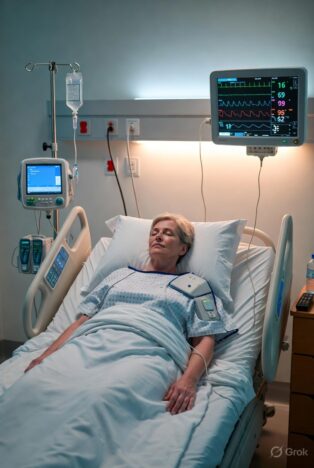
Imagine a world where your clothes aren’t just fabric, but active participants in your healing. Where a shirt can stiffen to support a wobbly shoulder, or pants can monitor your balance and alert your doctor if you’re about to fall. It sounds like the costume closet of a Marvel superhero. Still, thanks to a tidal wave of innovation in medical-functional apparel, this “smartwear revolution” is leaving the pages of science fiction and entering the recovery room.
If you or a loved one has ever faced the gruelling reality of post-surgery recovery, you know the real struggle often isn’t the pain medication—it’s the simple act of getting dressed. The awkward fumbling with buttons when your chest is in agony. The impossible task of pulling on pants after abdominal surgery. The indignity of relying on a flimsy, backless hospital gown that exposes you to the world.
But the era of suffering for style (or lack thereof) is ending. The global adaptive clothing market, valued at $2.04 billion in 2024, is on a meteoric rise, projected to hit $6.22 billion by 2033. Driven by an ageing population, a boom in surgical procedures, and a long-overdue demand for inclusivity, designers and scientists are teaming up to create recovery wear that is not only functional but fiercely futuristic.
Here are the 5 ways adaptive fashion is transforming the post-op experience from a battle into a dignified, high-tech journey home.
1. Goodbye Buttons, Hello Magnetic Universes(Smartwear)
Let’s be honest: Buttons are the enemy of the post-surgical patient. They require fine motor skills that pain, swelling, and medication have temporarily stolen. The future of closures is magnetic, and it’s way cooler than you think.
Brands like MagnaReady have pioneered the “magnetic button,” a seemingly normal button-down shirt that conceals a powerful magnetic closure system. You don’t button; you bring the two sides together, and click—you’re dressed. It’s a game-changer for shoulder, rotator cuff, and mastectomy patients who can’t raise their arms.
And it’s not just about basic shirts. Companies like June Adaptive are embedding these magnets into stylish blouses and polos, making them indistinguishable from high-street fashion. But the real future? Magnets that work with industrial machinery in manufacturing plants without jamming the equipment, or “Pro Model” garments that feature up to seven magnetic snaps for hands-free access during dialysis. We are moving toward a wardrobe that you can literally put on with your eyes closed.
2. The “Batman Suit” Is Real(Smartwear) (And It’s Coming for Muscle Weakness)
If you want a glimpse of the far horizon, look at the University of Alberta. Researchers there, led by Dr Vivian Mushahwar, have secured a $24-million grant to develop “smart-wear” inspired by… Batman.
The concept is simple yet revolutionary: clothing that can change its stiffness and shape in real-time to assist with movement. Imagine pants that detect you’re about to stand up and subtly stiffen to provide support for weak quadriceps. Imagine a sleeve that helps you lift a cup of coffee by acting as an “artificial muscle”.
This isn’t just about comfort; it’s about re-enabling life. By using advanced polymers and 3D-printed fibres, this technology aims to reduce falls—one of the biggest risks for seniors and post-op patients—and keep people active, mobile, and connected to their communities.
3. Wound Access Without the Wardrobe Change(Smartwear)
One of the most stressful parts of recovery is managing drains, PICC lines, and surgical sites. Traditional clothing requires you to undress completely, exposing wounds and often causing pain. Enter the era of “stealth access.”
Today’s adaptive apparel features discreet port flaps, side zippers, and overlapping panels that allow doctors and caregivers to reach the injury without removing the garment. For example, Joe & Bella’s CareZips® pants feature hidden inner-leg zippers that allow for catheter or ostomy bag access without pulling your pants down.
Similarly, tops designed for chemotherapy patients feature magnetic snaps that open along the seams, allowing access to chest ports while the patient remains fully covered and warm. This isn’t just convenient; it preserves dignity. As one reviewer noted about a post-surgery top, “Patient designed with your dignity in mind”.
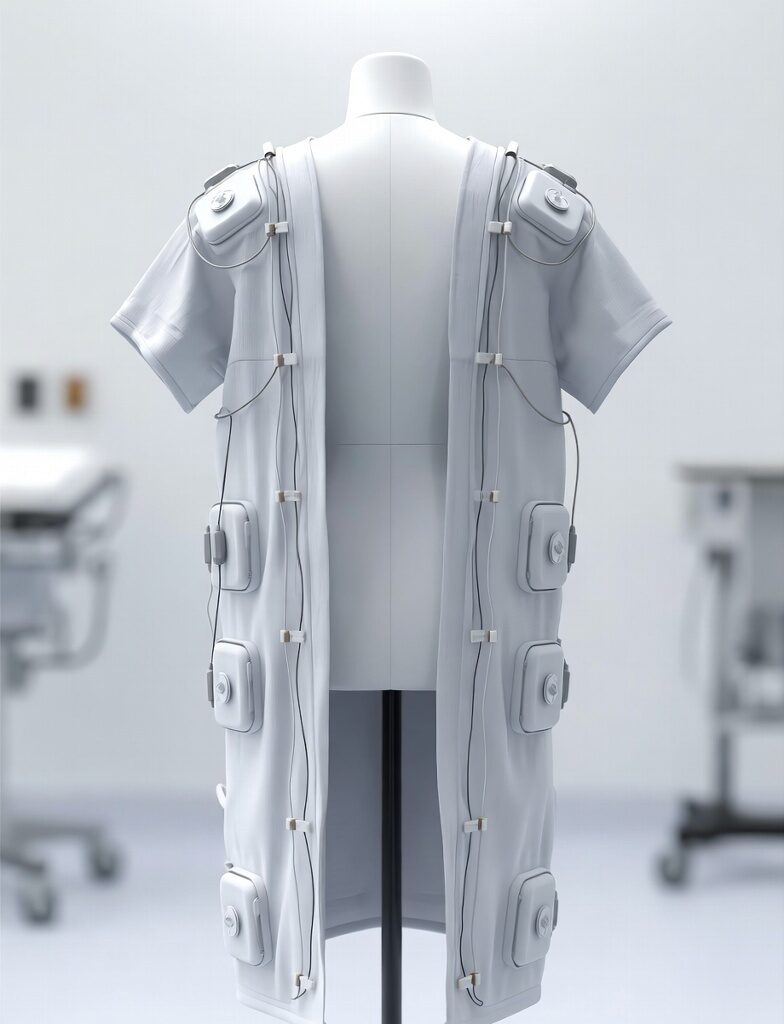
4. Fabrics That Heal(Smartwear) (And Don’t Itch)
Anyone who has spent a week in bed knows that hospital sheets and standard pyjamas can become torture devices. Seams dig in, tags itch, and non-breathable fabrics can irritate wounds.
The new wave of medical apparel is obsessed with material science. Brands are moving away from stiff cottons and toward bamboo rayon, modal, and advanced blends that are antimicrobial, temperature-regulating, and buttery-soft.
These fabrics are chosen to reduce friction against stitches and sensitive skin. They are designed to be anti-wrinkle (because ironing is the last thing a caregiver needs to do) and durable enough to withstand the constant, high-heat washing required to keep wounds safe from infection. Think of it less like “clothes” and more like a wearable, protective barrier that actively contributes to skin health.
5. From Hospital-to-Home: The End of the “Recovery Wardrobe”(Smartwear)
In the past, recovery wear was something you threw away as soon as you got better—those faded sweatpants with the elastic shot. Today, the market is shifting toward transitional fashion: pieces that work just as hard in the hospital as they do at the office.
Take side-zip pants. During early recovery, they are essential for getting dressed while lying down or dealing with a cast. Three months later, zipped up and paired with a nice top, they are simply stylish trousers. Magnetic closure shirts look sharp enough for a dinner date, hiding their adaptive technology in plain sight.
This shift is crucial for mental health. Recovery is an emotional rollercoaster, and looking in the mirror and seeing yourself—not a “patient”—can be a massive psychological boost. As the team at June Adaptive puts it, the goal is to help you reclaim “independence, confidence, and comfort in your own skin”.
The Bottom Line
The future of fashion is functional. It is inclusive. And most importantly, it is humane. Whether it’s a senior citizen with arthritis finally being able to dress independently, or a young athlete recovering from an ACL tear, adaptive clothing is removing the barriers between us and our best lives.
The next time you think about recovery, don’t picture a drab hospital gown. Picture a wardrobe that supports you, empowers you, and yes—might just be smart enough to call for help if you fall.
Ready to upgrade your recovery wardrobe?
Check out these industry leaders pioneering the revolution:
- For High-Tech Magnetic Closures: MagnaReady
- For Stylish, Fashion-Forward Recovery Wear: June Adaptive
- For Seniors & Specialized Care: Joe & Bella
- For the Latest in Smart Fabric Research: University of Alberta iSMART