
Table of Contents(5G Expansion)
1. Introduction to 5G Expansion
The world is moving at lightning speed, and the backbone of this transformation is 5G Expansion. From high-speed downloads to intelligent automation, 5G is more than just a new generation of mobile connectivity—it is a revolutionary digital ecosystem.
When we talk about 5G Expansion, we are discussing a paradigm shift in communication technology that touches every aspect of human life. Unlike previous generations (2G, 3G, 4G), 5G is not limited to mobile phones—it empowers industries, healthcare, education, and governance.
2. Why 5G Exp. Matters in the Digital Era
5G Expansion is not just an upgrade—it is the foundation for the future. It brings:
- Ultra-low latency: Response times of less than 1 millisecond.
- Massive device connectivity: Billions of IoT devices connected seamlessly.
- Enhanced mobile broadband: Speed that is up to 100x faster than 4G.
For example, in smart cities, 5G Expansion allows traffic signals, vehicles, and surveillance systems to communicate in real time, reducing accidents and congestion.
3. Technical Backbone of 5G Exp.
The magic of 5G Expansion lies in:
- Millimeter waves (mmWave): Offering high bandwidth.
- Small cell networks: Expanding coverage in urban and rural areas.
- Massive MIMO (Multiple Input, Multiple Output): Enhancing data transfer efficiency.
- Beamforming: Delivering precise connectivity to devices.
4. 5G Exp. vs. 4G: A Game-Changing Leap
| Feature | 4G | 5G Expansion |
|---|---|---|
| Speed | 100 Mbps | 10 Gbps |
| Latency | 50 ms | <1 ms |
| Connectivity | Limited | 1 million devices/km² |
| Applications | Streaming, browsing | AR/VR, autonomous cars, remote surgery |
Clearly, 5G Expansion is not just faster but smarter.
5. Key Benefits of 5G Exp.
- Healthcare innovations – Remote surgeries, telemedicine.
- Industry 4.0 – Automation, robotics, AI integration.
- Smart homes – IoT devices functioning without lag.
- Enhanced user experience – Ultra-fast gaming and streaming.
6. Global Adoption of 5G Exp.
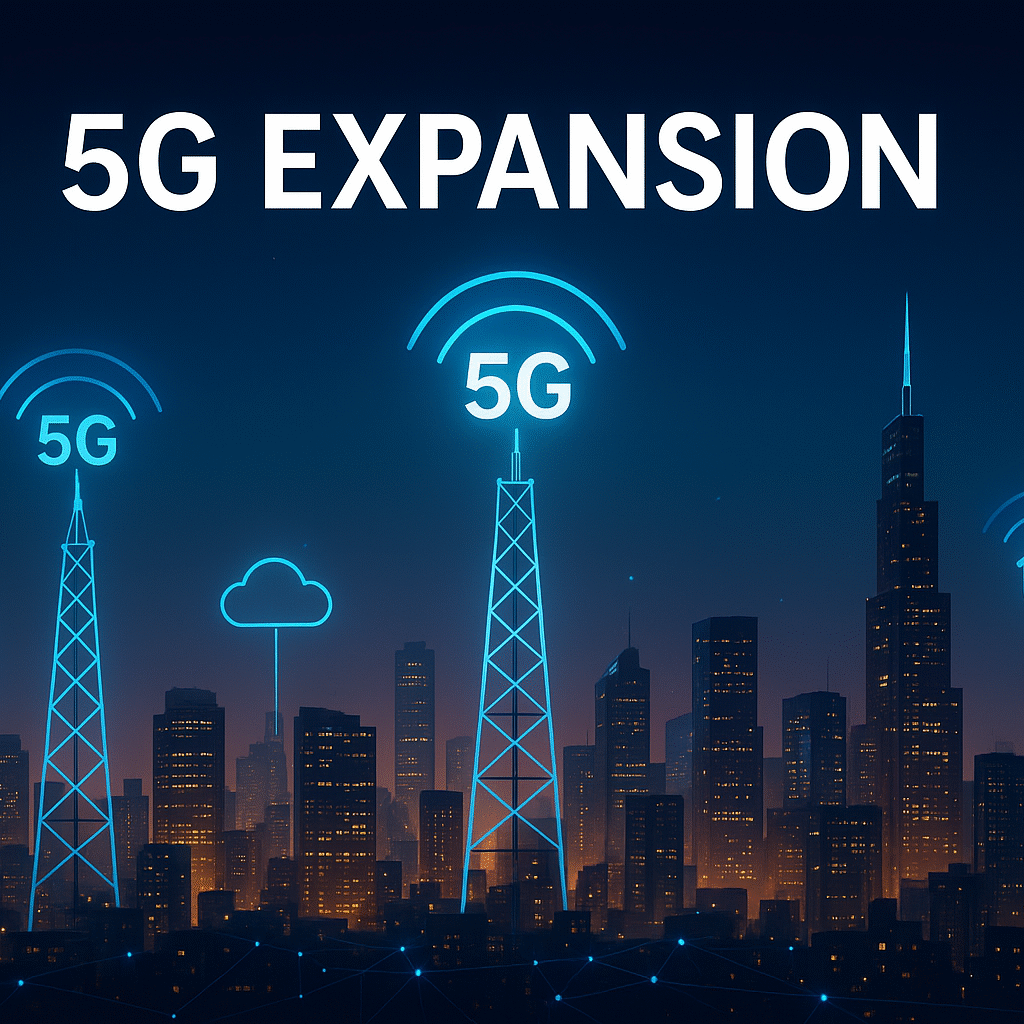
Countries are racing toward 5G Expansion. According to GSMA, over 240 operators worldwide are investing in 5G, with more than 90 countries deploying live networks.
7. Speed Comparison of 5G Exp. in Different Countries
Let us now compare average 5G download speeds globally (based on OpenSignal reports):
| Country | Avg. 5G Speed (Mbps) | Notable Strength |
|---|---|---|
| South Korea | 432 Mbps | World leader, dense urban coverage |
| China | 350 Mbps | Rapid nationwide rollout |
| USA | 280 Mbps | Strong mmWave networks |
| UAE | 273 Mbps | Excellent smart city integration |
| UK | 220 Mbps | Consistent speed in metros |
| India | 210 Mbps | Fastest growing adoption |
| Germany | 190 Mbps | Robust industrial use cases |
This comparison shows that 5G Expansion is reshaping connectivity across regions, with South Korea leading the race.
8. 5G Exp. in the USA
The United States invests heavily in 5G Expansion through carriers like Verizon, AT&T, and T-Mobile. The adoption of mmWave technology allows ultra-fast speeds but limited range, making small cell deployment essential.
9. 5G Exp. in China
China is a global leader in 5G Expansion with more than 2.3 million base stations. Companies like Huawei and ZTE are spearheading growth, powering smart factories and autonomous transport.
10. 5G Exp. in South Korea
South Korea was the first nation to launch nationwide 5G Expansion in 2019. With over 47% mobile users on 5G, it dominates speed and adoption.
11. 5G Exp. in India
India’s 5G Expansion started in 2022 with Jio and Airtel leading the rollout. Despite late entry, adoption is rapid, with 100 million+ subscribers within a year.
12. 5G Exp. in Europe
European nations like Germany, UK, and France are focusing on industrial applications of 5G Expansion—smart factories, supply chains, and healthcare.
13. Industrial Applications of 5G Exp.
- Manufacturing: Robotics and automated systems.
- Transport: Self-driving cars and smart traffic management.
- Agriculture: Smart irrigation and drone farming.
14. 5G Exp. and Healthcare Transformation
- Remote robotic surgeries
- AI-assisted diagnostics
- Real-time monitoring of patients in rural areas
15. 5G Exp. in Education and Research
- Virtual classrooms with zero lag
- Remote labs for science and engineering
- Global research collaboration in real time
16. Role of 5G Exp. in Smart Cities
5G Expansion allows connected infrastructure, including:
- Smart grids
- Intelligent waste management
- Real-time traffic monitoring
17. Challenges in 5G Exp.
- High infrastructure cost
- Limited rural coverage
- Spectrum allocation conflicts
- Device affordability
18. Security Concerns of 5G Exp.
- Increased cyberattack surface
- Data privacy concerns
- Nation-state threats
19. Economic Impact of 5G Exp.
According to PwC, 5G Expansion could contribute $1.3 trillion to the global economy by 2030, especially in manufacturing, healthcare, and logistics.
20. Future Trends of 5G Exp.
- 6G preparation starting by 2030
- AI-powered networks
- Integration with space-based internet
21. Frequently Asked Questions (FAQs)
Q1: What is the average global speed of 5G Expansion?
Ans: Between 200–400 Mbps, depending on country and network density.
Q2: Which country leads in 5G Expansion?
Ans: South Korea holds the top spot in speed and adoption.
Q3: Will 5G Expansion replace broadband?
Ans: Not entirely—it complements fiber broadband, especially in rural areas.
22. Conclusion: 5G Exp. as the Next Digital Revolution
The future belongs to 5G Exp., where industries, education, and healthcare thrive with ultra-fast, reliable, and intelligent networks. With countries competing in speed and coverage, 5G Expansion will bridge digital divides and pave the way for a hyper-connected world.
Wow.. Amazing post.
thanks,i am grateful.
Your point of view caught my eye and was very interesting. Thanks. I have a question for you.
Imagine if you could convert a straightforward thought into sustainable result flow without using a single line of programming syntax? This platform provides a guided step-by-step workflow to create, publish, and operate app-based products available on well-known app platforms. It requires no complex setups, no external specialists — just a transparent route connecting idea into a scalable mobile product, an approach often chosen by seasoned publishers to maintain a solid foothold in the mobile software space.
https://are-toto03.site/MeeloAppEmpire?kritiinfo.com
You are getting this email
since we believe
the offer we provide
could be relevant to you.
If you do not wish to receive
additional emails from us,
please click here to
unsubscribe from these emails:
https://are-toto03.site/unsub?domain=kritiinfo.com
Address: Address: 7367 Alsteravagen 34, NA 591 95
Looking out for you, Shantell Gwin.
Your article helped me a lot, is there any more related content? Thanks! https://www.binance.com/register?ref=IXBIAFVY
Your article helped me a lot, is there any more related content? Thanks!
Thank you for your sharing. I am worried that I lack creative ideas. It is your article that makes me full of hope. Thank you. But, I have a question, can you help me?
Your article helped me a lot, is there any more related content? Thanks!