
Introduction: Why “Rewiring Your Brain” Matters Today
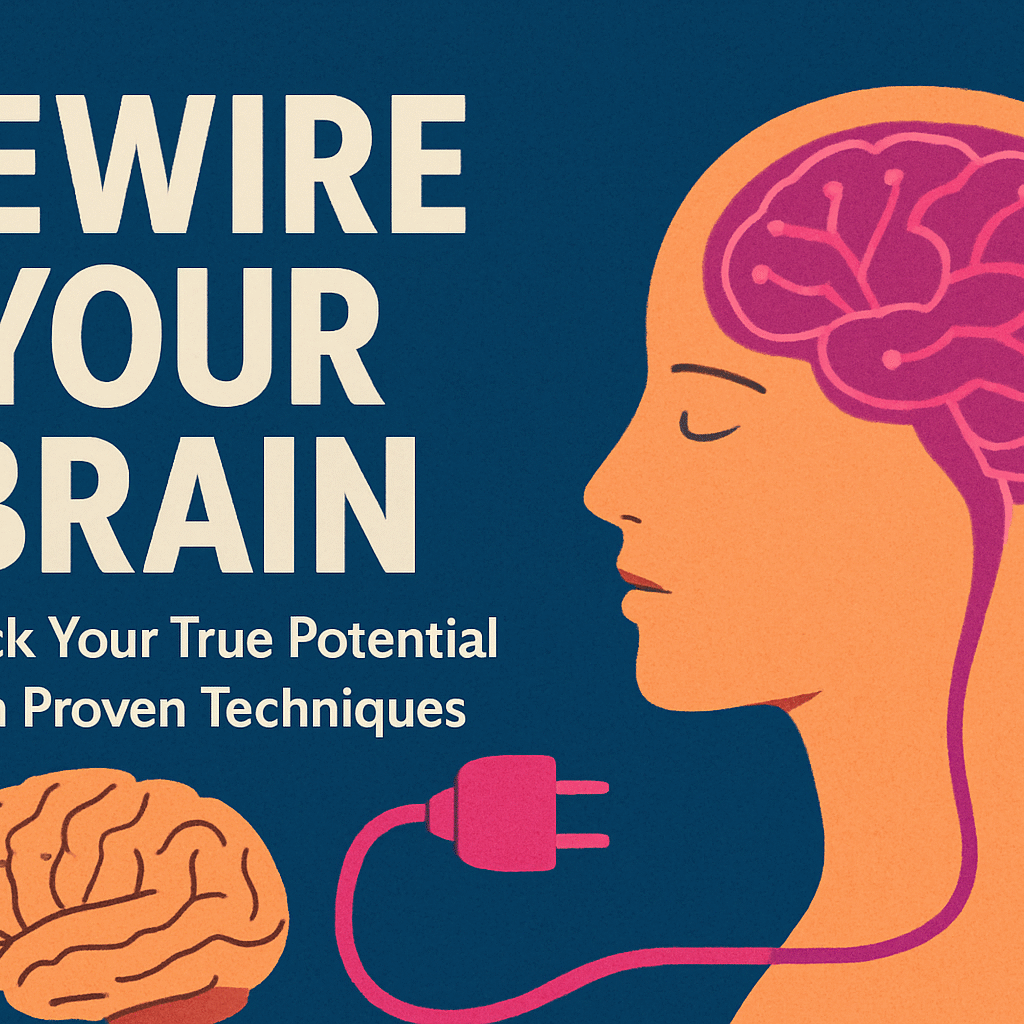
The human brain is one of the most powerful tools in the universe, yet most of us hardly ever use it to its full potential. Our thoughts, habits, decisions, and even our happiness stem from the neural networks inside our brain. The good news is that science has proven something amazing: you can rewire your brain. This means you can create new thought patterns, break old habits, strengthen your memory, and even reshape your personality.
Neuroplasticity – the brain’s ability to form new connections and pathways – has revolutionized how we understand human growth. No matter your age, background, or challenges, you have the ability to rewire your mind for success, peace, and fulfillment.
In this blog, we’ll dive deep into what rewiring your brain really means, how you can do it, and practical steps you can start applying today.
Table of Contents
Chapter 1: The Science of Rewiring Your Brain
To rewire your brain, it’s important to first understand how it works.
1.1 What is Neuroplasticity?
Neuroplasticity refers to the brain’s ability to reorganize itself by forming new neural connections. Imagine your brain like a vast network of roads. Every thought and habit is like a car driving along a road. The more often you use a road, the stronger and wider it becomes. When you start using a new road repeatedly, it eventually becomes a highway, while old, unused ones fade away.
This means your habits and thoughts are not fixed – they can be reshaped.
1.2 Why Does It Matter?
- You can overcome negative thinking patterns.
- You can recover from setbacks faster.
- You can build confidence and resilience.
- You can learn new skills even at an older age.
1.3 Real-Life Examples
- Stroke Patients: Many stroke survivors relearn speech and movement through neuroplasticity.
- Musicians: Studies show that musicians have stronger brain connections in areas controlling coordination and creativity.
- Students: People who practice daily affirmations and mindfulness reshape their brain to handle stress better.
Chapter 2: The Role of Habits in Rewiring Your Brain
Your brain is wired by repetition. Every time you repeat a habit, you strengthen the associated neural pathways.
2.1 Good vs. Bad Habits
- Good habits like exercising, journaling, or reading stimulate positive brain connections.
- Bad habits like procrastination, excessive scrolling, or overeating strengthen unhelpful circuits.
2.2 Breaking Old Habits
To rewire your brain, you must weaken old patterns. This requires:
- Awareness – Recognize when you’re stuck in the loop.
- Replacement – Introduce healthier alternatives.
- Repetition – Practice new habits until they stick.
Example: If you constantly check your phone, replace it with a short breathing exercise whenever the urge arises. Over time, your brain adapts.
Chapter 3: Techniques to Rewire Your Brain
Now that you understand the foundation, let’s explore powerful, proven methods to rewire your brain for success and happiness.
3.1 Meditation & Mindfulness
Meditation literally changes the structure of your brain. Regular mindfulness practice increases gray matter in areas linked to memory, learning, and emotional regulation.
Practical Step: Start with 5 minutes daily. Focus on your breath. When your mind wanders, gently bring it back.
3.2 Gratitude Journaling
Writing down three things you’re grateful for every day shifts your focus from lack to abundance. Gratitude activates the brain’s reward system, increasing dopamine – the “feel-good” chemical.
3.3 Affirmations & Positive Self-Talk
Repeating empowering phrases builds confidence. Your brain doesn’t always differentiate between imagination and reality, so affirmations help strengthen new self-beliefs.
Example: Instead of saying, “I can’t do this,” replace it with, “I am capable of learning and growing.”
3.4 Visualization
Visualization is used by athletes, entrepreneurs, and leaders. When you imagine success vividly, your brain fires the same neural circuits as if you were actually performing the action.
Practical Step: Before sleeping, visualize your ideal day or a goal achieved.
3.5 Physical Exercise
Movement improves blood flow and releases chemicals that enhance brain function. Exercise also reduces stress, which helps form new connections.
3.6 Learning New Skills
Pick up a new language, musical instrument, or even a puzzle game. Each time you challenge your brain, you strengthen neuroplasticity.
Chapter 4: Rewiring Your Brain for Emotional Control
Most people feel controlled by emotions. But what if you could reshape your brain to respond differently?
4.1 Overcoming Anxiety
- Practice deep breathing (activates the parasympathetic nervous system).
- Challenge negative thoughts by asking: “Is this fact or assumption?”
4.2 Managing Anger
- Use a pause technique: Count to 10 before reacting.
- Channel energy into physical activity like walking or running.
4.3 Building Resilience
- Focus on solutions instead of problems.
- Keep a gratitude list to maintain perspective.
Chapter 5: Daily Routine to Rewire Your Brain
Here’s a simple yet powerful daily plan you can start today:
- Morning:
- 5 minutes of meditation
- Write 3 affirmations
- Drink a glass of water
- Daytime:
- Take short breaks (avoid digital overload)
- Learn something new daily (podcast, book, or skill)
- Exercise for at least 20 minutes
- Evening:
- Journal your gratitude
- Reflect on what went well
- Visualize tomorrow’s success
This routine aligns with neuroscience and ensures consistent rewiring of your brain.
Chapter 6: Challenges in Rewiring Your Brain (and How to Overcome Them)
6.1 Lack of Patience
Neuroplasticity is not instant. It requires repetition and consistency. Be patient – small changes add up.
6.2 Old Habits Resurfacing
It’s natural for old patterns to come back. Instead of guilt, view it as a reminder to refocus.
6.3 Negative Environment
Surround yourself with growth-minded people. Your environment shapes your brain just as much as your thoughts do.
Chapter 7: The Long-Term Benefits of Rewiring Your Brain
When you commit to rewiring your brain, you’ll experience:
- Greater mental clarity
- Improved memory and focus
- Emotional stability
- Better decision-making
- Stronger relationships
- Higher productivity
- A more fulfilling, meaningful life
Chapter 8: Inspiring Real-Life Stories
Example 1: The Entrepreneur Who Beat Self-Doubt
A young entrepreneur rewired his brain using affirmations and visualization. Over time, he built confidence, overcame rejection, and launched a successful business.
Example 2: The Student Who Transformed Learning
A struggling student used mindfulness, exercise, and habit-building to rewire her brain. She not only improved grades but also gained self-confidence.
Example 3: The Survivor Who Found Peace
A trauma survivor practiced gratitude, therapy, and meditation. Slowly, her brain shifted from constant fear to healing and resilience.
Conclusion: You Hold the Power to Rewire Your Brain
Rewiring your brain is not a one-time effort but a lifelong process of growth. Every thought you think, every habit you repeat, every emotion you regulate contributes to the architecture of your mind.
The science of neuroplasticity has proven that no matter your age, background, or current struggles, you can reshape your destiny. All it takes is awareness, commitment, and consistency.
So, start today. Take one step – meditate for five minutes, write one affirmation, or learn one new thing. Over time, you’ll witness the incredible transformation that comes from the simple truth: you have the power to rewire your brain.
Thanks for sharing. I read many of your blog posts, cool, your blog is very good.
Thank you for your sharing. I am worried that I lack creative ideas. It is your article that makes me full of hope. Thank you. But, I have a question, can you help me?
Wow, amazing blog layout! How long have you been blogging for?
you made blogging look easy. The overall look of your website is great,
as well as the content!
Thank you for your sharing. I am worried that I lack creative ideas. It is your article that makes me full of hope. Thank you. But, I have a question, can you help me? https://accounts.binance.com/es/register?ref=RQUR4BEO