
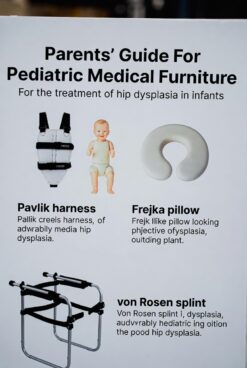
No parent expects a medical device to decide whether their child walks confidently into a classroom or limps silently through life.
It usually starts with a subtle “click” during a diaper change, or perhaps a doctor’s furrowed brow during a routine check-up. Then come the words that stop time: Developmental Dysplasia of the Hip (DDH). Suddenly, your world is a whirlwind of harnesses, casts, and X-rays. But amidst the clinical chaos, there is a silent hero often overlooked—the physical environment your child inhabits every day.
We think of furniture as passive. A chair is just a place to sit; a bed is just a place to sleep. But for a child with hip dysplasia, furniture is active medicine. It is the difference between a hip socket that heals and one that fails. It is the difference between a child who feels “broken” and one who feels empowered. This is the story of how design doesn’t just support a body; it saves a future.
1. Understanding the “Misaligned Hinge”: Hip Dysplasia in Plain English
Think of your child’s hip like a high-performance door hinge. In a perfect world, the ball (the top of the thigh bone) fits snugly into a deep, rounded socket in the pelvis. It rotates smoothly, allowing for those first shaky steps and eventual playground sprints.
In a child with hip dysplasia, the hinge is loose. The socket might be too shallow—more like a saucer than a cup—or the ball might keep sliding out of place. If the “hinge” isn’t kept in the right position during the critical windows of early growth, the foundation of their entire skeleton begins to shift.
If we don’t keep that ball centred in the socket, the body builds bone in the wrong places. It’s like trying to build a house on a foundation that’s five degrees off-centre. At first, it’s barely noticeable. Years later, the walls start to crack. In medical terms, that looks like early-onset arthritis, chronic pain, and mobility struggles before they even hit adulthood.
2. More Than Just a Chair: Why Design is Your Child’s Silent Physical Therapist
When a child is in a Pavlik harness or a Spica cast, “normal” furniture becomes an enemy. Standard high chairs pinch. Standard car seats don’t fit the wide “frog-leg” position required for healing.
Pediatric medical furniture is not a luxury; it is a clinical intervention. The right furniture provides Hip-Healthy Positioning. This isn’t just about comfort; it’s about biology. When a child is positioned correctly—with hips abducted (spread apart) and knees slightly bent—the femur exerts steady, gentle pressure on the acetabulum (the socket). This pressure actually signals the body to grow a deeper, stronger socket.
Every hour your child spends in a poorly designed chair is an hour their body is fighting against its own healing. Conversely, every hour spent in an ergonomically optimised seating system is an hour of passive physical therapy.
3. The Essential Toolkit: Types of Hip-Healthy Furniture & Aids
The “Freedom” Seating Systems
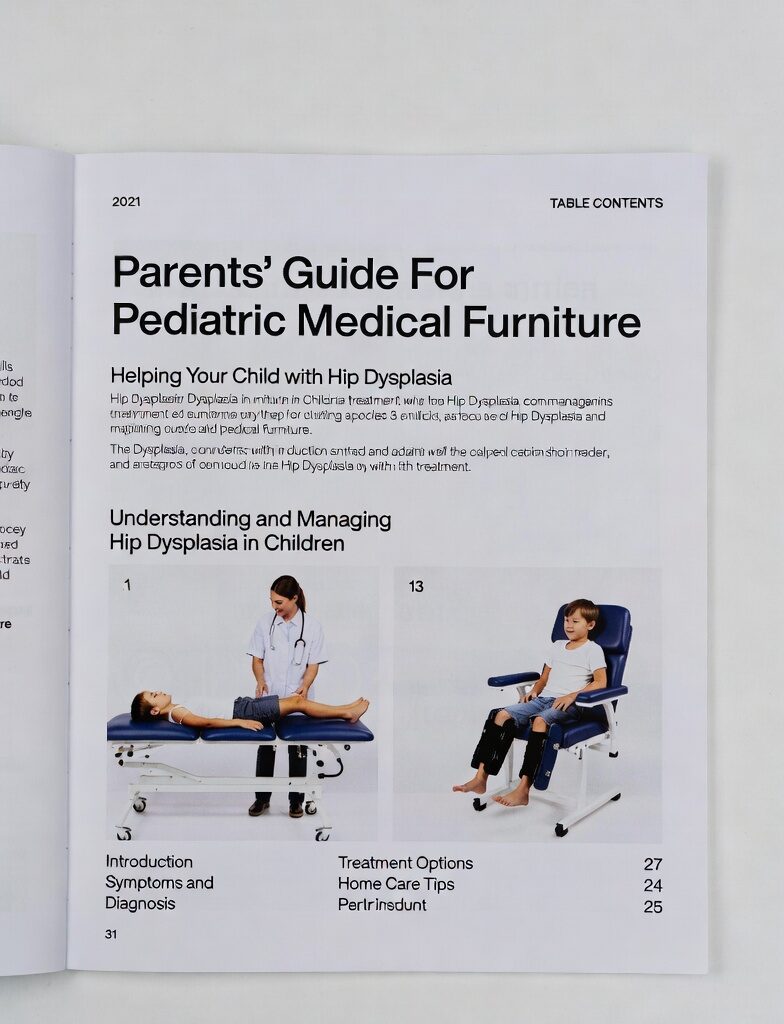
Standard chairs force the legs together. For a DDH child, this is catastrophic. Specialist pediatric chairs are designed with “saddle” seats or adjustable bases that allow the legs to remain wide.
- The Real-World Impact: Imagine 3-year-old Leo. In a standard chair, he’s fidgety and in pain because his cast hits the armrests. In a specialist pediatric chair, he sits at the dinner table with his family, eye-to-eye, his hips perfectly positioned for growth.
Sleep Positioning Systems
Sleep is when the most intense bone growth happens. If a child’s legs “flop” into a detrimental position during the night, you lose eight hours of corrective progress. Specialised wedges and sleep docks ensure the “frog position” is maintained safely without restricting the child’s breathing or comfort.
The Modified Mobility Walker
For older children, the fear of falling can lead to a sedentary lifestyle, which weakens the very muscles needed to support the hip. Pediatric walkers designed for DDH have wider frames to accommodate the “W-sitting” or wide gait common during recovery, allowing the child to explore their world safely.
Therapy-Integrated Play Tables
Low-profile tables that allow a child in a Spica cast to engage in “tummy time” or floor play are vital. They prevent the developmental delays that often occur when a child is “stuck” in a single position for months.
4. The Hidden Psychological Impact: Beyond the Bone
We focus so much on the X-rays that we forget the eyes looking back at us. A child who cannot sit at the same table as their peers feels “othered.” A toddler who can’t move because their furniture is too heavy or awkward begins to develop “learned helplessness.”
The right furniture builds a “Can-Do” spirit. When a child can navigate their home despite their brace, they aren’t a “patient”—they’re a kid. We once worked with a family whose daughter, Maya, refused to eat until they got her a hip-specialised high chair. It wasn’t the food; it was the fact that she could finally reach the table like her big brother.
The right design removes the “medical” feel and replaces it with “functional” pride. It prevents the trauma of being immobile and replaces it with the joy of participation.
5. What Most Hospitals & Parents Get Wrong
In my two decades of experience, I see the same three mistakes repeatedly:
- The “Adult-Lite” Mistake: Using furniture that is just a smaller version of adult gear. Children aren’t small adults; their centre of gravity, bone density, and skin sensitivity are entirely different.
- Ignoring Growth Adaptability: Hip dysplasia treatment is a marathon. A chair that fits today but can’t be adjusted for a growth spurt in six months is a waste of resources.
- Prioritising Cost Over Ergonomics: It is tempting to “DIY” a solution with pillows and foam. But medical-grade furniture is tested for Pressure Distribution. Homemade solutions often create “hot spots” that can lead to skin breakdown or even nerve compression.
6. The Parents’ Buying Checklist: Trust-Building Guide
Before you click “buy” or sign off on a rental, check these five boxes:
- [ ] Certification: Does it meet ISO standards for pediatric medical devices?
- [ ] Abduction Capability: Does the design allow for a minimum of 30–45 degrees of hip abduction without pressure on the inner thigh?
- [ ] Material Safety: Is the foam medical-grade and antimicrobial? Children in braces sweat more; the material must breathe.
- [ ] Weight & Portability: Can you move it from the living room to the kitchen? If it’s too heavy, you won’t use it, and your child will lose out.
- [ ] Clinical Endorsement: Has this specific design been reviewed by a pediatric orthopaedic surgeon or a Fellow of the American Academy of Paediatrics (AAP)?
7. Expert Insights: The Orthopaedic Perspective
Leading surgeons at institutions like Boston Children’s Hospital and the International Hip Dysplasia Institute consistently emphasise that “The brace starts the job, but the environment finishes it.”
Bone is a living, breathing tissue. It responds to the stresses placed upon it (Wolff’s Law). If the furniture provides the right stress, the bone heals. If the furniture provides the wrong stress, the surgery—no matter how brilliant the surgeon—is at risk of failing.
8. SEO-Optimised FAQ
Q: Is hip dysplasia furniture really necessary if my child is already in a harness? A: Yes. The harness sets the position, but the furniture supports the harness. Without proper furniture, the harness can be pushed out of alignment by the chair’s backrest or base, neutralising its effectiveness.
Q: Can proper furniture reduce the risk of future surgery? A: While furniture isn’t a “cure-all,” maintaining “hip-healthy” positioning 24/7 maximises the chances of successful non-surgical remodelling of the hip socket.
Q: Are these aids safe for long-term use? A: Most are designed to be used throughout the “remodelling” phase, which can last several years. Always ensure the furniture is adjusted as the child grows to maintain ergonomic alignment.
The Path Forward: A Call to Empowerment
Parenting a child with hip dysplasia is a journey of a thousand tiny adjustments. It is easy to feel powerless against a diagnosis that seems so structural and fixed. But you have more power than you realise.
By choosing furniture designed with your child’s specific anatomy in mind, you aren’t just buying a chair or a walker. You are buying them a smoother gait. You are buying them a childhood where they can play without pain. You are buying them the confidence to stand tall.
Don’t settle for “good enough” when it comes to your child’s foundation.