
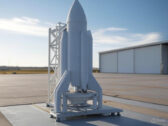
Segment 1: The Dawn – A Roar That Echoed Beyond the Sky
Picture this: the early morning of May 30, 2024. The air at India’s Satish Dhawan Space Centre in Sriharikota is thick with anticipation, not just of the humid coastal breeze, but of history itself. On the launchpad stands not a behemoth of traditional rocketry, but a sleek, innovative vehicle named Agnibaan SOrTeD (Suborbital Technological Demonstrator). At its heart lies a marvel of modern engineering – the world’s first single-piece 3D printed rocket engine.
The countdown reaches zero. A controlled, powerful roar erupts. The Agnibaan lifts off, not with a hesitant shudder, but with a confident surge, painting the sky with the fiery ambition of a new India.
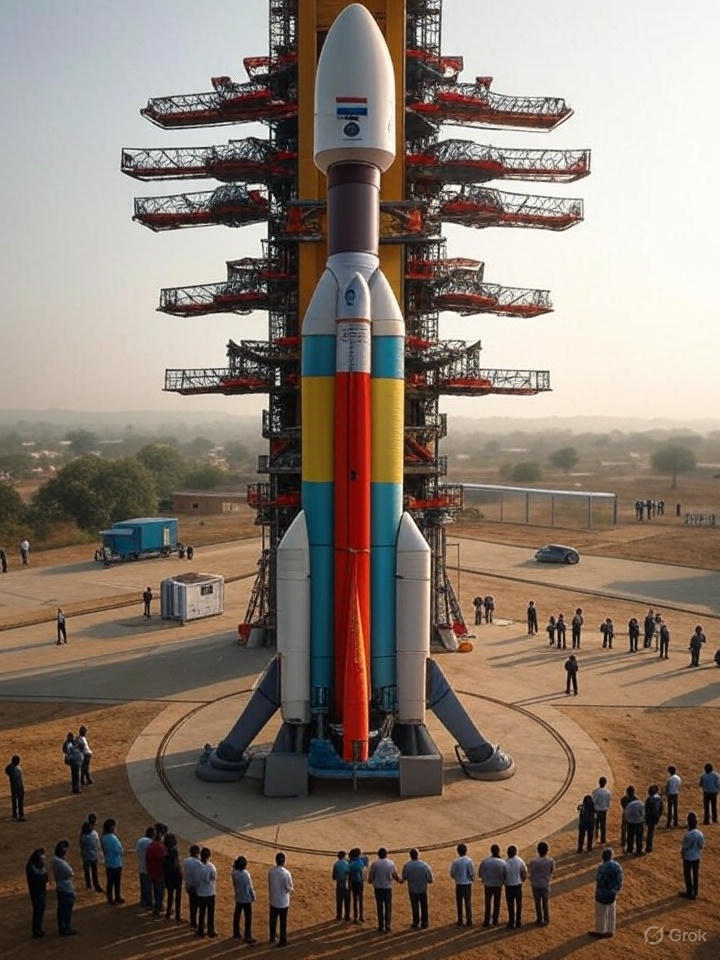
For 7 flawless minutes, it performed a beautiful, precise ballet in the sky, proving a point that was once deemed impossible. This wasn’t just a rocket launch; it was the ignition of a new dawn for the Indian space industry.
This, dear reader, is the story of Agnikul Cosmos, an IIT-Madras incubated startup that looked at the centuries-old playbook of rocket science and decided to hit Ctrl+P. This is the story of how India didn’t just join the space race; it started a new one.
Segment 2: The Architects – Meet Agnikul Cosmos, The Dreamers Who Printed Their Ambition(3D printed rocket)
Behind every world-changing machine is a team of visionaries. Agnikul Cosmos was founded in 2017 by Srinath Ravichandran, Moin SPM, and Professor Sathyanarayanan R. (a.k.a. Prof. Sathya) from IIT-Madras. Their vision was audaciously simple yet profoundly complex: to democratize space access.
But what does that mean? In simple terms, they wanted to make launching small satellites as routine and customizable as booking a cab. Traditional rockets are like public buses—they run on fixed routes (orbits) and schedules. If your satellite doesn’t fit, you’re out of luck. Agnikul envisioned a fleet of “space cabs”—the Agnibaan—that could be tailored to the exact needs of each customer, launching on their schedule, into their desired orbit.
The name itself is a testament to their philosophy. “Agni” means fire, and “kul” means family. They aimed to build a family of launch vehicles, starting with the Agnibaan (“Arrow of Fire”), that would be simple, reliable, and radically affordable.
Their secret weapon? A relentless focus on additive manufacturing, or as we commonly know it, 3D printing. They bet their entire company on the idea that they could build a better, faster, and cheaper rocket engine not in a giant factory with thousands of parts, but layer by layer, in a machine.
Segment 3: The Marvel – Deconstructing the “World’s First” 3D Printed Rocket Engine
Let’s get technical, but in a humanized way. What does “world’s first single-piece 3D printed rocket engine” actually mean?
Traditional Rocket Engine Manufacturing: The Old Way
Typically, a semi-cryogenic engine that uses liquid oxygen and kerosene (like Agnikul’s Agnilet engine) is a complex beast. It’s assembled from hundreds of individually forged, machined, and welded components. Think of it like building a car engine by painstakingly screwing in every piston, valve, and pipe. It’s time-consuming (often taking months), expensive, and prone to human error or weaknesses at the numerous joints and welds. Every weld is a potential point of failure under extreme temperatures and pressures.
Agnikul’s Revolutionary Approach: The New Way
Agnikul threw that blueprint out the window. They designed the entire engine—the injector, the combustion chamber, the nozzle, and the cooling channels—as a single, unified piece of geometry. Then, they fed this digital blueprint into a powerful 3D printer.
This printer, over a continuous period of about 72-100 hours, used a high-powered laser to fuse fine layers of a special, high-performance nickel-alloy superpowder, building the engine from the ground up, layer by microscopic layer.
The Stunning Benefits of This 3D Printing Revolution:
-
Radical Reduction in Parts: They took an engine that would have over 300 parts and turned it into ONE. This is a reduction in complexity that is almost unheard of in aerospace.
-
Unprecedented Speed: From a digital file to a finished, ready-to-test engine in less than a week. This compresses development cycles from years to months.
-
Massive Cost Savings: Fewer parts mean no assembly line, less manpower for assembly, and no costs associated with sourcing, storing, and quality-checking hundreds of individual components.
-
Enhanced Reliability and Performance: A single-piece structure means there are zero welds or joints. This eliminates the primary points of failure in a traditional engine. Furthermore, 3D printing allows for the creation of complex internal cooling channels that are impossible to machine traditionally, making the engine more efficient and robust.
The Agnilet engine isn’t just a part of the rocket; it is the heart of the rocket, and it was printed to perfection.
Segment 4: The Launch – A Minute-by-Minute Account of a 7-Minute Miracle(3D printed rocket)
The Agnibaan SOrTeD mission was a suborbital flight, meaning it went to space and came back down without achieving orbit. Its goal was not to deploy a satellite, but to be the ultimate technological demonstrator—to prove that the core technology, the 3D printed engine, worked flawlessly in real-world conditions.
-
T – 0 Seconds: Liftoff! The Agnilet engine, fueled by liquid oxygen and a special-grade kerosene, ignites. The thrust is smooth and powerful.
-
T + 1 Minute 20 Seconds: The vehicle passes through Max-Q, the period of maximum dynamic pressure where aerodynamic stresses on the vehicle are the highest. This is a critical moment where many rockets face their greatest challenge. Agnibaan sailed through.
-
T + 2 Minutes: The rocket continues its precise ascent, its guidance systems constantly making micro-adjustments to stay on its predetermined trajectory.
-
T + 5 Minutes: The main engine cut-off occurs as planned. The rocket has now reached the apogee (highest point) of its flight, well into space.
-
T + 5 to T + 7 Minutes: The vehicle begins its descent, performing maneuvers to re-enter the atmosphere. It splashes down safely in the Bay of Bengal as planned.
For 7 minutes, a piece of India’s future, born from a printer, danced with the stars and returned, having validated every calculation, every simulation, and every dream.
Segment 5: The Ecosystem – The Invisible Forces Propelling Agnikul’s Success(3D printed rocket)
No startup, no matter how brilliant, achieves such a feat in a vacuum. Agnikul’s success is a powerful testament to a synergistic ecosystem that India has been meticulously building.
-
ISRO (Indian Space Research Organisation): The giant upon whose shoulders everyone stands. ISRO provided not just technical guidance and access to its world-class facilities but also a philosophy of “frugal engineering.” More crucially, it opened up its launch ports through its commercial arm, NSIL.
-
IN-SPACe (Indian National Space Promotion and Authorization Centre): This is the single-window, nodal agency established by the government as a regulator and facilitator for the private space industry. IN-SPACe streamlined the entire process, from granting launch permissions to ensuring safety protocols, making this historic launch possible.
-
IIT-Madras: The incubator and intellectual home. The institute provided the initial research, the talent pool (many Agnikul engineers are IIT-M alumni), and the incubation support that nurtures deep-tech startups.
-
The Government’s Vision: Policies like the Indian Space Policy 2023 have been instrumental in creating a clear, supportive framework for private players, encouraging investment and innovation.
This public-private partnership model is India’s unique strength, and the Agnibaan launch is its most dazzling validation yet.
Segment 6: The Ripple Effect – What This Means for India and the World(3D printed rocket)
The success of the first 3D printed rocket by India sends shockwaves far beyond the launchpad.
-
Democratizing Space: By drastically reducing cost and lead time, Agnikul makes it feasible for universities, small countries, and private companies to launch their own dedicated satellites. Imagine a university in Manipur being able to launch a climate-study cubeSat for a fraction of the current cost.
-
A Boon for “Make in India”: This is a quintessential “Made in India” story, not just in assembly, but in core design and intellectual property. It positions India as a global hub for cutting-edge aerospace manufacturing.
-
Spurring a Startup Tsunami: Just as the success of Infosys and Wipro spawned a generation of IT professionals, the success of Agnikul and Skyroot will inspire thousands of engineers and entrepreneurs to look up at the stars. The talent and venture capital will follow.
-
Global Commercial Appeal: With its promise of on-demand, customized launches, Agnikul is poised to capture a significant share of the global small-satellite launch market, estimated to be worth billions.
-
A Strategic Advantage: Robust, homegrown, and rapid launch capabilities are a significant strategic asset for any nation in the 21st century.
Segment 7: The Future is Printed – What’s Next for Agnikul and India?(3D printed rocket)
The Agnibaan SOrTeD was just the opening act. The main feature is the orbital Agnibaan vehicle.
This will be a two-stage rocket, powered by a cluster of seven of these very same Agnilet engines in its first stage. It is designed to carry a payload of up to 300 kg to a Low Earth Orbit (LEO). With their technology now proven, the path to the orbital launch is clearer and faster.
The vision is to have a plug-and-play launch architecture. Customers will be able to select their payload requirements online, and Agnikul’s systems will automatically configure the rocket for their specific mission. This is the “Uberization” of space launches, and it’s no longer science fiction; it’s India’s imminent reality.
Segment 8: Example in Action – A Hypothetical Use Case(3D printed rocket)
Let’s make this tangible. Imagine “TerraSense,” a European agri-tech startup. They have developed a constellation of five small satellites to monitor soil moisture and crop health in real-time across Africa. They need these satellites placed in a very specific, sun-synchronous orbit (SSO) to get consistent daylight imagery.
The Old Way: They would have to wait for a rideshare opportunity on a large rocket, which might be going to a different orbit. They’d have to compromise on their ideal parameters, and their satellites would be deployed alongside dozens of others, leading to potential scheduling conflicts.
The Agnikul Way: TerraSense visits Agnikul’s website. They input their payload specifications (weight, dimensions, desired orbit). The platform gives them a quote and a potential launch window in just a few months. They book it. Agnikul prints the required engines, assembles the Agnibaan rocket precisely for this mission, and launches from Sriharikota, inserting all five TerraSense satellites into their perfect, custom orbit. Mission accomplished, on time, on budget, on target.
Frequently Asked Questions (FAQ) Section
Q1: Is this India’s first private rocket?
A: No, that historic title goes to Skyroot Aerospace’s Vikram-S in November 2022. Agnikul’s launch is historic for being the world’s first with a single-piece 3D printed semi-cryogenic engine.
Q2: What fuel does the Agnibaan rocket use?
A: The Agnilet engine uses a semi-cryogenic propellant combination: Liquid Oxygen (oxidizer) and a special grade of Kerosene (fuel).
Q3: How long did it take to 3D print the Agnilet engine?
A: The continuous printing process for a single engine takes approximately 72 to 100 hours (3 to 4 days).
Q4: What is the advantage of 3D printing a rocket engine?
A: The key advantages are a massive reduction in the number of parts (from 300+ to 1), which leads to faster production (days vs. months), significantly lower cost, and enhanced reliability due to the elimination of weak points like welds and joints.
Q5: Can this technology be used for larger rockets?
A: Absolutely. The Agnibaan’s orbital variant will use a cluster of seven Agnilet engines. The technology is scalable. Furthermore, the success proves the viability of 3D printing for critical rocket components, a principle that can be applied to larger launch vehicles, potentially even by ISRO for its future missions.
Q6: Where was the rocket launched from?
A: It was launched from the Satish Dhawan Space Centre (SDSC SHAR) in Sriharikota, Andhra Pradesh, from India’s first private launchpad developed by Agnikul within the ISRO campus.
Conclusion: The Sky is Not the Limit, It’s the Playground(3D printed rocket)
The roar of the Agnibaan was more than just the sound of a rocket engine; it was the sound of a paradigm shifting. It was the sound of a young, confident India declaring that it has the talent, the tenacity, and the technology to not just participate in the global space economy, but to help lead it.
Agnikul Cosmos didn’t just launch a rocket; they launched a blueprint for the future. A future where rockets are printed on demand, where access to space is democratized, and where the final frontier is a little closer for all of humanity. The message is clear: In the new space race, India is not just catching up; it’s leapfrogging with innovation, one printed layer at a time.
Your point of view caught my eye and was very interesting. Thanks. I have a question for you.