
Introduction – Why This Topic Matters
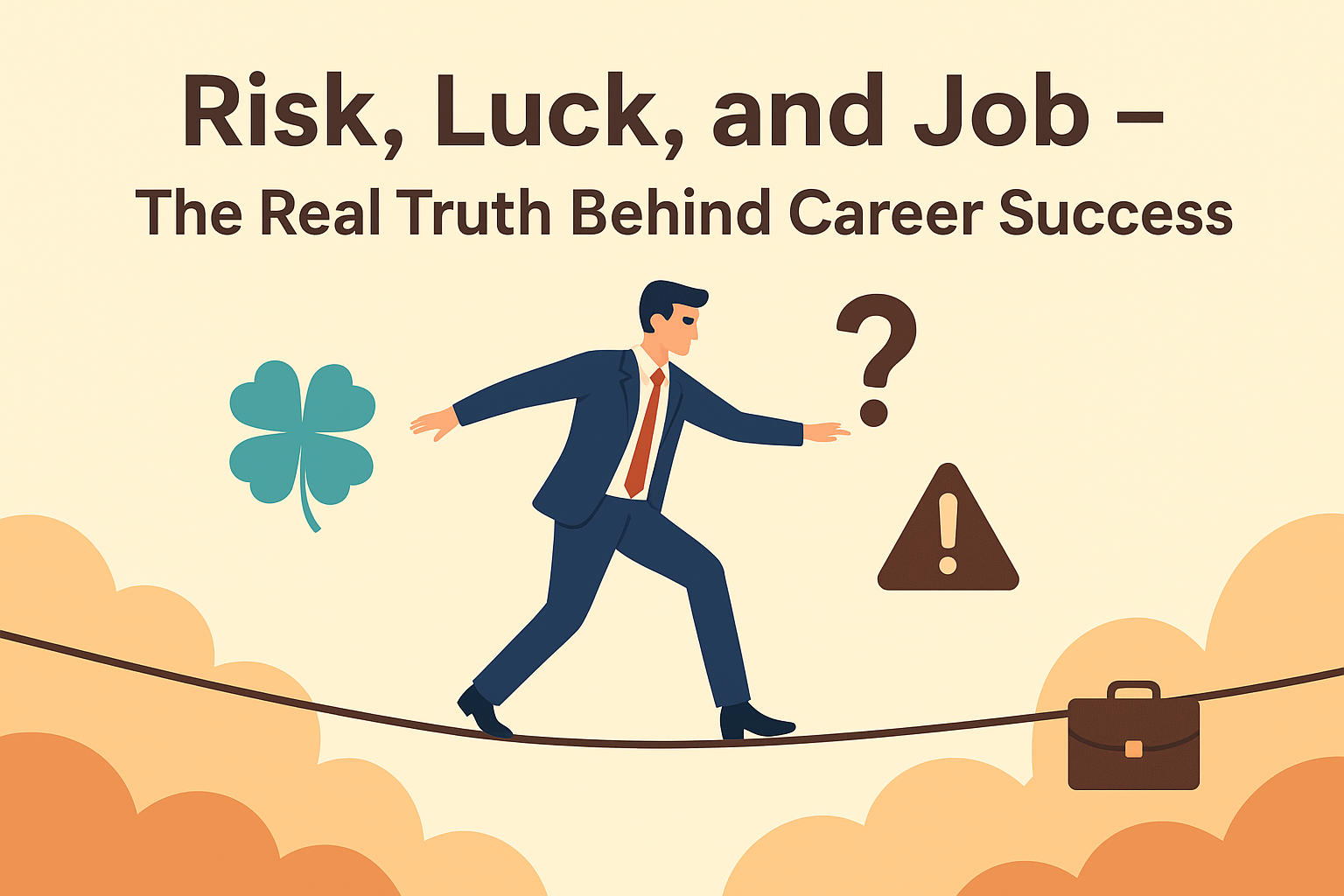
In today’s unpredictable world, your career is no longer shaped by just one factor—your skills. Instead, it’s a complex combination of risk, luck, and your job decisions. Some people climb the ladder of success faster, some get stuck for years, and some face unexpected career twists—often not because they were less talented, but because of how these three forces played out in their lives.
Understanding risk, luck, and job is not just an intellectual exercise—it’s about taking control of your career and preparing yourself for the future. This blog will break down each element in detail, share real-life examples, and give you practical strategies to balance them effectively.
Table of Contents
Understanding the Three Forces That Shape Your Career
What is Risk in Your Job and Career?
Risk in your career is the possibility of loss or failure when making a decision. It could be leaving a stable job for a startup, asking for a promotion, switching industries, or even investing in learning a new skill. Risk isn’t always bad—without it, growth becomes limited.
There are two main types:
- Calculated Risk – Measured and planned with some backup.
- Blind Risk – Jumping without preparation or information.
How Luck Influences Professional Growth
Luck is the factor you can’t fully control, but you can influence its probability. Sometimes, you meet the right mentor at the right time, stumble upon a job opening no one knew about, or your company gets a big client just when your project is up for review.
While you can’t guarantee luck, you can position yourself in situations where good things are more likely to happen.
Why Your Job Choices Matter More Than You Think
Your job is the platform where risk and luck play out. The role you choose, the industry you enter, and the company culture you work in determine how much risk you face and how often luck can strike. A high-growth industry increases opportunities for both.
The Psychology of Taking Risks in Jobs
Why People Avoid Risk
- Fear of failure – People prefer security over the unknown.
- Comfort zone attachment – Familiarity feels safe.
- Overthinking consequences – Imagining worst-case scenarios.
Calculated Risk vs. Blind Risk
- Calculated Risk: You do research, analyze data, have backup plans. Example: Leaving your job for a startup after building a financial cushion and networking in advance.
- Blind Risk: Acting purely on impulse without preparation. Example: Quitting your job without any savings or prospects.
The Role of Luck in Professional Life
Good Luck vs. Bad Luck in Jobs
- Good Luck: Getting an unexpected promotion because your boss got a new position and recommended you.
- Bad Luck: Company downsizing just after you join.
Can You Create Your Own Luck?
Yes, partly. By networking, learning new skills, and being open to opportunities, you increase the surface area for luck to find you.
Job Stability vs. Risk-Taking – Which One Wins?
Pros and Cons of Playing it Safe
Pros:
- Steady income
- Predictable routine
- Lower stress from uncertainty
Cons:
- Slower growth
- Missed high-reward opportunities
- Career stagnation
When to Take the Leap
Take the leap when:
- You have enough savings to survive without income for 6–12 months.
- You have researched the new opportunity thoroughly.
- You have skills that are in demand in your target field.
How to Balance Risk, Luck, and Job Security
The 70-20-10 Career Growth Rule
- 70% – Focus on mastering your current role.
- 20% – Explore new projects and challenges.
- 10% – Take bold risks to test new directions.
Decision-Making Framework
- Define the potential gain.
- Calculate possible loss.
- Check your risk tolerance.
- Have a fallback plan.
Real-Life Examples of Risk and Luck in Jobs
From Clerk to CEO – The Risk That Paid Off
Ramesh started as a bank clerk but decided to take a risk by joining a small fintech startup. Within 8 years, he became the CEO because the company grew exponentially, partly due to market timing (luck) and his adaptability (skill).
The Startup That Failed but Changed a Career
Priya left her stable IT job to start a design studio. The startup failed within 2 years, but the experience landed her a global role in a creative agency—something she could never have achieved through her old career path.
Practical Tips to Manage Risk and Use Luck in Your Job
Networking for Opportunities
- Attend industry events.
- Connect with professionals on LinkedIn.
- Offer help before asking for help.
Upskilling for Safety Nets
Learn new tools, certifications, or soft skills that make you valuable in multiple industries.
Maintaining Multiple Income Streams
Having a side hustle or investment income reduces the fear of losing your job.
The Future of Risk, Luck, and Jobs in a Changing World
AI, Automation, and Job Risk
With technology replacing repetitive tasks, risk is higher in some sectors. The best defense is adaptability.
The Luck Factor in Emerging Industries
Entering growing industries early—like renewable energy or AI—gives you more opportunities to get lucky with promotions and projects.
Final Thoughts – Making Peace with Uncertainty
The truth is, you can’t control luck, but you can control preparation and decisions. Risk is not your enemy—it’s a tool. Luck is not magic—it’s probability. And your job is not just a paycheck—it’s the arena where these forces play together. The winners are those who stay prepared, take calculated risks, and remain open to lucky breaks.
Can you be more specific about the content of your article? After reading it, I still have some doubts. Hope you can help me.
Your point of view caught my eye and was very interesting. Thanks. I have a question for you.