
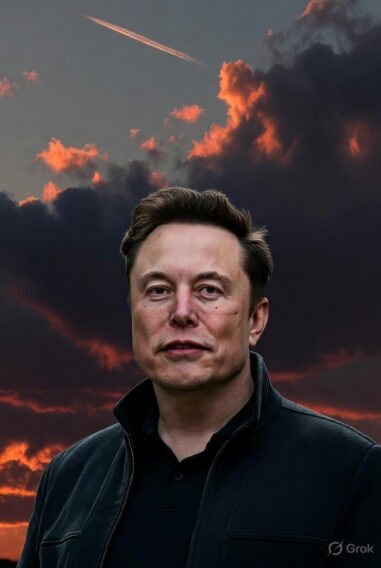
Elon Musk’s Role in the Iran–US War (2026)
In 2026, global warfare shifted dramatically as private tech power merged with state military strategy. At the center of this transformation is Elon Musk, whose control over advanced digital and orbital systems reshaped how the Iran–US conflict unfolded.
The AI-Driven War Shift
The conflict entered a new era with Operation Epic Fury (Feb 28, 2026)—an AI-led strike that eliminated Ali Khamenei. Unlike traditional warfare, this mission relied on real-time data, algorithms, and distributed computing, marking the rise of “algorithmic warfare.”
Musk’s Strategic Influence
Through initiatives like the Department of Government Efficiency (DOGE), Musk accelerated the U.S. military’s transition into an AI-first combat system, integrating private-sector speed and innovation into Pentagon operations.
Iran’s Digital Blackout & Starlink Impact
Following protests in late 2025, Iran imposed a near-total internet shutdown (Jan 2026). Musk’s satellite network, via SpaceX’s Starlink, bypassed this blackout, restoring limited connectivity and undermining state control over information.
Broader Geopolitical Impact
- Conflict escalated from cyber warfare to full kinetic engagement
- Global trade disrupted (Hormuz transit collapse)
- U.S. strategy shifted toward realism and rapid-response warfare
- Private tech became a decisive factor in military outcomes
Bottom line:
Musk’s role redefined warfare—where code, satellites, and AI now rival traditional weapons, blurring the line between corporate power and state sovereignty.
Way 1: Elon Musk’s Technological Influence and the DOGE Doctrine(Elon Musk’s role in Iran-US war)
The most systemic way Musk is shaping the conflict is through the Department of Government Efficiency (DOGE). Launched on the day of President Trump’s second inauguration, DOGE was tasked with modernising federal technology and software to maximise productivity. Musk’s approach to government was to treat it as a “big dumb machine” that required a software update. This philosophy translated into the military domain as a push for “fast and at-cost” procurement, forcing traditional defence contractors to compete on a level playing field without the protection of entrenched lobbyists.
Under Musk’s guidance, the Pentagon shifted its focus to the “Replicator” initiative, aiming to field systems that are “small, smart, cheap, and many”. This doctrine was evidenced by the rapid deployment of the Low-Cost Uncrewed Combat Attack System (LUCAS). Following a drone memo from Secretary Pete Hegseth in June 2025, the LUCAS drone moved from prototype to the battlefield in record time. This shift reflects Musk’s long-held belief that manned fighter jets like the F-35 are “obsolete in the age of drones” because they are too expensive and risk the lives of pilots unnecessarily.
The “DOGE Doctrine” effectively gamified government procurement, incentivising speed and industrial scale over the “exquisite” but rare platforms of the past. The result is a US military that now operates at the “military clock” of AI, where the time from target identification to engagement is measured in seconds rather than hours.
Way 2: Starlink as a Digital Lifeline(Elon Musk’s role in Iran-US war)
When the Iranian regime attempted to “blind” its population and the world by shutting down fibre-optic and cellular networks, Starlink provided the only remaining channel for communication. On January 13, 2026, SpaceX activated free Starlink service for Iranians, pushing a critical software update to terminals inside the country to boost resilience against government jamming. This move positioned a private company as a primary tool for bypassing state-level censorship, a role previously reserved for government-funded soft power initiatives.
The technical battle for the Iranian sky has been a high-stakes game of electronic warfare. Iranian security forces utilised military-grade jammers, allegedly sourced from Russia and China, to disrupt L-band satellite signals. Reports indicated that while jamming degraded signals by up to 80% in urban centres like Tehran, Starlink remained functional in border regions. Musk’s ability to iteratively update terminal software in real-time provided a “digital oxygen” that terrestrial networks could not match.
The physical risks to users remained extreme, with the regime deploying drones to identify satellite dishes on rooftops and enacting laws that punishable possession of unlicensed terminals with the death penalty. Despite this, the presence of approximately 50,000 to 100,000 smuggled terminals allowed activists to send videos of the crackdown to international monitors, preventing a total “infocide”.
Way 3: Starshield and the Hardening of Orbital Infrastructure(Elon Musk’s role in Iran-US war)
Beyond the civilian application of Starlink lies Starshield, SpaceX’s government-exclusive business unit. During the March 2026 strikes, Starshield proved to be the indispensable backbone of US military operations. Consisting of roughly 480 dedicated, hardened satellites, Starshield integrated NSA-level encryption and laser inter-satellite links to create an “unbreakable aerial mesh”.
When Iran’s “Kalinka” jamming systems attempted to sever frontline communications, Starshield satellites maintained a 200 Gbps connection, allowing special forces to transmit petabytes of high-resolution imagery and electromagnetic signals in seconds. This capability was particularly evident during the strike on Khamenei’s bunker. A compact “UAT-222” terminal, only two feet square, was used by ground units to pierce through jamming smoke and feed data directly into analytical engines like Palantir.
The development of Starshield represents the “military hardening of commercial space”. By disaggregating capabilities into thousands of small, cheap satellites, SpaceX has ensured that the loss of individual nodes does not stop the system. Furthermore, Starshield has been detected using unauthorised radio frequencies (2025–2110 MHz) to downlink data, a tactic that amateur satellite trackers suggest may be used to obscure operations from adversary signal-intelligence units.
| Feature | Starlink (Consumer) | Starshield (Military) | Source |
| Satellite Count | ~6,000+ | ~480 (Classified/Hardened) | |
| Encryption | End-to-end user data | High-assurance cryptographic | |
| Navigation | Standard GPS integration | Interference-resistant/Narrow beam | |
| Primary Use | Global broadband / Crisis comms | Earth observation / Tactical kill-chain | |
| Control | SpaceX / Commercial | US Department of War (DOW) |
Way 4: Social Media Power (X) and the Battle for Reality(Elon Musk’s role in Iran-US war)
The platform X (formerly Twitter) has been integrated into the very fabric of military intelligence and narrative warfare in 2026. Musk has positioned X as a “live information” source for the War Department, with the Grok AI model providing personnel with real-time situational awareness from global posts. This integration allows military planners to monitor “digital signals” as early warning indicators for physical and operational risk.
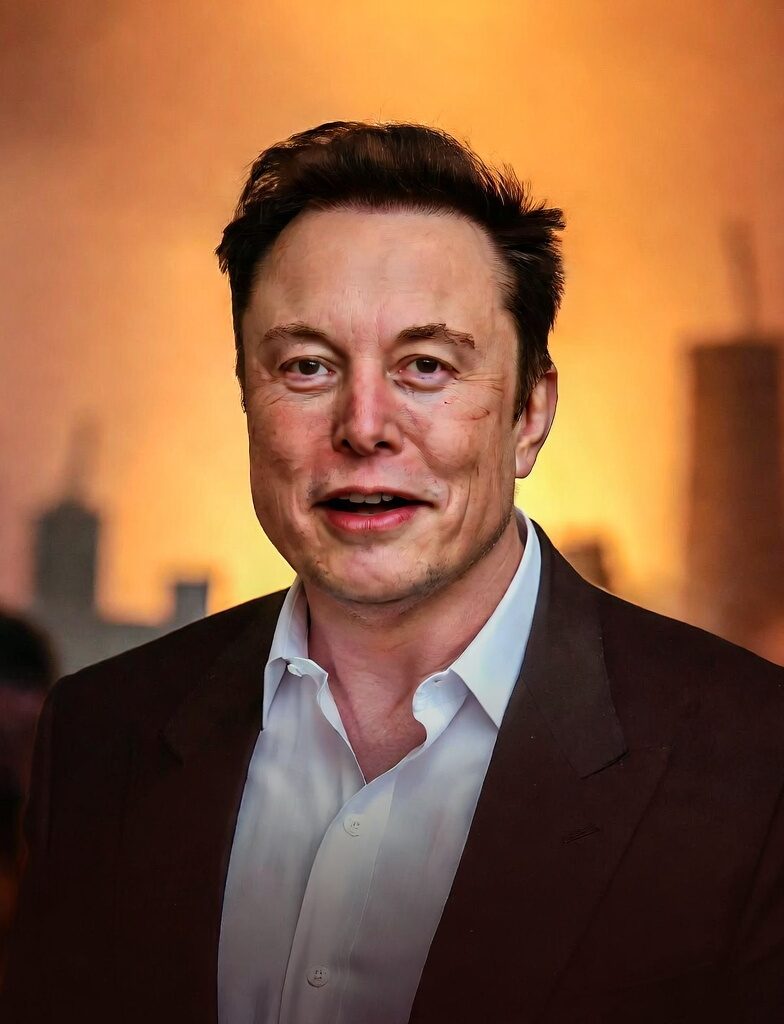
However, the platform has also become a repository for “war as a clickable product”. During the escalation, X was flooded with AI-generated visuals depicting scorched cities and captured troops, often leaving users unable to distinguish fact from fabrication. In response, X implemented a policy to suspend creators from the revenue-sharing program if they post AI-generated war videos without disclosure. Despite this, disinformation researchers observed that the financial incentive to peddle sensational content remained “turbocharged” by X’s engagement-based payouts.
The role of X in “infocide”—the destruction of objective facts—is a critical component of Musk’s influence. By serving as the primary arena where the conflict is “fetishised” into discrete hashtags like #WorldWar3 or #OperationEpicFury, the platform shapes how the global public retroactively understands the war. This makes the billionaire owner of X a primary gatekeeper of the “political clock,” the slowest of the three clocks of conflict, which governs public approval and regional sentiment.
Way 5: Musk’s Views on Warfare Tech: Drones and AI Kill Chains(Elon Musk’s role in Iran-US war)
Musk has long argued that the side that wins tomorrow’s wars will not be the one with the single best platform, but the one that can combine “small numbers of exquisite weaponry with vast numbers of cheap drones”. This vision was realised in 2026 through the “Autonomous Government Reference Architecture” (A-GRA), which allows drones to switch AI “brains” mid-flight.
A technical highlight of the Tehran strike was the drone swarm’s ability to autonomously reconfigure its formation based on threat perception. When an Iranian air defence radar locked onto a drone, the swarm shared the threat via the Lattice software system and deployed sub-drones for electronic deception. This “software-defined air superiority” relies on partners like Anduril and Shield AI, companies that reflect Musk’s philosophy of iterate-and-scale.
The LUCAS Drone: Precision Mass
The LUCAS drone represents the “new arithmetic of conflict”. At a cost of roughly $35,000, it is a one-way attack drone modelled on the Iranian Shahed-136 but integrated with Starlink navigation modules. This creates a “precisely mass-produced” weapon that forces the defender to spend millions on interceptors to neutralise threats that cost thousands to launch. This economic asymmetry is a key pillar of how Musk has reshaped the sustainability of the US military effort in Iran.
| System | Traditional (e.g., F-35/Patriot) | Modern (e.g., LUCAS/Drone Swarm) | Source |
| Unit Cost | $100M+ per plane / $4M per missile | $35,000 per drone | |
| Risk Profile | High (Pilot loss / Multi-million dollar asset) | Low (Attritable / Unmanned) | |
| Speed of Prep | Months to years | Seconds (via AI-enabled planning) | |
| Scalability | Limited by industrial base | High (3D-printed/Commercial components) | |
| Decision Loop | Human-centric (Minutes) | Machine-centric (10 seconds) |
Way 6: Diplomatic and Indirect Influence(Elon Musk’s role in Iran-US war)
Musk’s influence is not limited to technical systems; he has emerged as a high-level diplomatic intermediary. In November 2024, Musk met with Iran’s UN Ambassador, Amir Saeid Iravani, in a secret New York location to discuss defusing tensions. The meeting, described as “positive” by Iranian sources, involved discussions on seeking sanctions exemptions and encouraging Musk to conduct business in Tehran.
This “billionaire diplomacy” reflects a shift away from traditional state-centric models of international relations. Musk’s presence at President Trump’s side during calls with world leaders has led observers to describe him as a de facto diplomat whose personal business interests are intertwined with US foreign policy. While some viewed these talks as a sign of potential moderation, the subsequent escalation to Operation Epic Fury suggests that Musk’s role as a “deal-maker” is secondary to his role as a “disruptor”.
Way 7: Controversies and the Future of Tech Billionaires(Elon Musk’s role in Iran-US war)
The privatization of modern warfare has reached a tipping point in 2026, creating a volatile intersection of corporate ethics, orbital power, and global economic shock.
The Private Defense Rift
A ideological schism has emerged among AI giants. The Pentagon recently branded Anthropic a “supply chain risk” after the firm refused to support mass domestic surveillance or autonomous lethality. In contrast, OpenAI and xAI have successfully “threaded the needle,” integrating their models into military infrastructure.
SpaceX and Orbital Sovereignty
Elon Musk’s control over Starlink highlights the “unregulated power” of private space actors. In February 2026, SpaceX was forced to disable terminals used by Russian forces on strike drones, demonstrating a corporation’s unprecedented ability to gatekeep military success for state actors.
The “Three Clocks” Framework
Commercial tech has mastered two speeds of conflict:
- The Military Clock: Rapid strike capabilities.
- The Economic Clock: Low-cost, mass-produced tech.
- The Political Clock (The Failure): Tech billionaires still struggle to navigate the slow-moving “political clock,” failing to address the underlying class and imperial tensions that drive war.
Economic Fallout: The Hormuz Threshold
By March 18, 2026, ship transits through the Strait of Hormuz collapsed by 97%. This was triggered by an “actuarial battlefield,” where war risk premiums spiked to 1% of hull value, effectively halting trade.
Current Global Impact:
- Brent Crude: ↑ 27%
- Dutch TTF Gas: ↑ 74%
- LNG Capacity: 73.4% of global capacity is now stalled or exposed.
As terrestrial corridors fail, Musk’s orbital infrastructure becomes even more embedded in the global economy, transitioning from “luxury” to “essential” survival tech.
The Future of Tech Billionaires in Global Conflicts (2030 Outlook)(Elon Musk’s role in Iran-US war)
The “eclipse of the state” theory suggests that in a globalised world, the authority of the state is diminishing as “super-empowered individuals” like Musk rise. By 2030, analysts expect the “Sovereign-Commercial Nexus” to be the standard operating procedure for global security. NATO’s “Rapid Adoption Action Plan” and the NATO Innovation Fund are already bridging the gap between commercial startups and allied defence, ensuring that cutting-edge solutions like Starshield are integrated into military doctrine within 24 months.
For kritiinfo.com, the takeaway is clear: the future is defined by “digital mastery” and the ability to navigate a “no-code revolution” where even the machinery of war is software-defined. As we move toward 2030, the ability to control AI, rather than be controlled by it, will be the ultimate measure of sovereignty.
Conclusion: The Musk Transformation(Elon Musk’s role in Iran-US war)
Elon Musk is not merely “helping” in the Iran-US war; he is architecting a new paradigm of conflict. By institutionalising speed through DOGE, providing the “digital oxygen” of Starlink/Starshield, and integrating real-time intelligence via X and Grok, he has created a world where war is “surgical,” “algorithmic,” and “mass-produced.” While the controversies surrounding this shift—ranging from “infocide” to the erosion of institutional accountability—are significant, the futuristic reality of 2026 is one in which the billionaire-innovator has become as consequential as the commander-in-chief.
FAQs(Elon Musk’s role in Iran-US war)
How is Elon Musk’s role in the Iran-US war different from traditional defence contractors? Traditional contractors like Lockheed Martin focus on “exquisite,” high-cost platforms like the F-35. Musk’s influence via DOGE and SpaceX emphasises “precision mass”—cheap, attritable, and software-defined systems like the LUCAS drone that iterate at the speed of Silicon Valley.
What is the “Starshield” constellation, and why does it matter? Starshield is the military-hardened version of Starlink. It consists of 480 satellites with laser links and high-grade encryption. It is critical because it provides an “unbreakable grid” for military communication, even when commercial signals are jammed by systems like the “Kalinka”.
How did AI “dominate the kill chain” in Operation Epic Fury? AI systems like Palantir’s Ontology and xAI’s Grok processed massive amounts of unstructured data from satellites and intercepted communications. This allowed US forces to identify and strike the Supreme Leader’s bunker in seconds, a process that used to take months of planning.
Is Starlink free in Iran during the 2026 conflict? Yes, SpaceX activated free service on January 13, 2026, to support Iranian protesters during the national internet blackout. Users with smuggled terminals can connect without a subscription, though they face extreme legal risks from the regime.
What is the “Three Clocks” theory of AI conflict? It describes the temporal mismatch in modern war: the Military Clock is extremely fast (seconds to strike), the Economic Clock is rapid (supply chain pressure), but the Political Clock is slow (resolving the underlying human conflict).