
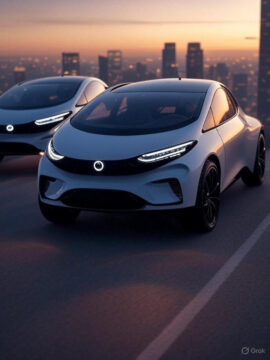
Top 10 Mind-Blowing Facts About Flying Cars Revolutionizing the Future of Transportation
🌍 Introduction: The Dawn of Flying Cars
Imagine waking up in the morning, finishing your coffee, and heading to work — not by car or train, but by a flying vehicle soaring above the skyline. It sounds like science fiction, but it’s fast becoming a real-world revolution.
Flying cars represent the ultimate fusion of automotive innovation and aerospace engineering, redefining how we perceive transportation.
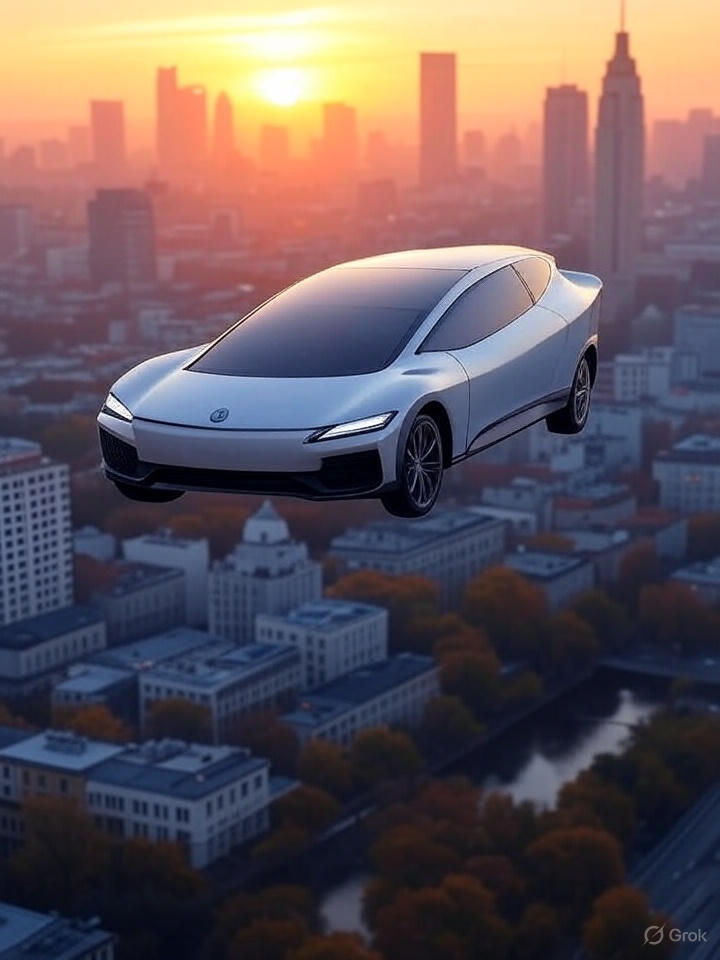
Once seen only in futuristic movies like Back to the Future or The Fifth Element, these vehicles are now stepping into the real world through breakthroughs in electric propulsion, lightweight composite materials, and artificial intelligence (AI).
The Idea Takes Flight
The global race for urban air mobility (UAM) began as cities struggled with rising congestion, long commute times, and environmental concerns. Today, flying cars—or more technically, eVTOLs (electric vertical takeoff and landing vehicles)—offer a way to travel faster, cleaner, and smarter.
Companies such as Joby Aviation, Volocopter, PAL-V Liberty, Lilium Jet, and Klein Vision Aeromobil are already conducting test flights, proving that the sky is no longer the limit.
In 2023, Chinese startup XPeng AeroHT wowed audiences by demonstrating a dual-mode vehicle that could drive on roads and take off vertically. The demonstration hinted that commercial use may arrive sooner than most people expect.
Why It Matters
-
Traffic-free commutes
-
Eco-friendly propulsion
-
Smart AI navigation
-
Rapid intercity travel
The dream of accessible flying cars aligns with the broader vision of smart cities, clean mobility, and connected transportation networks — all essential for the 2030 Sustainable Mobility Goals.
The Evolution of Flying Cars: From Fantasy to Reality
The desire to conquer both land and sky isn’t new. Humanity’s obsession with flight led to remarkable innovations long before the term “flying car” existed.
Early Concepts (1900s–1950s)
In 1917, aviation pioneer Glenn Curtiss introduced the Autoplane, often regarded as the first flying car prototype. Although it could only hop short distances, it ignited imaginations worldwide.
During the 1940s and 1950s, engineers experimented with hybrid designs like the Convair Model 118 and Taylor Aerocar. These were road-legal vehicles that could attach detachable wings for short flights. However, lack of safety standards, fuel inefficiency, and high cost made them impractical for mass use.
The Jet Age to Digital Age (1960s–2000s)
The rise of jet engines and aviation technology in the mid-20th century shifted attention away from personal flying vehicles. But in the early 2000s, with electric propulsion, lightweight composites, and computer automation, innovators revived the dream.
Today, eVTOL technology allows for vertical takeoff and landing without long runways, making flying cars viable even in crowded urban areas.
You may love to read also-
 How Flying Cars Work: The Engineering Magic
Flying cars operate using aerodynamic lift, electric propulsion, and intelligent control systems. They are not just cars with wings — they’re complex aerial machines built for urban safety and efficiency.
The Science Behind eVTOLs
eVTOL stands for electric Vertical Take-Off and Landing. These vehicles use multiple rotors or ducted fans to generate lift, powered by high-capacity batteries or hybrid engines.
Key Components of a Flying Car:
| Component | Function | Example |
|---|---|---|
| Electric Motor | Provides thrust for lift and propulsion | Joby Aviation’s 6-rotor system |
| Flight Controller (AI) | Stabilizes flight automatically | Volocopter’s autonomous AI |
| Battery System | Stores electrical energy for propulsion | Lilium’s 320 kWh solid-state pack |
| Avionics | Controls altitude, navigation, and autopilot | PAL-V’s gyro-based system |
| Safety Parachute | Emergency descent system | Aeromobil AirCar |
 Hybrid Operation
Most modern flying cars operate in two modes:
-
Ground Mode – functions as a regular car with wheels.
-
Flight Mode – transforms via foldable wings or lift rotors to become airborne.
Real Example:
The Lilium Jet uses 36 electric ducted fans to produce a near-silent lift and thrust combination. Its sleek design and zero-emission profile make it one of the leading contenders in sustainable flying mobility.
Top 10 Companies Shaping the Future of Flying Cars
The flying car industry is booming, attracting investments from aerospace giants, automakers, and tech innovators alike. Below are 10 leaders shaping this futuristic frontier:
1. Joby Aviation (USA)
-
Backed by Toyota and Uber.
-
Capable of speeds up to 200 mph with a 150-mile range.
-
Expected to launch air taxi services by 2026.
2. Volocopter (Germany)
-
Designs multicopter air taxis with 18 electric rotors.
-
Already tested flights in Dubai and Singapore.
3. PAL-V Liberty (Netherlands)
-
World’s first road-legal flying car.
-
Certified for both ground and air by European regulators.
-
Operates as a gyroplane, not a helicopter.
4. Klein Vision Aeromobil (Slovakia)
-
Seamlessly transforms from car to plane in under 3 minutes.
-
Completed a 35-minute intercity flight in 2021.
5. Lilium Jet (Germany)
-
7-seater eVTOL with 36 ducted fans.
-
Zero emissions and ultra-quiet operation.
6. Terrafugia Transition (USA)
-
Founded by MIT graduates.
-
Supported by Geely Group (Volvo’s parent company).
7. XPeng AeroHT (China)
-
Integrates drone-like flight with car operation.
-
Showcased at CES 2023 with real-life flight footage.
8. Hyundai Supernal (South Korea)
-
Aims to introduce flying taxis by 2028.
-
Integrates with Hyundai’s smart mobility platform.
9. EHang 216 (China)
-
Autonomous passenger drone.
-
Approved for limited air taxi trials in Guangzhou.
10. SkyDrive (Japan)
-
Compact, single-person flying vehicle.
-
Supported by Toyota and targeting Osaka Expo 2025 for launch.
Challenges: The Roadblocks to the Sky
While the excitement is real, flying cars face several critical challenges before becoming mainstream.
1. Air Traffic Management
Managing thousands of flying cars in urban airspace is complex. AI-powered air traffic systems are being developed to prevent mid-air collisions and control routes.
2. Battery Efficiency
Even with modern batteries, most eVTOLs have limited flight ranges (20–30 minutes). The industry is moving toward solid-state and hydrogen fuel solutions.
3. High Cost
Current flying cars cost between $250,000 and $600,000, putting them out of reach for most consumers. However, mass production could bring prices down.
4. Noise Pollution
Although quieter than helicopters, takeoff sounds are still disruptive. Engineers are developing noise-cancellation rotors to address this.
 5. Legal and Safety Regulations
No unified global framework exists for licensing, flying lanes, or vertiport infrastructure. Countries like Japan and the UAE are early leaders in policy development.
Real-World Example:
Japan’s Ministry of Land and Infrastructure has already begun certifying flying car pilots, aiming for commercial rollout during the Osaka World Expo 2025 — a crucial step toward real-world adoption.
The Future of Flying Cars: Beyond the Horizon
By 2035, flying cars could become an integral part of smart cities. Experts predict cities will develop “sky lanes” — designated flight corridors controlled by AI and 5G communication systems.
Future Trends:
-
Hydrogen propulsion for longer range and zero emissions.
-
AI-managed air corridors reducing pilot dependency.
-
Skyports (Vertiports) for takeoff and landing hubs.
-
Integration with smart traffic systems for real-time route optimization.
Emergency and Utility Use
Flying cars aren’t just luxury toys. They will serve critical roles:
-
Emergency medical response
-
Disaster relief and rescue
-
Aerial logistics for goods delivery
Economic & Environmental Impact:-
Flying cars could reduce traffic congestion, decrease travel time by 70%, and cut carbon emissions by replacing fossil fuel-based ground vehicles.Flying cars are poised to transform both economic and environmental landscapes, yet they bring significant benefits and challenges. Economically, the flying car market is rapidly growing and expected to provide new opportunities across multiple industries, but high production and operating costs remain a barrier. Environmentally, while electric flying cars can lower emissions for longer trips compared to traditional cars, their impact varies depending on distance, technology, and energy sources.
Economic Impact
-
The global flying car market is expanding rapidly, with projections showing growth from around $4.11 billion in 2025 to over $162 billion by 2034, implying strong investment, job creation, and new business models across urban air mobility, aerospace engineering, and infrastructure development.
-
Significant advances in battery technology, artificial intelligence, and automation are fueling the industry. These advancements are expected to create new economic opportunities, especially in urban transport, emergency response, and tourism.
-
However, flying cars remain expensive to manufacture, operate, and maintain due to sophisticated engineering and regulatory challenges, making initial adoption accessible mainly to high-net-worth individuals or specialized business use cases.
-
Infrastructure upgrades, such as landing pads and air traffic management systems, are also required, adding to the overall economic footprint but introducing growth prospects for infrastructure and technology providers.
Environmental Impact
-
Electric flying cars offer notable environmental benefits, particularly for longer journeys. Studies suggest up to 52% lower greenhouse gas emissions per passenger-kilometer compared to conventional internal combustion engine vehicles (ICEVs), and about 6% lower than battery electric vehicles (BEVs) when fully loaded and on trips over 100 km.
-
The environmental advantage arises largely from energy-efficient cruising and reduced time spent in traffic; however, takeoff and landing phases are energy intensive, reducing the benefits for short trips.
-
If powered by renewable energy, flying cars could nearly eliminate their carbon footprint, further enhancing sustainability goals.
-
Despite potential emission reductions, concerns persist regarding noise pollution and the cumulative impact of large-scale deployment in urban areas.
-
The shift to electric propulsion mitigates air pollution, but the sourcing and disposal of batteries and materials poses additional environmental questions.
Advantages and Disadvantages
| Advantage | Disadvantage |
|---|---|
| Reduced road congestion | High operational cost |
| Faster, more direct travel | Noise pollution |
| Lower emissions (long trips) | Infrastructure demands |
| Enhanced emergency response | Regulatory and safety issues |
| Boost to high-tech industries | Need for specialized skills |
In summary, flying cars promise to unlock significant economic value and offer cleaner mobility options for certain use cases, especially if powered by renewable energies. Nevertheless, their net benefits depend on thoughtful management of costs, regulations, safety, and infrastructure as the technology matures.
Economic Benefits:
-
Boosts aerospace and tech employment.
-
Creates new infrastructure industries (vertiports, charging networks).
-
Encourages green technology investments.
However, sustainability challenges remain — especially in battery recycling and manufacturing emissions. Companies must adopt eco-friendly production cycles to ensure true environmental benefits.
 Case Studies: Real Flights, Real Results
Case Study 1: AirCar (Slovakia)
In 2021, Klein Vision’s AirCar completed a 35-minute flight between Nitra and Bratislava — marking the first-ever intercity flight by a flying car.
Outcome: Proved feasibility of dual-mode travel.
Case Study 2: Uber Elevate / Joby Aviation
Before merging with Joby, Uber Elevate planned air taxi routes between Los Angeles and San Francisco, reducing a 6-hour drive to under 60 minutes.
Outcome: Demonstrated urban air taxi feasibility.
Conclusion: The Sky Is No Longer the Limit
From Glenn Curtiss’ 1917 dream to 21st-century reality, the flying car journey has come full circle.
We stand at the edge of a new era where roads meet skies, and vehicles are as intelligent as they are efficient.
With every innovation, humanity inches closer to democratized flight — a future where personal freedom is measured not in miles per hour, but in miles above ground.
So, buckle up — the future of transportation is already airborne.
FAQ :-
1. Are flying cars real or just prototypes?
They are real! Several companies, like PAL-V and Aeromobil, have already achieved flight certification.
2. How much will a flying car cost?
Currently $250,000–$600,000, but prices will drop once production scales.
3. How safe are flying cars?
Extremely safe — they have redundant power systems, AI navigation, and emergency parachutes.
4. When can I buy one?
Commercial availability is expected between 2026–2030 in select cities.
5. What fuel do flying cars use?
Most use electric or hybrid propulsion, with hydrogen expected to dominate in the future.
Your point of view caught my eye and was very interesting. Thanks. I have a question for you.
Thank you for your sharing. I am worried that I lack creative ideas. It is your article that makes me full of hope. Thank you. But, I have a question, can you help me?