

Introduction: Why the H1B Visa is a Life-Changing Opportunity
The H1B visa isn’t just a document—it’s a golden ticket for professionals around the world. For many, it’s the first step toward working in the United States, building a global career, and creating opportunities for their families. The U.S. economy thrives on innovation, and global talent plays a vital role in keeping industries competitive.
Every year, thousands of professionals apply for the H1B, but only a fraction succeed due to its strict caps and lottery system. Still, the H1B remains the most sought-after U.S. work visa, especially for IT, finance, engineering, healthcare, and STEM-related jobs.
👉 If you’re a professional eyeing U.S. opportunities, this 7000-word deep dive will be your complete handbook—covering eligibility, process, benefits, challenges, success tips, examples, FAQs, and more.
Table of Contents
📌 Segment 1: What is the H1B Visa?
The H1B visa is a non-immigrant work visa that allows U.S. companies to hire skilled foreign workers for jobs that require specialized knowledge.
🔑 Key Facts at a Glance:
- Type: Non-immigrant visa with dual intent (you can pursue a Green Card).
- Initial Duration: 3 years.
- Maximum Duration: 6 years (with possible extensions).
- Annual Cap: 65,000 visas + 20,000 for U.S. Master’s degree holders.
- Employer-Sponsored: Individuals cannot apply directly; a U.S. employer must sponsor them.
- The H-1B visa is a non-immigrant visa that allows U.S. employers to temporarily employ foreign workers in specialty occupations that typically require at least a bachelor’s degree or equivalent.
- Core Features
- The H-1B is employer-sponsored: a U.S. employer must file a petition with USCIS on behalf of the worker.
- Specialty occupations include fields like technology, finance, engineering, and other areas that require specialized knowledge.
- A job offer is mandatory and the role must require at least a bachelor’s degree or equivalent in a relevant field.
- There is an annual cap of 85,000 new H-1B visas: 65,000 for regular applicants and an extra 20,000 for those with advanced degrees from U.S. institutions.
- Some employers, such as universities and research institutions, are exempt from the cap.
- Application and Eligibility
- The employer must attest that the foreign worker will be paid the prevailing wage and will not adversely affect the working conditions of similarly employed U.S. workers.
- The duration is up to three years initially, with a possible extension to a maximum of six years in most cases.
- If the worker is laid off or terminated, there is a 60-day grace period to change employer, adjust status, or leave the U.S.
- The visa features “dual intent,” so the holder can apply for permanent residency (green card) while under H-1B status.
- Benefits and Limitations
- Provides a pathway for skilled professionals to work in the U.S. and potentially transition to permanent residency.
- Allows job changes but requires a new petition for each new employer.
- The H-1B visa can also be issued to distinguished fashion models and certain Department of Defense projects in addition to specialty occupations.
- Recent Notes
- Lottery selection system is used when petitions exceed the annual cap.
- The program has had recent policy discussions about balancing the influx of foreign talent with investment in the U.S. workforce.
- These points summarize the fundamental aspects of the H-1B visa program as of September 2025.
🌍 Why the H1B Visa Matters Globally
- Bridges the U.S. talent gap in critical industries.
- Empowers professionals with higher wages and global exposure.
- Strengthens cultural and technological exchange between countries.
💡 Example: In 2024, nearly 780,000 applications were submitted for just 85,000 slots, reflecting the intense competition.
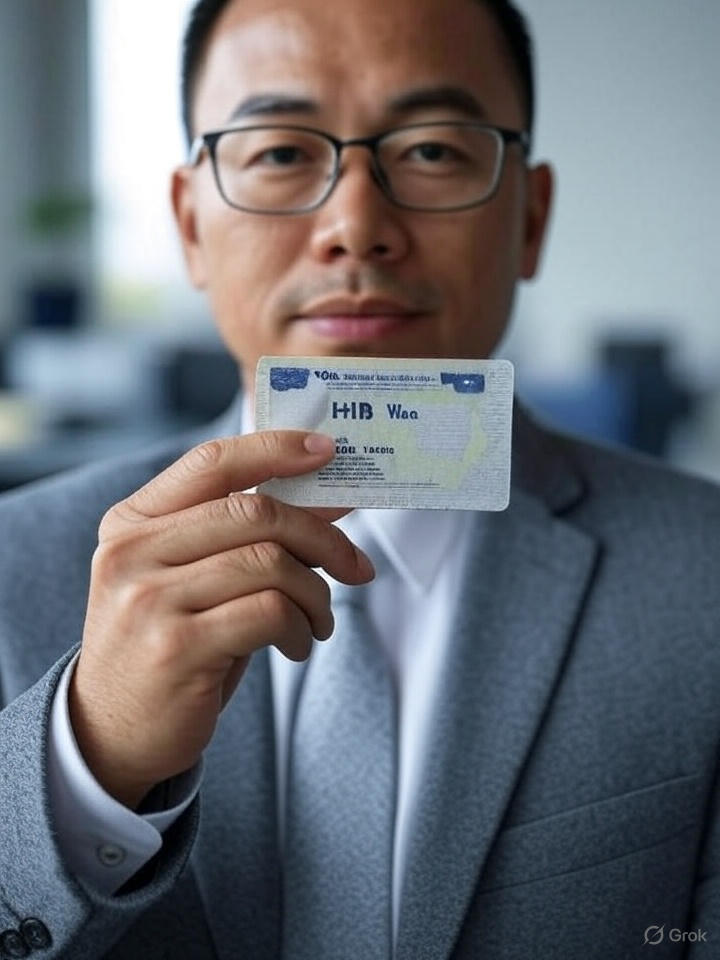
📌 Segment 2: Eligibility Criteria for H1B Visa
Not everyone qualifies for an H1B visa. Both the applicant and the employer must meet certain conditions.
✅ Requirements for Applicants
- A Bachelor’s degree or higher in a relevant specialty field.
- Equivalent work experience (3 years of experience ≈ 1 year of college study, in some cases).
- Proof of a specialty occupation that requires technical or theoretical knowledge.
✅ Requirements for Employers
- Must be a legally operating U.S. company.
- Job offered must require specialized skills.
- Filing of a Labor Condition Application (LCA) to guarantee fair wages and conditions.
💡 Example: A healthcare analytics firm in Boston hired Raj, a data analyst from India, because his advanced skills in predictive modeling were essential for their U.S. operations.
📌 Segment 3: The H1B Visa Application Process – Step by Step
The H1B journey can feel overwhelming, but breaking it down into steps makes it easier.
📝 Step 1: Employer Sponsorship
- A U.S. company agrees to hire you and files the necessary paperwork.
- You cannot self-apply.
📝 Step 2: Registration with USCIS
- The employer submits your details electronically during the H1B lottery registration window (usually March).
📝 Step 3: Lottery Selection
- Due to high demand, USCIS runs a random lottery draw.
- Selected candidates move to the next step.
📝 Step 4: Petition Filing (Form I-129)
- The employer files Form I-129 with USCIS, along with supporting documents.
📝 Step 5: USCIS Processing
- The application is reviewed. Processing can be:
- Regular (2–6 months).
- Premium (15 days, with additional fees).
📝 Step 6: Consular Processing or Change of Status
- If abroad: You attend an interview at a U.S. embassy/consulate.
- If in the U.S.: You may switch from another visa category (like F1 or L1).
📝 Step 7: Travel to the U.S. and Start Work
- Once approved and stamped, you can legally work for your sponsoring employer.
💡 Example: Mei, a researcher from China, applied during her OPT, got selected, and seamlessly transitioned to her H1B without leaving the U.S.
📌 Segment 4: Benefits of H1B Visa
The H1B is considered one of the most rewarding visas in the U.S. immigration system.
🌟 Professional Benefits
- Access to world-class career opportunities.
- Higher wages than many home-country equivalents.
- Work with leading global corporations.
🌟 Personal & Family Benefits
- Bring your spouse and children under H4 visas.
- Spouses may apply for H4 EAD (Employment Authorization Document).
- Children can attend U.S. schools and universities.
🌟 Long-Term Pathway
- The H1B allows dual intent → You can apply for a Green Card.
- After permanent residency, you can eventually pursue U.S. citizenship.
💡 Case Study: Priya, an Indian IT consultant, started with an H1B in 2015, transitioned to a Green Card in 2021, and today owns her consulting firm in New Jersey.
📌 Segment 5: Challenges & Limitations of H1B
While rewarding, the H1B journey isn’t without obstacles.
🚧 Major Challenges
- Lottery Dependency: Pure chance determines selection.
- Cap Restriction: Only 85,000 visas yearly vs. hundreds of thousands of applicants.
- Employer Dependence: You cannot freely switch jobs without transferring your visa.
- Processing Delays: USCIS backlogs often cause months of waiting.
- Uncertainty: Denials can occur even after selection.
💡 Example: Ahmed, a cybersecurity expert, applied for 3 consecutive years before finally being selected in the lottery. His persistence paid off.
📌 Segment 6: Alternatives to H1B Visa
If the H1B doesn’t work out, there are other pathways:
- L1 Visa: For intra-company transfers.
- O1 Visa: For individuals with extraordinary ability.
- F1 + OPT: Study in the U.S. and later apply for H1B.
- EB Green Cards: Employment-based permanent residency.
- H2B Visa: For temporary non-agricultural workers.
📌 Segment 7: Real-Life Success Stories
🌟 Case 1: Raj – The Software Engineer
Raj came to the U.S. for his Master’s in Computer Science. He applied for H1B in his OPT year and got selected. Today, he’s a Senior Software Architect at a leading U.S. tech firm.
🌟 Case 2: Maria – The Data Scientist
Maria from Brazil leveraged her unique machine learning skills. After working in the U.S. under H1B, she became a team lead in Silicon Valley.
🌟 Case 3: David – The Financial Analyst
David switched from an L1 to H1B visa, giving him more flexibility to change employers. Today, he’s thriving on Wall Street.
📌 Segment 8: Economic Impact of H1B Visa
The H1B visa not only benefits individuals but also boosts the U.S. economy.
- Technology Growth: 70% of H1B visas go to IT-related fields.
- Innovation: Many H1B holders later launch startups.
- GDP Contribution: According to reports, immigrant workers contribute hundreds of billions annually to U.S. GDP.
📊 A 2023 report by the American Immigration Council found that H1B workers increased overall productivity in the U.S. economy by $95 billion annually.
📌 Segment 9: Tips to Increase Your H1B Chances
- 🎯 Apply through multiple employers (if eligible).
- 🎯 Enroll in a U.S. Master’s degree program (qualify for the advanced cap).
- 🎯 Gain expertise in in-demand fields (AI, cloud computing, cybersecurity).
- 🎯 File for premium processing to reduce delays.
- 🎯 Consult with immigration attorneys for error-free applications.
📌 Segment 10: SEO-Optimized FAQ Section
❓ Can I bring my family with me on H1B?
Yes, under the H4 visa category. Spouses may also apply for H4 EAD to work in the U.S.
❓ How long can I stay in the U.S. on H1B?
Typically 6 years, with some extensions if you’re pursuing a Green Card.
❓ Can I switch employers?
Yes, but you need to file an H1B transfer before joining a new company.
❓ What if my visa is denied?
You may reapply next year or explore alternatives like L1, O1, or EB visas.
❓ Is H1B the only pathway to a Green Card?
No, but it’s a popular stepping stone due to its dual intent status.
📌 Segment 11: Backlink & Internal Link
- External Backlink:
- Internal Links:
- Extended Reality Blog – Future of work trends.
- Low Code No Code Blog – Shaping software careers.
- AI Agent Blog – How AI is redefining global job markets.
📌 Segment 12:The New policy of Donald Trump’s govt. on H1B Visa.
Main H-1B Changes (2025)
These changes represent the strictest financial and eligibility requirements ever imposed on H-1B visa applicants by the Trump administration.
🏁 Conclusion: The H1B Visa as a Pathway to Dreams
The H1B visa has transformed countless lives, helping professionals achieve financial growth, career advancement, and personal dreams. Despite the challenges—lottery odds, strict rules, and uncertainties—it remains the most powerful U.S. work visa for global talent.
For many, the H1B journey is just the first chapter in a longer story that leads to a Green Card, U.S. citizenship, and global leadership opportunities.
If you’re aspiring for an H1B, remember: preparation, persistence, and the right skills can make all the difference.
Thank you for your sharing. I am worried that I lack creative ideas. It is your article that makes me full of hope. Thank you. But, I have a question, can you help me?
Your point of view caught my eye and was very interesting. Thanks. I have a question for you.
Thank you for your sharing. I am worried that I lack creative ideas. It is your article that makes me full of hope. Thank you. But, I have a question, can you help me?
Your point of view caught my eye and was very interesting. Thanks. I have a question for you. https://www.binance.com/register?ref=IXBIAFVY
Your article helped me a lot, is there any more related content? Thanks! https://www.binance.com/join?ref=JW3W4Y3A