

Superpower:-“You’ve climbed the ladder of success, only to realise it was leaning against the wrong wall. The promotion came. The bank account grew. The respect poured in. But why do you feel like you are slowly disappearing?” This sentiment, echoing through the corridors of modern executive suites and entrepreneurial hubs, serves as the definitive gut-punch hook for the contemporary high achiever. It signals a profound disconnection between external achievement and internal fulfilment, a phenomenon increasingly characterised as the “Meaning Crisis.” In the high-stakes environment of 2025, success often arrives with an uninvited guest: a gnawing sense of emptiness and isolation. This psychological state, while traditionally viewed as a breakdown or a symptom of burnout, is reframed by futuristic psychology as a critical software update for the human soul. The core thesis posits that feeling empty after achieving significant success is not a flaw in character or ambition; rather, it is a sophisticated feature of human evolution indicating that the individual is prepared to ascend to a higher level of conscious existence.
The loneliness of success is a documented reality for top performers who, having reached the pinnacle of their respective fields, find that the view is often obscured by the fog of “Summit Syndrome”. This condition describes the emotional crash that follows the attainment of a massive personal or professional summit—be it a successful business exit, the publication of a definitive work, or the acquisition of a long-sought title. When all energy is funnelled into a singular goal, its achievement leaves a vacuum where purpose once resided. The existential dread that follows is not an ending but a prompt for realignment.
Step 1: The Identity Detox
The initial phase of transforming existential dread into a superpower necessitates a rigorous Identity Detox. This process involves diagnosing why goals established in a previous life stage—often as recently as five years ago—have become psychological toxins in the present. High achievers frequently operate under “Success Addiction,” a behavioural pattern where self-worth is tethered exclusively to external validation and metrics. This addiction is fueled by the very traits that initially drive success, such as perfectionism, discipline, and an all-encompassing commitment to work, which can ultimately obscure the need for rest, genuine relationships, and emotional health.
The mechanism of this toxicity is rooted in the “Arrival Fallacy,” a term coined by Dr Tal Ben-Shahar to describe the false belief that attaining a specific milestone will yield permanent happiness. Research indicates that the human brain quickly recalibrates to new levels of achievement, returning to a baseline level of contentment shortly after the dopamine surge of victory subsides. For the high achiever, this creates a “hedonic treadmill” where they must run faster and achieve more just to stay in the same psychological place.
Comparative Analysis of Achievement Frameworks
| Feature | Toxic Goal Setting (Success Addiction) | Intentional Living (Significance Nutrition) |
| Primary Motivation | Fear of inadequacy; external validation | Internal values; pursuit of purpose |
| Focus | Narrow metrics (revenue, titles) | Holistic alignment (relationships, integrity) |
| Risk Profile | Prioritises sustainable growth and ethics | Internal values: pursuit of purpose |
| Psychological State | Anxiety-driven; “never enough” | Presence-driven; “meaningful enough” |
| Outcome | Identity erosion and burnout | Identity integration and resilience |
The systematic side effects of over-prescribing goal setting are profound. According to the foundational analysis in(https://hbr.org/2019/12/the-pitfalls-of-goal-setting), specific and challenging goals can narrow an individual’s focus so severely that they suffer from “inattentional blindness,” missing critical aspects of their environment, such as ethical lapses or the deterioration of their personal lives. This narrow focus can lead to catastrophic organisational and personal failures, exemplified by historical instances like the Ford Pinto’s safety oversights or Enron’s revenue-at-all-costs culture.
An Identity Detox requires the subject to “lead with why” and disrupt “if-then” thinking, such as the belief that happiness will only occur if a certain promotion is attained. It is a shift from managing people and metrics to creating “team-ship” and intentionality, where vulnerability is viewed as a strength rather than a liability. The detoxification process often involves the “reverse bucket list,” where the individual consciously detaches from desires that hinder long-term fulfilment and focuses on “eulogy virtues” rather than “résumé virtues”.
Step 2: Curate Your Meaning Inputs
The second step in navigating the meaning crisis is the deliberate curation of “Meaning Inputs.” Modern high achievers have evolved into “informavores”—organisms that consume information with a biological intensity once reserved for physical sustenance. While individuals in 2025 are increasingly meticulous regarding their caloric intake and physical nutrition, they remain dangerously indiscriminate about their informational diet, leading to a state of profound spiritual malnutrition.
Information is no longer just a tool for survival; it is consumed as a matter of personal identity. However, the “Attention Economy” commodifies this drive, exploiting the brain’s evolutionary bias toward novel and threatening stimuli. This results in “Information Overload,” where the sheer volume of data surpasses the cognitive capacity to process it, manifesting as generalised anxiety, sleep complications, and a fractured attention span. The constant bombardment of social media “highlight reels” further exacerbates this by fueling social comparison and denting self-esteem.
The Informational Nutritional Spectrum
| Intake Level | Category | Characteristics | Potential Impact |
| Nourishing | Significance Nutrition | In-depth books, documentaries, philosophical discourse. | Promotes flow, deep learning, and emotional resilience. |
| Functional | Practical Utility | Weather, recipes, technical manuals, directions. | Enables efficient navigation of the daily physical world. |
| Pleasurable | Entertainment | Music, fiction, comedy, creative hobbies. | Provides necessary mental breaks and reduces stress. |
| Toxic | Clickbait/Outrage | In-depth books, documentaries, and philosophical discourse. | Leads to cognitive overload, anxiety, and distorted reality. |
Culturating healthy informational inputs is described as “mental ecology,” a practice that ensures the inner world remains a site of clarity rather than a landfill for notifications. High achievers are encouraged to perform an “Information Audit,” observing how different types of content influence their emotional state. The goal is to move toward “mindful consumption,” where every piece of information is assessed for its alignment with one’s core values.
A strategic informational diet involves setting digital boundaries, such as the “11-Minute Rule” for exercise or the “100-Day Identity Audit” for teams, to ensure that focus remains on high-value inputs. Studies show that limiting social media use to just 30 minutes per day can lead to significant reductions in loneliness and anxiety. By prioritising quality over quantity, the high achiever can protect their mental resources from the exhausting effects of the modern “infodemic”. Further exploration of these dynamics can be found in the Psychology Today treatise on Information Consumption and Mental Health, which details how informational patterns shape our psychological well-being.
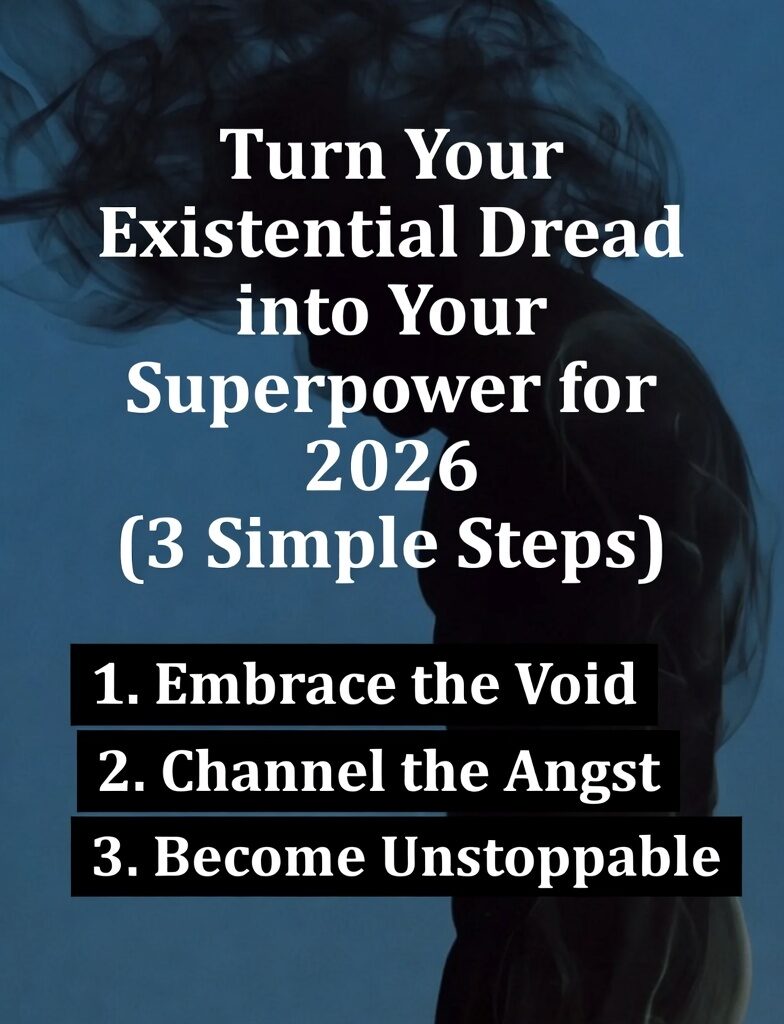
Step 3: The “Backward” Future Self
The final step in the transformation is the resurrection of the “Backward” Future Self. This concept challenges the traditional forward-looking obsession of high achievers by encouraging them to walk backwards into the future. This involves unearthing childhood passions or “impractical” skills that were abandoned in the pursuit of the ladder of success. In the AI-driven economy of 2026, these seemingly useless traits are becoming the cornerstone of a new “Polymathic Edge”.
The “Legacy Algorithm” represents the merging of these resurrected joys with current professional expertise to create unique hybrid value. As AI automates specialised tasks—from data analysis to routine legal work—the market is seeing the rise of the “Polymath”: individuals who possess “Transversal Intelligence” and can operate at the intersections of disparate fields. For instance, a software engineer who integrates their childhood passion for behavioural psychology can design more human-centric interfaces, creating a value proposition that a single-discipline thinker cannot match.
The Evolution of Intelligence and Identity
| Phase | Intelligence Type | Professional Archetype | Core Identity Focus |
| Early Career | Fluid Intelligence | The Hyper-Specialist | Achievement and speed. |
| Mid-Career | Transitioning | The Insecure Overachiever | Mastery and impact. |
| The New 2025 | Crystallized Intelligence | The Polymath | Wisdom and intersectional value. |
This shift from fluid to crystallised intelligence is a biological reality; while raw processing speed peaks early, the ability to connect complex ideas grows with age. AI acts as a catalyst for this “new renaissance” by democratizing access to specialised knowledge, allowing anyone to bypass “knowledge silos” and cultivate a diverse range of skills. The “Polymath Lab” model in higher education and professional development now focuses on the fusion of fields such as bioinformatics, legal tech, and ethical engineering.
To enact the “Backward” Future Self, high achievers must identify their “Massively Transformative Purpose” by hunting for intersections between their curiosities and the world’s challenges. This is not just a personal quest but a strategic career move. As explored in the Forbes piece on(https://www.forbes.com/sites/joemckendrick/2025/01/20/in-the-age-of-artificial-intelligence-polymaths-are-back-in-vogue/), versatility and curiosity are the ultimate defences against technological displacement.
Conclusion: The New ROI – Return on Identity
As we stand in 2026, the metrics of a successful life have been irrevocably altered. The traditional focus on Return on Investment (ROI) is being replaced by a more profound metric: Return on Identity. This new ROI measures the degree to which an individual’s work, relationships, and daily actions align with their authentic self and internal integrity. It is the calculation of whether one has “gained the world and lost their soul”.
The return on acting pro-environmentally or pro-socially is often described through the lens of intrinsic motivation:
It=(ηt−1−ϵt−1)⋅xt−1+ρ⋅It−1
where the “return” is positive only when intrinsic motivation η outweighs extrinsic pressure ϵ. In 2026, the most valuable asset is not just the capital in the bank, but the “Identity Capital” that allows an individual to lead with presence and purpose.
The call to action for the modern high achiever is to “return”—not to a physical place, but to the self. Returning is not a sign of failure or going backwards; it is an act of realignment that ensures the foundation of success is sustainable. In an era of AI impersonation and “identity as the new perimeter,” the only thing that cannot be automated is the unique, integrated, and purposeful human spirit. The transition from a crisis of meaning to a superpower of purpose is the ultimate evolution for the 2025 high achiever. Those who master their Return on Identity will not just navigate the future—they will define it.