

The human brain is one of the most complex and fascinating biological structures known to science. As we progress into an era of rapid technological and scientific development, the study of advanced neuroscience has shifted from understanding basic neural functions to exploring how the brain learns, heals, adapts, and even interfaces with digital systems. Today, we stand on the edge of breakthroughs that were once considered pure science fiction — from enhancing memory and boosting intelligence to developing brain-computer interfaces capable of controlling machines with thought alone.
In this article, we explore the cutting-edge discoveries in neuroscience, their real-world applications, and
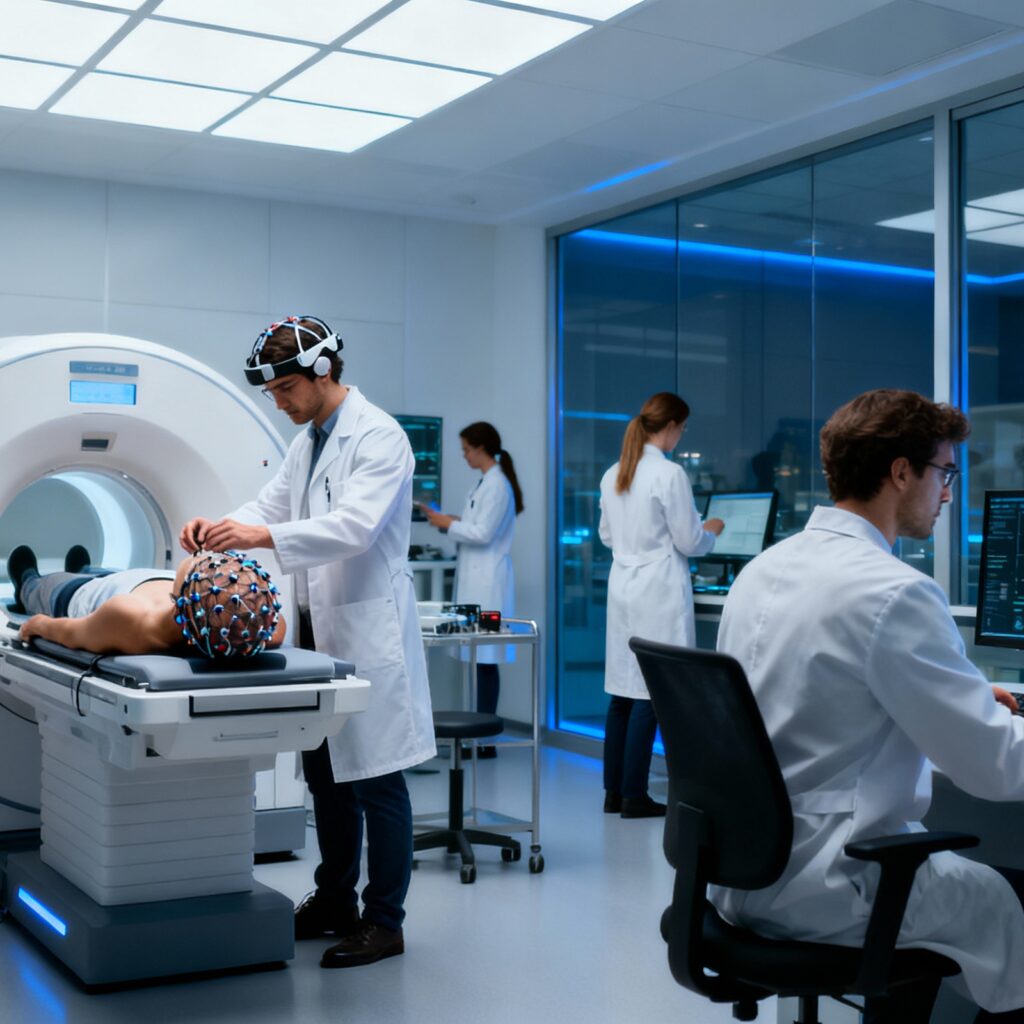
how they are reshaping the future of mental health, education, human performance, and artificial intelligence.
Understanding the Human Brain: The Most Powerful Organ
The brain contains over 86 billion neurons, each forming thousands of synaptic connections. These neural networks determine everything we think, feel, and do. Advanced neuroscience focuses on how these networks shape:
-
Consciousness
-
Decision-making
-
Emotions
-
Memory and learning
-
Behavioral patterns
Recent research has shown that the brain is not fixed. It continuously changes through a phenomenon known as neuroplasticity, meaning your thoughts, environment, and habits can rewire neural pathways.
This leads to a groundbreaking realization: human potential is not predetermined — it can be intentionally developed.
Neuroplasticity: Rewiring the Brain for Excellence(Human Brain)
Neuroplasticity is the brain’s ability to adapt and reorganize by forming new neural connections. It plays a crucial role in:
-
Learning new skills
-
Recovering from brain injuries
-
Developing emotional resilience
-
Enhancing cognitive performance
How Neuroplasticity Works(Human Brain)
Every time we repeat an action, thought, or behavior, neurons fire and form stronger connections. This is why habits — both good and bad — become automatic.
What fires together, wires together.
By intentionally practicing powerful mental and physical routines, we can:
-
Strengthen positive patterns
-
Break harmful behaviors
-
Upgrade our emotional responses
-
Improve memory and focus
Practical Techniques to Boost Neuroplasticity
| Strategy | Benefits |
|---|---|
| Meditation | Strengthens prefrontal cortex, reduces stress |
| Learning new skills | Enhances cognitive pathways |
| Physical exercise | Boosts neural growth hormone (BDNF) |
| Adequate sleep | Supports memory consolidation |
| Mindful repetition | Reinforces desired behavior |
Neuroscience and Emotional Intelligence(Human Brain)
Advanced neuroscience has revealed that emotional intelligence (EQ) can be trained just like cognitive intelligence. The amygdala (emotion center) and prefrontal cortex (rational center) interact to shape our emotional responses.
Strengthening the prefrontal cortex through mindfulness, breathwork, and reflection increases emotional control, improving:
-
Leadership abilities
-
Communication skills
-
Stress management
-
Decision-making clarity
In the workplace, individuals with high EQ outperform others by up to 70%, making emotional mastery a foundational success skill.
Memory Enhancement: Training the Brain to Remember More
The science of memory has advanced significantly. Memory is not a storage process alone — it is dynamic.
Methods that Improve Memory Processing
-
Spaced Repetition: Revisiting information at structured intervals.
-
Visualization & Story Linking: Turning data into vivid mental imagery.
-
Active Recall: Retrieving information without cues to strengthen retention.
-
Sleep Optimization: Deep sleep cycles protect and organize memory.
Studies show that anyone can double memory retention in as little as 30 days using structured cognitive training techniques.
Brain-Computer Interfaces (BCI): The Future of Human-Machine Interaction
One of the most exciting advancements in modern neuroscience is the development of brain-computer interfaces (BCIs). These systems translate neural signals into digital commands.
Applications of BCI(Human Brain)
-
Helping paralyzed individuals control robotic limbs
-
Allowing communication through thought signals
-
Enhancing cognitive performance through neural feedback
-
Exploring augmented intelligence
Companies like Neuralink, OpenBCI, and international research labs are developing systems that may one day enable:
-
Telepathic communication
-
Memory uploading
-
Mind-controlled devices
While still in early phases, the future of BCI suggests a world where the boundaries between biology and technology blur.
Neuroscience and Artificial Intelligence: A Powerful Collaboration
Modern AI systems are increasingly designed to imitate the structure and function of the brain. Neural networks, deep learning models, and reinforcement learning systems are all inspired by neuroscience.
Key Collaboration Areas(Human Brain)
-
AI models improving brain mapping
-
Neuroscience guiding AI learning structure
-
AI assisting in diagnosing neurological disorders
This reciprocal relationship accelerates innovation in both fields.
Mental Health and the Neurochemical Balance
Advanced neuroscience has also transformed our understanding of mental health. Conditions like anxiety, depression, ADHD, and PTSD are now understood as neurochemical imbalances rather than personal weaknesses.
Key Brain Chemicals and Their Roles
| Neurotransmitter | Role |
|---|---|
| Dopamine | Motivation & reward |
| Serotonin | Mood & emotional stability |
| GABA | Calmness & relaxation |
| Norepinephrine | Focus & alertness |
Treatments now include:
-
Cognitive Behavioral Therapy (CBT)
-
Neurofeedback training
-
Mindfulness-based stress reduction
-
Personalized medication approaches
-
Holistic lifestyle modification
The goal is not just symptom relief — but restoring neurochemical harmony.
The Future of Advanced Neuroscience
We are entering a new era of cognitive evolution where human potential can be expanded beyond natural limitations. Emerging research suggests future advancements may allow:
-
Enhanced creativity
-
Accelerated skill learning
-
Emotional reprogramming
-
Memory enhancement
-
Biological integration with AI
The brain is no longer a mystery — it is a blueprint for unlocking human greatness.
Conclusion(Human Brain)
The field of advanced neuroscience is transforming how we understand intelligence, emotions, behavior, and human potential. By embracing the science of the brain, we can learn to reshape our minds, enrich our lives, and expand what we are capable of achieving. The future of human evolution will not be written by chance — it will be shaped by intentional cognitive mastery.
I don’t think the title of your article matches the content lol. Just kidding, mainly because I had some doubts after reading the article.
Your point of view caught my eye and was very interesting. Thanks. I have a question for you.
Can you be more specific about the content of your article? After reading it, I still have some doubts. Hope you can help me.
Can you be more specific about the content of your article? After reading it, I still have some doubts. Hope you can help me. https://accounts.binance.info/cs/register-person?ref=OMM3XK51