

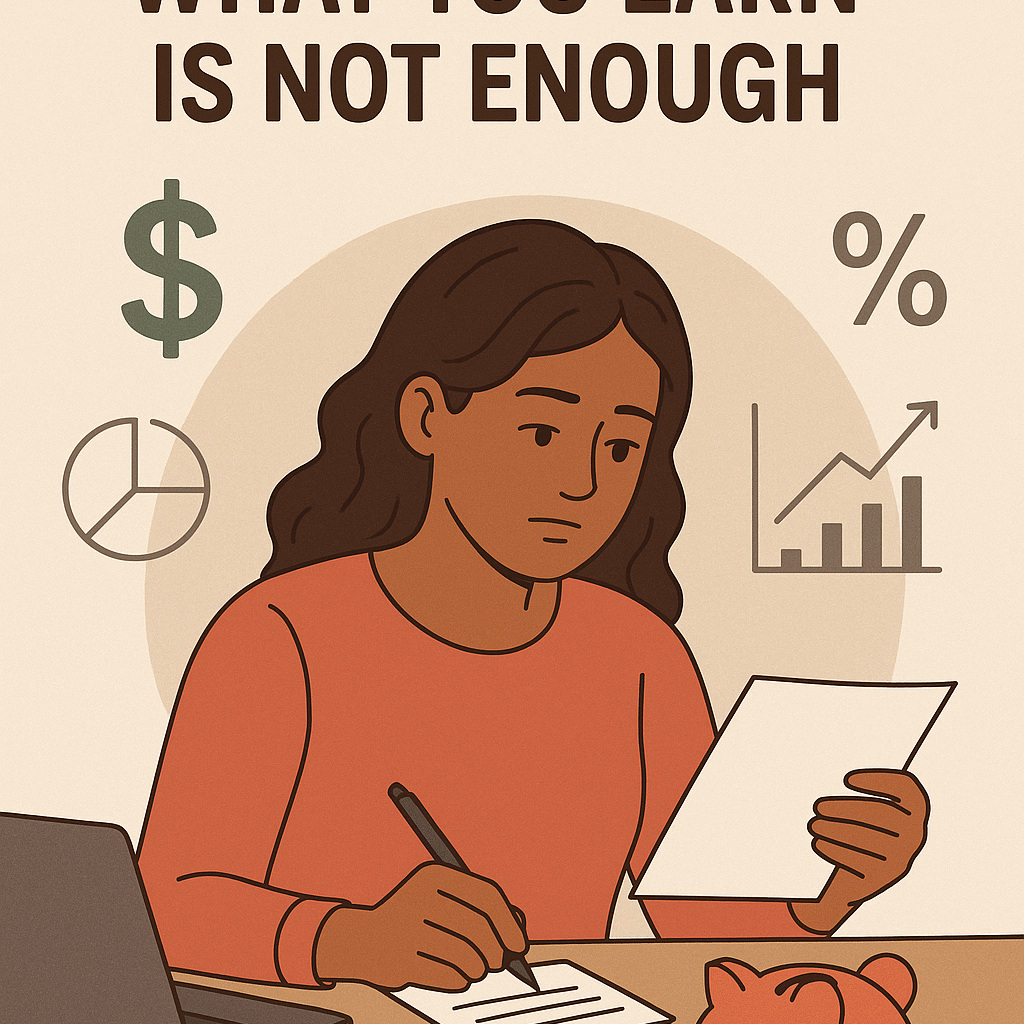
Introduction: The Harsh Reality of Short Income{ Managing When What You Earn Is Not Enough}
Imagine waking up on payday, seeing your salary hit your bank account… and within a few days, it’s almost gone. Rent, bills, groceries, a few unavoidable expenses — and poof! You’re back to wondering how to survive the rest of the month.
If this sounds familiar, you’re not alone. Millions of people across the world live with the reality of earning less than they need.
The reasons vary — rising living costs, job market instability, family responsibilities, medical bills, or simply starting out in a low-paying job. And while motivational quotes about “earning more” sound nice, the truth is that managing what you already earn is your first battlefield.
This blog will guide you through practical, human-friendly strategies to help you not just survive but slowly break out of this cycle. And yes, every strategy comes with real-life examples so you can actually apply them.So ,Managing When What You Earn Is Not Enough is most necessary.
Table of Contents
1. Facing the Truth: Understanding the Income–Expense Gap
Many people say, “My salary isn’t enough”, but have no exact idea how much they are short by each month.
Before solving the problem, you must measure it:
Step-by-step:
- Write down your exact monthly income after tax.
- List all fixed expenses (rent, electricity, EMIs, insurance).
- Track variable expenses (groceries, travel, outings, subscriptions).
- Calculate the shortfall — your expenses minus your income.
Example:
Ravi earns ₹25,000/month but spends ₹28,000. His monthly gap is ₹3,000. Now, Ravi knows his problem isn’t “I earn too little” — it’s “I need to cover ₹3,000 more each month.” That clarity changes the game.Hence Managing When What You Earn Is Not Enough is quite necessary
2. Accepting Your Current Reality Without Guilt
When you earn less, it’s tempting to blame yourself, your job, or the economy. But guilt is a mental tax — it eats up your energy without solving anything.
Instead:
- Accept your current income as your starting point, not your identity.
- Treat your earnings like a puzzle — your job is to fit the pieces together.
Human Tip: Say to yourself every morning — “My earnings now don’t define my potential. They define my plan today.”
.So ,Managing When What You Earn Is Not Enough is most necessary.
3. Survival Budgeting: The 70/20/10 Rule for Low Income
Popular budgeting advice like the 50/30/20 rule assumes you have enough to save comfortably. But when income is low, you need a Survival Mode Budget:
- 70% for essentials (food, rent, utilities)
- 20% for debt repayment or emergency savings (even tiny savings matter)
- 10% for mental health and small joys
Example:
Meena earns ₹20,000. She spends ₹14,000 on essentials, ₹4,000 on debt, and ₹2,000 on self-care (books, outings, hobbies). This way, she avoids complete burnout while staying financially disciplined.
4. Cutting Costs Without Feeling Deprived
A sudden spending ban feels like punishment — and most people break it quickly. Instead, cut with strategy:
- Cancel unused subscriptions.
- Share streaming accounts with friends.
- Cook more at home.
- Choose free entertainment (parks, community events).
Pro Tip: Cut the least meaningful expenses first, not the ones you love most — this way, you stick to the plan longer.
5. Downsizing Your Lifestyle to Match Reality
This is one of the hardest but most effective steps:
- Move to a smaller or shared home.
- Sell unused gadgets and furniture.
- Consider shifting to a cheaper city or locality.
Example:
Arun moved from a ₹12,000/month flat to a ₹7,000 shared apartment, instantly freeing up ₹5,000/month — which he redirected into paying off his credit card debt.
.So ,Managing When What You Earn Is Not Enough is most necessary.
6. Negotiating to Pay Less
Many costs are negotiable — if you ask politely and consistently.
- Request your landlord to freeze or slightly reduce rent.
- Call your internet provider for cheaper plans.
- Ask about annual payment discounts on services.
Example:
Pooja called her broadband provider, citing competitor offers, and got her bill reduced from ₹1,000 to ₹750/month — saving ₹3,000 annually.
7. Tackling Debt Before It Tackles You
High-interest debt is a silent thief of your future income. Focus on:
- Paying off highest interest first (Avalanche Method).
- Consolidating debts into lower-interest loans.
Example:
Nikhil had two credit cards charging 36% interest. He took a personal loan at 14% interest, paid off the cards, and saved thousands over the year.
8. Making Extra Money — Even Small Amounts Count
When your income is short, increasing earnings — even by a little — can close the gap.
Options:
- Freelance writing, graphic design, or tutoring.
- Weekend or evening jobs.
- Selling crafts, baked goods, or thrift items online.
- Renting out your bike, camera, or tools.
Example:
Priya earns ₹18,000 from her job and tutors kids for ₹4,000/month. That extra amount covers her rent fully.
9. Learning Skills That Boost Your Pay
Skill-building is your long-term escape route. Choose in-demand skills like:
- Digital marketing
- Coding and web development
- Data entry and virtual assistance
- Language translation
- Social media management
Use free or affordable resources — YouTube, Coursera, Skillshare, Google Skillshop.
10. Building Multiple Income Streams
One salary = one point of failure. Diversify:
- Affiliate marketing or blogging
- Selling stock photos
- Starting an online course
- Seasonal or festival-based sales
11. Adopting Minimalism Without Misery
Minimalism isn’t about living with nothing — it’s about removing unnecessary spending.
Before every purchase, ask: “Will this improve my life long-term?” If not, skip it.
12. Using Technology to Control Spending
Apps like Walnut, Money Manager, Mint help you track expenses, set goals, and avoid overspending.
- Set alerts for low balance.
- Automate bill payments to avoid penalties.
13. Building an Emergency Fund — Even Slowly
Even ₹500/month matters.
Over 12 months, that’s ₹6,000 — enough for small emergencies so you don’t borrow again.
14. Avoiding Lifestyle Inflation
When you get a raise, resist upgrading your life immediately. Instead, use extra money to:
- Pay off debt faster.
- Build savings.
- Invest.
- .So ,Managing When What You Earn Is Not Enough is most necessary.
15. Building a Support Network
Money struggles are easier with help:
- Join community swap groups.
- Share childcare or meal prep.
- Attend free skill workshops.
16. Distinguishing Needs from Wants
Needs keep you alive. Wants keep you entertained.
When money is tight, needs win — but leave a small budget for joy so you don’t feel deprived.
17. Avoiding “Get Rich Quick” Traps
Financial desperation makes scams look tempting. Remember: if it sounds too good to be true, it probably is.
18. Planning for Long-Term Escape
The short-term goal is survival. The long-term goal is growth.
- Finish debt repayments.
- Grow skills and income.
- Build 6–12 months’ savings.
19. Shifting from Victim to Planner Mindset
Instead of “I can’t survive on this”, think “How can I make this work and grow?”
A planner mindset opens creative solutions.
20. Staying Motivated in Hard Times
Celebrate small wins:
- Paid one bill early? Celebrate.
- Saved ₹200 this week? Celebrate.
Progress may be slow — but it’s still progress.
Final Thoughts
Managing money when your earnings aren’t enough requires discipline, creativity, and patience. It’s not about cutting every joy out of your life — it’s about using what you have in the smartest way possible while slowly increasing your capacity to earn more.
Your income may be small today, but your potential to manage and grow it is huge.
Thank you for your sharing. I am worried that I lack creative ideas. It is your article that makes me full of hope. Thank you. But, I have a question, can you help me?
I don’t think the title of your article matches the content lol. Just kidding, mainly because I had some doubts after reading the article.
Can you be more specific about the content of your article? After reading it, I still have some doubts. Hope you can help me. https://www.binance.com/register?ref=JW3W4Y3A
Thanks for sharing. I read many of your blog posts, cool, your blog is very good. https://www.binance.com/cs/register?ref=OMM3XK51
Thank you for your sharing. I am worried that I lack creative ideas. It is your article that makes me full of hope. Thank you. But, I have a question, can you help me?