
Hook Introduction: A Glimpse into a Brighter Tomorrow
Imagine settling into your home theater. With a voice command, the wall in front of you transforms. Not with a mechanical whirr of a projector screen, but by becoming the screen. A 120-inch canvas of pure, perfect black emerges. Then, the movie begins. A starfield explodes into view, each pinprick of light so intensely bright and distinct it feels like a window into deep space. The deep crimson of a superhero’s cape is vibrant, even with sunlight streaming through your window. This isn’t magic. This isn’t a concept. This is the imminent future promised by microLED technology—a revolution that isn’t just an upgrade, but a fundamental reinvention of what a screen can be.
For decades, we’ve been on a relentless quest for the perfect display. From the bulky CRT to the sleek but backlit LCD
, to the beautifully organic but fragile OLED, each step has been an evolution. But now, we stand at the precipice of a next-generation visual technology that combines the best of all worlds and adds a few miracles of its own. Welcome to the era of microLED.
What is MicroLED? The Simple Genius of Tiny Lights
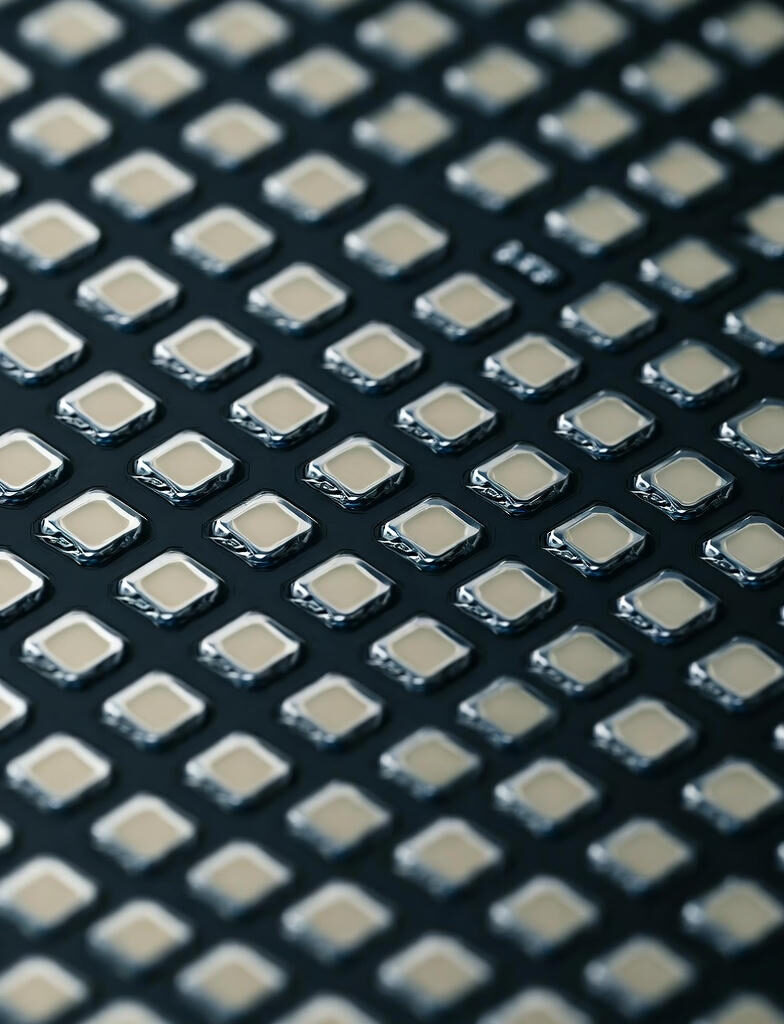
Let’s strip away the jargon. At its heart, a microLED display is a screen made of millions of microscopic, independent light-emitting diodes (LEDs). Each of these tiny LEDs—smaller than a speck of dust—is its own pixel. They are self-emissive, meaning each one can turn completely on or off, and produce its own red, green, or blue light, without the need for a backlight or color filters.
A Simple Analogy: Think of a massive stadium scoreboard. You see it composed of thousands of small red, green, and blue bulbs that work together to create a giant image. Now, imagine shrinking those bulbs down to the size of a bacterium, packing millions of them into your smartphone screen, and making them incredibly energy-efficient. That, in essence, is the monumental achievement of microLED technology. It’s the power and purity of inorganic LEDs, scaled down to an almost unimaginable degree, creating what many call the “holy grail” of display technology.
How MicroLED is Made: A Marvel of Semiconductor Innovation
The manufacturing process of microLEDs is where the real magic—and the current challenge—lies. It’s a breathtaking feat of precision engineering. Here’s a simplified breakdown:
-
Epitaxial Growth: It all starts on semiconductor wafers (like Gallium Nitride for blue/green or Gallium Arsenide for red). Under intense heat and specific gases, ultra-pure crystalline layers are grown. This is where the light-emitting material is created.
-
Photolithography and Etching: This is the same process used to make computer chips. The wafer is coated with a light-sensitive material, and using precise masks, the pattern for millions of micro-scale LEDs is etched onto it, creating individual diode structures.
-
Mass Transfer – The Billion-Pixel Puzzle: This is the most critical and difficult step. The microscopic LEDs, now on their source wafer, must be picked up and placed onto the final display substrate (the backplane) with absolute precision. We’re talking about transferring millions or even billions of these tiny chips for a single large display. Companies are developing ingenious methods using stamp-like tools, lasers, and fluidic assembly to achieve this fine-pitch LED placement at mind-boggling speeds and accuracy. A single misplaced pixel can lead to a dead spot on the screen.
-
Testing and Repair: Given the scale, defective pixels are a reality. Advanced systems scan the assembled display to find and fix faulty LEDs, often by zapping them with a laser and replacing them—a testament to the incredible tolerances required.
This complex display manufacturing process is why microLEDs are currently so expensive, but it’s also the foundation for their unparalleled performance.
Key Features and Advantages: Why MicroLED is a Game-Changer
The painstaking manufacturing process pays off in a display that seems to defy physics. Here’s what makes microLED technology so extraordinary:
-
Unmatched Brightness and Optical Efficiency: microLEDs are inherently bright. We’re talking about potential peak brightness levels of 5,000 nits and beyond (a top-tier OLED manages around 1,500 nits for brief periods). This makes them perfectly viewable in direct sunlight and unlocks a new dimension of HDR performance. Their ultra-brightness comes with incredible optical efficiency, meaning more light is emitted from the power consumed.
-
Infinite Contrast and Perfect Blacks: Like OLED, each microLED pixel is self-emissive and can be switched off individually. This means in a dark scene, the black parts of the screen are truly, perfectly black—resulting in an infinite contrast ratio. The contrast ratio enhancement is absolute.
-
Extreme Energy Efficiency: This is a silent killer feature. Because there’s no need for a power-hungry backlight (like in LCDs) and because the inorganic LEDs are incredibly efficient light producers, microLED displays consume significantly less power for the same brightness level. Imagine a TV that delivers a brighter, more vibrant picture than anything you’ve seen, yet sips power. This is a huge win for sustainability in electronics and for battery life in portable devices.
-
Blazing Fast Response Time and Lifespan: microLEDs can turn on and off in nanoseconds, eliminating motion blur completely. Furthermore, being made of inorganic materials, they are not susceptible to the burn-in that can plague OLEDs. Their display longevity is measured in decades, not years, ensuring display durability that is virtually unmatched.
-
Modularity and New Form Factors: Since a microLED screen is essentially an array of tiny modules, it can be made in virtually any size or shape. Want a TV that covers your entire wall? Seamlessly. A circular screen for your smartwatch? A transparent display for your car window? A flexible flexible microLED panel for a rollable phone? microLED makes it all possible, driving true consumer electronics evolution.
MicroLED vs OLED vs MiniLED: The Ultimate Display Showdown
It’s the question on every tech enthusiast’s mind. How does this new contender stack up against the reigning champion and the popular contender? Let’s break it down.
| Feature | MicroLED | OLED | Mini-LED (LCD) |
|---|---|---|---|
| Technology | Self-emissive Inorganic Micro-LEDs | Self-emissive Organic Compounds | LED Backlight with Dimming Zones |
| Contrast Ratio | Infinite (Perfect Blacks) | Infinite (Perfect Blacks) | Very High (But Blooming) |
| Peak Brightness | Extremely High (5,000+ nits) | High ( ~1,500 nits) | High ( ~2,000+ nits) |
| Power Consumption | Very Low | Medium | Medium to High |
| Response Time | Nanoseconds (Fastest) | Microseconds (Extremely Fast) | Milliseconds (Good) |
| Risk of Burn-in | None | Possible | None |
| Lifespan | Extremely Long | Long (Organic decay) | Long |
| Viewing Angles | Excellent | Excellent | Good |
| Manufacturing Cost | Extremely High | High | Moderate |
| Form Factors | Any size, Transparent, Flexible | Flexible, Thin | Standard Sizes |
The Verdict: While OLED delivers a phenomenal picture today, microLED vs OLED is a battle where microLED wins on pure performance specs. It offers OLED’s perfect blacks but adds extreme brightness, superior energy efficiency, and zero risk of burn-in. Mini-LED is a brilliant enhancement to LCD technology but remains a backlit technology, unable to achieve the per-pixel precision of its self-emissive rivals.
Applications: Beyond the Living Room TV
The potential of microLED technology stretches far beyond just dazzling home theaters. Its unique properties are set to transform entire industries.
-
Consumer Electronics: Imagine an Apple Watch with an always-on, sunlight-readable display that barely affects battery life. Or a Samsung Galaxy Fold with a flexible microLED panel that’s virtually indestructible. This is the future for smartphones, wearables, and TVs.
-
AR/VR and Wearable Displays: For true immersive experience displays in AR/VR, you need tiny, incredibly dense, and ultra-bright screens. microLED’s pixel precision and ultra-brightness are perfect for creating high-resolution AR VR displays and future smart glasses displays that can overlay digital information seamlessly onto the real world, even on a bright day.
-
Automotive: The future of driving is digital dashboards and Head-Up Displays (HUDs). Automotive HUD displays using microLED can project critical information onto the windshield with crystal clarity, regardless of lighting conditions. Their ruggedness and long life are perfect for the harsh environment of a vehicle.
-
Aerospace: In the cockpit, reliability is non-negotiable. Aerospace cockpit screens need to be bright, reliable, and have a long lifespan. microLED checks all these boxes, providing pilots with critical flight data on ultra-durable screens.
-
Medical: For a surgeon analyzing an X-ray or MRI, color accuracy and detail are paramount. Medical imaging displays based on microLED can offer exceptional contrast and resolution, helping to reveal details that might be missed on conventional screens.
Why Tech Giants Are Betting Big on MicroLED
The industry’s heavyweights are in an arms race to master this technology, investing billions in R&D. Here’s why:
-
Apple: Apple’s pursuit is legendary. They’ve been acquiring microLED firms and running a secretive lab for years. The goal is clear: to free themselves from reliance on suppliers like Samsung and LG for top-tier displays. We can expect microLED to debut first on the Apple Watch Ultra, creating an unrivalled wearable display that becomes a key selling point, before eventually migrating to iPhones and beyond. [Backlink 1: A report on Apple’s microLED endeavors from Bloomberg.]
-
Samsung: Samsung has been the most aggressive in commercializing the tech, at least for high-end TVs. Their “The Wall” lineup is a modular microLED TV that showcases the technology’s mind-bending scalability and performance. They are pushing the boundaries of display resolution innovation and setting the premium benchmark for the industry. [Backlink 2: Samsung’s official MicroLED page.]
-
Meta (Facebook): For Meta’s vision of the metaverse, the display is the gateway. They need the best possible AR VR displays to make their virtual worlds compelling and comfortable. Meta is heavily investing in research to shrink microLEDs further, aiming for the miniature pixel arrays needed for next-generation VR headsets and AR glasses.
This massive investment is a clear signal: microLED is not a niche experiment; it’s the strategic future of visual interfaces.
Current Challenges & The Road to Mainstream
So, if it’s so perfect, why don’t we all have one? The path to microLED commercialization is paved with formidable hurdles.
-
The Mass Transfer Problem: As mentioned, placing billions of microscopic LEDs perfectly is astronomically difficult and slow. Improving the yield and speed of this process is the single biggest challenge facing the display supply chain.
-
Cost: The complex processes and low initial yields make microLEDs prohibitively expensive. Samsung’s 110-inch The Wall costs over $150,000. This is a technology for the 0.1% for now.
-
Color Consistency: Achieving perfect, uniform color from millions of separate red, green, and blue micro-LEDs, especially with the red LEDs being historically harder to produce efficiently, is a significant semiconductor innovation challenge.
Future Outlook: When Will MicroLED Become Mainstream?
The journey will be gradual, not a sudden big bang.
-
2024-2026 (Niche Luxury): We will see microLEDs solidify their position in ultra-premium, large-format TVs and specialized commercial installations (like corporate lobbies and broadcast studios).
-
2027-2030 (Trickle-Down to High-End): The technology will likely make its debut in high-end smartwatches and specialized AR/VR hardware. Costs will begin to fall as manufacturing processes mature.
-
2030+ (The Mainstream Dream): With continued display research and breakthroughs in mass production, we can expect microLED to finally hit the mainstream consumer market, becoming a viable option for flagship smartphones and televisions for the average buyer.
The timeline hinges on solving the manufacturing puzzle. But the industry’s commitment suggests it’s a matter of “when,” not “if.”
Top 5 Research & Industry Backlinks
To dive deeper into the science and business of microLED, explore these authoritative resources:
-
Yole Développement: A leading market research firm providing in-depth analysis on the microLED supply chain and technology trends.
-
Society for Information Display (SID): The premier professional organization for the display industry, hosting symposia where the latest microLED research is presented.
-
LG Display Newsroom: Follow one of the world’s display giants as they develop and potentially commercialize their own microLED solutions.
-
CNET Display Tech Reviews: A great consumer-facing source for hands-on reviews of the latest microLED TVs as they hit the market.
-
ScienceDaily – Technology: For cutting-edge academic research breakthroughs in micro-scale LEDs and related semiconductor innovation.
Conclusion: The Inevitable Visual Revolution
MicroLED is more than just the next step in display technology; it’s a paradigm shift. It promises a world where screens are brighter than reality, more efficient than our wildest dreams, and as durable as the devices they power. They will blend into our environments, reshape our interfaces with technology, and deliver ultra-realistic visuals that blur the line between the digital and the physical.
The road ahead is steep, but the destination is clear. We are witnessing the slow, deliberate birth of a technology that will one day be in everything, from the glasses on our faces to the walls of our homes. The future of displays is not just bright; it’s microscopic, modular, and magnificent. The visual revolution is coming, one tiny LED at a time.
FAQ Section
1. Is microLED better than OLED?
On pure technical specifications, yes. microLED matches OLED’s perfect blacks and viewing angles but surpasses it in brightness, energy efficiency, response time, and lifespan, with no risk of burn-in. However, OLED is a mature, affordable technology today, while microLED is still in its early, expensive stages.
2. Can you buy a microLED TV now?
Yes, but they are extremely expensive and aimed at the luxury/commercial market. Samsung’s “The Wall” is a prime example, with prices starting in the tens of thousands of dollars for a 100+ inch screen.
3. What is the main problem with microLED?
The primary challenge is manufacturing. The “mass transfer” process of placing millions of microscopic LEDs onto a screen with perfect accuracy is incredibly difficult and expensive, leading to high costs and low production yields.
4. Will microLED replace OLED?
Most experts believe so, in the long term (likely 5-10 years). Just as OLED is replacing LCD in the premium market, microLED is expected to eventually become the dominant premium technology once manufacturing costs come down sufficiently.
5. Is QLED the same as microLED?
No, they are fundamentally different. QLED is an enhanced version of LCD technology that uses a Quantum Dot filter to improve color and brightness, but it still relies on a backlight. microLED is a self-emissive technology where each pixel produces its own light.
6. Are there any microLED smartphones or smartwatches?
Not yet available to consumers. However, Apple and others are widely reported to be developing microLED displays for future models of the Apple Watch and eventually iPhones, as it offers significant benefits for battery life and outdoor visibility.
7. What does “emissive display technology” mean?
It means each pixel on the screen produces its own light. This is in contrast to “transmissive” displays like LCD, which use a separate backlight and block light with liquid crystals to create an image. microLED and OLED are both emissive technologies.
Call-to-Action
What display are you staring at right now? After reading this, does it feel a little… last-generation? The future of screens is being written in labs today. What application of microLED excites you the most? The thought of a transparent display in your car, or an indestructible, rollable tablet? Share this article with a fellow tech-lover and start the conversation! The visual revolution is a shared experience—let’s dream about it together.
Your point of view caught my eye and was very interesting. Thanks. I have a question for you.
Your article helped me a lot, is there any more related content? Thanks!