
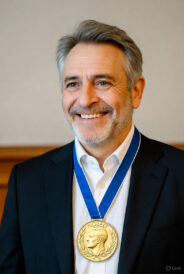
Nobel Prize 2025 for Medicine: Groundbreaking Discovery Transforming Immune Health
Nobel Prize for Medicine :
The 2025Nobel Prize for Medicine has been awarded to Mary E. Brunkow, Fred Ramsdell, and Shimon Sakaguchi for their pioneering discoveries related to peripheral immune tolerance — a discovery that has revolutionized our understanding of how the immune system protects the body without attacking it from within. This breakthrough has set the stage for innovative therapies in autoimmune diseases, cancer treatment, and transplantation medicine. This article dives deep into the science behind their discovery, the impact on medicine, and why this Nobel Prize is a monumental milestone for global health.
Introduction: Nobel Prize 2025(Nobel Prize for Medicine )
– Pioneering Immune Tolerance
The immune system is a complex and powerful defense network that protects us from countless pathogens every day. However, its power comes with risks — without careful regulation, it can mistakenly attack the body’s own tissues, causing autoimmune diseases such as type 1 diabetes, multiple sclerosis, and rheumatoid arthritis. The 2025 Nobel laureates have illuminated one of the body’s most crucial defense mechanisms that prevent such attacks: peripheral immune tolerance.
Their research discovered a special class of immune cells called regulatory T cells (Tregs) and identified the genetic regulatory pathways that control their development and function, particularly focusing on the FOXP3 gene. These “security guards” keep the immune system in check, ensuring it attacks invaders without harming the self. This monumental finding has unlocked new medical frontiers, offering hope for treating previously incurable diseases.
What is Peripheral Immune Tolerance?
(Nobel Prize for Medicine )
To understand the Nobel-winning discovery, it’s essential to grasp the concept of immune tolerance. The immune system must distinguish between harmful pathogens and the body’s own cells to avoid self-damage. While central tolerance (which occurs in the thymus) eliminates some self-reactive immune cells early on, peripheral immune tolerance acts as a second line of defense, regulating immune cells that have escaped this process.
The three laureates revealed that regulatory T cells play a vital role by suppressing immune cells that mistakenly target the body’s healthy tissues. These Tregs maintain immune homeostasis and prevent autoimmune reactions, forming a critical balancing system.
Meet the Nobel Laureates: Mary E. Brunkow, Fred Ramsdell, and Shimon Sakaguchi(Nobel Prize for Medicine )
-
Mary E. Brunkow (Institute for Systems Biology, Seattle) was pivotal in identifying FOXP3, the gene critical for regulatory T cell function.
-
Fred Ramsdell (Sonoma Biotherapeutics, San Francisco) contributed key insights into the molecular mechanisms regulating immune tolerance.
-
Shimon Sakaguchi (Osaka University, Japan) made the first seminal discovery of regulatory T cells in 1995, challenging the established belief that immune tolerance develops only through thymic elimination.
Together, their work reshaped the understanding of immune regulation and opened new paths for therapeutic interventions.
How This Discovery Transformed Medicine
(Nobel Prize for Medicine )
Discovering regulatory T cells has had profound implications:
-
Autoimmune diseases: Autoimmune diseases occur when the body’s immune system mistakenly attacks its own healthy cells instead of protecting them from harmful invaders like bacteria or viruses.
In Short:
-
Cause: The immune system fails to recognize self-tissues and produces autoantibodies.
-
Examples: Rheumatoid arthritis, lupus, type 1 diabetes, multiple sclerosis, psoriasis.
-
Symptoms: Fatigue, joint pain, swelling, skin rashes, and organ inflammation.
-
Treatment: Focuses on controlling the immune response using immunosuppressants, steroids, or biologic drugs, along with lifestyle and dietary management.
In essence, autoimmune diseases are the body turning against itself, and modern medicine aims to rebalance or retrain the immune system to restore normal function.
-
-
Therapeutic strategies now aim to enhance Treg function to suppress unwanted immune attacks that cause autoimmune conditions.
-
Cancer immunotherapy:Cancer immunotherapy is a modern treatment that helps the body’s own immune system fight cancer cells more effectively.
In Short:(Nobel Prize for Medicine )
-
Concept: Boosts or restores the natural defenses of the immune system to identify and destroy cancer cells.
-
Types:
-
Checkpoint inhibitors (e.g., Keytruda, Opdivo) – release immune “brakes.”
-
CAR T-cell therapy – reprograms immune cells to target tumors.
-
Cancer vaccines – train the immune system to recognize cancer antigens.
-
Monoclonal antibodies – mark cancer cells for immune attack.
-
-
Benefits: Can cause long-lasting remission with fewer side effects than chemotherapy.
-
Challenges: Not all cancers respond, and some cause immune-related side effects.
Simply put, cancer immunotherapy turns your immune system into a living weapon against cancer, offering new hope for long-term survival.
-
-
Modulating Tregs can improve the immune system’s ability to attack tumors, making treatments more effective.
-
Transplant medicine:Transplant medicine focuses on replacing a failing organ or tissue (like the heart, kidney, liver, or bone marrow) with a healthy one from a donor to save or improve a patient’s life.
In Short:
-
Purpose: Restore normal organ function in patients with end-stage organ failure.
-
Types: Organ transplants (heart, liver, kidney, lung), tissue transplants, and stem cell or bone marrow transplants.
-
Key Step: Preventing organ rejection using immunosuppressant drugs (like cyclosporine or tacrolimus).
-
Challenges: Donor shortages, rejection risks, and infection due to weakened immunity.
-
Advances: Use of artificial organs, xenotransplantation (animal-to-human), and 3D-printed tissues are emerging solutions.
In simple terms, transplant medicine gives a second life by replacing damaged organs with healthy ones — while managing the immune system to ensure the body accepts the new organ.
-
-
Better control of immune tolerance helps reduce transplant rejection and the need for lifelong immunosuppression.
Clinical trials are underway to develop treatments derived from these insights, heralding a new era in precision medicine.
Example: Tregs in Action(Nobel Prize for Medicine )
Imagine a patient with multiple sclerosis, an autoimmune disease where immune cells attack nerve cells in the brain. With the understanding of Tregs, scientists are developing therapies to boost these regulatory T cells in patients, aiming to calm the immune system’s harmful attacks without compromising its ability to fight infections. This targeted therapy contrasts with current broad immunosuppressants that weaken overall immunity.
Frequently Asked Questions (FAQ)
Q1: What is the Nobel Prize in Physiology or Medicine?
A1: It is one of the six Nobel Prizes established by Alfred Nobel’s will in 1895 to honor outstanding discoveries in medicine that have profoundly benefited humanity.
Q2: Why is the 2025 Nobel Prize important?
A2: It highlights fundamental discoveries in immune regulation, offering insights that are expected to transform treatments for autoimmune diseases, cancers, and transplantation.
Q3: What are regulatory T cells?
A3: Regulatory T cells are specialized immune cells that prevent the immune system from attacking the body’s own tissues, maintaining immune balance.
Q4: How will this discovery affect future treatments?
A4: It enables targeted therapies that modulate immune responses, providing hope for more effective and safer treatments for various immune-related diseases.
Q5: Who received the Nobel Prize in Medicine in 2025?
A5: Mary E. Brunkow, Fred Ramsdell, and Shimon Sakaguchi were jointly awarded for their discovery concerning peripheral immune tolerance.
Thanks for sharing. I read many of your blog posts, cool, your blog is very good.