
Table of Contents(Personalized Medicine for a Healthier Future)
1. Introduction to Personalized Medicine for a Healthier Future
Imagine visiting your doctor and instead of receiving a “one-size-fits-all” prescription, you are given a treatment plan designed specifically for you—based on your genes, environment, and lifestyle. This is not science fiction—it is personalized medicine, also known as precision medicine.
Healthcare is evolving from reactive to proactive, shifting focus from treating illness to preventing it. Personalized medicine ensures that your treatment works better, has fewer side effects, and gives you the best chance of recovery.
2. Why Personalized Medicine for a Healthier Future Matters
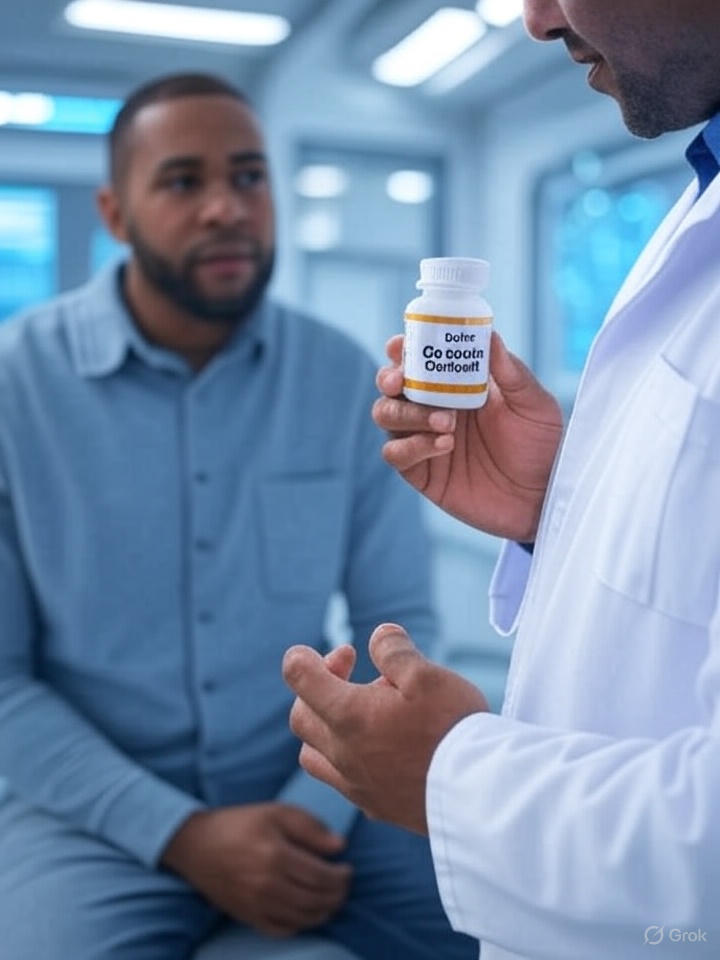
Traditional medicine treats patients with a general approach. For example, if 100 people have diabetes, most will receive similar medications. But not all bodies react the same way. Some patients may improve quickly, while others may struggle with side effects.
Personalized medicine solves this problem. It looks deeper—into your genetic code, environment, and lifestyle—to design the right treatment. This means fewer trial-and-error prescriptions, reduced costs, and better results.
👉 Example: Two cancer patients with the same diagnosis may respond very differently to chemotherapy. Personalized medicine ensures each receives the drug most effective for their unique genetic profile.
3. The Science Behind Personalized Medicine
At its core, personalized medicine uses information about your DNA, proteins, and metabolism to guide treatment.
- Genomics: Studies your genes and how they influence disease.
- Proteomics: Focuses on proteins that impact your health.
- Pharmacogenomics: Determines how your body responds to drugs.
- Lifestyle & Environment: Factors like diet, exercise, and exposure to toxins also play a role.
Together, these components create a complete health blueprint that helps doctors make smarter choices.
4. Key Components of Personalized Medicine
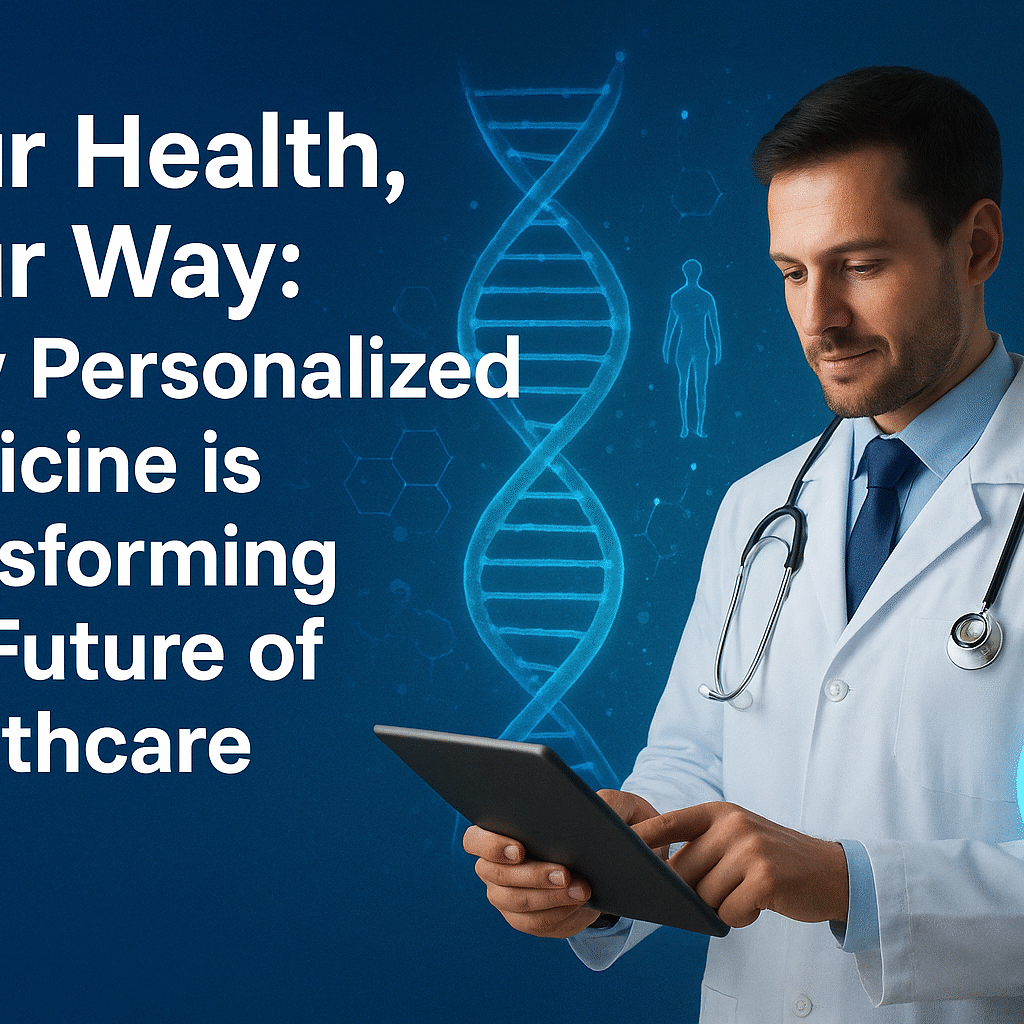
- Genomic Testing – Identifies mutations that cause disease.
- AI and Big Data – Analyzes health records to predict risks.
- Wearable Technology – Tracks real-time health data.
- Biomarkers – Biological signals used to predict response to treatment.
- Patient Involvement – Encourages active participation in care.
👉 Example: Companies like 23andMe provide genetic testing that helps you understand your ancestry and health risks, giving insight into what conditions you might develop.
5. Benefits of Personalized Medicine
- More Effective Treatments: Reduces guesswork in prescriptions.
- Fewer Side Effects: Drugs designed for your body’s chemistry.
- Preventive Healthcare: Identifies diseases before they develop.
- Cost-Effective: Fewer failed treatments mean lower medical bills.
- Empowered Patients: Patients become active decision-makers.
6. Real-Life Examples of Personalized Medicine
- Herceptin for Breast Cancer: Works only for patients with HER2-positive breast cancer.
- Warfarin (Blood Thinner): Doses are customized based on genes affecting metabolism.
- Cystic Fibrosis Treatment: Drugs like Ivacaftor target specific gene mutations.
- Pharmacogenomic Testing: Used in psychiatry to find the right antidepressant.
7. Personalized Medicine in Cancer Care
Cancer treatment is one of the greatest successes of personalized medicine. Instead of giving every patient the same chemotherapy, doctors use genetic profiling of tumors.
👉 Example: In lung cancer, a drug like Gefitinib is effective only for patients with mutations in the EGFR gene. Without personalized medicine, these patients would undergo unnecessary chemotherapy.
8. Personalized Medicine in Mental Health
Mental health treatments often involve years of trial and error. Personalized medicine changes this by analyzing genes that affect brain chemistry.
👉 Example: Pharmacogenomic testing helps psychiatrists choose the right antidepressant, avoiding months of ineffective therapy.
9. Role of AI and Big Data
AI plays a crucial role in analyzing huge amounts of genetic and health data. Machine learning algorithms can identify patterns that predict disease risk or drug response.
👉 Example: IBM Watson has been used in oncology to suggest treatment options based on patient data.
10. Personalized Medicine vs. Traditional Medicine
| Traditional Medicine | Personalized Medicine |
|---|---|
| One-size-fits-all approach | Tailored to each patient |
| Trial-and-error prescriptions | Data-driven treatments |
| Focus on treatment | Focus on prevention |
| Generic guidelines | Individualized care |
11. Ethical Considerations and Challenges
While promising, personalized medicine raises important concerns:
- Data Privacy: Who controls your genetic data?
- Cost & Accessibility: Can everyone afford it?
- Ethical Use: Preventing discrimination based on genetic information.
Governments and healthcare providers must ensure fair access and protect patient rights.
12. Future of Personalized Medicine
The future looks exciting. With advances in AI, nanotechnology, and gene editing (like CRISPR), personalized medicine will only become more precise. Soon, doctors may be able to:
- Predict diseases years before symptoms appear.
- Design medicines tailored to each patient’s DNA.
- Use 3D bioprinting to create organs for transplant.
13. Case Studies & Success Stories
- Case 1: Emily Whitehead (Leukemia Patient) – Treated with CAR-T cell therapy, a personalized cancer treatment, and is now cancer-free.
- Case 2: Diabetes Prevention – Genetic testing helps identify high-risk individuals who can prevent diabetes with lifestyle changes.
- Case 3: Heart Disease – Personalized cholesterol-lowering drugs (PCSK9 inhibitors) save lives when statins fail.
14. How Personalized Medicine Affects You
Whether you realize it or not, personalized medicine is already shaping your healthcare. If you’ve ever taken a genetic test, used a fitness tracker, or received a targeted treatment, you’ve experienced it firsthand.
It empowers patients by giving them knowledge, control, and confidence over their health.
15. Conclusion: Building a Healthier Future
Personalized medicine is not just a medical innovation—it’s a healthcare revolution. It ensures that treatments are safer, more effective, and patient-centered.
By embracing this approach, society moves towards a future where diseases are prevented rather than treated, and healthcare truly revolves around the individual.
The future of medicine is personal—and it’s built around you.
Your point of view caught my eye and was very interesting. Thanks. I have a question for you. https://www.binance.com/en-NG/register?ref=YY80CKRN
Your point of view caught my eye and was very interesting. Thanks. I have a question for you. https://www.binance.com/ar/register?ref=PORL8W0Z
Reading your article helped me a lot and I agree with you. But I still have some doubts, can you clarify for me? I’ll keep an eye out for your answers. https://accounts.binance.info/en-NG/register?ref=YY80CKRN
Your article helped me a lot, is there any more related content? Thanks!
Thanks for sharing. I read many of your blog posts, cool, your blog is very good.