
Imagine Sarah. Sarah is a rockstar. As a Senior Software Engineer, she closes tickets faster than anyone on the team, her code is elegant, and she’s the “go-to” person for every technical emergency. Naturally, when the Lead Developer position opens up, the company doesn’t hesitate. They promote her.
Six months later, the team’s morale is cratering. Projects are lagging, Sarah is working 80-hour weeks, and she’s micromanaging her former peers into oblivion. The “rockstar” is now a bottleneck.
This isn’t just bad luck; it’s a classic psychological phenomenon. Why does success suddenly turn into a struggle the moment we climb the ladder? Why do the traits that made us “the best” at the bottom make us “the worst” at the top?
In this kritiinfo.com guide, we’ll dive into the Peter Principle, explore the hidden reasons behind leadership failure, and learn how you—and your organisation—can break the cycle of “incompetent” promotions.
What is the Peter Principle?
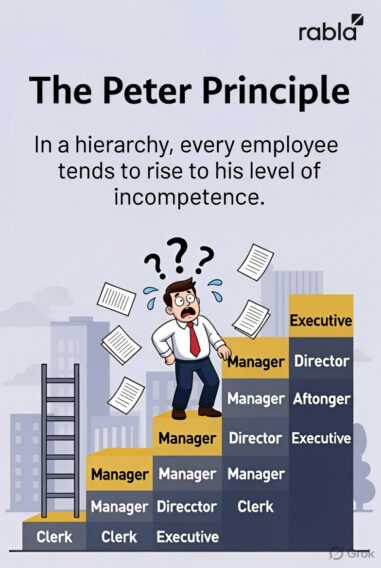
In 1969, Dr Laurence J. Peter released a book that seemed like a satire but was actually a chillingly accurate observation of corporate life. He formulated the Peter Principle, which states:
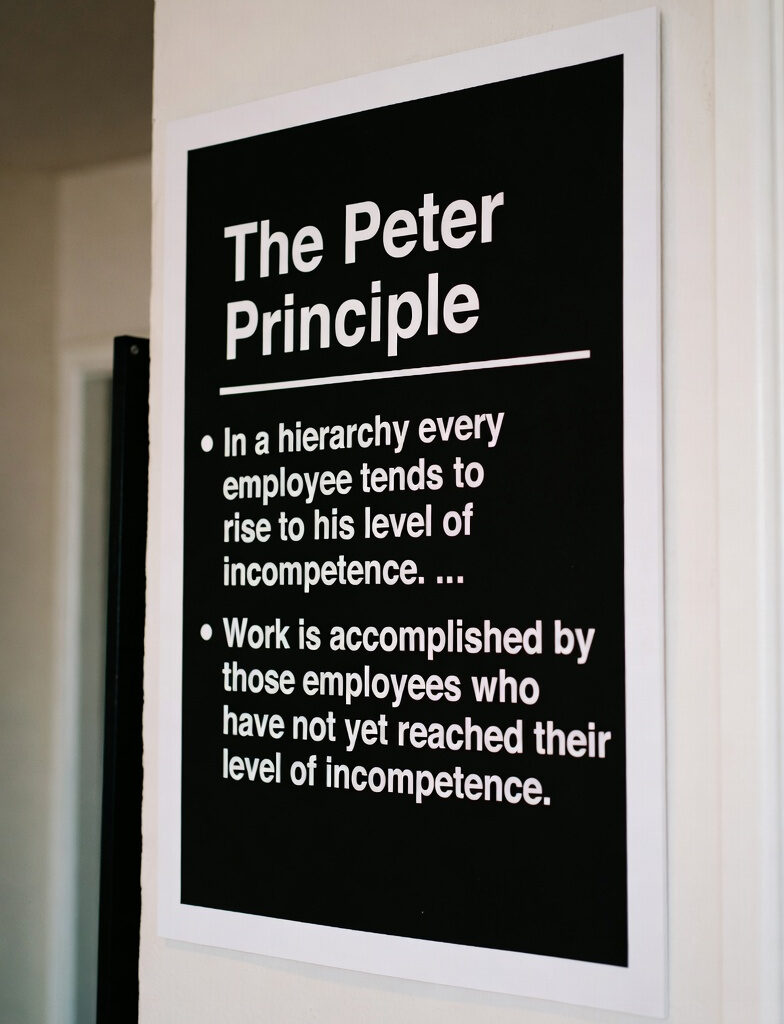
“In a hierarchy, every employee tends to rise to his level of incompetence.”
In simple terms, companies promote people based on their performance in their current role, rather than their suitability for the next one. If you are a great salesperson, you get promoted to Sales Manager. If you’re a great manager, you get promoted to Director. This continues until you reach a role where you are no longer “great.” At that point, you stop being promoted, and you stay in that role—becoming a permanent fixture of incompetence.
According to research shared by Investopedia, this creates a “bottleneck of mediocrity” where the very structure of career growth ensures that eventually, every position is filled by someone who can’t quite handle the job.
7 Shocking Reasons Why Top Performers Fail After Promotion
1. The Brutal Skill Mismatch
The most common reason for failure is the assumption that technical brilliance translates to managerial success. A top-tier accountant deals with numbers; a Finance Manager deals with people, politics, and budgets. These are entirely different “muscles.” When a performer is promoted, they often find their “toolbox” is empty for the new challenges they face.
2. The “Imposter” Overconfidence
Success breeds a dangerous form of “experience bias.” Because a top performer has won so many times before, they assume their intuition is infallible. This overconfidence prevents them from being students of their new craft. Instead of learning how to lead, they try to “brute force” their way through the new role using old methods that no longer apply.
3. Lack of Formal Leadership Training
Companies often treat promotion like a reward rather than a career pivot. We give the “Best Employee” a new title and a bigger paycheck, but provide zero training on how to handle conflict, give feedback, or build a roadmap. Without a foundation, even the most talented individual will crumble under the weight of organisational complexity.
4. The Delegation Death Trap
Top performers are usually “doers.” They take pride in their individual output. When promoted, they struggle to let go. They feel that if they don’t do the work themselves, it won’t be done “right.” This leads to micromanagement, which suffocates the team and leads to the manager burning out because they are still trying to do their old job and their new one.
5. The Emotional Intelligence (EQ) Gap
Being a solo contributor requires IQ; being a leader requires EQ. A Harvard Business Review study highlights that the #1 reason for executive derailment is a lack of empathy and poor relationship management. Top performers can sometimes be “lone wolves” who find the emotional needs of a team frustrating or “illogical.”
6. Paralysing Performance Anxiety
When you’ve been the “best” for years, the fear of finally being “average” is terrifying. This pressure leads to “leadership failure” because the new manager becomes risk-averse. They stop innovating because they are too busy trying not to make a mistake in their new, highly visible position.
7. The Death of Strategic Thinking
Individual contributors focus on the How and the Now. Leaders must focus on the Why and the Future. Many top performers fail because they cannot stop looking at the ground. They are so busy fixing immediate problems that they fail to see the iceberg the ship is heading toward.
Real-Life Case Study: From Sales King to Management Chaos
The Subject: Mark, a top-performing real estate agent. The Situation: Mark broke every sales record in his firm for three years straight. He was promoted to Regional Sales Director, overseeing 15 agents. The Struggle: Mark expected his agents to work exactly like him—14-hour days, aggressive cold-calling, and no weekends. He didn’t understand why his “motivation” speeches (which were mostly just him bragging about his old wins) weren’t working. The Result: Within nine months, his three best agents quit, citing a “toxic and unsupportive environment.” Mark’s region dropped to the bottom of the company rankings. The Peter Principle Connection: Mark reached his “level of incompetence” because his skill was selling, not coaching others to sell.
How to Avoid the Peter Principle Trap
If you are eyeing a promotion—or if you’ve recently been moved up—here is how you stay competent:
- Audit Your New Role: Before accepting, ask: “What are the three most important skills for this role?” If they are vastly different from your current skills, start upskilling now.
- Seek a Mentor Outside Your Chain: Find someone who is already successful in the role you want and ask them about the “hidden” parts of the job (the meetings, the politics, the emotional labour).
- Embrace the “Beginner’s Mind”: Acknowledge that you are starting from zero in many ways. Read books on leadership failure and management to build a new mental framework.
- Prioritise Delegation: Make it your goal to become “unnecessary” for the day-to-day tasks. If your team can’t function without you, you aren’t leading; you’re hovering.
The Role of Organizations: A Better Way to Promote
HR professionals and leaders need to stop using promotions as “participation trophies.” Here’s how to fix the system:
- Dual Career Tracks: Create a path for “Individual Contributors” to get raises and status without having to manage people. Not every genius coder wants to be a manager.
- Trial Periods: Use “acting” roles or project-based leadership to see how someone handles the pressure before making the title permanent.
- Reverse the Stigma: If a promotion isn’t working, allow a “graceful demotion” or a pivot back to a technical role without the person feeling like they failed.
Conclusion
A promotion is not just a reward for past work; it is a “hiring decision” for a brand-new career. The Peter Principle is a warning that yesterday’s trophies don’t guarantee tomorrow’s triumphs.
If you’re a top performer, don’t just aim for the “next level”—aim for the right level. True success isn’t about how high you climb; it’s about how much impact you make where you land.
Are you ready for your next move, or are you just chasing a title? Let’s talk about it in the comments below.
FAQ Section
What is the Peter Principle in simple terms? It is the theory that people in a hierarchy keep getting promoted based on their current success until they reach a job they aren’t good at, where they then stay.
Why do good employees fail as managers? Because management requires a completely different skillset (empathy, delegation, strategy) than the technical skills that made them a good employee (execution, speed, accuracy).
Can the Peter Principle be avoided? Yes, through self-awareness, targeted leadership training, and by organisations offering “expert” career paths that don’t involve managing people.
How can companies prevent poor promotions? By evaluating candidates based on the requirements of the future role and providing transition coaching during the first 90 days.
Is promotion always a sign of success? Not necessarily. A promotion into a role that doesn’t fit your strengths can lead to burnout, decreased job satisfaction, and eventual career stagnation.