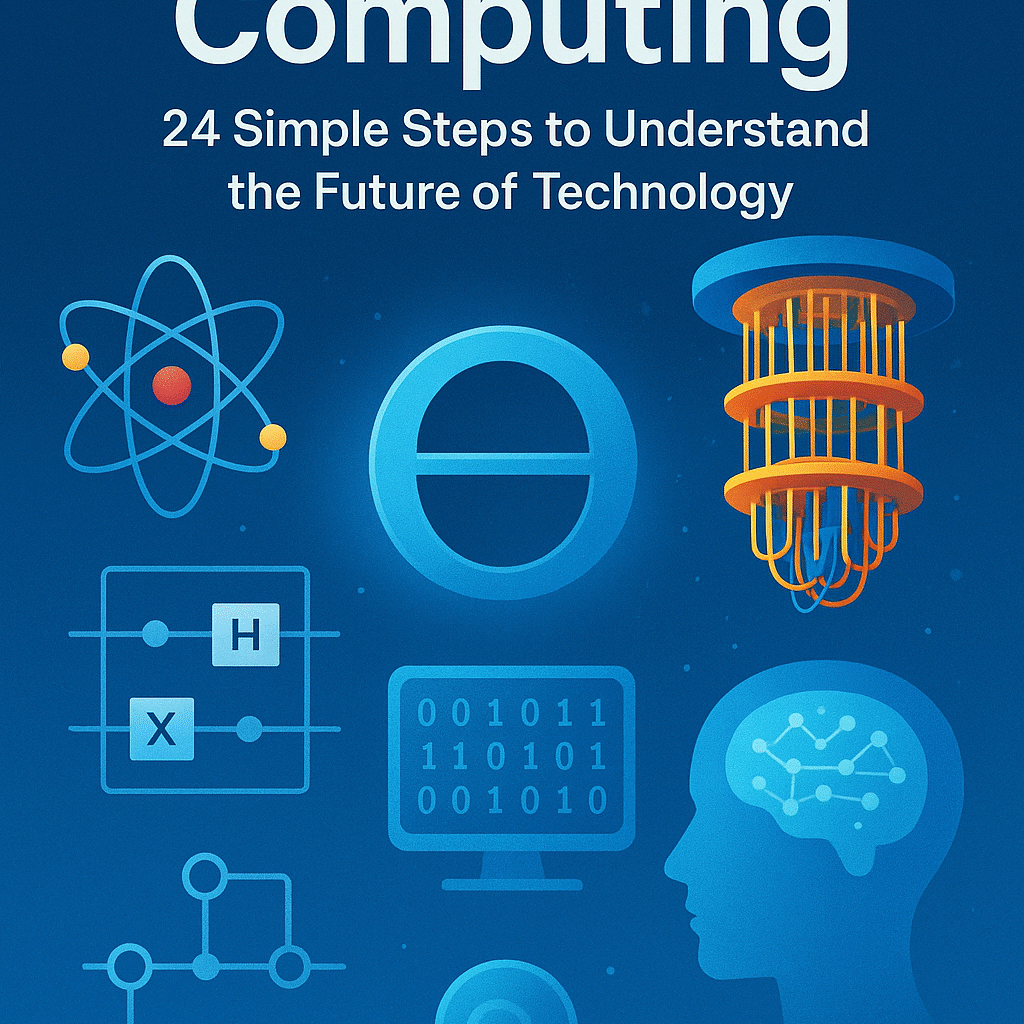
Quantum Computing in 24 Steps: A Simple Global Guide.–Quantum computing is no longer just a buzzword whispered in physics labs—it’s becoming a global revolution. From Silicon Valley to Singapore, governments, tech giants, and researchers are racing to unlock its potential. Unlike classical computers that power your phone or laptop, quantum computers use the strange rules of quantum mechanics to solve problems that even supercomputers struggle with.
But what does that really mean for everyday people? Will it change jobs, medicine, security, and business? Let’s break down the complex world of quantum computing into 24 simple steps that anyone can understand.
Step 1: What is Quantum Computing?
Quantum computing is a type of computing that uses the principles of quantum mechanics—the science that explains how tiny particles like electrons and photons behave. Instead of working with bits (0s and 1s), quantum computers work with qubits, which can be 0, 1, or both at the same time. This ability makes them incredibly powerful.
Classical computers: Process data in a step-by-step, logical order. Great for everyday tasks like browsing or editing photos.
Quantum computers: Process data in parallel, exploring many possibilities at once. Perfect for solving extremely complex problems like climate modeling, cryptography, and drug discovery.
Qubits are the heart of quantum computing. Imagine a coin spinning in the air—it’s not just heads or tails, but a mix of both until it lands. That’s how qubits work: they can exist in multiple states at once, thanks to a quantum property called superposition.
Step 4: Superposition Explained Simply
Superposition means a qubit can be 0 and 1 simultaneously. This allows quantum computers to perform multiple calculations at the same time, unlike classical computers that do one after another.
Step 5: Entanglement—The Quantum Connection
[Quantum Computing in 24 Steps: A Simple Global Guide]
Entanglement is another quantum phenomenon where two qubits become linked, no matter how far apart they are. Changing one instantly affects the other. This property makes quantum computers incredibly powerful for transmitting and processing information.
Step 6: Quantum Gates—The Brain of Quantum Computing
“Quantum Computing – Exploring the Future of Technology in 24 Simple Steps”
Just as classical computers use logic gates (AND, OR, NOT), quantum computers use quantum gates to manipulate qubits. These gates allow scientists to design algorithms that classical computers simply cannot handle.
Step 7: Why Do We Need Quantum Computing?
[Quantum Computing in 24 Steps: A Simple Global Guide]
The world is facing problems too big for classical computers alone:
Discovering new medicines faster
Solving climate change models
Securing digital data against hackers
Optimizing global supply chains
Quantum computing offers solutions where traditional computing falls short.
Step 8: Quantum Computing in Real Life
It’s not just theory anymore. Companies and governments are already experimenting:
IBM, Google, Microsoft are building quantum machines.
Banks like JPMorgan Chase use quantum algorithms for fraud detection.
Pharmaceutical companies like Roche are exploring drug discovery with quantum tools.
Step 9: The Global Quantum Race
[Quantum Computing in 24 Steps: A Simple Global Guide]
Just like the space race of the 20th century, the 21st century has a quantum race. The U.S., China, Europe, Japan, and India are investing billions in research. Whoever leads in quantum computing may dominate the future economy.
Step 10: Quantum vs Supercomputers
Supercomputers are extremely powerful, but they still work classically. In 2019, Google announced its quantum computer Sycamore performed a calculation in 200 seconds that would take the world’s fastest supercomputer 10,000 years. That’s the scale of difference we’re talking about.
Step 11: How Secure Is Quantum Computing?
[Quantum Computing in 24 Steps: A Simple Global Guide]
Quantum computing is a double-edged sword:
It can break today’s encryption systems, threatening cybersecurity.
It can also create quantum-safe encryption, making future systems nearly unhackable.
Step 12: Quantum Computing in Healthcare
Quantum algorithms can simulate molecular structures with unmatched precision. This means:
Faster drug development
Personalized medicine
Better disease modeling
Imagine finding a cure for cancer years faster because of quantum simulations.
Step 13: Quantum Computing and Artificial Intelligence (AI)
[Quantum Computing in 24 Steps: A Simple Global Guide]
Quantum computing could supercharge AI by making it process massive datasets much faster. This means smarter chatbots, better medical imaging, and more accurate predictions in almost every field.
Step 14: Quantum Cloud Computing
You don’t need to buy a quantum computer (which can cost millions). Companies like IBM and Amazon now offer quantum computing on the cloud, letting researchers and businesses access it worldwide.
Step 15: Challenges of Quantum Computing
Despite its promise, quantum computing faces big hurdles:
Qubits are unstable and fragile.
Requires extremely low temperatures.
Still expensive and experimental.
Step 16: The Role of Governments
[Quantum Computing in 24 Steps: A Simple Global Guide]
Countries are treating quantum computing as a matter of national security. Programs like U.S. National Quantum Initiative and China’s Quantum Manhattan Project highlight the global importance.
Step 17: Quantum Computing in Business
Companies are already exploring use cases:
Logistics: Optimizing delivery routes.
Finance: Detecting fraud, managing risks.
Energy: Modeling new battery technologies.
Step 18: Everyday Impact in the Future
Quantum computing might:
Speed up internet searches
Create smarter personal assistants
Make weather forecasts highly accurate
Allow instant language translation
Step 19: Quantum and Climate Change
Modeling Earth’s climate involves enormous calculations. Quantum computers could simulate climate systems with precision, helping scientists design better strategies to combat global warming.
Step 20: Quantum Startups Around the World
Beyond big tech, startups like Rigetti (USA), D-Wave (Canada), IonQ (USA), and Zapata (UK) are making global breakthroughs. Even India has launched quantum initiatives to support homegrown startups.
Step 21: Quantum Myths Busted
Myth: Quantum computers will replace classical computers.
Truth: They will work together—quantum for specialized problems, classical for daily tasks.
Step 22: Job Opportunities in Quantum Computing
The field is creating new careers:
Quantum software engineers
Quantum algorithm designers
Quantum hardware scientists
Data analysts with quantum knowledge
Step 23: The Future of Quantum Computing
Experts predict by 2035–2040, quantum computers may move from labs into practical industries worldwide. The Quantum Internet—an ultra-secure communication network—is already being tested in countries like China and the Netherlands.
Step 24: Final Thoughts—Why Quantum Matters Globally
Quantum computing isn’t just about faster machines—it’s about reshaping humanity’s future. From curing diseases to saving the planet, quantum has the potential to bring a new digital revolution. But with great power comes great responsibility. The global community must work together to use quantum for good.
Conclusion
Quantum computing may sound complicated, but at its heart, it’s a story of human innovation. By understanding these 24 simple steps, you now have a clear view of how this technology works, why it matters, and how it could affect your life.
The quantum future is not decades away—it’s unfolding right now.
Post Views:159
4 thoughts on “Master Quantum Computing in 24 Steps: A Simple Global Guide to the Future Potential of Technology”
Thank you for your sharing. I am worried that I lack creative ideas. It is your article that makes me full of hope. Thank you. But, I have a question, can you help me?
Thank you for your sharing. I am worried that I lack creative ideas. It is your article that makes me full of hope. Thank you. But, I have a question, can you help me?


Thank you for your sharing. I am worried that I lack creative ideas. It is your article that makes me full of hope. Thank you. But, I have a question, can you help me?
your question pls?
Thank you for your sharing. I am worried that I lack creative ideas. It is your article that makes me full of hope. Thank you. But, I have a question, can you help me?
Thanks for sharing. I read many of your blog posts, cool, your blog is very good.