
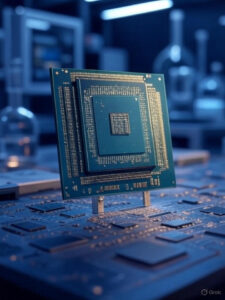
In the rapidly evolving world of technology, few concepts have sparked as much excitement and optimism as neuromorphic computing. It represents not just another step in the evolution of computing, but a giant leap toward creating machines that think, learn, and adapt like humans. While traditional computing systems have brought us far, neuromorphic computing is reshaping the boundaries of what is possible, offering the promise of smarter, faster, and more energy-efficient solutions to some of the most complex challenges of our time.
Unlike conventional architectures, which rely heavily on sequential processing, neuromorphic computing mimics the intricate structure and functionality of the human brain. Imagine a computer that does not just calculate but perceives, adapts, and evolves—that is the essence of neuromorphic technology.
In this blog, we’ll dive deep into the fascinating world of neuromorphic computing, explore how it works, its real-life applications, its future potential, and why it is considered a revolutionary force in modern science and technology.
Table of Contents
Understanding Neuromorphic Computing
At its core, neuromorphic computing is inspired by the human brain. The term “neuromorphic” comes from the Greek word “neuro,” meaning “nerve,” and “morphic,” meaning “form” or “shape.” Together, it implies a system modeled after the brain’s neural architecture.
In traditional computing, data is processed sequentially through CPUs and GPUs. While these systems are incredibly powerful, they are limited by bottlenecks in data transfer and energy consumption. On the other hand, neuromorphic computing uses artificial neurons and synapses to transmit information in parallel, just like biological brains do. This design makes it highly efficient, adaptable, and capable of learning in real-time.
Some of the key features of neuromorphic computing include:
- Parallel Processing: Multiple processes occur at once, enabling faster decision-making.
- Low Energy Consumption: Systems consume significantly less power compared to traditional supercomputers.
- Adaptive Learning: Machines can adapt to new inputs without requiring extensive reprogramming.
- Real-Time Processing: Ideal for applications like autonomous vehicles, robotics, and IoT.
Why Neuromorphic Computing Matters
The significance of neuromorphic computing lies in its ability to bridge the gap between artificial intelligence and human intelligence. While today’s AI is powerful, it is often rigid, energy-intensive, and dependent on massive datasets. Neuromorphic systems can process information with minimal power and adapt dynamically, which could revolutionize industries ranging from healthcare to space exploration.
Consider this: the human brain operates at just 20 watts of power, yet it can perform tasks that even the largest supercomputers struggle with. If machines can replicate even a fraction of this efficiency, we could see breakthroughs that transform human life in unimaginable ways.
A Humanized Look at Neuromorphic Computing
One of the most exciting aspects of neuromorphic computing is that it brings machines closer to us—not in a threatening, sci-fi way, but in a supportive and empowering manner. Imagine a medical diagnostic tool that not only scans your body but understands subtle biological signals like a human doctor would. Or picture autonomous vehicles that can react to unexpected road conditions with the reflexes of a skilled driver.
This human-like adaptability is what makes neuromorphic technology stand out. It’s not about replacing humans, but about amplifying human potential.
Part 2: The Science Behind Neuromorphic Computing
To truly appreciate the impact of neuromorphic computing, we must understand the science that makes it possible. This technology is not just a random leap in computing—it is the result of decades of research in neuroscience, artificial intelligence, and semiconductor design.
1. Brain-Inspired Architecture
The human brain has nearly 86 billion neurons, each connected to thousands of others through synapses. These connections allow us to think, learn, remember, and adapt. Neuromorphic computing replicates this by creating artificial neurons and synapses on silicon chips. Instead of rigid instruction sets, these chips communicate using spikes—short electrical pulses, just like neurons in the brain.
2. Spiking Neural Networks (SNNs)
At the heart of neuromorphic systems are spiking neural networks. Unlike traditional neural networks used in deep learning, SNNs are event-driven. They only activate when something happens, making them far more energy-efficient. This means a neuromorphic chip can process visual or auditory data in real time without consuming massive computational power.
3. Hardware Innovations
Tech giants and research institutes are working tirelessly to bring neuromorphic computing into the mainstream. Some remarkable examples include:
- Intel’s Loihi chip, which can simulate millions of neurons and synapses while consuming a fraction of the power required by GPUs.
- IBM’s TrueNorth, a pioneering neuromorphic chip with over one million programmable neurons.
- Research labs across Europe, the U.S., and Asia developing brain-on-chip systems for medical, defense, and industrial applications.
Real-Life Applications of Neuromorphic Computing
What makes neuromorphic computing so fascinating is its wide range of applications that can directly improve human life. Let’s explore a few real-world examples:
1. Healthcare Revolution
In healthcare, neuromorphic systems can analyze brain signals to detect neurological conditions like epilepsy or Alzheimer’s earlier than current diagnostic tools. They can also power prosthetic limbs that respond to neural signals in real time, giving patients natural, life-like control.
2. Smarter Robotics
Robots of the future will no longer act like stiff, pre-programmed machines. With neuromorphic chips, they will be able to adapt to their environment, learn from mistakes, and interact with humans in more intuitive ways. Imagine a household robot that understands emotions, adjusts tone of voice, and predicts needs before you even ask.
3. Autonomous Vehicles
For self-driving cars, real-time decision-making is essential. Neuromorphic computing provides the speed and adaptability needed for vehicles to process visual data instantly, react to sudden changes like pedestrians crossing the street, and make safe, human-like driving decisions.
4. Internet of Things (IoT)
With billions of connected devices, the IoT demands low-power, intelligent computing. Neuromorphic chips make it possible for IoT devices to operate continuously, analyzing data at the edge without draining batteries. Think of smart home devices that learn your habits and adapt naturally.
5. Space Exploration
In space, power is a luxury. Neuromorphic systems could enable spacecraft to analyze vast streams of data from sensors while using minimal energy. For example, a Mars rover with neuromorphic capabilities could adapt to unexpected terrain and carry out missions without constant human input.
Benefits of Neuromorphic Computing
The advantages of neuromorphic computing go far beyond efficiency. Here are some of the most compelling benefits:
- Energy Efficiency – Uses up to 1,000 times less energy than traditional supercomputers.
- Speed & Adaptability – Processes information at lightning speed with human-like flexibility.
- Scalability – Can grow in complexity without exponential increases in power demands.
- Real-Time Processing – Handles massive sensory data instantly, vital for robotics and autonomous systems.
- Closer to Human Intelligence – Bridges the gap between artificial and biological intelligence.
Part 3: Challenges Facing Neuromorphic Computing
While the promise of neuromorphic computing is inspiring, the path forward is not without challenges. Like any revolutionary technology, it faces hurdles in design, adoption, and large-scale implementation.
1. Hardware Complexity
Designing chips that replicate billions of neurons and trillions of synapses is extremely difficult. Unlike traditional processors, neuromorphic chips require unconventional architectures that push the limits of semiconductor engineering. Current prototypes are impressive, but scaling them for commercial use remains a challenge.
2. Standardization Issues
Since neuromorphic systems function differently from CPUs and GPUs, standard programming models don’t exist yet. Developers must learn new paradigms and frameworks, which slows adoption. Building universal tools for neuromorphic platforms is crucial to accelerate progress.
3. Data Compatibility
Much of today’s data infrastructure is built for conventional computing. Integrating neuromorphic chips into existing ecosystems requires redesigning data flows and algorithms, which can be costly and time-consuming.
4. High Research Costs
The research and development of neuromorphic hardware require significant investment. While large companies like Intel, IBM, and Google are pushing forward, smaller firms and startups face funding barriers that could limit innovation in the field.
5. Ethical Concerns
Any technology that brings machines closer to human-like intelligence raises ethical questions. With neuromorphic computing, there are concerns about privacy, surveillance, and the potential misuse of adaptive AI in military or political contexts. Ensuring responsible innovation will be key.
The Future of Neuromorphic Computing
Despite the challenges, the future of neuromorphic computing looks remarkably bright. Experts believe this technology will be at the core of the next computing revolution, much like the shift from vacuum tubes to transistors, or from desktops to cloud computing.
1. Smarter Everyday Devices
In the near future, everyday objects—from smartphones to refrigerators—could have neuromorphic chips. Imagine a phone that understands your mood through voice tone, or a refrigerator that predicts your diet needs and places online orders for groceries before you run out.
2. Breakthroughs in Medicine
Neuromorphic systems could help decode the mysteries of the human brain. For conditions like Parkinson’s disease or depression, real-time neuromorphic models could simulate neural activity, helping doctors personalize treatments more effectively.
3. Human-Machine Collaboration
We’re moving toward a world where machines are not just tools, but partners in creativity and problem-solving. Neuromorphic computers could co-create music, art, or literature by understanding human emotion and aesthetics in ways traditional AI cannot.
4. Sustainable Technology
With growing concerns about climate change, energy-efficient computing is no longer optional. Neuromorphic chips could drastically reduce the carbon footprint of massive data centers, making AI and digital services greener and more sustainable.
A Human-Centered Perspective
At its heart, neuromorphic computing is about more than speed or efficiency—it’s about bringing technology closer to humanity. The ability of machines to learn, adapt, and respond in real time has profound implications for how we live and work.
- In Education: Personalized learning systems could adapt to a child’s pace, strengths, and weaknesses, creating truly individualized teaching methods.
- In Workplaces: Neuromorphic assistants could manage tasks dynamically, reducing stress and freeing up time for creativity.
- In Elder Care: Smart devices could monitor the elderly, detect health anomalies instantly, and provide comfort through natural interactions.
This shift is not about replacing people, but about empowering individuals to focus on meaningful, creative, and human-centric activities while technology takes care of repetitive or highly complex tasks.
Part 4: Case Studies in Neuromorphic Computing
The true measure of any technology lies in its real-world applications. Several groundbreaking projects around the world demonstrate how neuromorphic computing is being tested, refined, and applied across industries.
Case Study 1: Intel Loihi – A Leap Toward Brain-Like Processing
Intel’s Loihi chip has been one of the most widely discussed advancements in the field. Unlike conventional processors, Loihi can self-learn through trial and error, much like the human brain.
- Application: Researchers have used Loihi to test real-time robotic navigation. The chip allows robots to learn routes, avoid obstacles, and adapt to changes in the environment without being explicitly programmed.
- Impact: This technology could transform industries such as logistics and manufacturing, where robots must work alongside humans in dynamic, unpredictable settings.
Case Study 2: IBM TrueNorth – A Million-Neuron Marvel
IBM’s TrueNorth chip was a milestone, boasting over one million programmable neurons and 256 million synapses.
- Application: TrueNorth has been applied to image recognition tasks with remarkable energy efficiency, consuming only a fraction of the power required by traditional GPUs.
- Impact: This innovation demonstrates how neuromorphic computing can drive advancements in AI-powered vision systems, critical for healthcare diagnostics and autonomous vehicles.
Case Study 3: Human Brain Project (Europe)
The Human Brain Project, funded by the European Union, aims to create large-scale neuromorphic platforms that replicate neural functions at unprecedented levels.
- Application: Scientists are using these platforms to simulate brain diseases, test new drugs, and develop next-generation AI models.
- Impact: Beyond computing, this project deepens our understanding of neuroscience, bridging biology and technology.
Case Study 4: DARPA’s SyNAPSE Program (USA)
The U.S. Defense Advanced Research Projects Agency (DARPA) has been investing heavily in neuromorphic computing to enhance national defense.
- Application: The SyNAPSE program focuses on building machines that can process sensory data in real time for battlefield applications, such as identifying threats or navigating drones.
- Impact: Although military in nature, the underlying technology could later influence civilian fields like disaster response and public safety.
Global Research and Development in Neuromorphic Computing
The journey toward widespread adoption of neuromorphic computing is a collaborative global effort.
- United States: Companies like Intel, IBM, and Google are pioneering neuromorphic chip design.
- Europe: The Human Brain Project and universities in Switzerland, Germany, and the UK are making significant strides.
- Asia: Countries like Japan, China, and South Korea are investing in neuromorphic research to power robotics, healthcare, and smart city initiatives.
This global collaboration signals that neuromorphic systems are not just experimental curiosities—they are central to the future of intelligent technology.
The Road Ahead
Looking at the pace of development, experts predict that the next decade will witness the commercial rise of neuromorphic chips. While they may not immediately replace CPUs or GPUs, they will work alongside them, handling tasks where adaptability, low energy consumption, and real-time learning are essential.
Industries most likely to benefit first include:
- Healthcare (for diagnostics and prosthetics)
- Automotive (for safer autonomous driving)
- Defense (for adaptive systems in unpredictable environments)
- Consumer Electronics (for personalized smart devices)
Over time, we may see neuromorphic systems embedded in nearly every device we use, making technology not only faster but more human-friendly.
Part 5: The Human Impact and Future Vision of Neuromorphic Computing
The story of neuromorphic computing is not just about circuits, algorithms, and chips—it is about reshaping the relationship between humans and machines. At its heart, this technology is an attempt to capture the brilliance of the human brain and bring it into the digital world, not to replace us, but to enhance our capabilities.
Empowering Humanity Through Technology
One of the most uplifting aspects of neuromorphic computing is how it empowers ordinary people. Consider a few scenarios:
- Students in rural schools could access AI-driven tutors that adapt to their learning styles, making quality education accessible anywhere.
- Doctors in developing countries could use portable neuromorphic devices to diagnose diseases instantly, saving lives even without advanced medical facilities.
- Elderly individuals could live more independently with intelligent home systems that monitor health, provide companionship, and alert caregivers when necessary.
This human-centered vision reminds us that the ultimate goal of technology is not profit or power, but improving lives on a global scale.
A Bridge Between Artificial and Biological Intelligence
Neuromorphic systems stand at the intersection of two worlds: the biological intelligence of the human brain and the artificial intelligence of machines. By mimicking the way neurons and synapses interact, these systems create a bridge that allows machines to learn, adapt, and respond in ways that feel natural to us.
This bridging capability opens doors to fascinating possibilities:
- Machines that understand emotions and adjust responses to comfort or inspire.
- AI partners that co-create art or music, blending logic with human imagination.
- Medical technologies that simulate entire brain functions, leading to cures for neurological diseases.
The Ethical Responsibility
As with any powerful innovation, the rise of neuromorphic systems comes with responsibility. Developers, governments, and organizations must ensure that this technology is used for ethical, transparent, and inclusive purposes. Protecting privacy, avoiding misuse, and promoting equitable access will determine whether neuromorphic advancements become a blessing for humanity or a tool of inequality.
The good news is that researchers worldwide are increasingly aware of these issues, and many are working to build responsible frameworks alongside the technology itself.
Final Thoughts: A Smarter and Brighter Tomorrow
When we look back at human history, we see that every leap in technology—from the wheel to electricity to the internet—has reshaped the world. Today, we stand at the dawn of another transformation.
Neuromorphic computing is not just a technological breakthrough; it is a revolution in how we think about intelligence itself. By imitating the brain’s efficiency, adaptability, and resilience, this innovation holds the potential to solve problems once thought impossible.
The future it paints is inspiring:
- Smarter healthcare, saving millions of lives.
- Safer autonomous systems, protecting travelers worldwide.
- More sustainable computing, reducing energy consumption globally.
- More human-like AI, making our interactions with machines natural and meaningful.
If nurtured responsibly, neuromorphic systems will help us build a smarter, kinder, and brighter future for generations to come.
Can you be more specific about the content of your article? After reading it, I still have some doubts. Hope you can help me.
Thanks for sharing. I read many of your blog posts, cool, your blog is very good.
Your article helped me a lot, is there any more related content? Thanks!
Thanks for sharing. I read many of your blog posts, cool, your blog is very good.