

7 Revolutionary Ways Synthetic Biology and Gene Editing Are Transforming the Future
Introduction: Life Reimagined Through Biology
Humankind has always sought ways to harness nature—domesticating animals, cultivating crops, creating medicines. But the 21st century marks a radical shift in how we shape life itself. Two fields—synthetic biology and gene editing—are rewriting the rules of biology, promising a new era where we can design, edit, and optimize life the same way we design software and machines.
-
Synthetic biology goes further than genetic engineering. Instead of simply inserting or removing genes, it treats biology like a set of building blocks—designing new organisms with novel capabilities.
-
Gene editing, powered by tools like CRISPR-Cas9, gives scientists precise control over DNA, enabling corrections to genetic errors, enhancements to crops, and innovations in medicine.
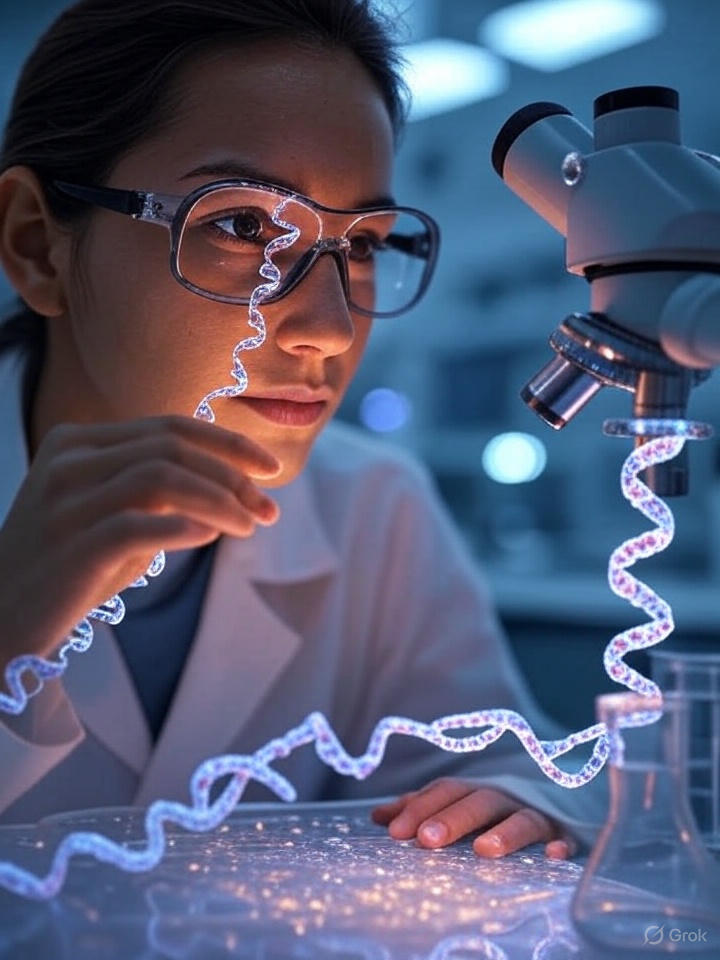
What was once a futuristic dream is now turning into reality, opening doors to cure previously untreatable diseases, boost food security, and tackle global crises like climate change.
This article explores the 7 most powerful impacts of these technologies, along with real-world examples, opportunities, challenges, and the questions we must face as a species.
What is Synthetic Biology?
Synthetic biology (often called SynBio) is the engineering of biology. It blends molecular biology, biotechnology, and computational design to reprogram living cells or even create novel organisms from scratch.
Think of it as building life the way engineers design machines. Scientists use DNA “parts” (promoters, genes, regulatory sequences) the same way engineers use wires, gears, or chips.
Core Features of Synthetic Biology
- Design and Construction: Engineering new biological systems or redesigning existing ones using standardized genetic parts involves creating custom organisms or biological modules with specific functions. This process relies on assembling DNA sequences in a controlled manner, much like building with Lego bricks, to produce predictable outcomes such as enhanced crop resilience or novel medical therapies.
- DNA Synthesis: Creating artificial DNA sequences to introduce specific functions into organisms entails synthesizing custom genetic code in the lab. This allows scientists to design genes that don’t exist in nature, enabling applications like producing insulin in bacteria or engineering microbes to break down pollutants, offering precise control over biological functions.
- Modular Assembly: Building biological circuits or pathways using interchangeable genetic components involves constructing systems where parts like promoters, genes, and terminators can be swapped or combined. This modularity facilitates the creation of complex behaviors, such as oscillating gene expression for synthetic clocks, and simplifies the process of scaling up bioengineering projects.
- Genetic Engineering: Precisely modifying or editing genomes to achieve desired traits or behaviors includes techniques like CRISPR to cut and paste DNA, altering an organism’s characteristics. This can lead to disease-resistant plants, gene therapies for genetic disorders, or the development of organisms with enhanced industrial capabilities.
- Synthetic Pathways: Developing new metabolic or regulatory pathways in organisms for applications like biofuel production or drug synthesis involves redesigning how cells process nutrients or produce compounds. For example, engineers might create a pathway in yeast to produce a new antibiotic or convert biomass into ethanol, expanding the range of biological products.
- Computational Modeling: Using software to simulate and predict the behavior of synthetic biological systems before implementation involves creating digital models to test designs virtually. This helps optimize gene networks, predict potential failures, and reduce experimental costs, ensuring more efficient development of synthetic organisms or therapies.
Example: A team of researchers created a synthetic yeast chromosome by redesigning natural DNA. This yeast not only produced useful molecules but also contained “switches” that allowed scientists to rewire its functions on demand.
What is Gene Editing?
(
Synthetic Biology and Gene Editing )
Gene editing refers to a set of tools that allow scientists to precisely manipulate DNA sequences. Among them, CRISPR-Cas9 revolutionized the field in 2012 by making gene editing faster, cheaper, and more accurate than any previous method.
How CRISPR Works
CRISPR (Clustered Regularly Interspaced Short Palindromic Repeats) works as a gene-editing tool by harnessing a natural bacterial immune system that protects against viruses:
1. **Guide RNA (gRNA) Design**: A custom RNA sequence, known as the guide RNA, is synthesized to complement a specific target DNA sequence within the genome that researchers want to edit. This gRNA is typically 20 nucleotides long and includes a segment that matches the target DNA, ensuring precision. The design process involves selecting a unique target site adjacent to a short DNA sequence called the protospacer adjacent motif (PAM), which is essential for Cas9 recognition.
2. **Cas9 Protein**: The gRNA is complexed with the Cas9 enzyme, a programmable protein derived from bacteria like *Streptococcus pyogenes*. Cas9 functions as molecular scissors, capable of cutting DNA at precise locations when guided by the gRNA. This enzyme has two key domains—HNH and RuvC—that each cleave one strand of the DNA double helix, enabling a clean break.
3. **DNA Targeting**: The Cas9-gRNA complex scans the genome and binds to the target DNA when the gRNA sequence aligns with the complementary DNA strand. The PAM sequence, usually a few nucleotides like “NGG” (where N is any nucleotide), acts as a signal for Cas9 to lock onto the site. This specificity minimizes off-target effects, though careful design is needed to avoid unintended edits.
4. **DNA Cleavage**: Once the target is located, Cas9 introduces a double-strand break in the DNA. This break occurs a few base pairs upstream of the PAM site, creating a blunt-ended cut. The precision of this cleavage is what makes CRISPR a powerful tool for targeted genetic modifications.
5. **Repair Mechanism**: The cell’s natural DNA repair mechanisms then attempt to fix the break. There are two primary pathways:
– **Non-Homologous End Joining (NHEJ)**: This error-prone process rejoins the broken ends, often inserting or deleting small nucleotide sequences. This can disrupt the gene’s function, effectively “knocking it out,” which is useful for studying gene roles or disabling disease-causing mutations.
– **Homology-Directed Repair (HDR)**: If a donor DNA template with homologous sequences is provided, HDR can precisely insert or correct the sequence at the break site. This method is ideal for introducing specific genetic changes, such as adding a functional gene to treat a genetic disorder.
6. **Outcome**: The result depends on the repair pathway and experimental goal. NHEJ might lead to a frameshift mutation, silencing a gene, while HDR can introduce a desired edit, like correcting a mutation in cystic fibrosis or inserting a gene for drought resistance in plants. After editing, the modified cells can be selected and propagated for further study or therapeutic use.
This technology has revolutionized biology by enabling precise, efficient, and scalable genome editing, with applications ranging from developing gene therapies for conditions like sickle cell disease to engineering crops with improved yields. However, challenges like off-target effects and delivery into cells remain areas of active research.
Example of application: A breakthrough clinical trial in 2019 used CRISPR to modify immune cells for a patient with advanced cancer, showing promising survival outcomes.
7 Transformative Ways Synthetic Biology and Gene Editing Are Changing the World
1. Redefining Medicine with Precision Therapies
The healthcare revolution is perhaps the most exciting frontier. Gene editing makes it possible to target diseases at their root—DNA mutations.
Redefining medicine with precision therapies involves tailoring treatments to individual genetic profiles, leveraging tools like CRISPR and synthetic biology. These therapies target specific disease-causing mutations or pathways, offering personalized solutions that minimize side effects compared to traditional broad-spectrum drugs. For example, gene editing can correct genetic defects in conditions like sickle cell disease, while synthetic biology can engineer cells to produce targeted therapies, such as CAR-T cell treatments for cancer. This approach enhances efficacy, reduces trial-and-error in treatment, and promises breakthroughs in managing complex diseases, transforming healthcare with data-driven, patient-specific interventions.
-
Curing genetic disorders: Diseases like sickle cell anemia, muscular dystrophy, and cystic fibrosis are caused by single-gene mutations. CRISPR allows precise correction.
-
Cancer immunotherapy: Synthetic biology enables scientists to reprogram T-cells in the immune system to better recognize and kill cancer cells.
-
Personalized medicine: Instead of one-size-fits-all, treatments could be tailored to an individual’s unique genetic makeup.
Case study: In 2023, researchers cured a teenager’s sickle cell disease by extracting her bone marrow stem cells, editing the faulty gene using CRISPR, and reimplanting the corrected cells. She is now living a symptom-free life.
Impact keyword insert: Synthetic biology in healthcare, CRISPR cancer therapy, personalized medicine.
2. Creating Climate-Resilient Agriculture(
Synthetic Biology and Gene Editing )
The food system faces stress from population growth, soil degradation, and climate change. Thankfully, synthetic biology and gene editing provide powerful solutions.
-
Drought-resistant crops: Scientists have engineered maize and rice that thrive with less water.
-
Nutrient enhancement: A CRISPR-edited tomato enriched with vitamin D is already commercialized in Japan.
-
Reduced reliance on chemicals: Pest-resistant crops reduce pesticide use, improving environmental sustainability.
Example: Gene-edited cassava crops in Africa are resistant to viral diseases that previously destroyed 40% of yields annually, helping boost food security in vulnerable regions.
3. Biofuels and New Sustainable Energy
Synthetic biology is fueling the renewable energy revolution. Engineered microbes can produce bioethanol, biodiesel, and even hydrogen efficiently.
-
Algae-based biofuel: Modified algae strains produce large volumes of oil substitutes.
-
Biomass fermentation: Engineered yeast converts agricultural waste into usable fuel.
Case study: A startup in California engineered bacteria that “eat” carbon dioxide and excrete ethanol, offering a carbon-negative energy alternative.
4. Saving Species and Biodiversity(
Synthetic Biology and Gene Editing )
Conservation biology is beginning to embrace gene editing.
-
Strengthening endangered species: Scientists can add disease-resistance genes into vulnerable species like amphibians affected by fungal infections.
-
De-extinction: Projects are exploring bringing back species like the woolly mammoth or passenger pigeon.
While controversial, such tools might tip the balance in preventing mass extinctions driven by climate change.
5. Longevity and Human Enhancement(
Synthetic Biology and Gene Editing )
Science fiction meets science reality as synthetic biology begins addressing human aging.
-
Telomerase activation: By editing genes that regulate telomeres (the “end caps” of chromosomes linked with aging), scientists aim to slow cellular aging.
-
Muscle and brain function: Potential bio-based therapies could delay age-related cognitive decline or muscle loss.
While human trials are preliminary, the anti-aging biotech industry is already worth billions.
6. Healing the Planet with Bioremediation(
Synthetic Biology and Gene Editing )
Synthetic organisms can act as eco-cleaners.
-
Microbes engineered to consume plastic waste in oceans.
-
Bacteria designed to absorb atmospheric carbon dioxide.
-
Enzymes programmed to detoxify heavy metals in polluted soils.
Example: In 2020, a team engineered bacteria that naturally degrade polyethylene terephthalate (PET), one of the most common plastics, offering a scalable recycling solution.
7. Revolutionizing Industrial Manufacturing
Industries from fashion to pharmaceuticals are adopting synthetic biology to move toward sustainable processes.
-
Synthetic silk: Companies like Bolt Threads produce spider silk fibers without using spiders.
-
Pharmaceutical production: Engineered yeast now produces artemisinin, a crucial malaria drug, faster and more cheaply.
-
Bioplastics & fragrances: Microbes are producing materials that traditionally required resource-heavy extraction from plants or petroleum.
This represents a new era of bio-based industries and a move toward a circular economy.
Ethical Challenges and Future Debates
While the benefits are immense, society must navigate delicate issues:
-
Biosafety: Could engineered organisms accidentally disrupt ecosystems?
-
Bioethics: Is it ethical to enhance humans or revive extinct species?
-
Equity: Will only wealthy countries access cures and bio-technologies?
Regulatory frameworks, open science, and global agreements will decide whether synthetic biology is used responsibly.
Future Scenario: Biology Becomes the New Digital Revolution
We can think of synthetic biology as the next computing revolution. If DNA is code, then cells are machines, and biological “apps” can be designed to tackle healthcare, food, and energy challenges.
Much like how the Internet reshaped economies, SynBio and gene editing could reshape human civilization.
Predictions for 2035–2050:
-
Digital bio-design tools allow anyone to prototype genetic circuits from home (similar to coding apps today).
-
Gene therapies replace antibiotics as mainstream treatments.
-
Synthetic “living materials” replace plastics in common use.
-
Entire industries run on biology-driven systems that are cleaner, smarter, and circular.
FAQs on Synthetic Biology and Gene Editing
Q1: Is synthetic biology safe for human health?
Current regulations require strict checks. While risks exist, safety protocols and lab standards ensure controlled use.
Q2: Is gene editing already used on humans?
Yes, clinical trials are ongoing, especially for blood and immune disorders. Some therapies have received regulatory approval.
Q3: Can these technologies feed the world?
Yes. Gene-edited crops and synthetic food production could help feed 10+ billion people sustainably.
Q4: Are there religious or cultural objections?
Many communities raise ethical questions about “creating life.” Open discussion and cultural sensitivity remain important.
Q5: Will AI and synthetic biology work together?
Absolutely. AI models already accelerate genome design and predict outcomes, making bioengineering faster and more accurate.
Conclusion: A Healthier, Smarter, Sustainable Future
Synthetic biology and gene editing present one of the biggest leaps forward in human history. From curing diseases to protecting nature and driving sustainable industries, these innovations promise a bold, positive future.
While we must face complex ethical and safety challenges, the question isn’t whether these technologies will transform our world—it’s how we will choose to guide them. By embracing responsibility, collaboration, and innovation, we stand at the threshold of what could be humanity’s most impactful scientific revolution
Can you be more specific about the content of your article? After reading it, I still have some doubts. Hope you can help me. https://accounts.binance.info/es-MX/register-person?ref=GJY4VW8W
Thank you for your sharing. I am worried that I lack creative ideas. It is your article that makes me full of hope. Thank you. But, I have a question, can you help me?
Can you be more specific about the content of your article? After reading it, I still have some doubts. Hope you can help me. https://www.binance.info/en-ZA/register?ref=B4EPR6J0
Thanks for sharing. I read many of your blog posts, cool, your blog is very good.