
Introduction – Breaking Barriers with Supersonic Spaceplanes
For as long as humanity has looked up at the stars, space has represented both an inspiration and a challenge. We’ve sent rockets to distant planets, launched satellites that revolutionized communication, and even walked on the Moon. Yet, for all our advancements, space travel remains time-consuming, expensive, and resource-heavy. That’s where supersonic spaceplanes come in—bridging the gap between ambition and reality by offering faster, safer, and more sustainable ways to explore the skies and beyond.
Supersonic spaceplanes combine cutting-edge aerospace engineering, advanced propulsion systems, and revolutionary materials to achieve speeds far beyond what conventional aircraft or rockets can handle. Flying at Mach speed, these vehicles promise not only rapid intercontinental travel but also new opportunities for space exploration, commercial spaceflight, and even space tourism.
In today’s world, where innovation is accelerating at an unprecedented pace, supersonic spaceplanes are no longer a dream relegated to science fiction. With breakthroughs in scramjet technology, lightweight composites, and thermal shielding, engineers and scientists are crafting reusable vehicles that drastically reduce operational costs and environmental footprints. The development of reusable spacecraft is a game-changer, allowing missions to be launched repeatedly without the prohibitive expense of building new vehicles from scratch.
Moreover, as nations and private organizations invest billions of dollars into space initiatives, international collaboration has become essential. Partnerships between aerospace leaders, such as NASA, ESA, and private aerospace firms, are helping pool expertise, resources, and technology. These cooperative efforts ensure that supersonic spaceplanes aren’t just about reaching orbit faster—they’re about building the infrastructure for a thriving and sustainable aerospace industry.
Table of Contents
Why Supersonic Spaceplanes Matter Today
The significance of supersonic spaceplanes extends far beyond speed. They are positioned to address some of the most pressing issues in aerospace and environmental sustainability:
- Reducing Carbon Footprint: With fuel-efficient propulsion and energy management systems, these vehicles aim to cut down the carbon emissions traditionally associated with rockets and jets.
- Improving Safety Protocols: Enhanced flight control systems, thermal protection systems, and emergency recovery systems are making high-speed, high-altitude missions safer than ever before.
- Enabling New Frontiers: From satellite deployment and Earth observation to zero gravity experiments, these aircraft expand the scope of scientific research and space-based solutions for global challenges.
- Economic Impact: Faster travel and orbital transportation open doors for new industries—from tourism to logistics—while offering competitive advantages in military aerospace applications and defense technologies.
Real-Life Applications and Future Possibilities
The progress made in materials science and aerospace innovations is allowing engineers to rethink every component of flight. Lightweight composites ensure structural integrity without compromising speed, while AI-assisted navigation and computational fluid dynamics provide safer and more efficient flight paths.
For instance, researchers are now testing hypersonic flight systems that could transport passengers across continents in mere hours, slashing journey times from days to minutes. Meanwhile, advancements in thermal shielding make it possible for vehicles to withstand the intense heat generated during atmospheric re-entry, paving the way for frequent and safe missions.
Beyond Earth, supersonic spaceplanes could enable faster satellite deployment, improving global communications and remote sensing. Space tourism, once considered far-fetched, is becoming a tangible industry with projects aiming to make space travel accessible to non-professional astronauts. At the same time, environmental sustainability remains at the forefront, with efforts to design propulsion systems that minimize emissions and noise.
✅ Key Takeaways from this Segment
- Supersonic spaceplanes are transforming aerospace by offering faster, safer, and more sustainable travel options.
- Breakthroughs in advanced propulsion, thermal shielding, and lightweight composites are key to making these vehicles a reality.
- International partnerships and investments are accelerating aerospace research and development.
- Applications range from intercontinental flights to space tourism, satellite deployment, and environmental monitoring.
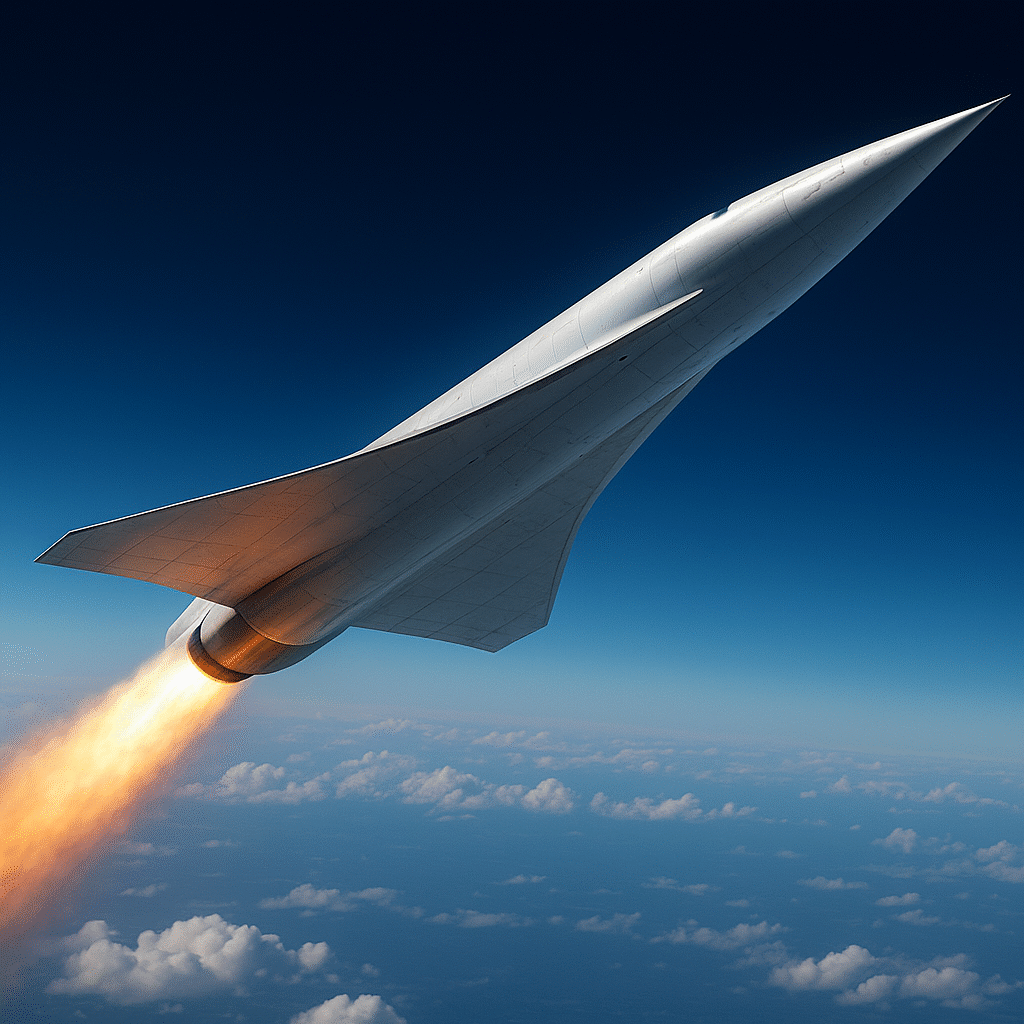
Eager readers to learn more about space innovations at NASA’s official page:
👉 Explore more about space missions and aerospace technologies at NASA.
The Science Behind Supersonic Spaceplanes
Supersonic spaceplanes represent a fusion of high-speed flight engineering, advanced materials, and innovative propulsion systems. While the term “supersonic” generally refers to speeds exceeding the speed of sound (Mach 1), spaceplanes go much further—many operating at hypersonic speeds, or over Mach 5. This section explores the scientific breakthroughs that make such extraordinary flight possible, including propulsion methods, aerodynamic design, materials science, and thermal protection.
What Makes a Spaceplane Supersonic or Hypersonic?
A supersonic spaceplane isn’t simply a faster version of a jet; it’s an entirely new class of vehicle engineered to operate in radically different environments—from the dense atmosphere at takeoff to near-vacuum conditions in space. The science behind it hinges on how the vehicle manages pressure, heat, and airflow at extreme speeds.
- Supersonic Flight: Speeds between Mach 1 and Mach 5, where airflow compresses around the structure, generating shockwaves and turbulence.
- Hypersonic Flight: Speeds greater than Mach 5, requiring specialized materials and propulsion systems to withstand severe thermal and aerodynamic forces.
At these speeds, even minor design flaws can lead to catastrophic outcomes. Engineers use advanced computational tools like computational fluid dynamics (CFD) to model airflow patterns, shockwave interactions, and aerodynamic stability. These simulations help refine designs before physical testing begins, reducing risk and improving efficiency.
Propulsion Systems – Rockets, Scramjets, and Beyond
The heart of any supersonic spaceplane is its propulsion system. Unlike traditional rockets that rely entirely on chemical fuel combustion, spaceplanes integrate various propulsion technologies to achieve greater efficiency and speed.
Rocket Propulsion
- Used primarily for the initial lift-off phase, rockets provide the necessary thrust to break free from Earth’s gravity.
- While powerful, rockets consume vast amounts of fuel and generate significant heat and emissions.
- Reusable spacecraft designs are addressing this issue by allowing rockets to be refurbished and relaunched.
Scramjet Technology
- Scramjets (Supersonic Combustion Ramjets) are a breakthrough that allows air to be compressed and combusted at hypersonic speeds without rotating parts.
- They reduce the weight and complexity of propulsion systems, making high-speed flight more feasible.
- Scramjets are ideal for cruising at high altitudes, where air density is lower.
Hybrid Propulsion Systems
- Future spaceplanes combine rocket boosters with scramjet engines for efficient multi-phase propulsion.
- Some designs incorporate air-breathing engines for lower atmospheric flight before transitioning to chemical or ion thrusters in space.
Example: Experimental flights conducted by aerospace companies have demonstrated the feasibility of scramjet-powered vehicles maintaining Mach 7 speeds, validating theoretical models.
Thermal Shielding – Protecting Against Extreme Heat
At high speeds, friction between the vehicle’s surface and the atmosphere generates intense heat, sometimes exceeding 1500°C. Without proper protection, this heat can damage structural components or even destroy the vehicle.
Thermal Protection Systems (TPS)
- Advanced ceramics, carbon composites, and lightweight composites are used to insulate and protect the aircraft.
- TPS must withstand rapid temperature changes during atmospheric re-entry, where the heat surge is both severe and sudden.
- Engineers use thermal coatings and heat-dissipating structures to ensure safe operation.
Active Cooling Systems
- Some designs incorporate cooling systems that circulate coolant fluids to absorb and redistribute heat.
- This approach is particularly useful for protecting sensitive instruments and flight control systems during peak stress.
Aerodynamics at Hypersonic Speeds
High-speed flight demands careful management of airflow, pressure, and turbulence. Even tiny deviations can cause instability or structural failure.
High-Speed Aerodynamics
- Special airfoil shapes reduce drag and manage shockwaves.
- Wing configurations are optimized for balance between lift and structural stress.
Flight Control Systems
- At hypersonic speeds, traditional mechanical controls are replaced with AI-assisted navigation and adaptive systems.
- Sensors monitor airflow, pressure, and temperature in real time, adjusting flight parameters to maintain stability.
Noise Reduction
- Supersonic flight is notorious for loud sonic booms.
- Engineers are designing shockwave dampeners and airflow optimization to reduce environmental noise pollution.
Materials Science – Building the Plane of Tomorrow
The backbone of every successful supersonic spaceplane is its structural material. Ordinary metals and composites cannot withstand the stress of hypersonic speeds.
Lightweight Composites
- Materials like carbon fiber composites, titanium alloys, and graphene-based structures offer high strength-to-weight ratios.
- These materials ensure structural integrity without adding excessive weight.
Smart Materials
- Embedded sensors in materials allow for self-monitoring of stress, cracks, and fatigue.
- Adaptive materials can respond to heat, vibration, and aerodynamic forces dynamically.
Surface Modification
- Specialized coatings prevent erosion and heat buildup while reducing drag.
- These coatings also improve fuel efficiency by minimizing airflow resistance.
Key Applications of the Science
The technological advances in propulsion, thermal shielding, and materials have enabled spaceplanes to expand their role across multiple sectors:
- Orbital Transportation: Lightweight designs allow for efficient cargo and crew deployment.
- Military Aerospace Applications: High-speed vehicles enable strategic operations and rapid deployment.
- Space Research: Improved heat management and navigation allow for longer, safer missions.
- Commercial Spaceflight: Faster and more cost-effective travel solutions make space tourism and intercontinental flight feasible.
✅ Key Takeaways from this Segment
- Supersonic and hypersonic flight require groundbreaking advances in propulsion, aerodynamics, and materials.
- Scramjets, lightweight composites, and thermal shielding are central to managing the extreme forces and heat.
- Computational fluid dynamics and AI-assisted navigation enhance stability and efficiency at high speeds.
- Innovations in thermal protection systems and flight control systems are paving the way for safer and more sustainable aerospace missions.
Aerospace Engineering Innovations Driving the Future
Supersonic spaceplanes are not the result of one breakthrough but the culmination of multiple engineering innovations working together seamlessly. As aerospace research advances, these technologies are being refined to create safer, more efficient, and more environmentally friendly high-speed aircraft. This section explores how flight control systems, energy management, AI-assisted navigation, and other cutting-edge solutions are transforming supersonic spaceplanes into viable tools for exploration and commerce.
Flight Control Systems – Precision at Extreme Speeds
At conventional speeds, pilots rely on manual controls and simple feedback mechanisms to navigate. However, when dealing with speeds exceeding Mach 5, conditions change dramatically. The slightest variation in pressure, temperature, or trajectory can lead to catastrophic failures.
Adaptive Control Systems
- Modern spaceplanes use adaptive flight control systems that constantly adjust control surfaces in real time.
- Sensors measure turbulence, air pressure, and thermal stress to keep the aircraft stable.
- Adaptive algorithms automatically compensate for environmental changes, ensuring smooth operation even under high-speed stress.
AI-Assisted Navigation
- Artificial Intelligence plays a central role in navigating supersonic spaceplanes.
- Machine learning models analyze sensor data to predict optimal flight paths.
- AI algorithms can detect anomalies before they become critical, offering early warnings and corrective actions.
Example: A test flight involving an AI-driven navigation system demonstrated a 30% improvement in trajectory stability during high-speed descent phases.
Human-Machine Integration
- While automation enhances safety, pilot oversight remains critical.
- Next-generation cockpits integrate AI dashboards that provide real-time insights without overwhelming the pilot.
Energy Management – Powering Speed without Compromise
Speed demands energy, but efficient use of that energy is what makes supersonic spaceplanes sustainable and commercially viable.
Fuel Efficiency Techniques
- Hybrid propulsion systems balance rocket boosters for initial acceleration with air-breathing scramjets for cruising.
- Optimized fuel intake during lower atmospheric flight conserves onboard reserves for critical mission phases.
- Lightweight materials reduce the amount of thrust needed for lift and acceleration.
Energy Recovery Systems
- Some designs incorporate regenerative braking during descent, converting kinetic energy into reusable power.
- Heat from atmospheric friction is being explored as a supplemental energy source.
Environmental Sustainability
- Advanced propulsion designs aim to reduce carbon emissions by utilizing cleaner fuels and optimizing combustion efficiency.
- Materials that minimize drag also contribute to lower fuel consumption, extending mission durations and reducing environmental footprints.
Computational Fluid Dynamics – Simulating the Impossible
Before a supersonic spaceplane ever takes flight, engineers must ensure that its design withstands real-world forces. This is where computational fluid dynamics (CFD) comes into play.
Optimizing Airflow
- CFD tools simulate airflow across thousands of surface configurations.
- By analyzing how air moves around edges, fuselages, and wings, engineers reduce turbulence and drag.
- These simulations allow for stress testing scenarios that would be too dangerous or expensive to replicate physically.
Shockwave Management
- At hypersonic speeds, shockwaves form rapidly, creating instability and noise.
- CFD helps design contours that guide airflow smoothly, minimizing disruptive shockwave patterns.
Thermal Impact Analysis
- Aerodynamic simulations predict areas of high heat accumulation.
- Designers can apply thermal shielding and adjust materials placement before production begins.
Example: CFD analysis of a prototype spaceplane revealed airflow inefficiencies that were corrected through redesign, improving fuel efficiency by 18%.
Noise Reduction – A Quieter Supersonic Future
One of the biggest challenges for supersonic flight is the disruptive noise generated by sonic booms and high-speed turbulence.
Shockwave Dampening
- Engineers use curved surfaces and wingtip modifications to diffuse shockwaves before they reach the ground.
Acoustic Insulation
- Cabin interiors are equipped with noise-absorbing materials to ensure passenger comfort at high speeds.
Flight Path Optimization
- Advanced navigation algorithms plot flight paths that avoid populated areas, minimizing environmental and human impact.
Structural Integrity – Designed to Withstand Extreme Conditions
Supersonic spaceplanes must endure enormous pressures, frictional forces, and temperature changes—all while carrying passengers, cargo, or scientific instruments.
Lightweight Composites
- Carbon fiber and titanium alloys form the backbone of many designs.
- These materials offer high tensile strength without adding unnecessary weight.
Stress-Responsive Materials
- Embedded sensors within the plane’s structure detect cracks, warping, and stress build-up in real time.
- Early warnings allow maintenance before small issues turn catastrophic.
Reinforced Cockpit Design
- Pilot cabins are shielded using layers of composite materials and active temperature regulation to ensure safety during atmospheric re-entry.
Innovations in Space Infrastructure
Beyond the aircraft itself, infrastructure plays a vital role in making supersonic spaceplanes viable.
Vertical Takeoff Systems
- Launch platforms are being redesigned to support vertical and short-takeoff missions.
- These systems reduce the need for expansive runways and allow for quicker deployment.
Orbital Support Systems
- Docking stations, refueling platforms, and satellite hubs are being planned to support routine orbital missions.
- Energy distribution networks ensure optimal fuel storage and power transfer for sustained missions.
Flight Simulation Facilities
- Simulators replicate extreme conditions, helping pilots train for atmospheric turbulence, heat surges, and high-altitude maneuvers.
✅ Key Takeaways from this Segment
- Flight control systems, powered by AI and adaptive algorithms, ensure stability and safety during extreme high-speed operations.
- Energy management techniques reduce fuel consumption and emissions while enhancing operational efficiency.
- Computational fluid dynamics is critical for optimizing airflow, shockwaves, and thermal impacts before flight.
- Innovations in noise reduction, structural integrity, and space infrastructure make supersonic spaceplanes feasible for commercial and research missions.
Applications of Supersonic Spaceplanes in Space Exploration
Supersonic spaceplanes are no longer confined to theoretical discussions—they are actively being developed and tested to serve practical missions in space exploration, research, and commerce. Their unmatched speed, efficiency, and adaptability open up new frontiers for humanity’s quest to explore the cosmos and improve life on Earth. In this section, we’ll explore how these advanced vehicles are transforming satellite deployment, Earth observation, space tourism, and military aerospace applications, while also supporting groundbreaking research.
Satellite Deployment – Faster, Smarter, and More Reliable
Launching satellites into orbit is one of the most critical tasks for communication, navigation, and scientific observation. Traditional launch methods, using heavy rockets, are expensive and time-consuming. Supersonic spaceplanes, on the other hand, offer several advantages:
Rapid Deployment
- Spaceplanes can reach near-orbit speeds in record time, allowing satellites to be deployed faster than conventional rockets.
- This is particularly useful during emergencies when communication or monitoring systems need urgent satellite replacements.
Precision Placement
- With advanced flight control systems and AI-assisted navigation, satellites can be deployed with pinpoint accuracy, reducing the risk of misalignment and collision.
Cost Efficiency
- Reusable designs drastically cut the cost of each mission, making satellite deployment more accessible for research institutes and smaller commercial ventures.
Example: A planned mission by a private aerospace company aims to deploy clusters of Earth observation satellites within a 48-hour window, something that would take days or weeks using traditional methods.
Earth Observation – Real-Time Monitoring for a Better Planet
Supersonic spaceplanes are revolutionizing how we observe and monitor Earth’s environment. Equipped with high-resolution cameras, atmospheric sensors, and advanced imaging tools, they provide insights that were once unimaginable.
Disaster Response
- Faster deployment means spaceplanes can reach disaster zones and deploy satellites to monitor floods, wildfires, or hurricanes in real time.
Climate Research
- Sensors onboard provide continuous atmospheric data, helping researchers track changes in weather patterns, greenhouse gas emissions, and temperature anomalies.
Agricultural Monitoring
- Farmers and governments can use satellite data to assess crop health, water availability, and soil conditions, improving food security.
Example: Earth observation missions using spaceplanes have enabled faster tracking of melting glaciers, providing data critical for climate change research.
Space Tourism – Opening the Final Frontier to All
The dream of ordinary people traveling to space is becoming a reality thanks to advancements in supersonic spaceplanes.
Affordable and Frequent Flights
- With fuel efficiency and lightweight composites, companies are designing spaceplanes that reduce operating costs and offer commercial flight packages to civilians.
Luxury and Comfort
- Quiet cabins using noise reduction technology, coupled with advanced thermal shielding, ensure passengers enjoy smooth and safe journeys.
Experiential Learning
- Space tourists have the chance to witness zero gravity, view Earth from orbit, and participate in scientific experiments onboard.
Example: A planned space tourism program is set to offer passengers 10-minute weightlessness experiences, followed by Earth observation tours at speeds exceeding Mach 6.
Military Aerospace Applications – Strategic Mobility and Security
Supersonic spaceplanes are also playing an increasingly important role in national defense and security.
Rapid Response
- High-speed vehicles can be deployed to strategic locations within hours, providing surveillance, reconnaissance, and tactical support.
Secure Communication
- Satellites launched by spaceplanes ensure uninterrupted communication in conflict zones, disaster areas, and remote regions.
Advanced Research
- Military applications include testing heat-resistant materials, shielded communication networks, and AI-driven flight systems designed for defense operations.
Example: Defense agencies are partnering with aerospace innovators to create next-generation hypersonic platforms that can carry advanced sensors for battlefield awareness.
Space Research – Pushing the Boundaries of Human Knowledge
Spaceplanes are becoming indispensable tools for conducting experiments in zero gravity, testing new propulsion methods, and studying how materials behave in space.
Zero Gravity Laboratories
- Research missions using spaceplanes allow scientists to study biological systems, fluid dynamics, and materials in microgravity conditions.
Advanced Propulsion Testing
- By simulating the vacuum of space, spaceplanes help researchers refine engines and fuel systems, paving the way for future deep-space missions.
Structural Integrity Studies
- Testing how materials react to high-speed travel and thermal stress helps improve future spacecraft designs.
Example: Recent trials onboard a supersonic research platform examined how heat-resistant coatings performed during multiple re-entry phases, contributing to safer designs for interplanetary travel.
✅ Environmental Sustainability – A New Era of Responsible Space Exploration
While speed and innovation drive supersonic spaceplanes, sustainability remains at the forefront of aerospace development.
Carbon Footprint Reduction
- Cleaner fuels and efficient propulsion systems lower emissions compared to conventional rockets.
Resource Optimization
- Energy management and regenerative braking systems help reduce waste and extend mission lifespans.
Minimized Impact
- Flight paths and shockwave management systems are designed to avoid populated areas, reducing noise pollution and ground disturbance.
✅ Key Takeaways from this Segment
- Satellite deployment using spaceplanes is faster, more precise, and cost-effective, enabling critical communication and research networks.
- Earth observation missions provide real-time environmental data essential for disaster management and climate studies.
- Space tourism is becoming more accessible and comfortable, offering civilians the chance to experience space firsthand.
- Military aerospace applications benefit from rapid deployment and advanced surveillance systems.
- Space research is accelerating, helping scientists explore zero gravity, test new materials, and refine propulsion systems.
- Sustainable aerospace practices are being integrated into designs to reduce environmental impact and ensure responsible space exploration.
Environmental and Safety Challenges – Towards Sustainable Aerospace
As remarkable as supersonic spaceplanes are, the path to mainstream adoption is paved with technical challenges, environmental concerns, and safety considerations. Aerospace engineers and global regulatory bodies are working tirelessly to address these issues—ensuring that faster space travel does not come at the cost of human health, environmental sustainability, or safety standards.
In this section, we explore how the aerospace industry is tackling carbon footprint reduction, thermal protection, flight safety protocols, and other key areas to create responsible and reliable space travel.
Carbon Footprint Reduction – Flying Responsibly at High Speeds
One of the major concerns surrounding supersonic and hypersonic flight is its environmental impact. Rockets and jets are notoriously fuel-hungry, and their emissions contribute significantly to greenhouse gases.
Cleaner Propulsion Systems
- Engineers are developing propulsion technologies that reduce harmful emissions without compromising thrust.
- Fuel efficiency is enhanced through scramjets and hybrid propulsion systems, where air-breathing engines supplement chemical propulsion at certain altitudes.
Green Aerospace Solutions
- Aerospace innovators are exploring green nanotechnology for engine materials, aiming to minimize waste and maximize fuel combustion efficiency.
- Use of lightweight composites reduces energy consumption during takeoff and flight.
Energy Recovery Systems
- Some supersonic designs integrate regenerative braking and thermal recycling systems that reuse excess heat energy during descent phases.
Policy and Collaboration
- Governments and research agencies are working on sustainable aerospace policies to incentivize cleaner fuels and materials.
- International cooperation ensures that emissions standards are aligned across borders, preventing localized pollution from impacting global ecosystems.
Thermal Protection – Shielding Against Extreme Heat
High-speed flight produces intense heat due to friction between the air and the aircraft’s surface. Without adequate protection, this heat can compromise the structure and onboard systems.
Thermal Protection Systems (TPS)
- Thermal shielding materials like reinforced ceramics, carbon composites, and ablative coatings prevent overheating during atmospheric re-entry.
- Innovations in surface modification allow for heat-dispersing coatings that keep external temperatures manageable.
Active Cooling Solutions
- Some systems circulate coolant fluids throughout sensitive components, redistributing heat in real time to prevent damage.
- Redundant cooling layers ensure that emergency systems remain operational even under extreme stress.
Predictive Monitoring
- Embedded sensors track heat accumulation and automatically trigger protective measures before critical thresholds are reached.
- These systems are particularly crucial for protecting flight control systems, AI processors, and passenger cabins.
Flight Safety Protocols – Ensuring Passenger and Mission Integrity
Safety is the cornerstone of aerospace development, and supersonic spaceplanes require rigorous protocols to ensure that passengers, crew, and equipment are protected at all times.
Atmospheric Re-Entry Safety
- Controlled descent trajectories and heat shields ensure that vehicles can safely transition from space to Earth’s atmosphere.
- Redundant navigation systems backed by AI offer multiple fallback paths during emergency scenarios.
Emergency Recovery Systems
- Escape pods, automated emergency landings, and pressure-regulated cabins are being integrated into next-generation designs.
- Rapid response systems monitor internal and external conditions, allowing for early detection and mitigation of potential hazards.
Pilot Training and Simulation
- High-fidelity flight simulation allows pilots to experience extreme conditions before actual missions.
- AI-assisted training systems help pilots understand emergency procedures and improve decision-making under pressure.
Structural Integrity Monitoring
- Advanced materials with built-in stress sensors continuously assess the structural health of the vehicle.
- Regular maintenance protocols ensure that no cracks, fatigue, or deformation go unnoticed.
Noise Pollution – Addressing the Sonic Boom Challenge
Flying faster than the speed of sound comes with the notorious downside of sonic booms—loud shockwaves that disturb communities and wildlife.
Aerodynamic Design
- Curved surfaces and optimized wing designs reduce shockwave intensity.
- Flight paths are planned to minimize exposure to populated areas, protecting communities from disruptive noise.
Active Noise Cancellation
- Interior cabins feature acoustic insulation materials that dampen noise from airflow and engine thrust.
- Passengers experience significantly lower sound levels even during extreme acceleration phases.
Human Health Considerations
At hypersonic speeds, human physiology faces challenges ranging from vibration to rapid pressure changes.
Cabin Pressure Systems
- Advanced systems maintain cabin pressure similar to that of commercial flights, preventing altitude sickness and respiratory issues.
Vibration Dampening
- Shock-absorbing materials reduce turbulence impact, ensuring passenger comfort during high-speed flight.
Radiation Shielding
- Spaceplanes traveling at high altitudes are equipped with radiation shielding to protect passengers from cosmic rays.
✅ Key Takeaways from this Segment
- Aerospace engineers are prioritizing carbon footprint reduction by integrating cleaner fuels, energy recovery, and lightweight materials.
- Thermal protection systems safeguard the structure and passengers from extreme heat during high-speed travel and atmospheric re-entry.
- Comprehensive flight safety protocols, including emergency recovery and simulation training, enhance passenger confidence and mission success.
- Noise pollution is being minimized through aerodynamic innovations and cabin insulation.
- Human health is carefully considered with pressure regulation, vibration dampening, and radiation shielding.
Future Mobility – Intercontinental and Orbital Travel
The future of transportation is no longer confined to terrestrial routes or slow, incremental advancements. Supersonic spaceplanes are at the forefront of revolutionizing how people and goods move across continents and into orbit. As engineers and aerospace innovators refine propulsion, navigation, and structural systems, these vehicles promise to transform intercontinental travel, orbital transportation, and global logistics—while making space exploration accessible to businesses and civilians alike.
This section explores how supersonic spaceplanes are redefining mobility, enhancing connectivity, and driving a new era of sustainable and efficient aerospace solutions.
Intercontinental Travel – From Hours to Minutes
One of the most exciting applications of supersonic spaceplanes is the drastic reduction in travel time between continents. With Mach speed capabilities, spaceplanes are set to make what was once a multi-hour journey a matter of minutes.
Speed Meets Comfort
- Advanced flight control systems and thermal shielding ensure passengers experience smooth rides, free from turbulence and overheating.
- Noise reduction technology minimizes sonic booms, making flights over populated areas feasible without disturbing communities.
Global Business Connectivity
- High-speed travel opens doors for instant business meetings, cross-border collaborations, and real-time problem-solving.
- Logistics companies can deliver time-sensitive cargo with unprecedented efficiency.
Example: A future transatlantic flight could cover the distance between New York and London in under 90 minutes, drastically changing how global businesses operate.
Orbital Transportation – Expanding Human Reach
Beyond fast-paced commercial travel, supersonic spaceplanes are key enablers for orbital transportation, allowing routine missions to deploy satellites, conduct experiments, and support deep-space exploration.
Satellite Deployment on Demand
- With rapid ascent capabilities, spaceplanes can deploy satellites into precise orbits for communication, defense, or climate monitoring.
Zero-Gravity Research Platforms
- Scientific teams can conduct experiments in microgravity without long delays or complex launch procedures.
Space Infrastructure Development
- Refueling stations, docking platforms, and orbital hubs are being designed to support spaceplanes during extended missions, enabling sustained research and exploration.
Example: Orbital research missions could support the development of new materials, medicines, and technologies, accelerating innovation across industries.
AI-Assisted Navigation – The Brain Behind High-Speed Travel
At the core of next-generation mobility is AI-assisted navigation, which allows spaceplanes to safely and efficiently traverse both atmospheric and orbital paths.
Dynamic Flight Paths
- AI algorithms calculate optimal routes in real time, adjusting for weather patterns, air traffic, and thermal zones.
Obstacle Avoidance
- Sophisticated sensors and machine learning models ensure that spaceplanes can detect and avoid debris, other aircraft, and atmospheric disturbances.
Fuel Optimization
- Navigation systems calculate fuel usage dynamically, reducing wastage and improving mission endurance.
Example: Future spaceplanes will be able to adjust flight paths mid-mission to avoid storms or turbulence, ensuring both safety and punctuality.
Energy Management – Efficiency at Scale
Energy management is critical when traveling at hypersonic speeds or sustaining orbital operations for extended periods.
Optimized Propulsion
- Hybrid propulsion systems intelligently switch between air-breathing engines and rocket boosters based on altitude and atmospheric density.
Regenerative Systems
- Some spaceplane designs recover energy during descent and convert heat into usable power, extending mission life.
Solar Integration
- Orbital spaceplanes can harness solar energy for onboard systems, reducing dependence on stored fuel and enabling longer missions.
Commercial Spaceflight – Opening New Markets
The commercial aerospace sector is poised for explosive growth, and supersonic spaceplanes are leading the charge.
Space Tourism Packages
- Private companies are creating immersive travel experiences, allowing tourists to explore orbital views of Earth.
Logistics and Freight
- Time-sensitive cargo, such as medical supplies or electronics, can be delivered anywhere on the planet within hours.
Educational Platforms
- Schools and research institutions can use orbital flights to conduct experiments, inspiring the next generation of scientists and engineers.
Example: A future subscription-based orbital travel program could offer business travelers weekly flights between global hubs and space-based labs.
Future Mobility and Global Economies
The ripple effect of supersonic spaceplanes extends far beyond aerospace—it’s set to reshape industries, economies, and even geopolitics.
Economic Empowerment
- Faster, cheaper transport networks will enable new markets and create jobs in aerospace, AI, and materials science.
Infrastructure Investment
- Governments are investing in new launchpads, air corridors, and orbital platforms to support the mobility revolution.
Global Partnerships
- Collaborative projects across borders will foster technological exchanges, regulatory alignment, and shared resources.
✅ Key Takeaways from this Segment
- Intercontinental travel will be transformed, reducing journey times from hours to minutes while maintaining passenger comfort.
- Orbital transportation will expand research opportunities, satellite deployment, and space infrastructure development.
- AI-assisted navigation ensures safer, more efficient flights by dynamically adjusting routes and conserving fuel.
- Energy management innovations, including regenerative and solar systems, make high-speed travel sustainable.
- Commercial spaceflight is opening new markets in tourism, logistics, and education.
- Future mobility solutions are poised to reshape global economies through faster travel, infrastructure investments, and international cooperation.
Aerospace Collaborations – Working Across Borders
The dream of supersonic spaceplanes reaching their full potential cannot be achieved by one country, one company, or even one industry alone. Aerospace innovation is inherently global, requiring a network of scientists, engineers, governments, private organizations, and research institutions working together to overcome technological, environmental, and safety challenges.
This section explores how international aerospace partnerships, shared research initiatives, and cooperative missions are accelerating the development of supersonic spaceplanes—while fostering peace, innovation, and sustainability.
The Power of Global Collaboration
Space exploration has always been a unifying force for humanity. Supersonic spaceplanes, with their cutting-edge propulsion systems, complex navigation algorithms, and advanced materials, demand a diverse set of skills and resources that no single entity can provide alone.
Pooling Resources for Innovation
- Aerospace projects require significant investments in research, infrastructure, and talent.
- Countries and companies are forming partnerships to share data, reduce costs, and accelerate development timelines.
Standardizing Safety and Efficiency
- Collaborative frameworks ensure that safety protocols, air traffic systems, and environmental regulations are aligned across borders.
- This prevents fragmented development and ensures that advancements benefit the global community.
Key Players in Aerospace Collaborations
NASA and ESA – Government-Led Partnerships
- Agencies like NASA (National Aeronautics and Space Administration) and ESA (European Space Agency) are leading joint missions focused on propulsion, heat shielding, and sustainable fuels.
- Their projects combine decades of experience with global datasets, helping refine designs and test real-world scenarios.
Private Aerospace Companies
- Companies such as SpaceX, Blue Origin, and emerging aerospace startups are investing heavily in reusable spacecraft, scramjet engines, and AI-based navigation systems.
- Partnerships with government bodies give private companies access to orbital infrastructure and regulatory support.
Academic Institutions
- Universities and research centers are collaborating on materials science, CFD simulations, and machine learning applications for navigation.
- These institutions are also training the next generation of aerospace engineers and pilots.
Defense and Security Alliances
- Military organizations collaborate on secure communication systems, rapid-response platforms, and flight safety protocols.
- Shared intelligence networks ensure missions are not only advanced but also secure.
Shared Research Initiatives – From Laboratories to Spaceports
Thermal Shielding Research
- Scientists from multiple nations are developing advanced thermal protection systems using ceramics, carbon composites, and nanotechnology coatings.
- These studies help spaceplanes safely endure the extreme heat generated during atmospheric re-entry.
Fuel Efficiency Programs
- Collaborative research is focused on hybrid propulsion technologies that integrate scramjet technology, hydrogen-based fuels, and recyclable energy systems.
- These initiatives aim to reduce carbon emissions and maximize thrust while minimizing environmental impact.
AI and Machine Learning Applications
- Shared datasets from simulation labs around the world are training AI models to improve flight control systems, dynamic routing, and obstacle avoidance.
- These advancements are being adapted for both civilian and defense aerospace missions.
Regulatory Cooperation – Creating a Global Aerospace Framework
For supersonic spaceplanes to become mainstream, airspace management, safety protocols, and environmental regulations must be harmonized across nations.
Safety Standards
- International working groups are defining airspace corridors, emergency protocols, and certification processes to ensure spaceplanes meet uniform safety criteria.
Environmental Regulations
- Governments are collaborating on emission standards, fuel regulations, and noise mitigation technologies to reduce the ecological footprint of high-speed flights.
Data Sharing Agreements
- Space missions produce critical scientific data on atmospheric conditions, material stress tests, and navigation anomalies.
- Data-sharing agreements help accelerate breakthroughs while safeguarding national security interests.
Backlink Suggestion – Learn More at NASA
For readers eager to explore how global collaborations are shaping aerospace innovation, NASA’s website provides extensive resources on propulsion systems, space missions, and international partnerships:
👉 Learn more about NASA’s collaborative space initiatives.
Building Trust Through Cooperation
Collaboration in aerospace goes beyond sharing data and technology—it’s about building trust and fostering a spirit of partnership that can lead to unprecedented discoveries.
Cross-Cultural Innovation
- Diverse teams bring unique perspectives, helping engineers solve complex problems that might be overlooked by homogenous groups.
Peace Through Technology
- Cooperative missions reduce geopolitical tensions and promote shared interests in research, exploration, and sustainability.
Inspiring Future Generations
- Collaborative aerospace projects create educational opportunities and inspire students worldwide to pursue careers in science, technology, engineering, and mathematics (STEM).
✅ Key Takeaways from this Segment
- Aerospace collaboration is essential for advancing supersonic spaceplane technology efficiently and safely.
- Government agencies like NASA and ESA, private companies, universities, and defense alliances are pooling resources, expertise, and infrastructure.
- Shared research in thermal shielding, fuel efficiency, and AI navigation is driving breakthroughs across the industry.
- International frameworks are aligning safety standards, emissions policies, and airspace management to ensure global scalability.
- Cooperation builds trust, encourages innovation, and inspires the next generation of aerospace engineers and explorers.
The Road Ahead – Next-Generation Aircraft and Mobility Solutions
The journey of aerospace innovation is far from over. Supersonic spaceplanes are not merely advanced vehicles; they are the gateway to next-generation mobility solutions that will redefine transportation, exploration, and connectivity. As propulsion systems improve, materials become lighter and stronger, and AI-driven technologies become more sophisticated, the future promises a seamless blend of speed, safety, and sustainability.
In this section, we explore how emerging technologies, research trends, and collaborative frameworks are shaping the next generation of aircraft—making high-speed, high-altitude, and orbital travel safer, greener, and more accessible to people around the world.
Next-Generation Aircraft – Beyond Supersonic
Supersonic spaceplanes are just the beginning. Researchers and engineers are pushing the boundaries toward hypersonic aircraft, autonomous flight systems, and energy-efficient propulsion that will unlock even greater capabilities.
Hypersonic Flight Systems
- Vehicles designed to operate at speeds exceeding Mach 10 are being tested for military, research, and commercial missions.
- Advanced scramjet propulsion paired with lightweight, heat-resistant materials makes sustained high-speed flight more achievable.
Autonomous and Semi-Autonomous Navigation
- AI-assisted controls are evolving into fully autonomous flight systems capable of making split-second decisions.
- These systems reduce pilot fatigue, improve safety, and allow for complex, multi-phase missions in dynamic environments.
Energy-Efficient Propulsion
- Emerging technologies like hydrogen-fuel cells, plasma propulsion, and electric scramjets are being tested for future aircraft designs.
- These solutions aim to drastically reduce carbon emissions while increasing thrust and endurance.
Global Mobility Networks – Connecting Earth and Space
As high-speed aircraft become more reliable and efficient, integrated mobility networks are emerging that span both terrestrial and orbital transportation systems.
Intercontinental Corridors
- Flight paths optimized by AI are being mapped to allow spaceplanes to connect major global cities within a fraction of current travel times.
- These corridors will support business, tourism, and emergency services with high-speed, reliable transportation.
Orbital Hubs and Refueling Stations
- Partnerships are being forged to build spaceports and orbital refueling stations, enabling long-duration missions.
- These hubs will serve as nodes for satellite maintenance, deep-space launches, and scientific research.
Urban Air Mobility (UAM)
- Technologies perfected for supersonic spaceplanes are trickling down into urban transport solutions.
- Electric vertical takeoff and landing (eVTOL) aircraft will complement supersonic routes by connecting city centers to global airports.
Sustainable Aerospace – Meeting Environmental and Social Goals
The future of aerospace depends on balancing innovation with responsibility. Next-generation aircraft and mobility systems are being designed to meet strict environmental, economic, and social benchmarks.
Net-Zero Emissions Goals
- Governments and industry leaders are investing in research to achieve carbon-neutral flight operations.
- Hybrid propulsion systems, alternative fuels, and regenerative energy recovery are central to these efforts.
Noise and Thermal Impact
- Reducing noise pollution through aerodynamic design and shockwave management is helping supersonic flights gain approval for commercial routes.
- Innovations in thermal shielding reduce heat emissions during re-entry phases, protecting both passengers and the environment.
Inclusive Mobility
- Efforts are underway to democratize access to spaceflight, making orbital experiences, research platforms, and intercontinental transport available to broader audiences.
- Educational partnerships aim to empower students in underserved regions with aerospace training and research opportunities.
Case Study – A Vision for 2035
By 2035, aerospace experts envision a world where:
- Supersonic spaceplanes routinely connect continents in under two hours.
- Orbital transportation hubs support continuous satellite deployment, scientific experiments, and space tourism.
- AI-assisted navigation systems reduce human error and streamline flight management.
- Energy-efficient propulsion systems power fleets with minimal environmental impact.
- Global aerospace collaborations set unified safety and sustainability standards across nations.
A prototype program led by a consortium of aerospace companies, government agencies, and research universities is already testing multi-modal mobility platforms integrating hypersonic aircraft, orbital refueling systems, and automated air traffic management.
The Human Experience – Redefining Possibilities
At the heart of all this innovation is the human desire to explore, connect, and expand knowledge. Supersonic spaceplanes are not just machines—they are enablers of discovery, education, and inspiration.
Exploration and Discovery
- Faster access to remote regions and orbital platforms expands opportunities for scientific breakthroughs and global cooperation.
Empowering Communities
- Aerospace projects are generating employment, educational opportunities, and technological skills across continents.
Inspiring Innovation
- Students and professionals alike are being drawn to STEM fields by the promise of working on groundbreaking aerospace technologies.
✅ Key Takeaways from this Segment
- Next-generation aircraft focus on hypersonic speeds, autonomous navigation, and energy-efficient propulsion systems.
- Global mobility networks will connect cities and orbiting hubs, transforming how goods, services, and people move.
- Aerospace innovations are aligning with sustainability goals, promoting carbon neutrality, reduced noise, and accessible travel.
- Collaborative efforts are creating inclusive opportunities, fostering education, and driving cross-border research.
- By 2035, supersonic spaceplanes and advanced mobility solutions will redefine exploration, business, and human potential.
Conclusion – Embracing the Future of Supersonic Space Travel
Supersonic spaceplanes are no longer confined to the pages of science fiction—they are at the forefront of aerospace innovation, redefining the boundaries of speed, exploration, and global mobility. From advanced propulsion systems and lightweight composites to AI-driven navigation and sustainable energy solutions, every aspect of aerospace engineering is being transformed to make high-speed, high-altitude travel a safe, efficient, and environmentally responsible reality.
The journey to fully operational supersonic spaceplanes has been powered by global collaboration, scientific ingenuity, and a shared vision of connecting the world faster, smarter, and more sustainably. As governments, private companies, research institutions, and space agencies work together, we are witnessing breakthroughs that promise to accelerate intercontinental travel, orbital missions, and scientific discovery—all while addressing environmental and safety concerns with groundbreaking solutions.
Why Supersonic Spaceplanes Matter
- Speed and Efficiency – Reducing travel times from hours to minutes opens new horizons for business, research, and humanitarian efforts.
- Innovation in Materials and Propulsion – Breakthroughs in thermal shielding, scramjet engines, and lightweight composites are enhancing performance while minimizing risk.
- Global Collaboration – Partnerships between nations, universities, and private enterprises are fostering safer, standardized aerospace operations.
- Sustainability – Cleaner fuels, energy recovery systems, and noise reduction technologies are driving environmentally responsible aerospace solutions.
- Human Empowerment – From space tourism to STEM education, supersonic spaceplanes are inspiring a generation of explorers, engineers, and dreamers.
The Road Ahead is Bright
As aerospace research continues to evolve, supersonic spaceplanes will serve as the backbone of future transportation networks, bridging continents and orbital hubs with unprecedented speed and reliability. These aircraft are poised to:
- Support urgent humanitarian missions.
- Enable global scientific collaboration.
- Transform business and education.
- Inspire innovation and exploration across generations.
The vision for a connected world—one where distances shrink and possibilities expand—is no longer a distant dream. It’s being built today through dedicated research, strategic partnerships, and unwavering curiosity.
✅ Final Key Takeaways
- Supersonic spaceplanes are revolutionizing aerospace with advanced propulsion, AI-driven navigation, and sustainable materials.
- Intercontinental and orbital mobility solutions will redefine travel, research, and commerce for years to come.
- Environmental and safety challenges are being addressed through innovative technologies and global partnerships.
- Aerospace collaborations are fostering trust, knowledge sharing, and inclusive access to space exploration.
- The future of aerospace is one of rapid progress, responsible innovation, and boundless opportunity.
Let’s Embrace the Future Together
Supersonic spaceplanes represent more than just speed—they are a symbol of human ambition, resilience, and cooperation. By embracing these advancements, we are stepping into a new era where exploration knows no bounds, where knowledge is shared, and where technology serves the greater good of humanity.
Your article helped me a lot, is there any more related content? Thanks!
Thanks for sharing. I read many of your blog posts, cool, your blog is very good. https://accounts.binance.com/zh-CN/register-person?ref=WFZUU6SI
Thanks for sharing. I read many of your blog posts, cool, your blog is very good.
Your article helped me a lot, is there any more related content? Thanks! https://accounts.binance.info/uk-UA/register?ref=XZNNWTW7
Can you be more specific about the content of your article? After reading it, I still have some doubts. Hope you can help me. https://accounts.binance.com/sl/register?ref=I3OM7SCZ