
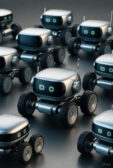
Unleashing Swarm Robots: The Game-Changing Power, Mind-Blowing Innovations & Real-World Impact in 2025
Introduction to Swarm Robots
Swarm robots represent a revolutionary leap in robotics, harnessing collective intelligence to solve complex challenges at scale while promising unmatched efficiency and adaptability. These systems emulate nature’s best examples, where groups of simple agents (like ants or bees) produce powerful outcomes through decentralized decision-making. In 2025, global industries are rapidly adopting swarms for logistics, manufacturing, healthcare, disaster response, and much more.
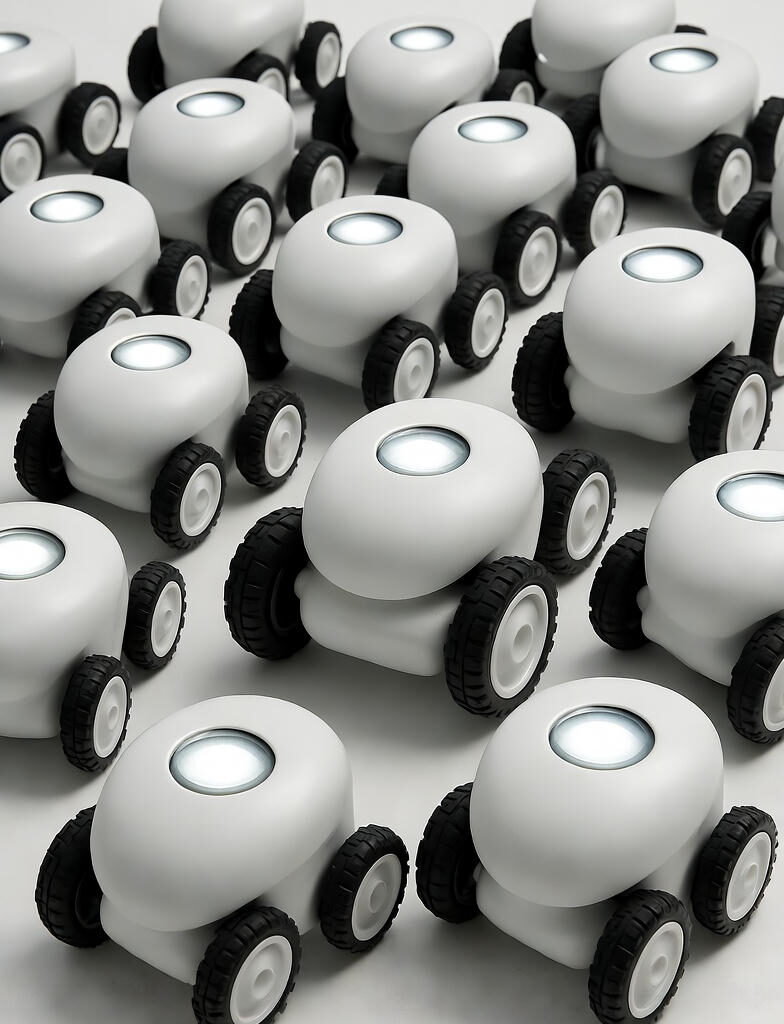
Swarm Intelligence: Nature’s Blueprint
Nature’s mastery of group behavior is the inspiration behind swarm robotics. Ants navigate mazes, bees optimize hive’s resources, and wasps collaborate seamlessly to build nests—all using simple local rules and collective adaptation. Scientists now replicate these patterns in robots, driving advances in efficient search, resource allocation, and flexible teamwork.
How Swarm Robotics Works
Swarm robots operate based on four foundation pillars: sensing, movement, communication, and collaboration. Each robot is simple, but collectively, they achieve multifaceted tasks like:
-
Cooperative exploration, mapping, and localization
-
Collaborative transport of objects
-
Consensus-driven decision-making across agents
-
Fault detection and self-healing within the swarm
Innovations Powering Swarm Robotics
Swarm robotics leverages breakthroughs in AI, edge-computing, federated learning, and real-time neural network algorithms to unlock collective adaptability. Recent innovations include:
-
FLDDPG algorithm for efficient navigation
-
Federated learning for decentralized obstacle avoidance
-
Neural networks for real-time behavior updates
Sensors, like LiDAR and computer vision, and advanced communication protocols enable superior real-time operation in dynamic settings.
Top Real-World Examples
Disaster Response: Drone swarms rapidly assess earthquake zones, locate survivors, and coordinate rescue—saving lives with minimal human risk.
Agriculture: Fleets of microbots automate crop monitoring, planting, and harvesting, maximizing yields while reducing resource use and chemical inputs.
Warehousing & Logistics: Swarm robots sort, transport, and manage inventory, revolutionizing e-commerce fulfillment for speed, cost reduction, and safety.
Healthcare: Swarm microbots deliver drugs directly inside blood vessels, assist in surgeries, and monitor patients in real-time.
Manufacturing: Robotic swarms on assembly lines boost throughput, automate quality checks, and reconfigure almost instantly for new products.
Environmental Monitoring: Swarms track pollution, perform coral reef surveys, and monitor complex ecosystems at scale.
| Application | Example | Value Created |
|---|---|---|
| Disaster Response | Drone swarms | Faster, safer search & rescue |
| Agriculture | Microbot fleets | Higher yield, reduced chemical inputs |
| Warehousing | Inventory robots | Speed, cost-savings, safety |
| Healthcare | Drug delivery microbots | Targeted therapy, minimally invasive |
| Manufacturing | Collaborative robots | Automated, flexible production |
| Environment | Coral reef monitoring bots | Data-rich ecosystem protection |
Applications Across Industries
Logistics & Warehousing: 28.5% market share in 2025; core to automated order fulfillment and inventory management.
| Application Area | How Swarm Robots Are Used |
| Search and Rescue (SAR) | Rapid and wide-area coverage: Swarms of small, aerial (drones) and ground-based robots can quickly cover large, complex areas like collapsed buildings or rubble fields, searching for survivors using thermal cameras, LiDAR, and gas/vibration sensors. Fault Tolerance: If one robot fails, the rest of the swarm can continue the mission. |
| Damage Assessment & Mapping | Real-time 3D mapping: Drone swarms can map the disaster zone in real-time to create a three-dimensional model of the environment, including structural damage to buildings, bridges, and infrastructure. Efficient data collection: They share data to avoid redundant coverage and prioritize high-risk areas. |
| Hazard Detection & Monitoring | Locating dangers: Robots equipped with specialized sensors can detect and monitor hazardous substances like gas leaks, radiation, or contaminated water, providing critical information to human responders without putting them at risk. |
| Logistics and Supply Delivery | Delivering essentials: Drone and ground robot swarms can carry small but essential supplies like medical aid, food, water, or first aid kits to stranded or trapped individuals in inaccessible areas. |
| Communication Infrastructure | Ad-hoc networking: In areas where communication infrastructure is destroyed, drone swarms can create a temporary, flexible, and dynamic communication network to relay data and coordinate with rescue teams. |
Agriculture: Precision farming, weed management, and sustainable irrigation through fleets of autonomous robots.Swarm robots are designed to collaboratively execute a wide range of tasks with a high degree of precision and detail:
| Application | Description |
| Crop Monitoring | Swarms of ground robots and/or drones equipped with advanced sensors and cameras traverse fields to collect real-time data on crop health, growth patterns, temperature, humidity, and soil quality. This data helps in early detection of issues like disease or nutrient deficiencies. |
| Precision Seeding/Planting | Robots work together to sow seeds at the optimal depth, spacing, and location. This high-precision planting can be configured to specific field conditions to ensure healthier crop growth and better yields. |
| Weed and Pest Control | Using computer vision and AI, robots precisely identify weeds and pests. They can then perform targeted interventions, such as: |
| – Targeted Spraying: Applying herbicides or pesticides only where needed, which massively reduces chemical usage and environmental impact. | |
| – Mechanical Removal: Physically eliminating weeds without chemicals. | |
| Precision Fertilization and Irrigation | By analyzing real-time soil moisture and nutrient level data, robots can apply water and fertilizer only to the specific areas that require it, minimizing waste and resource runoff. |
| Automated Harvesting | Multiple robots can work in coordination to harvest crops, which addresses labor shortages and ensures timely, uniform harvesting with minimal crop damage. |
| Pollination Assistance | Especially in controlled environments like greenhouses, tiny flying robots can mimic the behavior of natural pollinators to ensure successful fertilization of plants. |
Defense: Military drones for surveillance, reconnaissance, and tactical missions validated in operational settings (e.g., U.S. Coast Guard’s V-BAT UAV swarms).
-
Intelligence, Surveillance, and Reconnaissance (ISR): Swarms can cover vast areas more efficiently and persistently than single units, providing real-time data for enhanced situational awareness. They can be tasked to search for targets or map large, contested areas.
-
Distributed Attacks: Swarms can overwhelm enemy defenses through sheer numbers, a concept known as saturation attack. Individual units, which are often low-cost and numerous, can coordinate to strike a target simultaneously or distribute targets among themselves. These can include ‘kamikaze-style’ drones with one-time-use warheads.
-
Air and Perimeter Defense: Swarms can be used to confuse and neutralize enemy air defense systems, or they can form an autonomous border surveillance system for perimeter protection.
-
Force Protection: Swarms can be deployed to protect high-value assets, convoys, or troops, acting as a defensive shield.
-
Naval Warfare: Applications include Mine Countermeasures (MCM), where autonomous underwater vehicles (AUVs) work together to detect, classify, and neutralize sea mines, and Cooperative Anti-Submarine Warfare, where a fleet of AUVs collaborates to track hostile submarines.
-
Electronic Warfare (EW): Swarm drones can be utilized to disrupt enemy communication and radar systems.
Healthcare: Patient monitoring, robotic surgery support, and medication delivery with high safety and efficiency.Swarm robots are being explored for applications both within hospital environments and inside the human body:
| Application Area | Specific Tasks |
| Hospital Logistics & Operations | Patient Transport: Moving patients, reducing staff workload. |
| Medication and Supply Delivery: Transporting medicine, food, and laboratory equipment to wards and departments. | |
| Disinfection and Cleaning: Autonomous and simultaneous cleaning of floors and surfaces, often using UV light, and management of biomedical waste to maintain a clean environment and reduce staff contact with infectious materials. | |
| In-Vivo Medical Procedures | Targeted Drug Delivery: Swarms of micro- or nanorobots (devices <100 nanometers) can navigate the bloodstream to precisely deliver therapeutic agents to tumors or diseased tissues, minimizing systemic side effects. |
| Minimally Invasive Surgery: Micro-robots can collaborate to perform highly precise tasks like tissue manipulation, suturing, or assisting in delicate procedures within the body. | |
| Diagnosis and Monitoring: Micro-robots can travel inside veins or other body parts to gather real-time data on physiological processes, or use swarm intelligence algorithms to analyze medical images (e.g., CT scans, mammographs) for pathological parameters. | |
| Patient Care and Support | Repetitive Tasks: Assisting healthcare professionals with routine and time-consuming duties to improve operational efficiency and patient care. |
| Rehabilitation: Swarm robots could potentially assist with patient observation and rehabilitation. |
Manufacturing: Smart factories reconfigurable by swarm robots for multi-variety product lines and just-in-time operations.Swarm robots are being explored to revolutionize traditional factory and assembly line processes:
| Application Area | Description |
| Material Handling & Logistics | Swarms of Autonomous Mobile Robots (AMRs) move materials, components, and heavy items across the factory floor and in warehouses. They dynamically manage inventory, perform stock-picking, and optimize material flow, replacing fixed conveyor systems. |
| Flexible Assembly Lines | Swarm assembly allows for the production of highly customized or complex products, like premium vehicles or aerospace components. Robots can be assigned specific tasks (e.g., gathering parts, tightening screws, packaging) and dynamically re-allocate work based on changing demands. |
| Quality Control & Inspection | Swarms of robots or drones equipped with specialized sensors can inspect products and large structures for defects in real-time. The distributed inspection system allows for rapid data collection and collective defect detection. |
| Swarm 3D Printing (Additive Manufacturing) | In this new paradigm, a large part is broken down into smaller “chunks,” which are simultaneously printed and assembled by a swarm of mobile 3D printing robots. This significantly increases print speed and allows for the fabrication of objects larger than any single printer. |
Here are the key applications of swarm robotics in environmental science:
1. Environmental Monitoring and Data Collection
Swarm robots are highly effective for comprehensive and large-scale environmental sensing in air, water, and soil.
-
Air Quality Assessment: Swarms of small, mobile sensor drones (UAVs) can be deployed to:
-
Map and monitor urban air pollution hotspots and track industrial emissions in real-time.
-
Measure atmospheric pollutants, greenhouse gases, and particulate matter.
-
Adapt their movement based on wind patterns to better track and analyze pollution sources.
-
-
Aquatic and Marine Monitoring: Swarms of autonomous underwater vehicles (AUVs) and unmanned surface vehicles (USVs) are used to:
-
Monitor water quality by measuring parameters like pH, temperature, dissolved oxygen, and pollutant concentration (e.g., chemical or colorimetric sensors).
-
Conduct large-scale surveys of marine environments, including ocean mapping and tracking changes in ecosystems like coral reefs and wetlands.
-
-
Ecosystem and Habitat Health: Swarms can provide detailed, non-invasive surveillance of vast or hard-to-reach wilderness areas.
-
Monitor wildlife populations and their movement patterns.
-
Track deforestation rates and urban sprawl.
-
Observe changes in remote areas like glaciers for climate change research.
-
2. Pollution Cleanup and Remediation
The collaborative nature of a robot swarm is well-suited for distributed cleanup efforts.
-
Oil Spill Response: Swarms of aquatic robots can be quickly deployed to:
-
Provide real-time mapping of the spill’s spread, thickness, and movement patterns.
-
Actively participate in cleanup by coordinating paths to skim and recover oil from the water’s surface, maximizing collection efficiency and coverage.
-
Offer early detection of small leaks to prevent escalation into major disasters.
-
-
Soil and Waste Management: Swarms of terrestrial or aerial robots can be used for:
-
Precision soil remediation by analyzing soil health (e.g., moisture, nutrients) and delivering targeted remediation agents or seeds to specific areas.
-
Mapping and navigating hazardous or contaminated zones for debris and wreckage removal after industrial mishaps or natural disasters.
-
Autonomous rubbish collection and sorting in urban environments.
-
3. Ecological Restoration and Conservation
Swarm robots can actively contribute to restoring damaged ecosystems.
-
Reforestation and Habitat Recovery: Drones in a swarm can be programmed for:
-
Precise seed or agent delivery over difficult terrains for reforestation projects (e.g., post-fire restoration).
-
Monitoring the success of habitat restoration over time.
-
Targeted application of herbicides to remove invasive species with minimal off-target impact.
-
-
Artificial Reef Restoration: Swarms of micro-AUVs can be used for continuous surveillance and data collection to support the rebuilding of fish stocks around artificial reefs.
AI in Swarm Robotics
Artificial intelligence forms the backbone of modern swarm robotics. Machine learning and reinforcement learning enable swarms to adapt, optimize routes, allocate tasks, and solve problems collectively—even in challenging GPS-denied or communication-restricted environments. Edge AI delivers real-time sensing and decision-making, reducing latency and improving group performance.
Case Study: Shield AI’s Hivemind for collaborative UAV missions withstands electronic warfare conditions using decentralized AI.
Market Trends & Explosive Growth
-
The global swarm robotics market is valued at $1.63 billion in 2025, forecasted to hit $7.69 billion by 2032 (CAGR 24.8%).
-
Ground AMRs and AGV fleets: Backbone of 44.3% of market share, driven by warehousing, manufacturing, and smart factories.
-
North America leads (35.4% share); Asia Pacific fastest growth (33.2%), fueled by China, Japan, and South Korea[KUKA, FANUC, Boston Dynamics].
-
Demand spikes driven by e-commerce, labor shortages, safety needs, and sustainability goals (optimized energy use, minimized workplace accidents).
-
Major players: DJI, Boston Dynamics, Shield AI, FANUC, Hitec Robotics, GreyOrange, KUKA, Bosch, Skydio.
Ethical and Social Implications
-
Swarm robots raise questions about safety, privacy, and accountability, requiring robust governance frameworks.
-
Decision-making without central control needs transparency to avoid unintended or harmful consequences.
-
Human oversight, algorithmic fairness, and proper data management are essential to retain trust in swarm AI.
Future Outlook: Next-Gen Swarms
Experts predict that swarm robotics will soon deliver even more advanced features:
-
Scalable mega-swarms (>10,000 units)
-
Microscopic swarms for medicine & surgery
-
Real-time language and gesture-based coordination
-
Cloud-synced, edge-enhanced, self-healing networks
-
Autonomous solar-charged field robots
-
Ultra-smart AI for unstructured environment adaptation
Expert FAQ Section
What are the key benefits of swarm robots for businesses?
Swarm robots drive up productivity, minimize costs, boost flexibility, and greatly reduce human risk and error.
Can swarm robots work in hazardous or remote locations?
Yes. Modern swarms excel in disaster zones, remote farms, underwater research, and toxic industrial environments.
How do swarms prevent collisions or accidents?
Through advanced sensors, AI-driven path planning, and decentralized communication protocols, collisions and errors are minimized.
Is it possible to scale up robotic swarms instantly?
Absolutely. Businesses can add or reconfigure units on demand for volume spikes or new product needs.
How do swarms handle ethical issues or failures?
Recent developments focus on transparency, human-in-the-loop systems, and real-time fault detection.
Conclusion: Why Swarm Robots Are Transforming 2025
Swarm robots, powered by nature-inspired intelligence and game-changing tech, are reshaping nearly every major industry with rapid advances in AI, sensing, and self-organization. Their ability to adapt, scale, and solve once-impossible problems is unlocking bold new frontiers in business and science. For any enterprise or innovator in 2025, mastering swarm robotics means unleashing massive competitive value and future-proofing operations.
Thanks for sharing. I read many of your blog posts, cool, your blog is very good.
Can you be more specific about the content of your article? After reading it, I still have some doubts. Hope you can help me.
Thanks for sharing. I read many of your blog posts, cool, your blog is very good. https://accounts.binance.com/tr/register-person?ref=MST5ZREF
Thanks for sharing. I read many of your blog posts, cool, your blog is very good.