
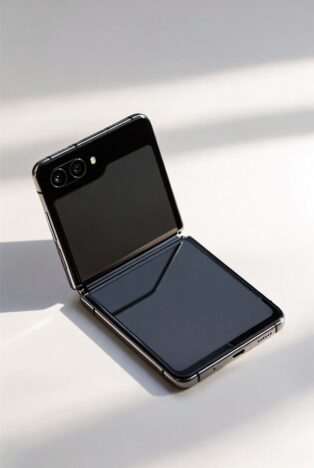
Introduction: Foldables Are Growing Up
For years, foldable smartphones have felt like exciting experiments rather than mainstream devices.
Samsung, Motorola, Google, and several Chinese brands have been iterating fast, but durability concerns, visible creases, and software quirks have held many users back from switching.
Now, with Apple reportedly targeting a 2026 launch window for its first foldable iPhone, informally called iPhone Fold 2026, the conversation is shifting from “if” to “when” and “how big an impact” this device will have.
If Apple gets this right, iPhone Fold 2026 won’t just be another model in the lineup—it could be a true Game Changer that forces the entire industry to rethink what a smartphone can be.
For a site like kritiinfo.com, which focuses on deep, insight‑driven tech coverage, this device represents the perfect intersection of design, usability, and future‑proof mobile experiences.
What is the iPhone Fold 2026?
“iPhone Fold 2026” is the widely used nickname for Apple’s long-rumoured foldable iPhone, expected to arrive around late 2026 and possibly positioned alongside the iPhone 18 series.
Apple has not officially confirmed the product, but a steady stream of leaks, analyst notes, and supply‑chain reports strongly suggest that a foldable iPhone is deep into development, with Samsung Display reportedly preparing panels for mass production.
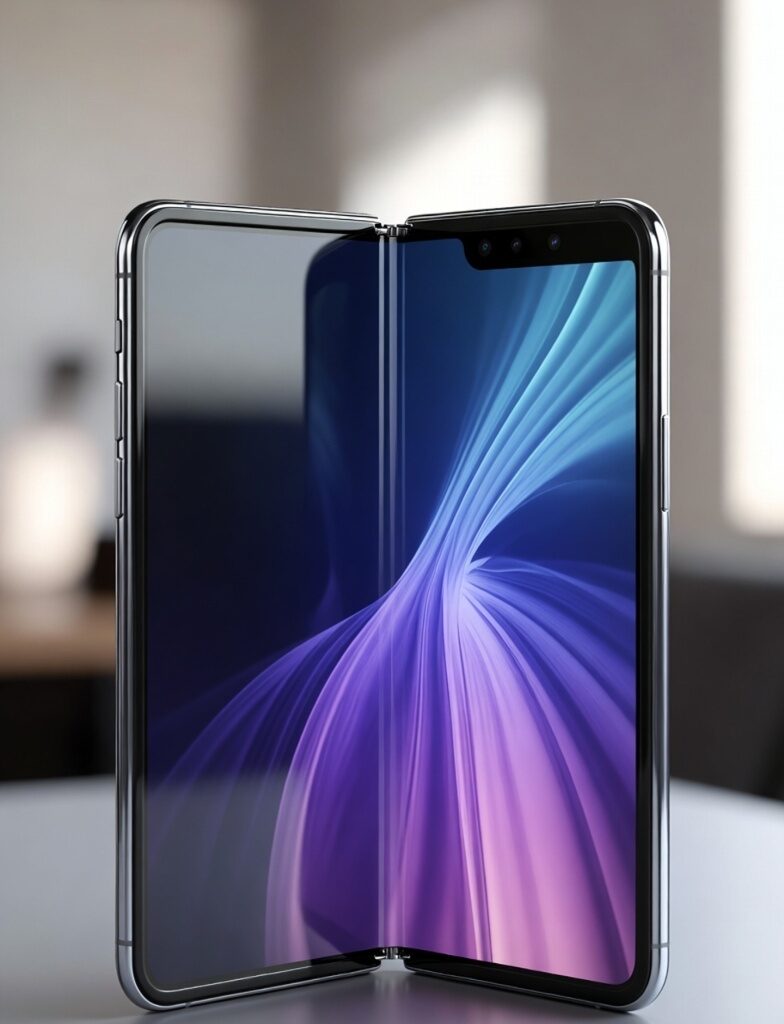
Current rumours point to a book‑style foldable with a large inner screen and a regular smartphone‑sized outer display, rather than a small clamshell‑only design.
This aligns with Apple’s broader strategy of prioritising productivity, media consumption, and premium user experience, areas where a foldable form factor can be a game-changer by offering both a phone and tablet‑like device in one.
Foldable Display Evolution and Apple’s Angle
Foldable displays have evolved quickly in just a few hardware generations.
Samsung’s Galaxy Z Fold 5, for example, uses a refined “Flex Hinge” that closes with almost no gap and is rated for around 200,000 folds, roughly equivalent to about five years of regular use.
Apple, however, appears to be aiming beyond today’s standards.
The company has filed multiple patents for durable foldable displays, including designs that thin the glass only at the fold axis and use special grooves filled with polymer to reduce stress and prevent creasing.
A separate patent even describes a “self‑healing” screen that can repair minor scratches or dents using heat, light, or electric current, technology that could dramatically change how robust a foldable display feels in daily life.
These engineering efforts are exactly why many analysts expect iPhone Fold 2026 to be a genuine Game Changer rather than just Apple’s late entry into the foldable race.
Key Features That Make It a Game Changer
1. Next‑Gen Foldable OLED or Hybrid Display
Rumours suggest Apple is working with Samsung on high‑end foldable OLED panels and exploring crease‑free designs using chemically thinned glass and reinforced cover layers.
If the inner display can truly minimise or nearly eliminate the crease, it would instantly address one of the biggest psychological barriers users have with today’s foldables.
Expect a large inner screen in the 7–8 inch range, effectively turning the iPhone Fold into a mini‑tablet when opened.
Combined with high refresh rates and Apple’s colour-accurate tuning, this alone positions the device as a Game Changer for content creators, gamers, and power users.
2. Advanced Hinge Technology
Apple’s hinge patents describe multi‑link systems, synchronisation plates, and friction elements designed to create a smooth folding action while gently cradling the display in a curved well to avoid sharp stress points.
This design philosophy mirrors and potentially improves on the waterdrop or teardrop hinges that have helped Samsung and others shrink gaps and soften creases.
A robust, precisely engineered hinge is a game-changer from a trust perspective: users feel confident that opening and closing the device thousands of times will not harm it, and adoption accelerates.
3. iOS Optimisation for Foldable UI
Unlike Android, which has had to adapt across dozens of foldable form factors, Apple controls both hardware and software, allowing deep OS‑level optimisation from day one.
Although there is no public iOS foldable build yet, Apple already has experience with features like Split View, Slide Over, Stage Manager on iPadOS, and Continuity across screens.
It is reasonable to expect:
- Adaptive layouts that shift fluidly between outer and inner displays.
- App continuity when opening or closing the device.
- Enhanced multitasking, with two or three apps visible on the inner screen.
If executed well, this tight hardware–software integration could be the ultimate Game Changer in day‑to‑day usability.
4. Battery Innovation
Some reports and leaks suggest Apple is testing foldable prototypes with significantly larger batteries than current iPhones, with capacities rumoured to be 5,000 mAh.
That would be a notable jump from today’s Pro Max models and necessary to power a large inner display at high brightness.
Combined with Apple’s track record in custom power‑efficient silicon, an intelligently managed dual‑cell or multi‑segment battery system could make all‑day foldable use practical, not aspirational—and that’s a Game Changer for real‑world mobility.
5. A‑Series or M‑Class Performance
By 2026, Apple’s chip roadmap suggests something beyond the A18 or even early M‑class variants could be available for a high‑end foldable.
Looking at current trends, each generation has significantly improved AI, graphics, and efficiency, enabling console‑level gaming and advanced camera computation in pocket devices.
If iPhone Fold 2026 ships with a top‑tier SoC tuned for multitasking, on‑device AI, and high‑resolution dual‑screen rendering, it becomes a Game Changer for productivity and creative workflows right out of the box.
6. Camera and Imaging Upgrades
Apple is unlikely to compromise on camera quality for such a flagship.
Given how recent iPhones have leaned into computational photography and ProRes/Log video, a foldable form factor could allow more flexibility in framing, tripod‑free vlogging, and creative angles when the device is partially folded.
Expect a camera system that at least matches the contemporary Pro series, with the foldable design enabling new use cases like hands‑free desk‑mode video calls and multi‑angle content creation.
How It Could Outshine Existing Foldables
Today’s foldable market is led by Samsung Galaxy Z Fold series, with competition from Google Pixel Fold, Motorola Razr, Honour Magic V2, and others.
These devices have made impressive strides in hinge design, water resistance, and panel longevity, but most still make trade‑offs in crease visibility, camera quality, or software polish.
Apple’s differentiation strategy is likely to focus on:
- Seamless ecosystem integration with Mac, iPad, Apple Watch, and Vision Pro.
- Refined industrial design that hides the fold complexity behind a familiar premium aesthetic.
- Carefully curated app experience, where top developers receive early tools to optimise for the foldable layout.
If iPhone Fold 2026 can offer iPad‑class apps on a phone‑sized device with Apple’s usual attention to detail, it becomes the foldable Game Changer that moves the category from niche to aspirational mainstream.
User Experience and Practical Use Cases
Multitasking and Productivity
The inner display of iPhone Fold 2026 has the potential to become a mobile command centre.
Picture reading a long article on kritiinfo.com on one side while taking notes or drafting a LinkedIn post on the other.
Add Apple Pencil support—something not yet confirmed but certainly plausible given iPadOS learnings—and the device turns into a compact notebook replacement.
For professionals, being able to review documents, join video calls, and manage email in parallel could be the Game Changer that lets them leave the laptop at home more often.
Gaming and Entertainment
Foldables already offer immersive gaming and video playback by expanding into tablet‑like screens.
Layer on Apple’s silicon, Metal-optimised titles, and spatial audio, and iPhone Fold 2026 could become the ultimate mobile entertainment hub.
Gamers gain a larger canvas with room for virtual controls that don’t block the main action, while movie lovers enjoy near‑tablet viewing without carrying a separate device.
Portability and Everyday Use
When folded, iPhone Fold 2026 is expected to behave like a regular premium iPhone, fitting into pockets and small bags without drama.
The outer display lets users handle quick interactions—messages, calls, navigation—while reserving the inner screen for deeper engagement.
This dual‑mode behaviour is a quiet but powerful Game Changer: the same device adapts to micro‑moments and deep‑focus sessions with equal ease.
Challenges and Limitations to Watch
Durability Concerns
Even with patents targeting more durable glass, crease‑free folds, and self‑healing layers, a foldable will always face tougher mechanical stress than a slab phone.
Real‑world experiences with Fold and Pixel devices show that hinges and inner displays remain the most failure‑prone components over time.
Apple will need to set clear expectations around fold ratings, drop performance, and long‑term reliability to convince sceptical users that this Game Changer won’t turn into an expensive headache.
Pricing Expectations
Early estimates suggest Apple’s first foldable could carry a price tag above the current Pro Max range, potentially aligning with or exceeding top‑tier Galaxy Z Fold pricing.
That places iPhone Fold 2026 firmly in ultra‑premium territory.
While Apple’s core audience has shown willingness to pay for meaningful innovation, the company will have to demonstrate that the extra cost delivers tangible value—not just novelty.
Software Adaptation and Developer Support
A foldable experience lives or dies by software.
If third‑party apps do not adapt to the new form factor, users end up with letterboxed layouts, awkward scaling, or wasted screen space—issues that have dogged some Android foldables.
Apple’s challenge is to provide robust developer tools, compelling design guidelines, and perhaps even incentives so that major apps are optimised for iPhone Fold (2026) at launch.
Doing so would reinforce its status as a true Game Changer.
Market Adoption Risks
Foldables remain a small slice of global smartphone shipments, with surveys showing that a majority of consumers are still hesitant, often due to durability and price concerns.
If Apple misjudges the timing or positioning, it could end up with an impressive engineering showcase that appeals only to enthusiasts.
However, history suggests that when Apple commits to a new category—from iPhone to Apple Watch, it tends to reshape consumer expectations.
Why iPhone Fold 2026 Could Transform the Industry
Competitive Shockwave
A successful iPhone Fold 2026 launch would put immediate pressure on Samsung, Google, and Chinese OEMs to step up build quality, software integration, and long‑term support.
Competitors would no longer benchmark only against each other but against Apple’s ecosystem strength and brand pull.
This kind of competitive shock can be a game-changer, accelerating the entire industry’s transition toward better foldables.
Influence on Design Trends
Apple’s design language often becomes the de facto template others follow.
If iPhone Fold 2026 popularises a particular folding style, hinge silhouette, or crease‑free display solution, expect similar aesthetics to show up in Android devices within a generation.
The device might also push accessory ecosystems—cases, keyboards, stands, styluses—into new shapes and use cases.
Consumer Behavior Shift
Just as large‑screen smartphones once seemed niche and are now the norm, a polished foldable could change what users expect from a “phone”.
A device that seamlessly transforms from compact mode to expansive workspace is a subtle, powerful Game Changer in daily digital habits.
For readers of kritiinfo.com who follow future tech trends, iPhone Fold 2026 marks a clear pivot point in mobile computing.
Expert Insights and Future Predictions
Looking ahead to 2030, foldables are likely to become thinner, lighter, and more affordable, with hybrid devices that blur the boundaries between phone, tablet, and laptop.
Self‑healing coatings, crease‑free glass, and new hinge materials will make the “fragile” foldable stereotype obsolete.
Apple’s first‑generation foldable may be conservative in some areas, but it is likely to set baselines for:
- Minimum acceptable crease visibility.
- Seamless handoff between inner and outer screens.
- Integration with desktop‑class workflows via Mac and cloud services.
By 2030, expect follow‑up models of iPhone Fold to integrate more AI‑driven context awareness—automatically adjusting layouts, inputs, and app bundles based on posture and task.
For professionals, students, and creators, this category will be a sustained Game Changer rather than a one‑off fad.
As kritiinfo.com continues to cover AI in mobile technology, smartphone comparisons, and future tech trends, iPhone Fold 2026 will serve as a central reference point for where premium mobile computing is headed.
Link Opportunities
For reader value, this article can naturally link to:
- Apple’s official iPhone page for current design philosophy and ecosystem overview: https://www.apple.com/iphone/
- GSMArena’s coverage of Apple patents or foldable display news to ground hardware discussions: https://www.gsmarena.com/apple_patents_a_foldable_display_with_no_creases_for_iphone_and_ipad-news-61917.php
- A reputable tech analysis or news platform, such as TechCrunch, for a broader foldable market context: https://techcrunch.com/
On kritiinfo.com, consider linking from or to:
- A detailed smartphone comparison guide (e.g., iPhone vs Samsung Galaxy vs Pixel) when discussing competitive positioning.
- Articles on AI in mobile technology, especially where on‑device AI and multitasking on foldables are explored.
- A cornerstone piece on future tech trends, with iPhone Fold 2026 used as a prime example of next‑generation hardware.
These links help position kritiinfo.com as a trusted, well‑connected authority in the tech insights space.
FAQ: iPhone Fold 2026
What is the expected price of the iPhone Fold 2026?
Early industry speculation suggests the iPhone Fold 2026 will sit above today’s Pro Max pricing, closer to or above leading foldables like the Galaxy Z Fold series.
Exact pricing will only be clear once Apple officially announces the product.
When will the iPhone Fold launch?
Most reliable reports and analyst notes now point to a launch window in the second half of 2026, likely in the fall, with some suggesting mass production beginning mid‑year if development stays on track.
However, timelines could still slip into 2027 if Apple encounters durability or manufacturing challenges.
Is the foldable iPhone likely to be durable?
Apple’s patents indicate a strong focus on durability, with reinforced glass at the fold, technologies to reduce or eliminate the crease, plus even self‑healing protective layers.
While this looks promising, real‑world durability will depend on final materials, hinge design, and quality control once the device ships.
Why is iPhone Fold 2026 considered a Game Changer?
The device combines a large foldable display, advanced hinge engineering, Apple’s custom silicon, and deep iOS optimisation in a single, tightly integrated product.
Together, these elements could move foldables from experimental to aspirational mainstream, redefining what users expect from a flagship smartphone.
How will iPhone Fold 2026 compare to other foldables?
Existing foldables from Samsung, Google, and others already offer strong hardware, but they vary in software polish, crease visibility, and ecosystem depth.
Apple’s edge will likely come from ecosystem integration, app optimisation, and long‑term support, making its first foldable a serious Game Changer for the entire market.
Will iPhone Fold 2026 support Apple Pencil or keyboard accessories?
Apple has not confirmed any such plans, but given the productivity potential of a large inner display and Apple’s experience with iPad accessories, it would be unsurprising to see some level of stylus or keyboard support in future iterations.
Whether that arrives in the first generation remains an open question.
Is a foldable iPhone a good long‑term bet for buyers?
For early adopters and power users, iPhone Fold 2026 could be a compelling long‑term device if Apple delivers on durability, software support, and performance.
More conservative buyers may prefer to wait for second‑generation models as the technology matures. Still, the direction of travel is clear: foldables are poised to be a lasting Game Changer in mobile tech.