

✅ Introduction – A New Era of Cyber Confidence
Cybersecurity is no longer optional—it’s an essential pillar of our digital lives. Whether you’re managing personal devices or overseeing enterprise networks, your data, communications, and online interactions are at risk every second. Yet, cybersecurity doesn’t have to be intimidating. By understanding the threats, leveraging the right tools, and cultivating cyber hygiene, you can build an empowered, proactive approach that protects your digital world while keeping you in control.
This guide will help you confidently navigate the complex landscape of online security with real-world examples, case studies, and actionable insights tailored to businesses, tech professionals, and everyday users alike. Let’s turn fear into preparedness, uncertainty into control, and vulnerabilities into strengths.
Table of Contents
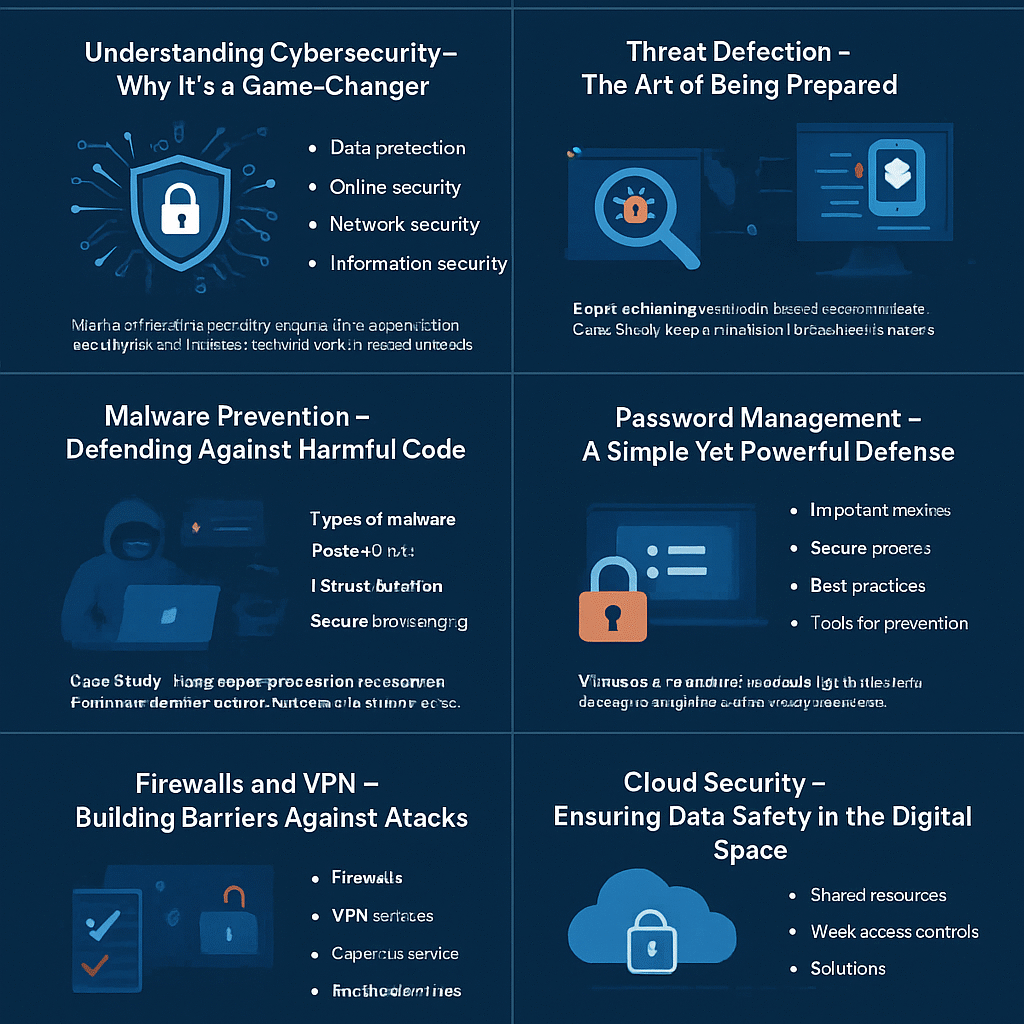
✅ Chapter 1: Understanding Cybersecurity – Why It’s a Game-Changer
Cybersecurity plays a central role in data protection, online security, network security, and information security. At its core, cybersecurity is about anticipating risks, defending against threats, and maintaining trust.
The Business Impact
A 2024 report by CyberSecure Analytics found that 68% of small businesses that experienced a data breach were forced to close within six months due to financial and reputational damage. Businesses now need to invest in cybersecurity policies, endpoint security, and security audits to avoid crippling setbacks.
Everyday Impact
For individuals, identity theft, phishing attacks, and ransomware defense are daily concerns. A common scenario involves a user receiving a fake email that looks like it’s from their bank. Without two-factor authentication or email security in place, that user may unknowingly give attackers access to their finances.
Positive Outcomes
Cybersecurity isn’t just about preventing loss—it’s about creating opportunities. Businesses that integrate encryption, secure communication tools, and risk management protocols can operate more confidently, attract clients, and ensure compliance with legal frameworks.
✅ Chapter 2: Threat Detection – The Art of Being Prepared
Threat detection refers to identifying, analyzing, and responding to cyber threats before they cause damage.
How Threats Are Detected
- Network monitoring systems flag unusual patterns.
- Intrusion detection software analyzes access requests.
- Machine learning models predict attack vectors by learning from past incidents.
Example: The Healthcare Breach
A healthcare provider in Texas fell victim to a ransomware attack because outdated antivirus software left endpoints exposed. After implementing a comprehensive threat detection protocol using AI-driven monitoring, they reduced future incidents by 75%.
Actionable Steps
- Install network monitoring tools on your Wi-Fi network.
- Enable alerts for unusual activity using intrusion detection systems.
- Train employees on recognizing phishing attacks and suspicious links.
✅ Chapter 3: Malware Prevention – Defending Against Harmful Code
Malware prevention is essential for keeping computers, servers, and mobile devices safe.
Types of Malware
- Spyware secretly records user activity.
- Adware bombards devices with unwanted ads.
- Ransomware locks files until payment is made.
Case Study: A Small Retailer’s Recovery
A small retail chain in California faced a malware outbreak through unsecured endpoints. By implementing firewalls, updating software, and enforcing strict password management, they restored operations in two days without paying ransom.
Tools for Prevention
- Antivirus software scans for known threats.
- Email security filters out spam and malicious attachments.
- Secure browsing practices limit exposure to harmful sites.
✅ Chapter 4: Encryption – Protecting What Matters
Encryption is the process of encoding data so only authorized users can access it.
Why Encryption Matters
During a data breach, encryption can prevent stolen files from being readable by attackers.
Real-Life Example
A multinational corporation experienced a data breach but escaped severe consequences because sensitive files were encrypted at rest and in transit using advanced encryption protocols.
How to Implement Encryption
- Use VPN services to encrypt internet traffic.
- Encrypt local files using trusted software tools.
- Enable two-factor authentication for cloud storage access.
✅ Chapter 5: Password Management – A Simple Yet Powerful Defense
Weak passwords are the root cause of many cyber threats.
Common Mistakes
- Reusing passwords across accounts.
- Using easily guessable terms like “123456.”
Best Practices
- Use a password manager to create and store complex passwords.
- Enable two-factor authentication wherever possible.
- Regularly update passwords and perform security audits to ensure integrity.
Case Example
A freelance graphic designer who used unique passwords for each client account prevented a major data breach when one service provider was hacked.
✅ Chapter 6: Firewalls and VPN – Building Barriers Against Attacks
Firewalls
These serve as barriers that control incoming and outgoing network traffic, allowing trusted sources while blocking malicious access attempts.
VPN – Protecting Privacy
A VPN masks your IP address and encrypts communications, which is especially critical on public Wi-Fi networks.
Example
Remote workers at a global company increased their productivity and data security by using VPNs and firewalls in tandem, reducing unauthorized access by 40%.
✅ Chapter 7: Cloud Security – Ensuring Data Safety in the Digital Space
As more businesses move to cloud platforms, cloud security becomes crucial.
Risks
- Shared resources can be exploited.
- Weak access controls allow unauthorized users.
Solutions
- Implement access control and secure communication protocols.
- Encrypt data stored and in transit.
- Perform compliance checks aligned with GDPR or HIPAA.
Case Study
A financial services firm migrated to a cloud-based infrastructure and avoided penalties by enforcing encryption, strict access policies, and regular security audits.
✅ Chapter 8: Cyber Hygiene – Everyday Habits That Build Protection
Cyber hygiene practices, like brushing your teeth, should be routine.
Key Practices
- Regular software updates patch vulnerabilities.
- Backup solutions ensure data recovery.
- Educating employees through cybersecurity awareness training prevents avoidable errors.
Example
A startup with limited resources reduced cyber incidents by 60% after implementing weekly update schedules and mandatory security training sessions.
✅ Chapter 9: Ethical Hacking and Penetration Testing – Staying One Step Ahead
Ethical hacking involves simulating cyberattacks to identify vulnerabilities.
Why It Works
Understanding how attackers think helps organizations anticipate threats.
Penetration Testing
Experts attempt to breach defenses using real-world tactics, uncovering weak points that automated systems miss.
Example
A university’s IT team conducted regular penetration testing and strengthened endpoint defenses, significantly reducing student account compromises.
✅ Chapter 10: AI and Machine Learning – The Future of Cybersecurity
AI-driven tools enhance threat detection and automated responses.
How It Helps
- Predictive analysis spots potential attacks.
- Adaptive algorithms learn from past incidents.
Example
A logistics company integrated machine learning to monitor global shipping networks, preventing potential ransomware attacks.
✅ Chapter 11: Risk Management and Compliance – Building Trust
Risk management involves identifying threats, evaluating their impact, and preparing responses.
Compliance Frameworks
- GDPR ensures data privacy.
- PCI DSS protects payment card information.
Actionable Strategies
- Conduct quarterly risk management assessments.
- Create documented cybersecurity policies to guide teams.
Example
A healthcare provider passed a compliance audit with ease after integrating encryption protocols and employee awareness programs.
✅ Chapter 12: Emerging Threats – IoT and Mobile Security
IoT Security
Connected devices like smart home assistants introduce vulnerabilities. Protect them with strong endpoint security and network segmentation.
Mobile Security
Phones carry sensitive data. Regular antivirus software, secure browsing, and secure communication apps minimize risk.
Example
A smart office with hundreds of IoT devices avoided mass exploitation by implementing layered defenses and constant monitoring.
✅ Chapter 13: Digital Forensics and Cyber Resilience – Learning from Attacks
Digital forensics investigates breaches, helping organizations understand how an attack happened and how to prevent it.
Building Resilience
- Keep offline backup solutions.
- Purchase cyber insurance for unforeseen disasters.
- Adopt structured security frameworks for consistency.
Example
A retail chain recovered quickly from a data breach because forensic analysis pinpointed the compromised endpoint, enabling swift containment.
✅ Final Thoughts – Your Cybersecurity Journey Starts Today
Cybersecurity is not about fear or complexity—it’s about empowerment, control, and readiness. With proper tools, policies, and habits, you can protect your data, devices, and networks while fostering trust and resilience. By integrating cyber hygiene, leveraging AI, and enforcing risk management, you can stay one step ahead of attackers and navigate the digital world confidently.
Start by:
✔ Updating your software
✔ Enabling two-factor authentication
✔ Using VPNs and firewalls
✔ Regularly training employees
✔ Performing security audits
Embrace cybersecurity as a continuous journey—not a one-time fix. It’s your gateway to a safer, smarter, and more connected future.
Thanks for sharing. I read many of your blog posts, cool, your blog is very good. https://accounts.binance.com/ar/register?ref=PORL8W0Z
Thank you for your sharing. I am worried that I lack creative ideas. It is your article that makes me full of hope. Thank you. But, I have a question, can you help me?