
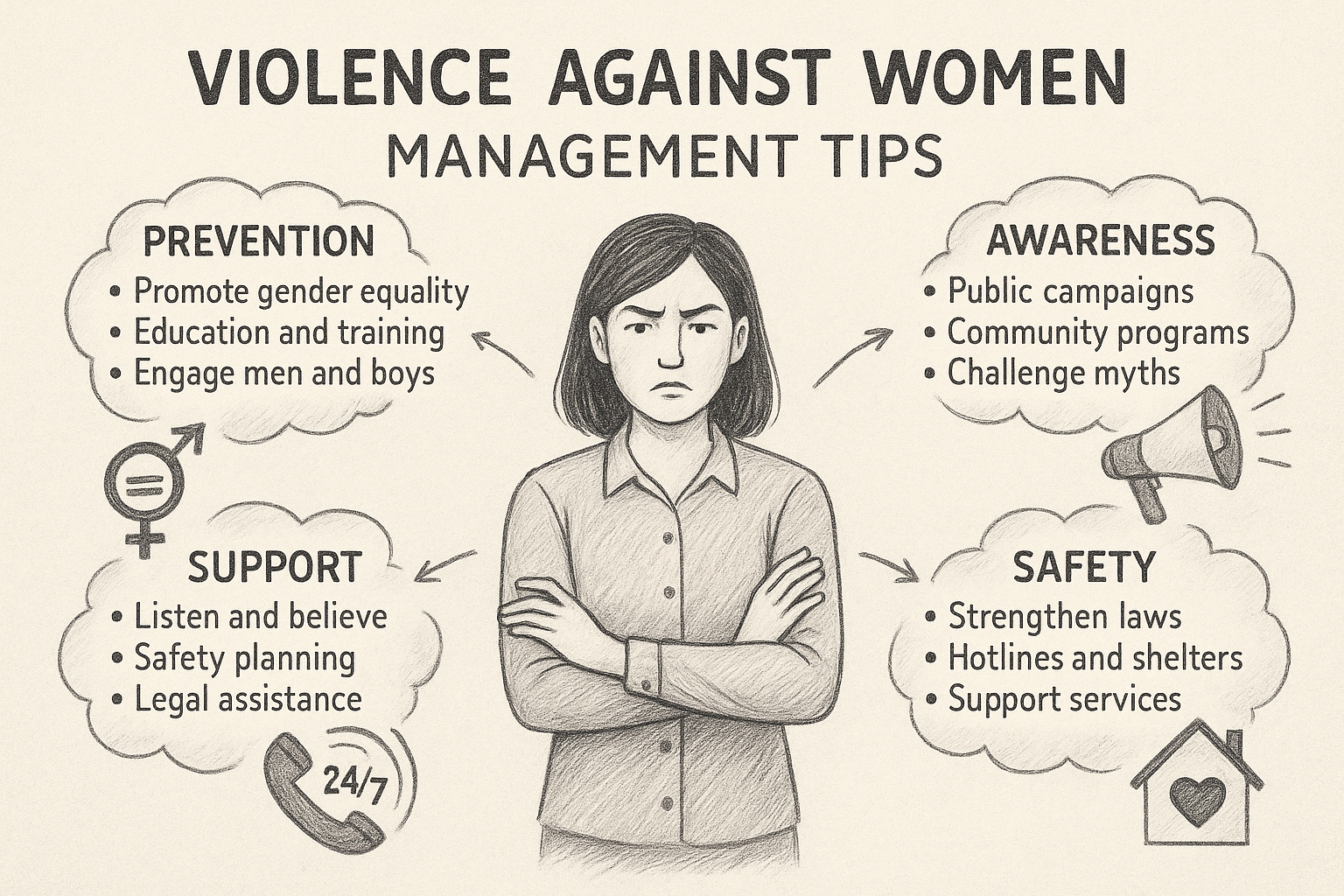
Introduction
Violence against women (VAW) is not just a personal tragedy—it’s a global epidemic that cuts across boundaries of culture, class, and age. From domestic abuse to workplace harassment and public violence, millions of women experience fear, trauma, and silence every day. But it doesn’t have to be this way.
Empowering women, educating society, strengthening laws, and building a culture of zero tolerance can collectively dismantle this dark reality. In this blog, we provide 30 actionable and effective tips to manage, prevent, and respond to violence against women—suitable for individuals, communities, institutions, and governments.
Part 1: Understanding Violence Against Women
1. Know What Constitutes Violence Against Women
Violence is not limited to physical abuse. It includes:
- Verbal threats
- Psychological trauma
- Sexual coercion
- Economic deprivation
- Online harassment
👉 Example: A woman repeatedly being denied her salary or inheritance is facing economic violence.
2. Recognize the Signs of Abuse
Early signs often include:
- Withdrawal from family/friends
- Fearfulness around certain people
- Sudden personality changes
- Unexplained injuries
👉 Tip: If you notice these, offer discreet and non-judgmental support.
3. Understand the Root Causes
VAW is deeply tied to:
- Patriarchal norms
- Gender inequality
- Power imbalances
- Lack of education
👉 The Causes of violence against women?
Part 2: Prevention and Awareness
4. Promote Gender Equality from an Early Age
Teach children respect, empathy, and equality.
👉 Example: Educate boys that emotions aren’t weaknesses and girls that they can lead.
5. Launch School and College Programs
Include gender sensitivity, sexual consent, and anti-bullying policies in curriculums.
6. Use Media as a Tool for Awareness
Support films, TV shows, and campaigns that challenge gender stereotypes.
👉 Tip: Follow pages like “SheThePeople” or “UN Women” for educational content.
7. Encourage Community Conversations
Organize workshops, neighborhood meetings, or open forums to speak about VAW.
8. Involve Men and Boys in Advocacy
Men can be allies by:
- Speaking up against sexist jokes
- Supporting survivors
- Volunteering with NGOs
9. Challenge Cultural Myths
Refute harmful ideas like:
- “It’s a private matter”
- “She must have provoked him”
👉 Tip: Use real-life examples and data to counter myths.
10. Advocate for Safer Urban Planning
Support initiatives for:
- Better street lighting
- CCTV surveillance
- Women-only transport options
👉 Example: Delhi Metro’s “women’s coach” policy boosted confidence in public travel.
Part 3: Empowering Survivors
11. Listen and Believe Her
Many survivors fear not being believed. Offer trust, not judgment.
12. Help Her Create a Safety Plan
A basic plan may include:
- Emergency contacts
- Safe shelter addresses
- Money stash
- Legal aid numbers
👉 Goverment: Domestic violence safety planning
13. Encourage Her to Seek Medical Help
Even without physical injury, trauma may require care. Hospitals can also document injuries legally.
14. Refer to Counseling and Support Services
Connect survivors to:
- Psychologists
- Women’s helplines
- Trauma counselors
👉 Tip: India’s 181 helpline offers 24/7 support to women in distress.
15. Provide Legal Support
Inform her of laws such as:
- Protection of Women from Domestic Violence Act (PWDVA)
- Section 498A IPC (cruelty)
- Sexual Harassment of Women at Workplace Act
👉 Example: Filing a complaint under the PWDVA can help ensure protection orders and shelter.
16. Support Financial Independence
Encourage skill-building, microloans, and job opportunities for survivors.
👉 Suggestion: Empowerment of women economically after abuse.
Part 4: Institutional Role
17. Strengthen Law Enforcement Training
Police need sensitivity training to:
- Handle cases with empathy
- Protect victims
- Avoid victim-blaming
👉 Example: Kerala’s “Pink Police” program provides special support to women victims.
18. Promote Fast-Track Courts
Delayed justice is denied justice. Fast-track courts can reduce trauma and increase faith in the system.
19. Ensure Workplace Safety
Companies should:
- Enforce POSH Act compliance
- Create safe reporting channels
- Provide gender equity training
👉..Workplace harassment redressal
20. Support NGOs and Helplines
Government and private sectors should fund and support:
- Crisis centers
- Shelter homes
- Legal aid clinics
21. Invest in Technology
Apps like Raksha, 112 India, and My Safetipin help women send distress alerts or assess safety.
Part 5: Healing and Reintegration
22. Normalize Therapy and Mental Health
Survivors may face PTSD, anxiety, or depression. Normalize seeking help.
23. Offer Peer Support Groups
Healing accelerates when shared with those who understand. Peer groups reduce isolation.
👉 Example: Local women’s collectives often form sisterhood bonds and self-help networks.
24. Avoid Victim Blaming
Don’t ask:
- “Why didn’t you leave?”
- “What were you wearing?”
👉 Ask: “How can I support you?”
25. Promote Survivor Stories
Public storytelling can reduce stigma and inspire others.
👉Example: Ankita from jharkhand suffered and so her family.
26. Rebuild Identity and Confidence
Encourage survivors to:
- Resume education
- Pursue hobbies
- Join public speaking or arts therapy programs
27. Monitor Long-Term Recovery
Healing is not linear. Survivors may face:
- Flashbacks
- Trust issues
- Re-traumatization
👉 Tip: Continue offering consistent support without pressure.
Part 6: Systemic Change and Policy Reform
28. Push for Stronger Laws
Advocate for:
- Stricter bail conditions for abusers
- Increased funding for women’s welfare
- Implementation of international treaties like CEDAW
29. Monitor Data and Research
Support institutes gathering data to guide policies. Example:
- NCRB reports
- UN Women stats
- National Family Health Survey
30. Build a Culture of Zero Tolerance
Ultimately, violence against women should be seen as unacceptable across all layers of society—home, work, public, digital.
👉 Start with your own circle. Call out abuse. Be an active bystander. Educate others.
Conclusion: Every Voice Counts
Violence against women is not a women’s issue—it’s a human issue. Whether you’re a parent, teacher, employer, friend, or policymaker, you hold the power to spark change. Use these 30 strategies as a roadmap to help build a world where women are safe, valued, and free to thrive.
Wow..Its a very unique post in your blog,sir..Never thought you would come up with such amazing content.. Thankyou for raising this issue and providing counter safety tips. Loved the post
Thanks for sharing. I read many of your blog posts, cool, your blog is very good.