
The Silent Discovery
(Diabetes Is Common Among Obese)A man walked into a hospital believing he only had tiredness. He felt drained every afternoon. His vision seemed slightly blurry at times. He blamed his busy work schedule and lack of proper rest. Thirty minutes later his doctor revealed a silent disease that had been growing inside his body for years. What shocked him even more was the real culprit.
He thought he was perfectly fine. He enjoyed big meals and rarely found time to exercise. He noticed his shirts fitting tighter around his belly but ignored it. He never imagined that this extra belly fat was quietly acting like a poison factory inside him. The doctor looked at his blood test results and sighed. The numbers were dangerously high.
This silent killer had no obvious symptoms at first. It just quietly destroyed his nerves and blood vessels over time. When the doctor explained the diagnosis the man felt a massive wave of fear. He had type 2 diabetes. He asked how this happened so quickly. The doctor simply pointed to his waistline.
That extra weight was not just harmless fat. It was an active organ pumping out chemicals that blocked his body from using energy properly. This hidden danger is spreading across the world at a terrifying speed. If you carry extra weight around your middle you might be walking into the exact same trap. You need to know the powerful truth behind this connection. Today we will explore exactly why diabetes is common among obese individuals and how you can escape this dangerous path.
Table of Contents
Introduction
Obesity and diabetes are two of the biggest health challenges in the world today. Medical experts recommend paying close attention to your weight because it directly affects your blood sugar. Over the last few decades waistlines have expanded globally. Alongside this weight gain we have seen a massive rise in blood sugar problems.
These two conditions are deeply connected. Extra body fat changes the way your body processes food. It creates a toxic environment where your cells stop responding to normal signals. But there is incredible hope. By understanding the root cause you can take control of your health. Let us break down this complex medical issue into simple facts and provide you with actionable steps for a healthy future.
What Is Obesity
Obesity is a medical condition where a person carries excess body fat that negatively affects their health. It is much more than just a cosmetic concern. Doctors often measure it using the Body Mass Index. When your body takes in more calories than it burns it stores the extra energy as fat. Over time this accumulation leads to severe health risks. The World Health Organization classifies obesity as a global epidemic because it impacts millions of lives daily.
What Is Diabetes
Diabetes is a chronic disease that occurs when your blood glucose is too high. Blood glucose is your main source of energy and comes from the food you eat. Insulin is a hormone made by the pancreas. It helps glucose from food get into your cells to be used for energy.
When you have type 2 diabetes your body does not make enough insulin or does not use it well. Too much glucose stays in your blood. Over time having too much glucose in your blood can cause serious health problems like heart disease and vision loss. The American Diabetes Association provides reliable research showing how damaging unchecked blood sugar can be.
How Fat Changes the Body
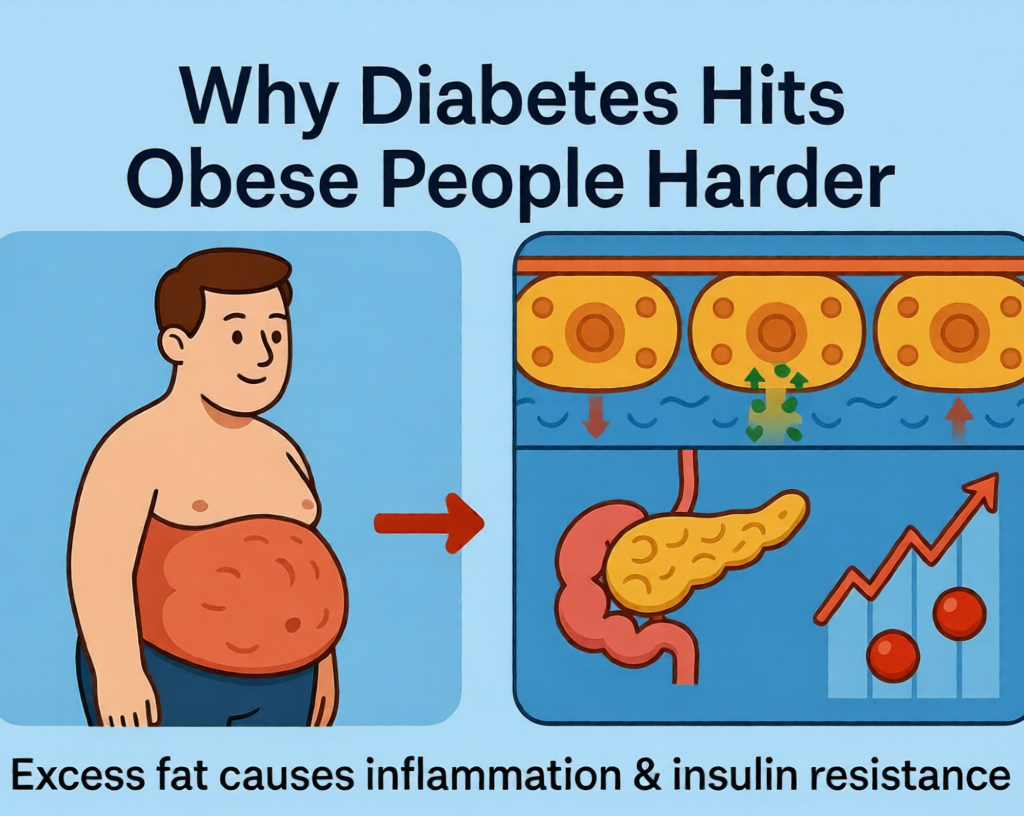
Fat cells are not just empty storage boxes. They are biologically active. When fat cells become too large they release harmful chemicals into your blood. These chemicals travel throughout your body and disrupt normal functions. They make it harder for your organs to communicate. This chemical chaos is the starting point for metabolic problems.
Why Diabetes Is Common Among Obese
Many people wonder about the exact link between weight and blood sugar. Understanding why diabetes is common among obese people requires looking closely at how fat cells operate. When a person gains excessive weight their cells become stressed. This stress forces the cells to ignore insulin.
This reaction is the body trying to protect itself from taking in too much energy. However this defense mechanism backfires completely. The pancreas senses that blood sugar is remaining high. It pumps out even more insulin to force the sugar into the cells. Eventually the pancreas gets exhausted and stops producing enough insulin. This cycle is scientifically proven to be the primary reason why diabetes is common among obese patients.
Hidden Role of Belly Fat(Diabetes Is Common Among Obese)
Not all fat is created equal. The fat located just under your skin is called subcutaneous fat. The fat buried deep inside your belly surrounding your organs is called visceral fat.
Warning Box: Visceral fat is extremely dangerous. It literally wraps around your liver and pancreas slowly choking their ability to function.
According to the National Institute of Diabetes and Digestive and Kidney Diseases this deep belly fat releases proteins that cause severe insulin resistance.
Insulin Resistance Explained Simply
Imagine insulin as a key and your cell as a locked door. Sugar needs to get inside the cell to give you energy. Normally the insulin key unlocks the door easily. But when you have extra body fat it is like someone stuffed chewing gum into the lock.
The insulin key no longer works. The sugar piles up outside the cell in your bloodstream. Your body screams for more energy because the cells are starving. You feel tired and hungry even though you just ate. This is insulin resistance in plain English.
Inflammation Inside the Body
Excess fat triggers a constant state of low grade inflammation. Your immune system thinks there is an infection because of the toxic chemicals released by large fat cells. It sends white blood cells to fight the imaginary infection. This constant battle damages healthy tissue and makes insulin resistance much worse. Clinical evidence shows that lowering inflammation is critical for blood sugar control.
Hormonal Changes
Body fat acts like a massive gland. It produces hormones like leptin and adiponectin. Leptin tells your brain you are full. Adiponectin makes your body sensitive to insulin.
In obesity leptin levels get very high but the brain stops listening. This is called leptin resistance. Meanwhile the levels of helpful adiponectin drop dangerously low. This hormonal disaster creates the perfect environment for diabetes to thrive.
Lifestyle Factors
Poor Sleep and Diabetes
Lack of sleep is a massive risk factor. When you do not sleep enough your body releases stress hormones. These hormones raise your blood sugar. If you want to dive deeper into this topic consider reading about Sleep improvement strategies. Rest is critical for healing.
Stress and Weight Gain
Mental stress causes physical damage. Stress releases cortisol. High cortisol makes your body store fat directly in your belly. It also increases your cravings for sugary foods. Proper Stress management techniques can actually lower your blood sugar levels.
Processed Food Connection
Modern diets are packed with processed sugars and unhealthy fats. These foods digest incredibly fast causing massive blood sugar spikes. They also fail to make you feel full leading to overeating. Avoiding these foods is a critical step in Weight management tips recommended by experts.
Lack of Physical Activity
Muscles use a massive amount of glucose. When you sit all day your muscles do not need that energy. The sugar stays in your blood. Regular movement acts like a vacuum cleaner sucking the sugar out of your blood without even needing insulin.
Genetics Versus Lifestyle
You might have a family history of diabetes. Genetics load the gun but lifestyle pulls the trigger. You are not doomed by your DNA. Healthy eating habits can override many genetic risks. Public health experts agree that changing your daily routines has a remarkable impact on your future.
Early Warning Signs
Do not wait for a crisis. Watch for these unexpected signs.
Health Checklist:
- Feeling thirsty constantly
- Needing to use the bathroom frequently
- Experiencing blurry vision
- Feeling extremely tired after meals
- Noticing dark skin patches on your neck
- Having cuts that heal very slowly
Who Is at Higher Risk
People with a Body Mass Index over thirty face the highest risk. Age also plays a role as our pancreas naturally weakens over time. If you have a sedentary job or a family history of metabolic syndrome your risk multiplies.
How Doctors Diagnose Diabetes
Doctors rely on simple blood tests. The A1C test measures your average blood sugar over three months. A fasting blood sugar test checks your levels after you have not eaten overnight. The Centers for Disease Control and Prevention states that early testing saves lives.
Can Obesity Diabetes Be Reversed(Diabetes Is Common Among Obese)
Yes there is powerful hope. Losing just five to ten percent of your body weight can completely change your life. Harvard Health confirms that shedding this initial weight drastically improves your cellular response to insulin. Many people successfully push their blood sugar back to normal levels through dedicated lifestyle changes.
Nutrition and Fitness Solutions
Best Foods
Focus on whole foods that nourish your body.
Healthy Food Table:
| Food Category | Examples | Benefits |
| Leafy Greens | Spinach Kale Broccoli | Low calories high fiber |
| Lean Proteins | Chicken Fish Tofu | Keeps you full longer |
| Healthy Fats | Avocados Olive Oil | Protects your heart |
| Complex Carbs | Quinoa Sweet Potatoes | Slow steady energy |
Foods to Avoid
Stay away from sugary drinks pastries white bread and highly processed meats. These items cause rapid blood sugar spikes and encourage fat storage.
Exercise That Works
You do not need to run a marathon. Brisk walking for thirty minutes a day is scientifically proven to help. Resistance training like lifting light weights builds muscle. More muscle means better sugar control. Check out our Fitness section for simple starter routines.
Lifestyle Habits That Prevent Diabetes
Drink plenty of water throughout the day. Avoid eating late at night. Manage your stress through deep breathing or meditation. Every positive choice builds a healthier future.
Daily Routine for Busy People
Quick Tip: Start today by walking for ten minutes after every meal. This simple habit drastically lowers the blood sugar spike from your food.
Common Myths
Myth: Eating too much sugar directly causes diabetes.
Fact: Sugar contributes to weight gain but excess body fat is the actual driver of insulin resistance.
Myth: Only obese people get diabetes.
Fact: Thin people can get it too especially if they carry hidden visceral fat.
Future Research
Medical researchers are constantly finding new ways to treat metabolic syndrome. Mayo Clinic frequently publishes studies on how gut bacteria influence weight and blood sugar. The future holds exciting possibilities for personalized Nutrition therapies based on your unique biology.
Real Life Case Study
Patient Profile:
David is a forty five year old software engineer.
Lifestyle:
He sat at a desk for ten hours a day. He relied on fast food and energy drinks to stay awake.
Health Condition:
David weighed two hundred and forty pounds. He went to the doctor for chronic fatigue. He was diagnosed with severe prediabetes.
Mistakes:
He skipped breakfast ate massive dinners and ignored his growing waistline.
Doctor Advice:
His doctor explained exactly why diabetes is common among obese individuals. The doctor told David to cut liquid sugar completely and walk daily.
Lifestyle Changes:
David started meal prepping on Sundays. He replaced soda with water. He began walking thirty minutes every morning.
Positive Outcome:
Within six months David lost thirty pounds. His blood sugar returned to completely normal levels.
Lessons Learned:
David realized that small daily habits are much more powerful than extreme temporary diets.
Conclusion
Understanding why diabetes is common among obese individuals is your ultimate wake up call. The connection between excess body fat and insulin resistance is clear. Belly fat creates toxic inflammation that stops your cells from using energy correctly.
But you have the power to change this story. By improving your diet moving your body daily and managing your stress you can protect your health. Start today. Take control of your habits. We invite you to explore more Healthy lifestyle articles on KritiInfo to keep your momentum going.
Frequently Asked Questions
Why does obesity increase diabetes risk?
Obesity increases risk because large fat cells release chemicals that block insulin from working properly. This forces sugar to build up in the blood.
Can losing weight reverse diabetes?
Yes losing even five to ten percent of your body weight can significantly improve your blood sugar and sometimes reverse the condition entirely.
Which fat is most dangerous?
Visceral fat which is stored deep inside your belly around your organs is the most dangerous fat.
Why diabetes is common among obese individuals compared to thin people?
It is common because excess fat tissue causes systemic inflammation and hormonal imbalances that thin individuals typically do not experience.
Can children become diabetic because of obesity?
Yes childhood obesity has led to a shocking increase in type 2 diabetes among young people today.
How much exercise prevents diabetes?
Public health experts recommend at least one hundred and fifty minutes of moderate exercise per week to maintain healthy blood sugar.
Are carbohydrates bad for diabetics?
Not all carbohydrates are bad. Complex carbs like vegetables and whole grains are healthy while simple processed carbs should be avoided.
What is the first sign of insulin resistance?
Constant fatigue and feeling hungry shortly after eating a large meal are early warning signs.
Does stress make diabetes worse?
Yes severe stress releases cortisol which directly raises your blood sugar and encourages belly fat storage.
How often should I check my blood sugar if I am overweight?
You should talk to your doctor and get a routine checkup at least once a year to catch any early changes.
1 thought on “How 7 Amazing Facts Show Why Diabetes Is Common Among Obese”