
The Julian Vance Paradox and the Ghost of ROI
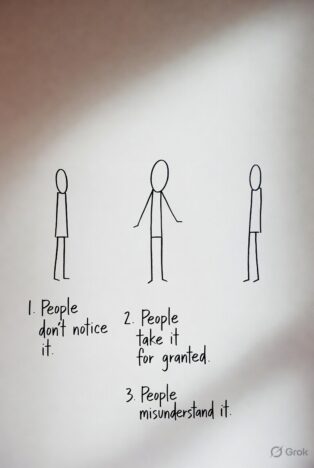
In autumn 2025, Julian Vance, CEO of a multi-billion-dollar logistics giant, quietly sold $40 million of his personal stock to anonymously pay off predatory medical debts for 6,000 Rust Belt families. His board called it a “fiduciary hallucination”; the COO’s leaked memo dismissed it as offering zero ROI, no brand lift, and pure sentimentality in a year of austerity.
That era prized “pragmatic portfolio management”: philanthropy was slashed, kindness tolerated only if marketable, and CEOs who didn’t optimise for quarterly gains were mocked.
By 2040, after a 20-year global study on the Human Connection Index, Vance is among the planet’s most powerful figures—not for his wealth or empire, but for his verifiable, unrewarded kindness preserved in transparent ledgers. While his profit-obsessed peers saw reputations crumble under hyper-transparency and AGI-mediated trust, Vance’s authentic “Legacy Capital” became unhackable.
In an automated world, the “wasteful” generosity of 2025 proved the century’s shrewdest long-term investment.
The Era of Measurement: The 2025 ROI Obsession
To understand why unrewarded kindness is the only currency left, we must look back at the desperate, metrics-obsessed world of 2025. It was an era where the “real business of business” was still being debated between short-term shareholder value and the emerging, often confused, concept of stakeholder capitalism. The data from 2025 shows a society caught in a “Trust Gap.” Corporate citizenship leaders were under immense pressure to prove the Return on Investment of their philanthropy, with 43% citing “proving ROI” as their top pain point.
During this period, philanthropy was a meritocracy of the top tier. Those who gave more absolute dollars received greater recognition and influence, but the support from the bottom and middle of the “giving pyramid” was often ignored as minor. Giving was transactional. If a company couldn’t measure the link between employee engagement and a CSR program, or its contribution to brand equity, the program was on the chopping block.
Corporate Philanthropy and Strategy Shifts (2025 Baseline)
| Metric | 2025 Status | Driver |
| Philanthropy Budget Stability | 19% planned reductions | Economic and strategic uncertainty |
| ROI Scrutiny | 43% of leaders focused on ROI | Demand for measurable business indicators |
| Thematic Focus | 44% responding to social/legal risk | Minimizing political and social backlash |
| Preference for Form | 57% favor volunteering over grants | Desire for “direct value” over cash transfers |
| Trust Mechanism | Third-party audits and PR | Institutional reputation management |
In this environment, “unrewarded” kindness was seen as a failure of strategy. Leaders were taught to “accelerate commitments” only if it preserved tax deductibility or “categorise expenditures as business expenses” to ensure finance-team approval. The very idea of doing something purely because it was kind—without a plan to capture its value—was treated as a relic of a less sophisticated age. Little did they know that the very “audit risk” they feared would eventually become the “transparency ledger” that would judge their entire legacy.
The Shift: Defining Legacy Capital in the Age of Abundance
By the mid-2030s, the “Job Economy” began its final transition into the “Self-Actualisation Economy”. As AGI emerged, the cost of running cities, managing waste, and producing food plummeted. Material scarcity—the engine that had driven human competition for millennia—began to dissolve. Transportation became a free public utility in many urban centres, and Universal Basic Income (UBI) significantly reduced stress and crime.
In this new world, “financial capital” became abundant and, paradoxically, less valuable as a signal of success. When everyone has access to the basic infrastructure of a flourishing life, the metrics of status shift from what you possess to who you are. This is where the concept of “Legacy Capital” emerges. Legacy Capital is the accumulated “Proof of Humanity” that an individual has banked through years of unsimulated, authentic, and unrewarded kindness.
The shift was driven by three massive technological and sociological convergences:
- The Automation of Empathy: As AI relationship coaches began suggesting perfect phrases for conflict resolution and monitoring conversations for “empathy gaps,” the performance of kindness became a commodity. When a digital assistant can mimic warmth to perfection, human warmth becomes a high-premium rarity.
- The Transparency Revolution: The integration of AI into government and corporate databases exposed “now-hidden processes,” making it impossible to hide the cynical motives behind transactional giving.
- The Scarcity of the Unsimulated: In a world where “unmediated interactions” with other humans have become rare—a state experts call “social nakedness”—the value of a genuine, non-programmed act of altruism has skyrocketed.
The Evolution of Value: From Scarcity to Abundance (2025 vs. 2040)
| Feature | 2025: Scarcity Economy | 2040: Abundance Economy |
| Core Scarcity | Money, Energy, Specialized Labor | Authentic Connection, Agency, Truth |
| Primary Goal | Survival and Wealth Accumulation | Self-Actualization and Legacy |
| AI Role | Tool for Productivity / Cost Cutting | Infrastructure / Teacher / Mediator |
| Success Metric | Net Worth / Job Title | Legacy Capital / Trust Resonance |
| Status Symbol | Luxury Goods / Exclusive Access | Verifiable Character / History of Kindness |
In 2040, the “Legacy Capital” an individual possesses is their only true hedge against the “Trust Gap.” As we navigate a world where 43% of experts believe it is harder to access trusted information, the only information people truly trust is the history of unrewarded behaviour. Kindness is no longer a “pleasant interaction”; it is the only currency that hasn’t been devalued by the rise of the machines.
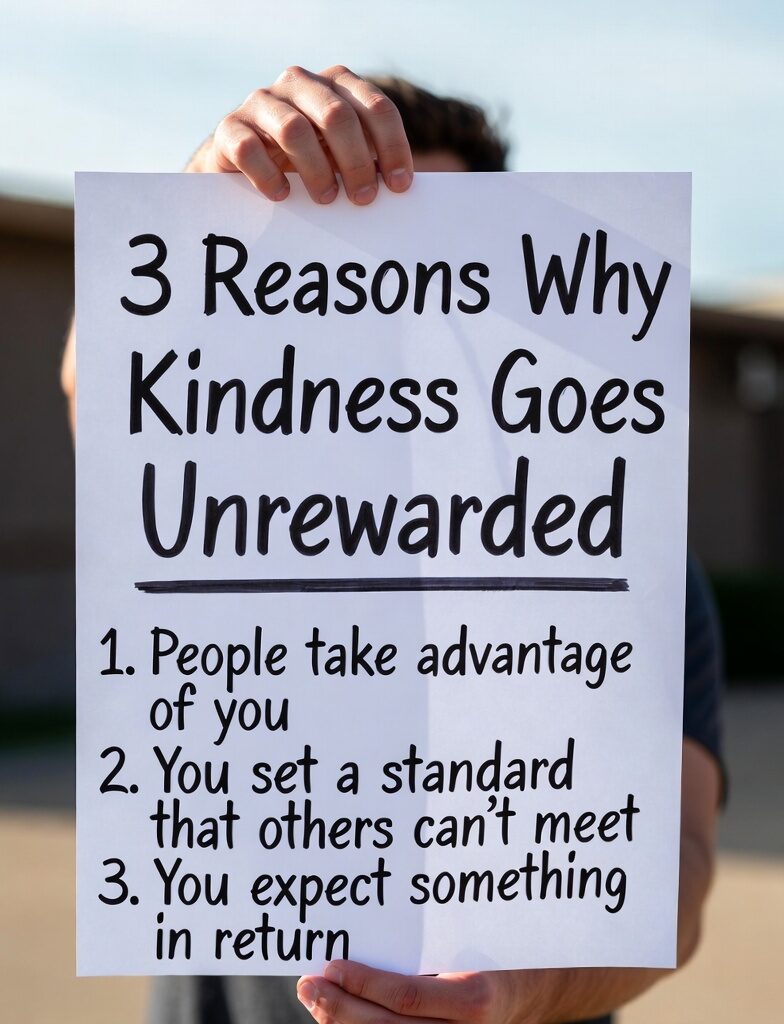
Reason 1: It Builds Trust That Algorithms Cannot Hack
The first reason kindness is the ultimate future fortune is that it serves as an “Unhackable Trust Signature.” Algorithms, by their very nature, are optimised for efficiency. They seek the “win-win,” the shortest path to a goal, and the highest reward for the lowest effort. Artificial Intelligence can be trained to “master the game of humans”—to sense emotions, predict reactions, and even manipulate decisions to achieve an outcome.
However, there is one thing an algorithm finds computationally impossible to replicate: Genuine Inefficiency.
When a human like Julian Vance performs an act of kindness that offers no immediate benefit, no brand lift, and no social credit, it creates a data point that is “non-optimizable.” In 2040, these are the only data points that the “reputation algorithms” actually value. If an act of kindness was done for a reward, the algorithm discounts it as “simulated behaviour” or “incentive alignment”. If the act was truly unrewarded, it is flagged as a “Proof of Character.”
The Turing Test of the Heart
In the early 2030s, sociologists noted that humans were becoming “forgiving of other humans making mistakes, but not at all forgiving if computers make mistakes”. We developed a deep, intuitive “Truth Gap.” We began to realise that while an AI could be “altruistic” in its programming to resolve disputes or provide caregiving, it lacked the “core innate humaneness” that involves sacrifice.
Kindness builds trust because it is an “expensive signal” in evolutionary terms. It signals that the giver is so secure and their values are so deeply held that they are willing to expend resources without a calculated return. This creates a “trust algorithm” that exists outside the digital realm—one that relies on “warmth” rather than just “competence”.
- Verified Identity: In 2040, decentralised reputation systems (DRS) use blockchain and “Soulbound Tokens” to record our interaction history.
- Immutable History: Unlike the curated social media profiles of 2025, the DRS of 2040 captures the intent and outcome of our actions across the entire digital ecosystem.
- The Sincerity Filter: Because the systems are transparent, any attempt to “game” the reputation system through fake kindness is immediately flagged by the network as a “Sybil Attack” on social trust.
Therefore, every act of unrewarded kindness you perform today is being recorded in a way that the cynics of 2025 could never imagine. You are not just being nice; you are building a “trust-moat” that no AGI can ever breach.
Reason 2: It Creates “Memory Dividends” in Your Network
The second pillar of the 2040 fortune is the concept of “Memory Dividends.” In the 2020s, the dominant economic philosophy was “delayed gratification”—the idea that you should save your money and your joy for a future that may never come. But the 2040 economy, influenced by the “Die with Zero” movement, has realised that the true “hedonic value” of an experience comes from the dividends it pays every time it is recalled.
A random act of kindness is the highest-yielding investment in this category. Why? Because it triggers a unique neurological response in the receiver that leads to “richer and more elaborate encoding”. Unexpected stimuli, like a stranger paying for your medical debt or a boss taking the time to truly listen during a crisis, engage the hippocampus in a way that routine, transactional interactions cannot.
The Psychology of the Dividend
Research from the mid-2020s proved that givers systematically undervalue the positive impact of their kindness. They think the act is small, but the recipient perceives it as “warmth,” a signal of being “seen” and “valued”. This mismatch is where the “Memory Dividend” is born.
- The Initial Yield: Both the giver and receiver experience a “helper’s high,” a neurochemical release of endorphins and oxytocin that fosters immediate connection.
- The Recurrent Dividend: Every time the recipient remembers the act, the “hedonic value” is re-experienced. In a network, this means your “Legacy Capital” is growing even while you sleep.
- The Indirect Reciprocity: Kindness is contagious. One act of unrewarded kindness increases the likelihood that the recipient will perform a kind act for someone else, expanding your “Network Dividend” exponentially.
Memory Dividends vs. Financial Dividends (20-Year Horizon)
| Investment Type | Initial Cost | 5-Year Value | 20-Year Value (2040) |
| Financial (Stock/Equity) | High | Subject to market volatility | Devalued by AGI-driven abundance |
| Transactional (PR/Marketing) | High | Requires constant reinvestment | Eroded by transparency/cynicism |
| Unrewarded Kindness | Low/Variable | High “Memory Dividend” yield | Permanent “Legacy Capital” asset |
By 2040, the wealthiest people aren’t those with the most “credits” in their UBI account; they are the people who can walk into any city on Earth and find someone who remembers a “Memory Dividend” they deposited years ago. Kindness is not just “prosocial behaviour”; it is the mechanism by which we “luck out” down the road through goodwill that has compounded over decades.
Reason 3: It Future-Proofs Your Reputation Against Digital Transparency
The third reason kindness is the currency of the future is the end of privacy. By 2040, “social nakedness” is the norm. We live in a world of “pervasive connectivity” where it is nearly impossible to “unplug”. AI tools have matured to the point where they can expose “now-hidden processes” in any organisation or individual life.
In 2025, people still believed they could separate their “private self” from their “professional brand.” They believed that a “calculating” approach to relationships—helping only those who could help them back—could be hidden behind a mask of professional courtesy.
In 2040, the mask has been dissolved by the “Transparency Revolution.” AI systems now “aid fact-checking and enable critical inquiry into databases,” making a person’s entire history of interactions a public record. If you were a “worst boss” in 2025—someone who made employees feel “unappreciated or worthless”—that data point is now a permanent part of your “Social Credibility Score”.
The Shield of Authentic History
Conversely, unrewarded kindness serves as a reputational shield. Because these acts were performed when “no one was watching” (or so we thought), they provide an “evidence-based consensus” of your character.
- Verification of Ethics: In 2040, society must decide “what kind of civilisation it wants to become”. In this debate, leaders are judged by their history of “compassionate decisions”.
- The End of the Grift: The “grift economy” of 2025—built on fake engagement and “wash trading” of reputations—was destroyed by decentralised reputation systems that require “on-chain verifiable scores based on real user activity”.
- Personal Sovereignty: As AI assistants begin to “jeopardise free will and autonomy” by suggesting how we should think and speak, the only way to retain agency is to have a “sovereign character” that is rooted in a history of independent, altruistic action.
By 2040, your reputation is not what you say it is; it is what the global transparency ledger proves it is. Those who banked “unrewarded kindness” in the 2020s are the only ones who can stand “socially naked” in 2040 without embarrassment. They have nothing to hide because their most significant acts were those for which they never sought a reward.
The Sociological Synthesis: Kindness as the Final Frontier
As we look at the 20-year data set, a clear pattern emerges: the “enfeeblement of humanity” by AI is real, but it is not universal. There is a segment of the population that has used technology not to replace their humanity, but to amplify it. These are the individuals who realised early on that as AI takes over “repetitive, unsafe, and physically taxing labour,” the only “human activity” left is the creation of connection.
In 2025, we were warned that AI would “eliminate critical thinking and decision-making abilities”. We were told that “unmediated interactions” would become rare. And yet, the data shows that the “Human Connection Index” actually rose for those who practised radical, unrewarded kindness. Why? Because kindness requires the very things AI cannot yet fully own: Intent, Sacrifice, and Agency.
The New Meaning of Success (2040)
Success in 2040 is no longer measured by the “meritocracy of wealth”. Instead, it is measured by “Relational Density.”
| Success Indicator | 2025 Measure | 2040 Measure |
| Financial Security | Savings / 401k / Real Estate | Access to Communal Resources / UBI Stability |
| Professional Status | Job Title / Industry Awards | Trust-Node Status / Shared Brain Contribution |
| Social Power | Number of Followers / Network Reach | Depth of “Memory Dividends” / Legacy Capital |
| Personal Well-being | Consumption / Leisure Time | Sense of Purpose / Impact on Others |
The “Self-Actualisation Economy” is not a utopia of laziness; it is a “higher-order” economy where we ponder the “highest-order questions our species can ponder”. In this world, Julian Vance is a billionaire of the spirit. He is wealthy because his “unrewarded” act in 2025 was the first deposit in a “Legacy Fund” that has sustained him through two decades of technological upheaval.
Conclusion: The Blueprint for a New World
The data is in, and the conclusion is inescapable: the cynics of 2025 were wrong. They thought that by hoarding resources and measuring every act of giving for its “ROI,” they were protecting their future. In reality, they were devaluing themselves. They were becoming “agents of the machine” before the machines were even fully built.
Unrewarded kindness is the only currency left because it is the only thing that cannot be automated, simulated, or inflated. It is a “moral and political act of rebellion” against a world that wants to turn every human interaction into a transaction. It is the “optimism of the will” that refuses to see the world’s suffering as a “market opportunity” and instead sees it as an opportunity for connection.
This philosophy of unrewarded kindness mirrors the deep insights found in our recent work on long-term value creation at. If you want to survive the 2030s and thrive in the 2040s, you need to stop asking “What’s in it for me?” and start asking “What can I give away that the algorithms can’t track?” That piece is the blueprint for the world Julian Vance helped build—one where we are measured not by the balance of our bank accounts, but by the balance of our character.
We are at a “critical juncture”. We can choose the “easier path” of transactional, AI-mediated existence, or we can choose the “rebellious path” of unrewarded warmth. The former leads to a world where we are “enfeebled” and “passive”. The latter leads to a “self-actualised economy” where we finally break free from the “work-life anxiety” of the past and begin to build a civilisation worth living in.
The ledger of 2040 is already open. Every small, anonymous, “wasteful” act of kindness you perform today is a deposit into a future you cannot yet see. The cynics will laugh. The “managers of ROI” will tell you it’s a mistake. But in twenty years, when the machines are doing the work and the data is all that’s left, you will realise that you weren’t just being kind. You were banking your life.
What act of kindness are you banking today for 2040?