
Introduction
In the modern marketplace, a brand is no longer just a logo or a catchy slogan. It is a living, breathing reputation built on the foundations of ethics and accountability. Today’s consumers are more informed and socially conscious than ever before; they don’t just buy products, they buy into values. Recent market shifts show that nearly 70% of consumers prefer brands that take a stand on social and environmental issues. This shift has transformed Corporate Social Responsibility (CSR) from a “nice-to-have” PR tactic into a fundamental driver of brand value.
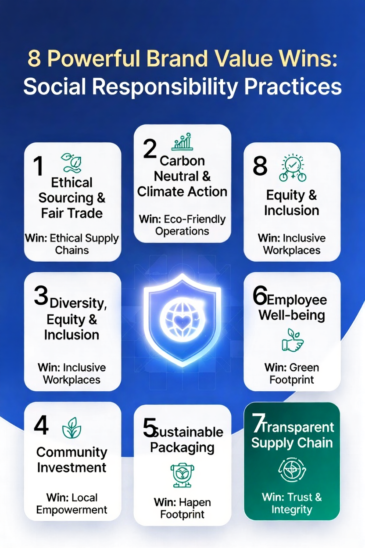
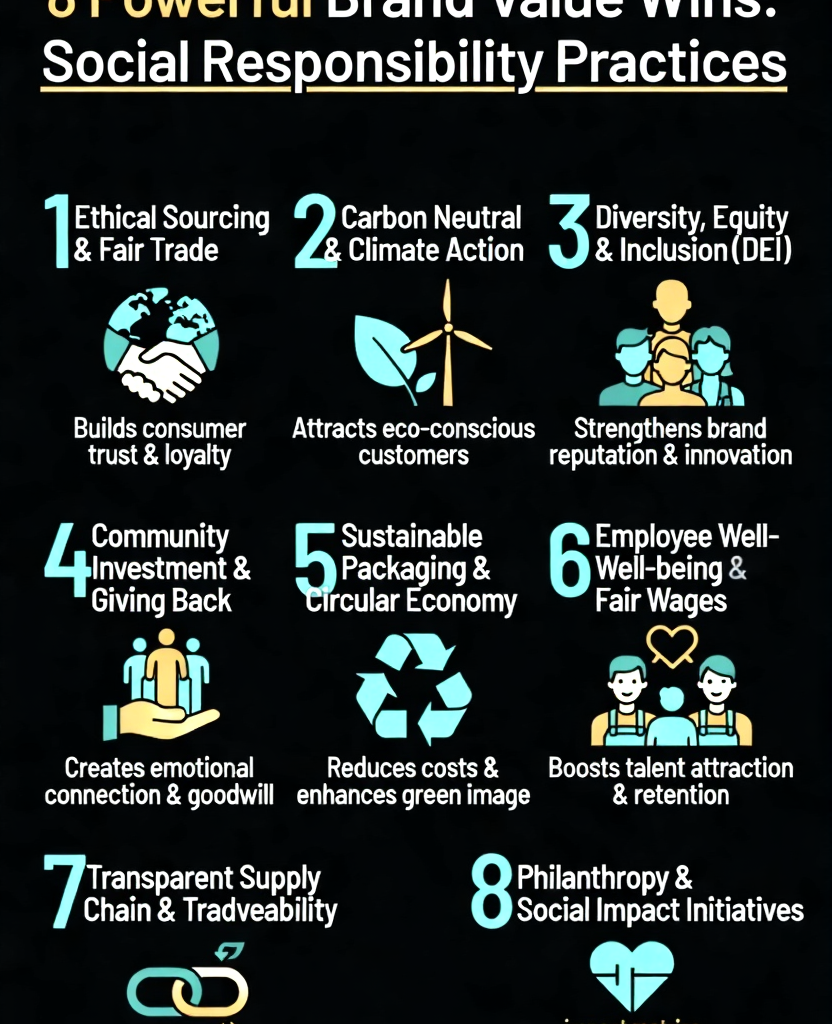
When a company aligns its operations with the greater good, it creates a ripple effect of trust that strengthens customer loyalty and attracts top-tier talent. This blog explores eight transformative social responsibility practices that do more than just “look good”—they actively build long-term brand value by fostering authentic connections with your audience. At kritiinfo.com, we believe that the intersection of ethics and excellence is where the most successful modern businesses reside.Let us dive deep through kritiinfo.com.
<1>Ethical Sourcing and Transparent Supply Chains
The journey of a product matters just as much as the product itself. In an era of “fast fashion” and rapid production, consumers are increasingly wary of how their goods are made. Ethical sourcing involves ensuring that every component of your product is obtained through responsible and sustainable methods.
Transparency is the secret sauce here. When a brand can pinpoint exactly where its raw materials come from—ensuring no forced labor or environmental degradation was involved—it earns a massive boost in brand value. People are willing to pay a premium for peace of mind.
- Real-World Example: Patagonia’s “Footprint Chronicles” allows customers to track the impact of their products from design to delivery. This radical transparency has cemented them as a leader in ethical branding.
- Actionable Takeaway: Map out your supply chain. Start by auditing your top three suppliers for labor practices and environmental impact, then share those findings with your customers.
<2>Environmental Sustainability Initiatives
Sustainability is no longer a niche market; it is a global imperative. Implementing green initiatives—such as reducing carbon footprints, using recycled packaging, or adopting renewable energy—directly correlates with how a brand is perceived.
By prioritizing the planet, a company demonstrates that it values the future over immediate, short-term margins. This forward-thinking approach builds brand value by positioning the company as a guardian of the environment rather than a mere consumer of resources.
- Real-World Example: Unilever’s “Sustainable Living” brands have consistently grown faster than the rest of their portfolio, proving that “green” is also “profitable.”
- Actionable Takeaway: Switch to biodegradable or recyclable packaging. Even small changes in your logistics can significantly reduce waste and resonate with eco-conscious buyers.
<3>Employee Welfare and Inclusive Culture
A brand’s most potent ambassadors are its employees. If a company claims to be socially responsible but treats its staff poorly, the disconnect eventually erodes brand value. True social responsibility starts within the office walls.
This includes fair wages, mental health support, and a genuine commitment to Diversity, Equity, and Inclusion (DEI). An inclusive culture attracts diverse perspectives, which leads to better innovation and a brand personality that feels human and relatable.
- Real-World Example: Salesforce is widely recognized for its “1-1-1” model, where they give 1% of equity, 1% of product, and 1% of employees’ time to community causes, fostering a culture of purpose.
- Actionable Takeaway: Conduct an internal pay-equity audit. Ensuring everyone is compensated fairly regardless of gender or background is a powerful statement of integrity.
<4>Community Engagement and Local Impact
Global reach is impressive, but local impact is what builds deep-seated loyalty. Brands that invest in the communities where they operate create a “neighborhood hero” status that is incredibly hard for competitors to disrupt.
Whether it is supporting local schools, sponsoring community events, or sourcing from local artisans, these actions show that the brand is an active participant in society. This localized focus builds brand value by creating a sense of shared success between the business and its neighbors.
- Real-World Example: Chobani’s commitment to hiring refugees and supporting local dairy farmers in New York and Idaho has created a legendary bond between the brand and its local workforce.
- Actionable Takeaway: Dedicate a specific percentage of your annual profits or employee hours to a local charity that aligns with your brand mission.
<5>Honest Marketing and Communication
In the digital age, “greenwashing” or exaggerated claims can destroy a reputation overnight. Honest marketing is about being truthful regarding what your product can do and acknowledging where your company still needs to improve.
Vulnerability in business is a sign of strength. When a brand is honest about its mistakes or the limitations of its sustainability journey, it builds a level of brand value that no flashy advertisement can buy. Authenticity is the currency of the modern consumer.
- Real-World Example: Dove’s “Real Beauty” campaign moved away from airbrushed perfection to celebrate real bodies, fundamentally changing the conversation in the beauty industry and skyrocketing their market share.
- Actionable Takeaway: Review your marketing materials. Ensure that every claim is backed by data and avoid using vague buzzwords like “eco-friendly” without specific proof.
<6>Supporting Social Causes and Philanthropy
Philanthropy should be more than just writing a check at the end of the year. It should be a strategic partnership with causes that reflect the brand’s core mission. When a company stands for something—whether it is literacy, clean water, or social justice—it gives consumers a reason to choose them over a generic alternative.
Strategic philanthropy elevates brand value by associating the company with positive social change. It transforms a transaction into a contribution toward a better world.
- Real-World Example: TOMS Shoes pioneered the “One for One” model. While the model has evolved, the initial impact of giving away millions of shoes created a global movement and a powerhouse brand.
- Actionable Takeaway: Choose one social cause that naturally fits your industry. If you are a tech firm, consider supporting STEM education for underprivileged youth.
<7>Responsible Technology and Data Ethics
In our data-driven world, how a company handles information is a major ethical frontier. Responsible technology involves protecting user privacy, ensuring algorithms are unbiased, and being transparent about data usage.
A brand that treats customer data with the utmost respect builds a “trust moat.” This integrity directly enhances brand value, as customers feel safe engaging with your digital platforms. In an era of frequent data breaches, being the “safe choice” is a massive competitive advantage.
- Real-World Example: Apple has made privacy a core pillar of its brand identity, using it as a primary selling point to distinguish itself from competitors who rely on data harvesting.
- Actionable Takeaway: Simplify your privacy policy. Make it easy for customers to understand what data you collect and give them clear options to opt out.
<8>Long-Term Sustainability Over Short-Term Profit
The final win for brand value comes from the “infinite game” mindset. Companies that are willing to sacrifice a quarterly profit spike to ensure the long-term health of their ecosystem always win in the end.
This means investing in durable products, maintaining fair prices during crises, and avoiding exploitative practices even when they are legal. This ethical backbone creates a resilient brand that can weather economic storms because its foundation is built on the loyalty of its people and customers.
- Real-World Example: Costco’s refusal to raise the price of their hot dog combo or membership significantly during inflationary periods has built a “cult-like” loyalty that most brands dream of.
- Actionable Takeaway: When making a major business decision, ask: “Will this still be a good move for our reputation five years from now?”
Case Study: The Power of Purpose-Led Growth
<1>Ben & Jerry’s: The Flavor of Activism
Ben & Jerry’s is a masterclass in building brand value through social responsibility. By taking bold stances on climate change, racial justice, and fair trade, they have created a brand that is inseparable from its values.
- Outcome: Despite being owned by a global conglomerate (Unilever), they have maintained their independent spirit and seen consistent growth. Their customers don’t just buy ice cream; they buy a piece of the activism they believe in.
<2>IKEA: The Circular Economy Shift
IKEA’s “People & Planet Positive” strategy aims to make the brand circular and climate-positive by 2030. They have introduced furniture buy-back programs and invested heavily in renewable energy.
- Outcome: This commitment has boosted their brand value by appealing to younger generations who are wary of “disposable” culture. Their revenue remains strong because they have adapted their business model to meet the ethical demands of the future.
The Action Plan: A Framework for Building Brand Value
To move from theory to practice, follow this four-step model to integrate social responsibility into your business DNA:
- Audit Current Practices: Take an honest look at your current operations. Where is your waste? How is your team treated? Where do your materials come from?
- Identify Responsibility Gaps: Find the “low-hanging fruit” where your business could be doing more good. This could be anything from reducing paper use to improving workplace diversity.
- Implement Strategies: Don’t try to change everything at once. Pick two or three of the eight strategies mentioned above and execute them with excellence.
- Measure Impact on Brand Value: Track metrics like customer retention rates, employee turnover, and brand sentiment on social media to see how your ethical shifts are paying off.
FAQ:
<1>How does social responsibility affect brand value?
Social responsibility builds brand value by creating trust. When customers see a brand acting ethically, they develop an emotional connection that goes beyond price. This leads to higher loyalty, better word-of-mouth marketing, and a more resilient reputation.
<2>Is social responsibility necessary for small businesses?
Absolutely. In fact, small businesses often find it easier to engage in community impact. Being a responsible local business can be your biggest differentiator against large, impersonal corporations.
<3>Can ethical practices increase profits?
Yes. While some initiatives require upfront investment, they often lead to long-term savings (like energy efficiency) and higher revenue through increased customer loyalty and the ability to charge premium prices for ethical products.
<4>What are examples of strong responsible brands?
Companies like Patagonia, Warby Parker, Dr. Bronner’s, and LEGO are excellent examples of brands that have successfully integrated social responsibility into their core business models to drive growth.
<5>How do I avoid “greenwashing”?
The best way to avoid greenwashing is through radical transparency and third-party certifications (like B-Corp status). Only make claims that you can back up with hard data and clear evidence.
1 thought on “8 Powerful Brand Value Wins: Social Responsibility Practices”