
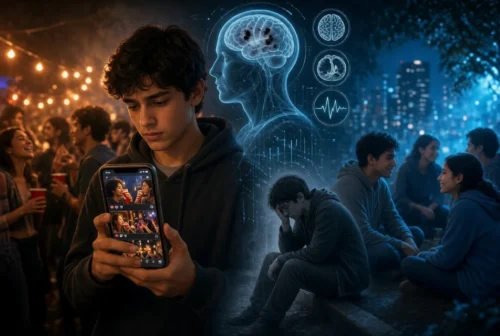
Meera is 16. At her cousin’s birthday party, an older boy hands her a cup. “Everyone is having one,” he says. Her friends are watching. In her pocket, her phone shows a message from her mother: “Call me if you need a ride.”
One small decision is about to change the evening. Why do some young people start drinking, what risks do they face, and how can families protect them? This guide to alcohol & youth in 2026 answers all three in simple words. We will return to Meera shortly.
Table of Contents
Why Alcohol & Youth in 2026 Matters
The World Health Organization (WHO) describes alcohol as a toxic substance that can cause dependence. Its fact sheet on alcohol reports about 2.6 million alcohol related deaths worldwide in 2019. People aged 20 to 39 carried the highest share, 13%, and WHO says no form of drinking is completely risk free.
What do the numbers say about young people? In the United States, the 2024 National Survey on Drug Use and Health found that 5.1 million people aged 12 to 20 (13.3%) drank in the past month, and 2.9 million (7.6%) binge drank, according to NIAAA statistics.
In India, the first national survey on substance use, run by AIIMS for the Ministry of Social Justice and Empowerment, found that 14.6% of people aged 10 to 75 use alcohol. The government has since said the same survey suggests about 30 lakh children and adolescents aged 10 to 17 use alcohol.
These figures have limits. They are self reported, the survey years differ, and the Indian survey dates from 2019, while a new national survey began in July 2025. Please do not compare the US and Indian numbers directly. Their age groups and methods are different.
Why does this matter now? Because the brain keeps developing into the 20s, and alcohol can alter that development. Early education and support cost far less than late rescue.
Why Teenagers Start Drinking
Teenagers are not irresponsible by nature. Adolescence is a time of seeking independence and new challenges, and NIAAA lists peer pressure, stress and easy access to alcohol, often at home, as common reasons for drinking.
Curiosity plays a part too. Many young people also feel the need to fit in at parties and gatherings. Some families worry that social media makes drinking look normal. Research on that link is still developing, so we should avoid strong claims.
The pattern is human, not shameful. That is why shame based responses rarely help.
What Alcohol Does to Young People
Alcohol affects judgement and coordination. NIAAA links underage drinking to injuries, risky decisions, violence, trouble at school and use of other substances.
Young bodies react strongly. NIAAA notes that for youth, as few as three drinks can bring girls to a binge level, and three to five drinks can do so for boys, depending on age and size. In 2023, 1,392 people under 21 died in US road crashes involving an alcohol impaired driver. Alcohol is also a factor in some deaths from falls, drowning and suicide.
Starting before age 15 is linked with a higher risk of alcohol use disorder later. That is a risk, not a certainty. Many young people who try alcohol never develop dependence.
| Experimentation | Repeated risky drinking | Possible alcohol use disorder | |
|---|---|---|---|
| Pattern | Rare, driven by curiosity | Regular or binge episodes | Cravings, loss of control |
| Main risks | Accidents, poor choices on the day | Injury, school decline, mood changes | Health, mental wellbeing, relationships |
| Best response | Calm talk and clear rules | Parent talk plus a health check | Professional assessment and treatment |
Experimentation is not the same as a disorder, but it is not harmless either. Supportive parenting keeps the door open. Shame teaches young people to hide. Prevention builds skills before trouble starts. Intervention helps when trouble has already begun. Both are needed.

What Happened Next to Meera (Hypothetical)
Meera said no and put the cup down. An hour later, her 15 year old friend Kabir, who had been drinking quickly, was lying on a sofa and would not wake up properly. “Let him sleep it off,” someone said.
Meera remembered the family rule: when in doubt, call. His breathing was slow and uneven. She called 112 and then her mother. Help arrived, and Kabir recovered in hospital. The lesson is simple. Calling early is never an overreaction.
Warning Signs Parents Should Notice
NIAAA lists possible signs of underage drinking:
- Changes in mood, including anger or irritability
- Academic or behaviour problems at school
- Changing groups of friends
- Low energy or less care in appearance
- Finding alcohol among belongings, or smelling it on the breath
- Problems with concentration or memory
No single sign proves alcohol use. Stress, sleep problems or mental health concerns can cause the same changes. Treat signs as a reason to talk, not to accuse.
Prevention That Actually Works: Recognise, Refuse, Reach Out, Recover
This four step framework was created for this article. It is not an official guideline.
Recognise. Notice the pressure, the setting and your own stress before the cup arrives.
Refuse. Prepare a line in advance. “No thanks, I’m good. I have a ride home” works well, and a friend who joins you makes it easier.
Reach Out. Tell a trusted adult, call a parent, or ask a friend for help. Asking early is a strength.
Recover. If drinking has already happened, return to supportive routines, talk to a health professional and treat setbacks as part of learning.
NIAAA describes five levels of prevention: individual, school, family, community and policy. Family programmes help parents set clear rules and talk openly. School programmes teach skills for staying alcohol free. Policies, such as higher prices and age limits, make alcohol harder to get. Legal drinking ages differ across Indian states, so check your local law.
Every method has limits. Education alone does not change every teenager’s behaviour, and awareness campaigns reach many people but weakly. NIAAA stresses that genetics, personality and environment all matter, so no approach works for everyone.
Three Common Myths
“Occasional underage drinking is harmless.” WHO says risk rises sharply with the amount consumed on a single occasion. Even rare drinking can lead to accidents.
“A good student cannot have a problem.” Grades are one clue, not proof either way.
“Punishment alone will fix it.” Punishment may stop open conversation. Screening, support and family communication are the approaches NIAAA recommends.
What to Do When Someone Needs Help
Start calmly, listen without humiliation and avoid labels. NIAAA and the American Academy of Pediatrics recommend regular screening of young people for alcohol use, so a visit to a paediatrician or family doctor is a good first step. Treatment can include counselling and family therapy.
For emotional support in India, Tele-MANAS offers free, 24 hour counselling on 14416 or 1800 891 4416.
Emergency warning. Call 112 immediately if someone is unconscious, difficult to wake, having a seizure, breathing slowly or abnormally, or has pale or bluish skin. MedlinePlus advises placing a breathing person on their side and not inducing vomiting. Never leave the person alone to sleep it off, and do not rely on coffee or a cold shower. Online advice cannot replace emergency care.
What Readers Should Do Next
- Parents: Hold one calm conversation this week. Agree on clear rules and a “call me, no questions tonight” promise.
- Teenagers: Pick your refusal line today and share it with a friend.
- Teachers: Teach refusal skills and share the names of trusted counsellors.
Frequently Asked Questions
1. Why do some teenagers start drinking alcohol? Common reasons include peer pressure, stress, curiosity, the wish for independence and easy access, often at home.
2. How can alcohol affect the developing brain? Brains keep developing into the 20s, and NIAAA says alcohol can alter that development, with possible effects on structure and function.
3. What are the warning signs of alcohol misuse in teenagers? Look for mood changes, school problems, new friend groups and low energy. No single sign is proof, so talk first.
4. How can parents talk to teenagers about alcohol? Choose a calm moment, ask open questions, listen fully and set clear rules together. Avoid shouting or shaming.
5. What should someone do if a teenager has consumed too much alcohol? Call 112 if the teen is unconscious, hard to wake, vomiting repeatedly, seizing or breathing abnormally. Stay with them and do not let them sleep it off alone.
Conclusion
Alcohol & youth in 2026 is not a story about bad teenagers. It is a story about growing brains, strong pressures and the adults who stay close. Recognise the risk, refuse with confidence, reach out early and recover without shame. When families, schools and communities do this together, the next Meera will already know what to do.