
Introduction
Riya was twenty six. She worked long shifts at a call centre in Pune, drank two cups of chai a day, and rarely got sick.
So when a dry cough showed up in October, nobody worried. Not her mother. Not her roommate. Not even Riya herself.
She blamed the office air conditioning. Then the pollution. Then a “viral thing going around.”
Three months later, she was coughing up blood.
That single symptom sent her to a chest specialist, and the diagnosis changed everything: pulmonary tuberculosis, already advanced.
Riya survived. Not everyone does.
Tuberculosis, or TB, is one of the oldest diseases known to humanity, yet it still kills more than a million people every single year. In 2024 alone, TB caused an estimated 1.23 million deaths worldwide, making it one of the leading causes of death from a single infectious agent on the planet.
If a disease this old and this well understood is still this deadly, something important is being missed by most people. This article walks through exactly why tuberculosis is fatal, how it silently destroys the body, who is most at risk, and what genuinely works to prevent and survive it.
Read until the end. The section on early warning signs alone could help you recognise TB in yourself or someone you love, long before it becomes life threatening.
Table of Contents
What Is Tuberculosis
Tuberculosis is a bacterial infection caused by a germ called Mycobacterium tuberculosis. It usually attacks the lungs, which is why it is often called pulmonary TB, but it can also affect the kidneys, spine, brain and other organs.
TB spreads through the air. When someone with active TB in their lungs coughs, sneezes, laughs or even talks, they release tiny droplets carrying the bacteria. Another person nearby can breathe those droplets in and become infected.
What makes TB tricky is that infection does not always mean illness. Many people carry the bacteria in a dormant, inactive form for years without ever feeling sick. This is called latent TB. It only becomes dangerous when the immune system weakens and the bacteria wake up, turning into active TB disease.
Why Tuberculosis Is Fatal
This is the question that matters most, so let’s answer it directly.
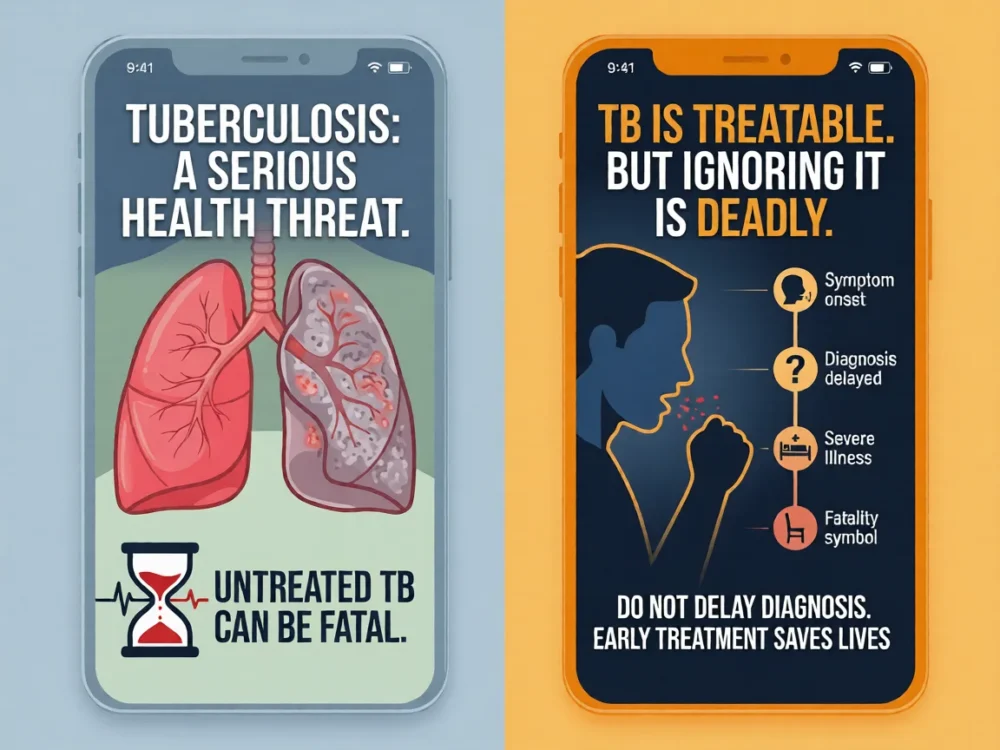
Tuberculosis is fatal because it is slow, silent and highly destructive all at once. It rarely announces itself with the urgency of a heart attack or a stroke. Instead, it works quietly for weeks or months, breaking down lung tissue while the person still feels well enough to go to work, care for their family and ignore the warning signs.
By the time breathlessness, chest pain or coughing blood appear, TB has often already caused serious, sometimes irreversible damage.
A few core reasons explain why tuberculosis is fatal even in the modern era of medicine.
It attacks a vital organ slowly and silently. The lungs are essential for survival, and TB destroys lung tissue gradually, so the body compensates until damage is severe.
It is highly contagious before it is diagnosed. A person can spread TB to ten or more people before they even know they are sick, which allows the disease to travel through households, workplaces and crowded communities.
Treatment is long, and many people stop too early. A full TB cure usually takes six months of daily medication. When people feel better after a few weeks and stop treatment, the bacteria that survive often become drug resistant, which is far harder to treat and far more dangerous.
It thrives on weak immunity. People with HIV, diabetes, malnutrition or those on immune suppressing medication are far more likely to develop severe, fast moving TB.
Diagnosis is often delayed. Early TB symptoms look like an ordinary cold, seasonal cough or fatigue, so people wait weeks or months before seeking help.
Drug resistant strains are rising. Multidrug resistant TB does not respond to standard first line antibiotics, requiring longer, harsher and more expensive treatment with a lower success rate.
Poverty and undernutrition fuel the disease. Crowded housing, poor ventilation and inadequate nutrition dramatically raise both the risk of catching TB and the risk of dying from it.
How TB Attacks The Lungs
Once inhaled, TB bacteria settle deep in the lungs and are attacked by immune cells called macrophages. In a healthy immune system, these cells often wall off the bacteria inside small structures called granulomas, keeping the infection contained and inactive.
If the immune system weakens, or if the initial infection is severe, the bacteria break free from these granulomas. They multiply and slowly destroy the surrounding lung tissue, creating cavities where healthy, oxygen exchanging tissue used to be.
Over time, this scarring reduces how much oxygen a person’s blood can carry, which is why advanced TB patients often feel severe breathlessness even while resting.
How TB Spreads
TB is airborne, not spread through touching objects, sharing food or shaking hands. The bacteria travel in tiny respiratory droplets released when someone with active pulmonary TB coughs or sneezes.
Close, prolonged contact in poorly ventilated spaces, such as crowded homes, hostels, prisons or public transport, significantly increases the risk of transmission. Someone who breathes in enough bacteria can become infected within a single extended exposure, though most people who are exposed do not develop active disease immediately.
Symptoms Of Tuberculosis
Common symptoms of active pulmonary TB include:
- A cough lasting more than two to three weeks
- Coughing up blood or blood streaked mucus
- Chest pain, especially while breathing or coughing
- Unexplained weight loss
- Night sweats
- Ongoing fatigue
- Low grade fever, often worse in the evening
- Loss of appetite
Early Warning Signs People Ignore
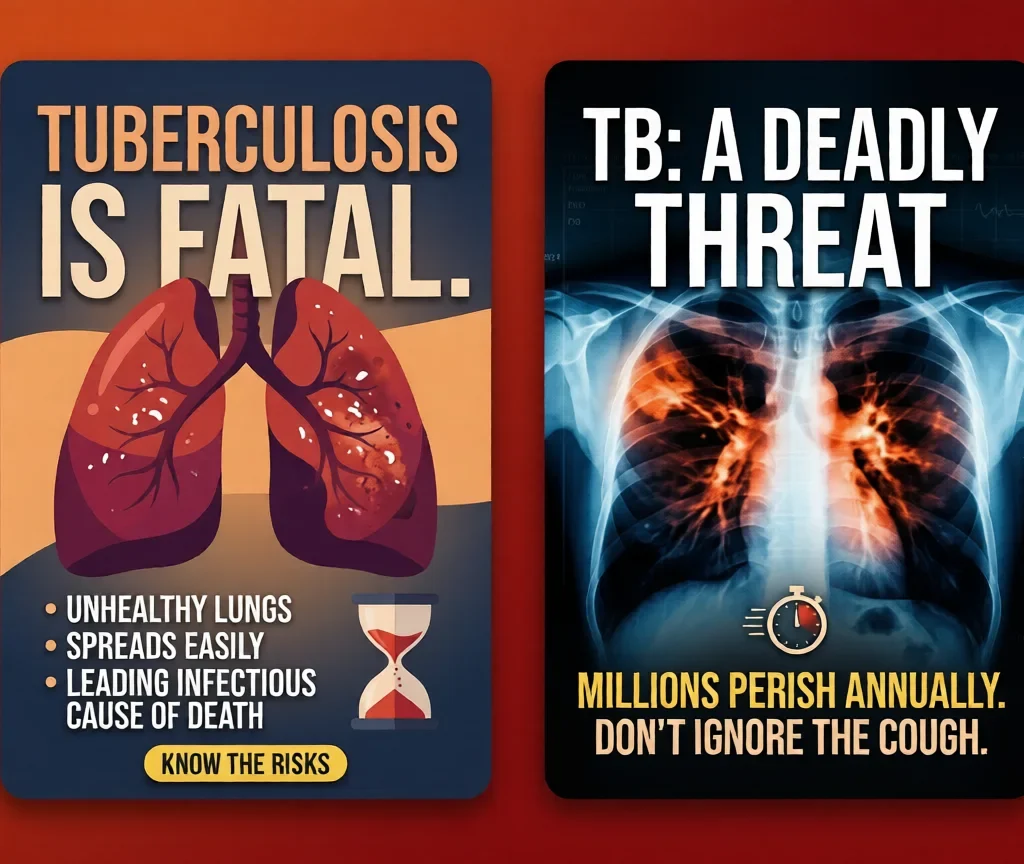
Most TB deaths are not caused by a lack of medicine. They are caused by delay.
The earliest warning signs are often dismissed as a lingering cold, seasonal allergies, work stress or simply “being tired lately.” A cough that refuses to fully go away after three weeks is the single most important warning sign of TB and should always be checked by a doctor, especially alongside fatigue or unexplained weight loss.
Risk Factors And Who Is At Greatest Risk
TB does not affect everyone equally. People at higher risk include:
- Those living with HIV or another condition that weakens immunity
- People with diabetes
- Malnourished individuals
- Smokers and people with alcohol use disorders
- Healthcare workers
- People in crowded housing, shelters or prisons
- Close household contacts of someone with active TB
- Young children and elderly adults
According to the WHO Global Tuberculosis Report 2025, key drivers of TB incidence worldwide include undernutrition, low income, HIV, diabetes, smoking and alcohol use disorders, a combination that hits vulnerable communities the hardest.
Complications Of Tuberculosis
Drug Resistant Tuberculosis
When TB bacteria stop responding to standard first line drugs, it is called drug resistant TB. This form requires longer treatment, stronger medication with more side effects, and has a lower overall cure rate. It develops mainly when treatment is incomplete, interrupted or incorrectly prescribed.
TB Meningitis
If TB bacteria spread to the membranes surrounding the brain and spinal cord, it causes TB meningitis. This is a medical emergency, with symptoms including severe headache, neck stiffness, confusion and seizures. It progresses quickly and needs urgent hospital treatment.
Miliary Tuberculosis
Miliary TB happens when the bacteria spread through the bloodstream to multiple organs at once, forming countless tiny lesions, similar in appearance to millet seeds on a scan. It is aggressive, harder to diagnose, and considerably more dangerous than TB confined to the lungs.
Diagnosis
Doctors diagnose TB using a combination of chest X-rays, sputum tests, molecular tests such as GeneXpert, and sometimes a tuberculin skin test or blood based interferon gamma release assay. Early, accurate testing is one of the most powerful tools against TB, since it allows treatment to begin before serious lung damage occurs.
Treatment: Can Tuberculosis Be Cured
Yes. Tuberculosis is curable, and this is one of the most hopeful facts in this entire article.
Standard drug sensitive TB is treated with a combination of antibiotics, usually taken daily for six months. When taken exactly as prescribed and completed fully, the cure rate is high.
Drug resistant TB requires a longer, more intensive regimen, sometimes extending to nine months or beyond, using newer drug combinations recommended by WHO. Completing the entire course, even after symptoms disappear, is the single most important factor in a full, lasting cure.
How To Prevent TB
- Complete the BCG vaccination in childhood where recommended
- Ensure good ventilation in homes and workplaces
- Seek testing early for a cough lasting more than three weeks
- Support household contacts of a TB patient to get screened
- Manage conditions like diabetes and HIV that weaken immunity
- Improve nutrition, since undernutrition significantly raises TB risk
- Avoid smoking and limit alcohol use
Nutrition During TB Treatment
Good nutrition supports the immune system and helps the body repair damaged tissue during TB treatment. A diet rich in protein, whole grains, fruits, vegetables and adequate calories is generally recommended, alongside any specific guidance from a treating doctor, since malnutrition can slow recovery and worsen outcomes.
Recovery Tips
- Take every dose of medication at the same time each day
- Attend every scheduled follow up test
- Rest adequately, especially in the first weeks of treatment
- Isolate as advised by your doctor until you are no longer infectious
- Keep a simple daily checklist to track medication and symptoms
Mental Health During TB Treatment
A TB diagnosis often brings fear, isolation and stigma, sometimes more distressing than the physical illness itself. Feeling low, anxious or isolated during treatment is common and understandable. Talking openly with family, joining a local support group, and maintaining contact with a counsellor or treating doctor can make a meaningful difference to how someone copes emotionally through the months of treatment.
Latest Medical Research And WHO Recommendations
The WHO Global Tuberculosis Report 2025 reported that globally, 10.7 million people fell ill with TB and 1.23 million died in 2024, with the case fatality rate estimated at 11.5 percent. Encouragingly, both new cases and deaths declined slightly compared to the previous year, the first meaningful improvement since the COVID nineteen pandemic disrupted TB services worldwide.
India remains the country with the highest TB burden globally, accounting for roughly a quarter of all cases worldwide. At the same time, India’s National TB Elimination Programme has reported a real decline in both incidence and mortality over the past decade, alongside a sharp rise in treatment coverage, showing that sustained public health effort genuinely saves lives.
WHO recommends TB preventive treatment for people living with HIV, household contacts of anyone with confirmed pulmonary TB, and other high risk groups such as people receiving dialysis, alongside continued investment in faster diagnostics and newer treatment regimens for drug resistant TB.
Common Myths About Tuberculosis
| Myth | Fact |
|---|---|
| TB only affects the poor | TB can affect anyone, though poverty and undernutrition raise risk |
| TB is always fatal | TB is curable when diagnosed early and treated fully |
| TB spreads through touch or shared utensils | TB spreads through air, not touch or shared food |
| Once cured, TB cannot return | TB can recur if treatment is incomplete or immunity weakens |
| TB is an old disease that barely exists anymore | TB still kills over a million people every year worldwide |
Important Facts To Remember
Did You Know? A cough lasting more than two to three weeks is the most important early warning sign of TB and should never be ignored.
Quick Fact: TB is fully curable with the correct, complete course of treatment.
Expert Tip: Never stop TB medication early, even after symptoms disappear, since incomplete treatment is the leading cause of drug resistant TB.
Warning: Coughing up blood is a medical emergency and needs immediate evaluation.
Case Study: Riya’s Journey Through Tuberculosis
This is an illustrative, composite case study created to explain TB in a relatable way. It does not represent one real, identifiable patient.
Symptoms: Riya first noticed a dry cough that lingered for weeks, along with tiredness she blamed on long work shifts. Over time, she developed mild fever in the evenings and began losing weight without trying.
Diagnosis: When she eventually coughed up blood, she visited a chest specialist immediately. A chest X-ray and sputum test confirmed pulmonary tuberculosis, already moderately advanced.
Treatment: Riya began a six month course of standard TB medication. The first two weeks were difficult, with nausea and fatigue, but her care team supported her through side effects and stressed the importance of never missing a dose.
Recovery: By month four, her cough had disappeared, her appetite returned, and repeat tests showed she was no longer infectious. She completed the full six months exactly as prescribed.
Lessons Learned: Riya’s story is a reminder that TB rarely looks dramatic in its early stages. It hides behind an ordinary cough. Recognising that warning sign early, and completing treatment fully once diagnosed, made the difference between a manageable illness and a life threatening one.
Conclusion
Tuberculosis is fatal not because medicine has failed against it, but because it is patient, silent and easily mistaken for something harmless. It hides behind an everyday cough. It spreads before anyone even knows it is there. And it punishes delay far more than it punishes the disease itself.
The hopeful truth is this: TB is curable, prevention works, and early recognition saves lives.
Don’t ignore a cough that refuses to go away. Talk to your doctor. Protect your family. Share this guide with someone who needs to read it, and explore more expert, evidence based health guides on kritiinfo.com to stay informed and protected.
Frequently Asked Questions
1. Why is tuberculosis fatal if it can be cured? TB is fatal mainly due to delayed diagnosis, incomplete treatment and drug resistance. When caught early and treated fully with the correct antibiotics, TB has a high cure rate, but silent early symptoms often allow serious lung damage before treatment begins.
2. How long does TB take to become fatal? Untreated active TB can take months to years to become fatal, since it typically destroys lung tissue gradually. However, aggressive forms like miliary TB or TB meningitis can turn dangerous much faster, sometimes within weeks.
3. Can TB be cured completely? Yes, standard drug sensitive TB is curable with a full six month course of antibiotics. Drug resistant TB needs a longer, more intensive regimen but can still be cured with consistent, complete treatment under medical supervision.
4. Is TB more dangerous than before? The overall global death rate has slowly declined in recent years, but drug resistant TB is a growing concern, and TB still causes over a million deaths annually, making it one of the deadliest infectious diseases today.
5. What is the first sign of tuberculosis? A cough lasting more than two to three weeks is usually the earliest and most important sign, often accompanied by mild fatigue or low grade fever that people initially dismiss as a common cold.
6. Can TB spread through the air over long distances? TB spreads through airborne droplets, but the highest risk comes from close, prolonged contact in poorly ventilated indoor spaces rather than brief, outdoor or well ventilated encounters.
7. Who is most at risk of dying from TB? People with weakened immunity, including those with HIV, diabetes or malnutrition, along with people who cannot access early diagnosis and complete treatment, face the highest risk of dying from TB.
8. What is drug resistant TB? Drug resistant TB occurs when the bacteria no longer respond to standard first line antibiotics, usually because of incomplete or incorrect earlier treatment. It requires longer, stronger and more carefully monitored treatment.
9. Can a fully cured TB patient get it again? Yes, TB can recur if the original treatment was incomplete or if the person is re-exposed and their immunity is weak. Completing the full prescribed course significantly lowers this risk.
10. How can I protect my family from TB? Ensure good ventilation at home, seek testing early for a persistent cough, support household contacts of any TB patient in getting screened, and manage conditions like diabetes that weaken immunity.
Really helpful post. If you make music online, check out TextSong at . TextSong