
Introduction
I remember the night I realized my freedom had a paperwork price: a half-written client invoice, a visa expiring in six weeks, and a bewildering email from a tax office asking about “tax residency.” That moment forced me to treat taxes not as fear but as a strategic skill — a Tax Hustle that separates anxious travelers from confident location-independent earners. This article shows six practical, experience-tested Tax Hustle secrets that helped me manage freelance income, international banking, and visa paperwork across continents, and that will help both beginners and seasoned remote entrepreneurs protect income and grow wealth responsibly.
What Makes Digital Nomads Financially Different
Digital nomads juggle income from many sources — freelance contracts, ad revenue, affiliate checks, and passive income — while moving between tax systems and banking rules. That mix makes tax residency, withholding, and reporting rules critical; small misunderstandings can create double taxation or unexpected audits. The difference isn’t just geography: it’s the constant cross-border flow of money and time that makes ordinary bookkeeping suddenly strategic.
Why Tax Hustle Matters More Than Ever
Remote work guidance and cross-border tax rules have evolved fast; the OECD and major tax authorities are actively updating rules around remote working and permanent establishments, raising stakes for location independent workers. That means a proactive Tax Hustle — knowing residency thresholds, documenting days and purpose, and designing contracts — reduces future risk and preserves freedom. Treating taxes as part of your growth plan, not an afterthought, is the most empowering habit a nomad can build.
How Smart Nomads Reduce Legal Tax Stress
I built a simple routine: track my country days, keep a single dedicated business account, and ask for clear withholding terms in client contracts. These three actions alone cut my tax questions in half during cross-border months. Use formal documentation—signed contracts showing remote status, visa records, and travel logs—so you can prove intent and establish whether a tax residency rule applies. When in doubt, pay a one-time consult with an international tax advisor; it’s usually cheaper than correcting a mistake later.
What Countries Welcome Digital Nomads Best
Many countries now offer digital nomad visas and clear entry paths for remote entrepreneurs; popular choices include Portugal, Estonia, Thailand, and several EU options that balance quality of life with favorable remote work frameworks. Each program differs on required income, duration, and implications for tax residency, so vet visa rules alongside tax rules before choosing a base. Nomad List and country-specific visa guides give up-to-date, practical insights to help you match lifestyle and tax strategy.
How Remote Entrepreneurs Build Global Income Streams
A resilient income mix shields nomads from local shocks: combine retainer clients, productized services, recurring subscriptions, and passive streams like digital products or royalties. Structuring income this way reduces dependency on a single tax jurisdiction and smooths cash flow during visa transitions. Record each revenue source separately in your books so you can report accurately and apply the right tax treatment when different rules apply.
Why Tax Residency Can Change Your Wealth
Tax residency rules determine where you owe the big-ticket tax obligations, and a single unnoticed residency trigger can dramatically change effective tax rates. Count days, keep travel proofs, and document the commercial purpose for your presence — many tax regimes focus on substance and intent, not only days. If you plan to establish a low-tax base, map residency timing carefully and execute it with documentation and professional advice to make your Tax Hustle defensible.
What Banking Habits Protect Nomad Finances
Use a primary business account in a reputable bank, maintain clear paper trails, and separate personal travel spending from business receipts; this prevents messy audits and offers proof when jurisdictions ask about income sources. Consider multi-currency accounts and fintech tools for low-fee transfers, but keep at least one relationship with a regulated international bank for bigger transactions and lending options. Remember that offshore banking is not a magic shield; transparency and proper reporting are part of a legal Tax Hustle.
How Experienced Nomads Avoid Expensive Mistakes
Experienced nomads adopt three rules: keep a tax calendar, monthly reconciliations, and an annual tax checklist. I learned this the hard way after a missed filing cost me time and a fine — a small subscription to a calendar and a quarterly cleanup avoided repeat headaches. Also, avoid relying solely on “nomad advice” forums for legal decisions; consult official tax guidance and trusted resources like OECD or the World Bank summaries when interpreting cross-border rules.
Why Long Term Freedom Requires Financial Discipline
Long-term location independence needs predictable savings, retirement planning, and compliance. Even with flexible travel, maintain retirement contributions and emergency funds in stable accounts to keep options open and prevent forced returns to a high-cost base. Think of your Tax Hustle as long-term insurance: disciplined reporting and saving keep your lifestyle sustainable and your options flexible.
How Tax Hustle Creates Sustainable Remote Success
Long-term location independence needs predictable savings, retirement planning, and compliance. Even with flexible travel, maintain retirement contributions and emergency funds in stable accounts to keep options open and prevent forced returns to a high-cost base. Think of your Tax Hustle as long-term insurance: disciplined reporting and saving keep your lifestyle sustainable and your options flexible.
How Tax Hustle Creates Sustainable Remote Success
When you convert tax complexity into a repeatable system — bookkeeping templates, contract clauses that clarify withholding, and a trusted advisor list — you free mental space to scale business and enjoy travel. Sustainable success comes from consistent habits more than clever loopholes: clear records, timely filings, and smart bank setups keep audits manageable and build a defensible tax position.
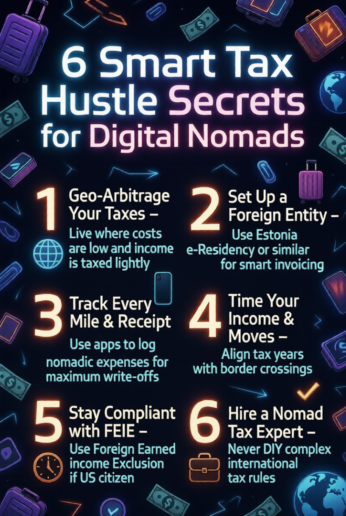
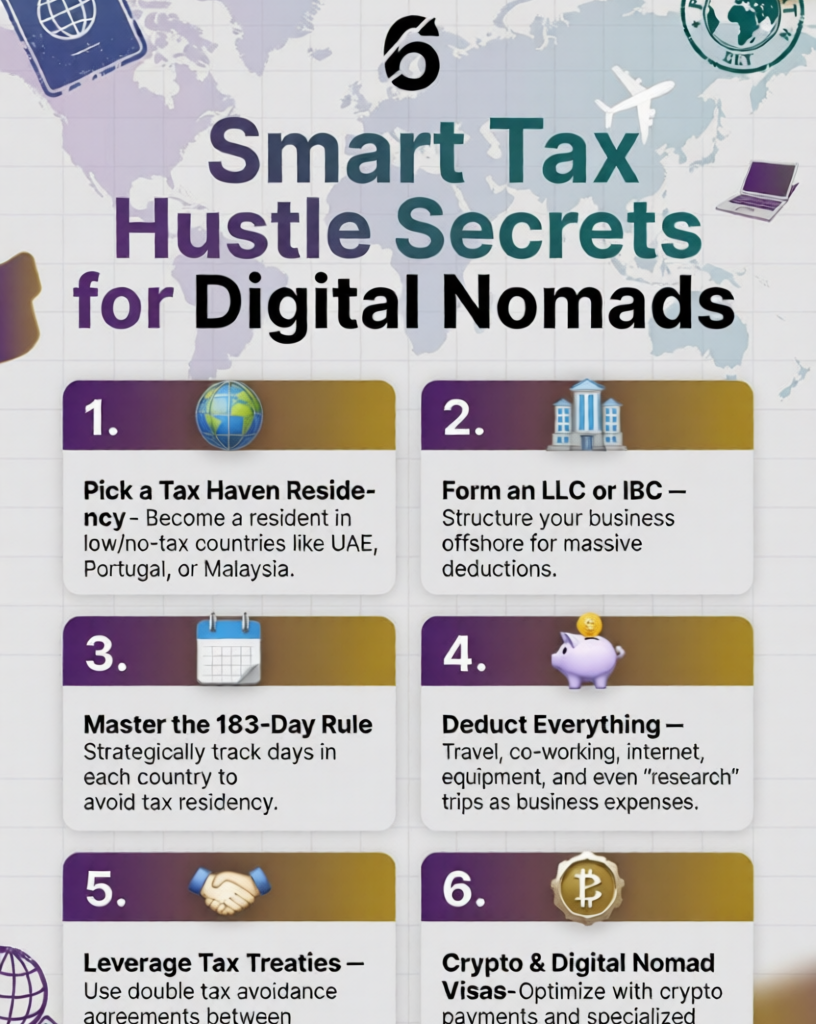
Actionable Checklist: 6 Tax Hustle Secrets (Step-by-step)
Track days and purpose: Use a single travel log and calendar with notes on business activities; it helps prove residency intentions.
Standardize contracts: Add clauses about client jurisdiction and withholding responsibilities to reduce surprises.
Separate accounts: One business account, one personal account, and one savings account for taxes — simple and audit-friendly.
Diversify income: Build recurring revenue so a sudden visa change doesn’t stop cash flow.
Use expert checks: Annual international tax review costs far less than correcting years of misfiling.
Leverage trusted resources: Follow OECD guidance for cross-border rules and Nomad List for living insights before moving.
Real Story: How a Tax Hustle Saved My Year
On a three-month stint in Lisbon I assumed short stays meant no tax issues, but my hosting invoices and a long-term co-working desk triggered questions from a European client’s tax advisor. Because I had day logs, signed contracts showing US-based clients, and clear invoicing, I resolved the issue in one week rather than months — proof that simple systems turn risks into manageable tasks.
FAQ:
Q: What is a Tax Hustle for freelancers?
A: A Tax Hustle is a practical, legal approach to tracking income, optimizing withholding, and documenting taxes as a freelancer to avoid double taxation and penalties.
Q: When does a digital nomad become a tax resident?
A: Residency depends on local rules — commonly day-counts or permanent establishment tests — so track days and commercial purpose; OECD guidance explains evolving tests for remote work.
Q: How should remote workers handle cross-border taxation?
A: Keep accurate records, use contracts specifying client jurisdiction, and consult double tax treaties or an advisor to apply credits or exemptions.
Q: Which countries are best for digital nomads now?
A: Popular and practical options include Portugal, Estonia, Thailand, and others that offer nomad visas and strong infrastructure; check recent lists from Nomad List and Forbes for updates.
Q: Are there legal ways to reduce taxes as a nomad?
A: Yes — use tax treaties, timed residency changes, proper expense deductions, and choosing the right business structure, all with professional help to stay compliant.
Q: How should nomads bank internationally?
A: Use a primary business account in a regulated bank, a low-fee multi-currency account for transfers, and maintain good records for all cross-border transactions.
Final practical tip
Start with one small habit this week: set up a travel+work calendar and add business purpose notes for every country you enter; that one habit will make every subsequent Tax Hustle step far simpler and defensible.
Call To Action
Loved these Tax Hustle strategies? Explore more expert guides and in-depth templates on kritiinfo.com for remote work productivity and passive income management to keep your nomad life thriving.