

Picture this: It’s Friday afternoon, and your boss rips into your latest report in front of the team. “This is sloppy—do better next time.” Your stomach drops, cheeks burn, and suddenly, you’re replaying every word, questioning your worth. Sound familiar? I’ve been there—nights lost to overanalyzing feedback, letting office politics erode my confidence. Most professionals take work personally because our jobs feel like extensions of ourselves. But here’s the game-changer: developing thicker skin doesn’t mean becoming numb. It means building the mental armor to detach emotionally, preserve your energy, and accelerate your career. In this guide, we’ll unpack why criticism stings and share seven proven habits to cultivate thicker skin for lasting resilience.
Why We Emotionally Attach to Work
Work isn’t just a paycheck—it’s where we pour our identity, creativity, and long hours. Psychologically, we tie our self-worth to performance because evolution wired us for belonging. Rejection at work mimics social exclusion, triggering the same brain response as physical pain, according to Psychology Today.
From my days navigating toxic team dynamics, I saw how praise inflated egos while critique crushed them. We attach because vulnerability feels risky in high-stakes environments. Breaking this cycle starts with awareness: your value isn’t your output. Check out our guide to building workplace confidence for more on reclaiming your inner strength.
Hidden Psychological Reasons Criticism Hurts Deeply
Criticism slices deep for hidden reasons. First, imposter syndrome whispers you’re a fraud, amplifying every flaw. Studies from Harvard Business Review show high achievers suffer most, turning feedback into self-doubt.
Second, emotional contagion spreads negativity—toxic coworkers’ barbs infect your mindset. Third, cognitive biases like personalization make neutral comments feel targeted. I once internalized a manager’s offhand “not quite” as career-ending failure. Truth? It was her stress talking. Understanding these roots builds thicker skin by reframing pain as data, not destiny. For deeper dives, explore Verywell Mind’s insights on emotional triggers.
Signs You’re Taking Work Too Personally
Spotting the problem is step one. Here are key red flags:
Rumination overload: Rehashing feedback for hours, losing sleep.
Physical toll: Tension headaches, burnout from defensiveness.
Overreactions: Snapping at colleagues or avoiding risks.
Identity bleed: One bad meeting tanks your whole self-image.
Stagnation: Skipping feedback to dodge pain, halting growth.
If these hit home, you’re not alone. I ignored them until a promotion slipped away. Recognizing them sparks change—thicker skin turns vulnerability into power.
How Thicker Skin Boosts Confidence and Professionalism
Thicker skin isn’t callousness; it’s selective permeability. It filters negativity while absorbing growth. MindTools explains resilient pros view setbacks as temporary, preserving confidence.
In my career pivot from startup chaos to consulting, thicker skin let me pitch boldly despite rejections. Result? Stronger professionalism, as you respond calmly, earning respect. It signals maturity, opening leadership doors. Pair it with our emotional intelligence at work article for amplified impact.
Practical Emotional Detachment Techniques
Detach without disconnecting. Try these:
Reframe feedback: Ask, “What can I control?” Journal facts vs. feelings.
4-7-8 breathing: Inhale 4 seconds, hold 7, exhale 8—resets amygdala hijacks.
Boundary ritual: End workday with a “shutdown” walk, mentally clocking out.
Perspective shift: Imagine advising a friend—would you judge as harshly?
These worked for me during a brutal performance review season. Practice daily for thicker skin that lasts.
How Successful Pros Separate Identity from Performance
Top performers know: You are not your role. Sheryl Sandberg rebuilt post-tragedy by decoupling self from success, per her HBR reflections. They treat work as a game—wins score points, losses teach plays.
One exec I coached visualized her career as a marathon, not a sprint. Feedback? Course corrections. Emulate by affirming: “I am capable, beyond this task.” This mindset fuels thicker skin and unshakeable poise.
Communication Habits That Reduce Emotional Reactions
Words shape reactions. Adopt these:
Neutral acknowledgments: “Thanks for the input—I’ll review it.”
Curiosity questions: “What specific changes would help?”
“I” statements: “I see your point; here’s my approach.”
Pause power: Count to five before responding.
These diffused my office politics battles, projecting thicker skin without aggression. Link to our stress management strategies for more tools.
How Workplace Flexibility Unlocks Leadership Potential
Flexibility isn’t solo—it’s leadership fuel. Thick-skinned leaders inspire teams by modeling calm amid storms. Psychology Today links it to grit, predicting promotions.
I’ve seen resilient managers turn toxic cultures around. Cultivate it, and you’ll lead with authority, not reactivity.
Real-Life Examples and Lessons from the Trenches
Take Sarah, a marketer gutted by “uninspired” client feedback. She built thicker skin by dissecting it objectively—tweaked her pitch, won the deal. Lesson: Pain precedes progress.
Or my story: Passed over for promotion amid “not a team player” whispers. I sought real feedback, adjusted collaboration—landed a better role. These tales prove thicker skin transforms setbacks into setups.
Common Mistakes When Building Emotional Strength
Avoid these pitfalls:
Suppressing emotions: Bottling leads to explosions—process, don’t ignore.
Over-isolating: Detachment isn’t withdrawal; stay connected.
Seeking perfection: Thicker skin accepts “good enough.”
Neglecting self-care: Resilience needs sleep, exercise, joy.
I skipped self-care once, crashing into burnout. Learn from it.
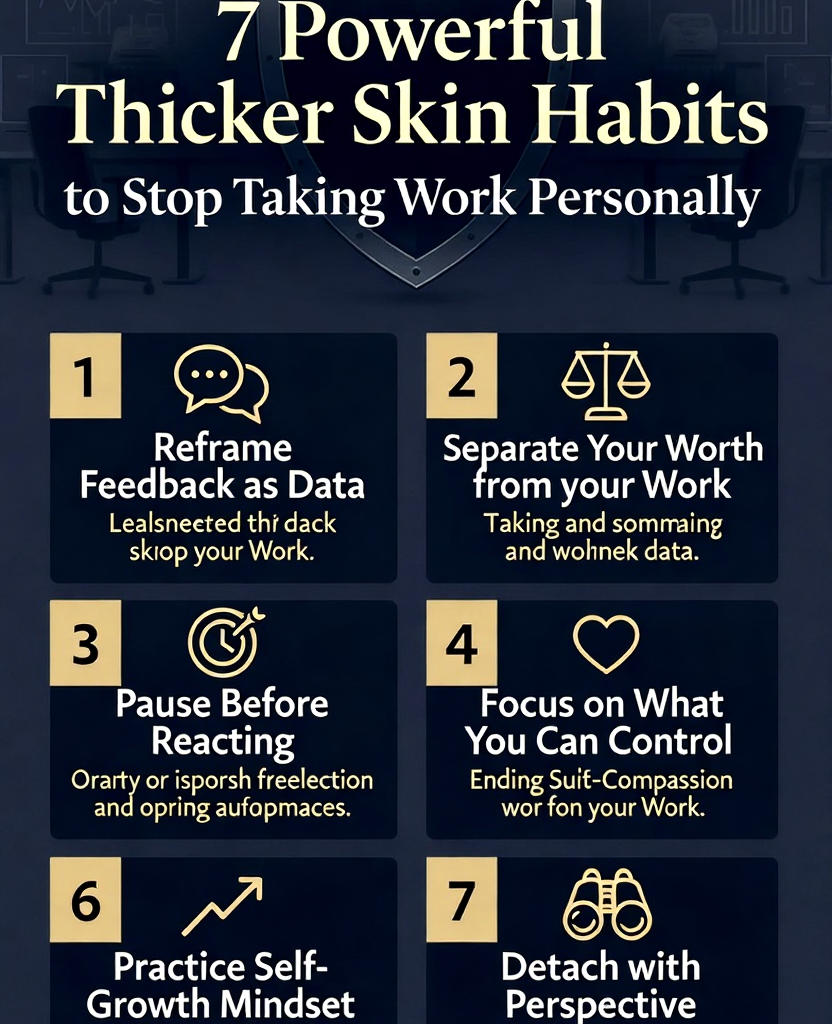
7 Daily Habits to Develop Thicker Skin
Here’s your roadmap—small, stackable habits for profound change:
Morning mindset reset: Affirm, “Feedback is info, not identity.” (5 minutes)
Feedback filter: After critiques, list one win and one tweak.
Gratitude anchor: Note three non-work strengths daily.
Exposure practice: Seek mild feedback weekly to desensitize.
Body scan breaks: Tense-release muscles during stress spikes.
Role reversal: Debate critiques as a neutral third party.
Evening offload: Journal releases, then close the book.
Commit 21 days; thicker skin becomes default.
Long-Term Career Benefits of Emotional Elasticity
Invest now, reap forever. Thicker skin slashes burnout, spikes promotions (resilient pros advance 20% faster, per HBR), and enhances joy. It fosters networks, innovation, and peace—your career’s secret weapon.
FAQ:
Final Thoughts: Embrace Thicker Skin for a Thriving CareerPause, breathe, reframe as growth data. Respond with “Appreciate the insight—what’s one adjustment?” Builds resilience fast.
What’s the fastest way to build emotional resilience?
Daily 4-7-8 breathing plus gratitude journaling. Consistency trumps intensity.
Can thicker skin help with toxic coworkers?
Yes—detach by gray rocking (neutral responses) and documenting issues. Focus on your lane.
How does thicker skin boost confidence at work?
It separates self-worth from outcomes, letting you risk boldly and recover swiftly.
What defines professional maturity in tough feedback?
Listening without defense, acting without resentment—thicker skin in action.
How long to develop thicker skin habits?
21-60 days with daily practice. Track progress in a journal for motivation.
Final Thoughts: Embrace Thicker Skin for a Thriving Career
You’ve got the tools—now build that thicker skin, one habit at a time. It won’t erase pain overnight, but it’ll shield your peace while propelling your career. Imagine critiquing without crumbling, leading without flinching, thriving amid chaos. That’s the resilient you waiting to emerge. Start today; your future self will thank you.
Ready for more? Dive into self-improvement gems on kritiinfo.com, from leadership mastery to stress-busting routines.