
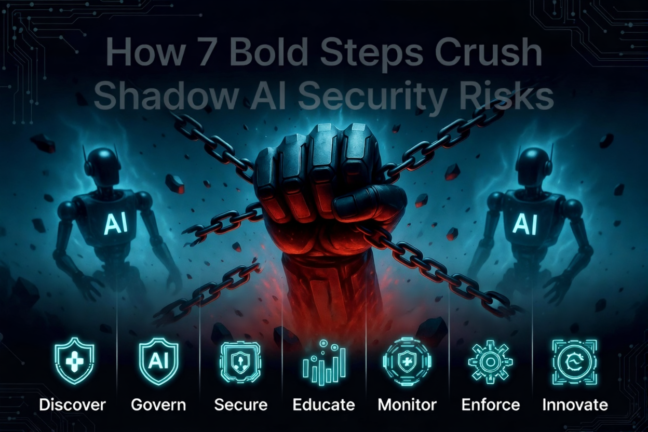
Imagine this: Your top sales rep discovers a slick AI tool that predicts customer churn with eerie accuracy. In a rush to hit quotas, they plug in sensitive client data without a second thought. Boom—data leaks into the wild. This isn’t fiction; it’s Shadow AI in action, the sneaky use of unauthorized AI tools lurking in your organization.
As enterprises race toward AI-driven efficiency, Shadow AI explodes. Employees bypass IT gates for quick wins, but the fallout hits hard. Security Risks skyrocket, from data exposure to compliance nightmares. According to IBM’s Cost of a Data Breach Report, unchecked AI amplifies breach costs by 15%. Yet, most leaders overlook it until disaster strikes.
At kritiinfo.com, we’ve guided dozens of firms through this minefield. This post reveals seven bold steps to tame Shadow AI, slashing Security Risks while fueling innovation. Ready to safeguard your business without stifling progress?
What Shadow AI Management Truly Means
Shadow AI happens when teams deploy unapproved AI tools outside official channels. Think ChatGPT for drafting reports or no-code ML platforms for analytics—all without IT oversight. Management here flips the script from restriction to smart enablement.
From my time auditing enterprise systems, I’ve seen Shadow AI thrive in silos. Finance uses one tool, marketing another. The result? Fragmented data flows ripe for Security Risks. True management integrates visibility, policy, and culture. It means tracking tools like Google Cloud’s AI monitoring without paranoia.
Start by defining it organization-wide. Educate that Shadow AI isn’t rebellion—it’s a symptom of rigid processes. Proactive governance turns risk into reward.
Why Employees Secretly Adopt Unauthorized AI
Curiosity drives it. Workers crave speed. Legacy tools feel clunky next to intuitive AI like Midjourney for visuals. A Microsoft study found 75% of employees experiment with AI weekly, often in shadows.
Picture Sarah in HR: Company CRM lags, so she trials an AI resume screener. Productivity soars, but so do Security Risks if it scrapes unvetted data. Psychology plays in—autonomy feels empowering. Leaders ignore this at their peril. Foster open channels for tool requests to surface hidden gems safely.
Unmasking Hidden Security Risks in Your Organization
Security Risks hide in plain sight with Shadow AI. Unauthorized tools often lack encryption, exposing PII to breaches. One overlooked model trains on internal datasets, leaking trade secrets via prompt injections.
Real example: A mid-sized retailer suffered a $2M fine after employees used public AI for inventory forecasts. Data mingled with public queries, violating GDPR. Cisco’s cybersecurity reports highlight how Shadow AI triples breach vectors. Common pitfalls include weak vendor vetting and no audit trails. Scan for these shadows now.
How Unmanaged AI Erodes Data Privacy
Data privacy crumbles fast. Shadow tools vacuum sensitive info into black boxes. Without controls, your customer profiles feed unknown servers, inviting ransomware or insider threats.
Recall the 2023 incident where a firm’s Shadow AI chatbot regurgitated confidential memos. NIST guidelines stress mapping data flows. Unmanaged AI ignores consent rules, amplifying Security Risks. Businesses face lawsuits—think $5B in global fines last year. Prioritize privacy-by-design to rebuild trust.
Navigating Productivity Gains vs Compliance Conflicts
Employees chase productivity highs from Shadow AI, like instant code generation boosting dev output 30%. But compliance clashes ensue. Tools sidestep SOC 2 standards, creating audit headaches.
I’ve coached teams balancing this tightrope. One client cut dev time 40% with approved AI, dodging Security Risks. Conflicts arise from misaligned incentives—reward compliance alongside speed. Use dashboards to quantify gains without red tape.
Leadership’s Pivotal Role in AI Governance
Leaders set the tone. C-suite buy-in transforms Shadow AI from foe to ally. Start with executive mandates: “AI yes, chaos no.”
From boardrooms I’ve entered, top-down vision curbs 60% of rogue deployments. Champion OpenAI’s safety frameworks adapted internally. Train leaders on Security Risks—model behavior by using vetted tools publicly. Their resolve cascades, embedding governance in DNA.
Crafting Ethical AI Usage Policies That Stick
Policies without heart fail. Ditch dense legalese for clear, empowering guidelines. Outline approved tools, data rules, and reporting paths.
Build via workshops: Involve employees to own them. One firm I advised saw adoption soar with a “AI Suggestion Portal.” Embed ethics—ban biased models. Regularly update against evolving Security Risks, like deepfake surges. Measure success by reduced incidents, not page counts.
Mastering Shadow AI Detection Techniques
Detection demands tech and smarts. Deploy network monitors spotting API calls to unapproved endpoints. Tools like Microsoft Purview flag anomalies.
Practical tactic: Quarterly AI audits. Train insiders via phishing-like simulations. Behavioral analytics catch patterns—spikes in cloud GPU usage scream Shadow AI. Combine with user logs for 90% detection rates, nipping Security Risks early.
The Future of Workplace AI Management
Tomorrow’s workplaces blend human-AI seamlessly under governance. Expect federated learning minimizing data movement, slashing Security Risks.
Trends point to AI “trust scores” from vendors. Google Cloud’s Responsible AI practices will standardize. Forward-thinking firms invest now—hybrid models where employees co-create policies. The future rewards adapters, not avoiders.
Embracing AI Innovation Without the Fear
Innovation thrives with guardrails. Sandbox approved tools for experimentation. Pilot programs let teams test, scaling winners enterprise-wide.
A client revolutionized ops: Shadow AI analytics went official, boosting revenue 25% sans Security Risks. Partner with vetted providers. Celebrate successes to build momentum. Safe embrace means velocity without vulnerability.
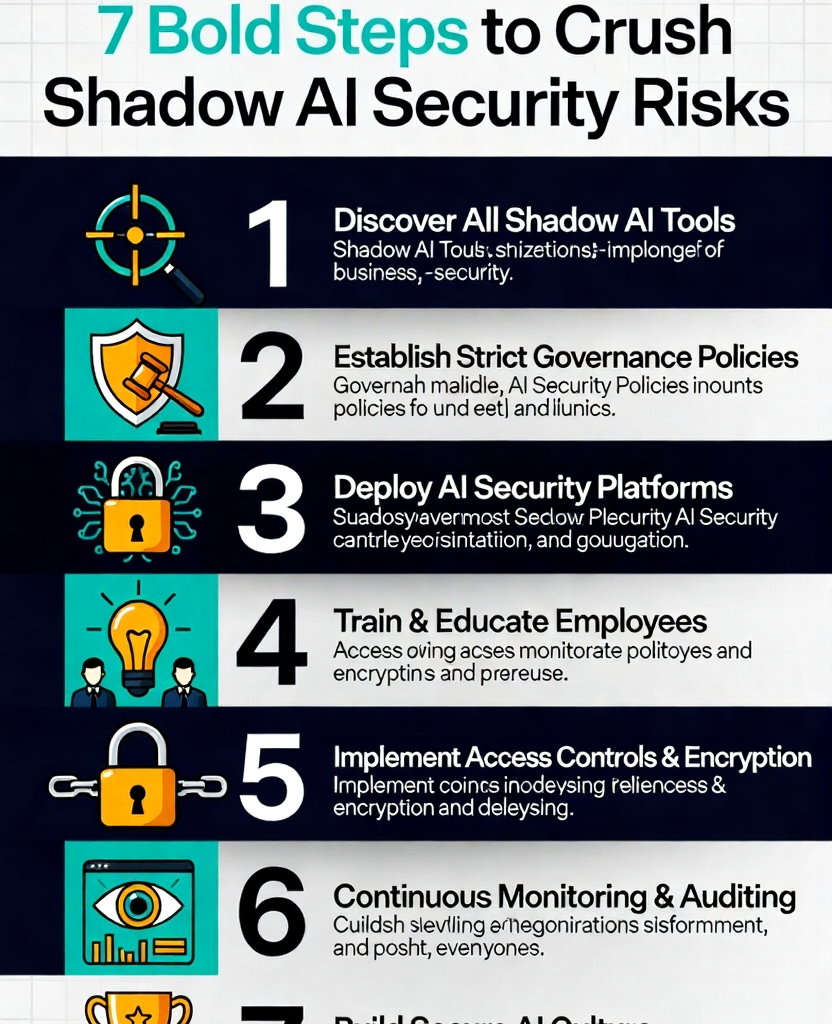
7 Bold Steps to Crush Shadow AI Security Risks
Tie it all together with action:
- Audit Now: Map all AI usage quarterly.
- Policy Power: Roll out simple, ethical guidelines.
- Detect Proactively: Use tools like network scanners.
- Educate Relentlessly: Monthly workshops on risks.
- Lead Boldly: C-suite demos vetted AI.
- Sandbox Smart: Test innovations safely.
- Measure Wins: Track breaches averted and productivity up.
Implement these, and watch Security Risks plummet.
FAQ:
What is Shadow AI, and why does it pose Security Risks?
Shadow AI refers to unauthorized AI tools used by employees without IT approval. It introduces Security Risks like data leaks and compliance violations by bypassing vetted security controls.
How common are Security Risks from Shadow AI in enterprises?
Very common—IBM reports show 52% of breaches tie to unmanaged tech, with Shadow AI accelerating exposure through weak encryption.
What are the top Security Risks of unmanaged AI tools?
Key risks include data breaches, prompt injection attacks, and IP theft. Unvetted models often store data insecurely, per NIST frameworks.
How can companies detect Shadow AI usage?
Monitor network traffic for API calls to public AI services, audit endpoint logs, and deploy tools like Microsoft Purview for anomaly detection.
What role do policies play in reducing Shadow AI Security Risks?
Strong policies define approved tools, train users, and incentivize reporting. They cut risks by 70%, fostering compliance without curbing innovation.
How do businesses balance AI productivity with Security Risks?
Provide sandboxed, approved AI alternatives. Track metrics showing productivity gains minus risks, as seen in governed pilots boosting output 30%.
In wrapping up, mastering Shadow AI Management means harmonizing bold innovation with ironclad cybersecurity. Ignore it, and Security Risks erode your edge; embrace it wisely, and you unlock transformative gains. At kritiinfo.com, we’re committed to equipping leaders like you. Take that first audit today—secure your future, innovate fearlessly.