
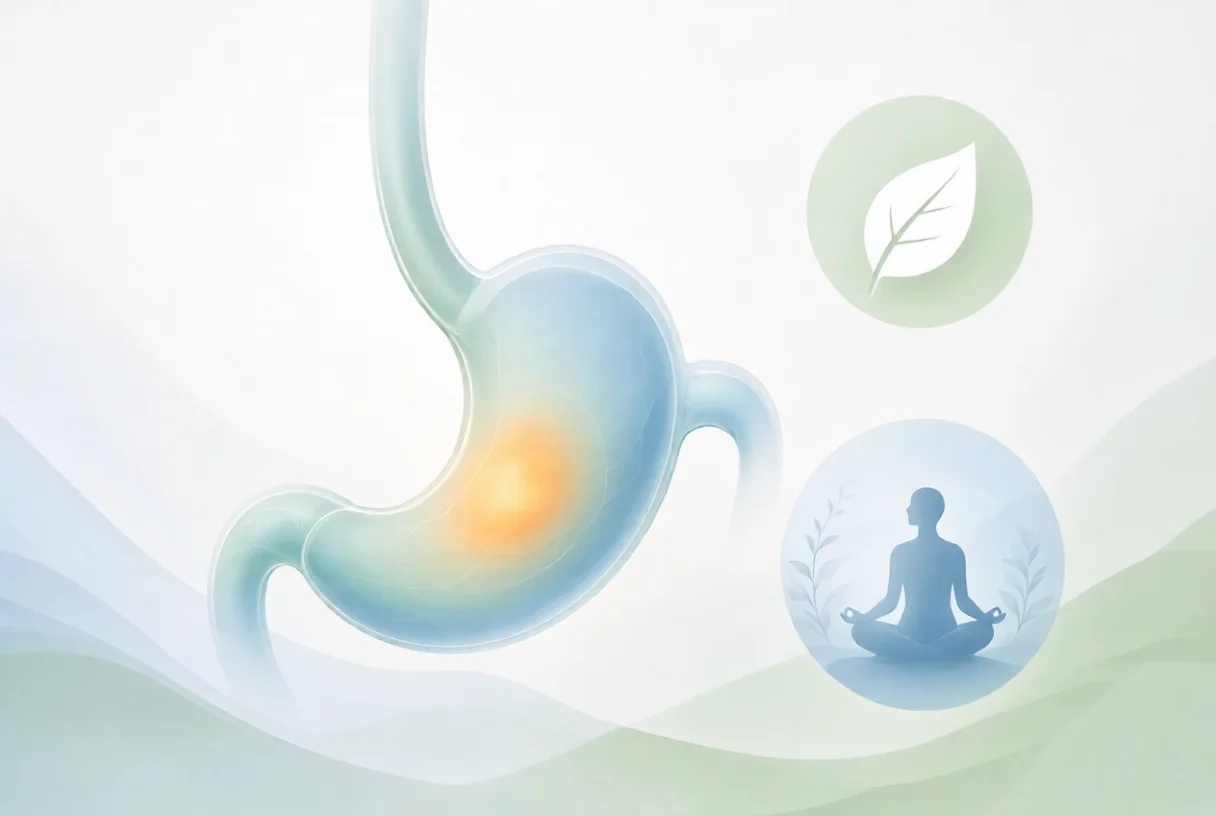
It always starts small.
A tight, heavy ache right beneath your ribs after dinner. A sour heat creeping upward while you drive home. A sudden wave of fullness three bites into a meal you spent all afternoon looking forward to. You take a sip of water, unbutton the top waistband of your trousers, and tell yourself you simply ate too fast. You pop a chalky antacid, wait for the fizz to dull the edge, and move on.
By next Tuesday, the sensation returns.
Then it shows up on a Sunday morning after a simple bowl of oatmeal. Gradually, an isolated inconvenience transforms into a recurring visitor. Most people chalk it up to stress or an unruly stomach, but our bodies rarely whisper without reason. That quiet, nagging discomfort often carries a specific clinical name: dyspepsia.
Far from being a single, isolated illness, it represents an umbrella of distress signals from your upper digestive tract. Understanding why your stomach refuses to settle is the first step toward reclaiming your daily comfort.
Table of Contents
The Nagging Signal
Persistent digestive discomfort has a peculiar way of wearing down your resilience. When pain arrives like a lightning strike, you rush to an emergency room. But when discomfort arrives as an ambient, low level irritation, you adapt to it. You learn to live with a constant, sour baseline.
That gradual surrender is risky.
While occasional indigestion happens to everyone after a greasy midnight feast, chronic distress is your digestive system waving an amber warning flag. Medical professionals view the upper gut as an intricate communication highway connecting nerves, digestive enzymes, smooth muscle contractions, and mucosal barriers. When one gear slips, the entire mechanism groans. Dismissing these signals as just something you have to tolerate prevents you from addressing reversible triggers before they evolve into deeper complications.
What Dyspepsia Really Means
In straightforward terms, dyspepsia is the formal medical designation for recurring pain or discomfort centered in the upper abdomen.
It is not an isolated disease entity like appendicitis or gallstones. Instead, it functions as a functional descriptor: a cluster of interconnected sensations originating between your navel and the lower edge of your breastbone.
Clinicians generally divide this condition into two broad categories:
- Organic Dyspepsia: Discomfort caused by an identifiable, physically verifiable condition, such as a peptic ulcer, erosive gastritis, gastroesophageal reflux disease, or gallbladder trouble.
- Functional Dyspepsia: Discomfort where thorough diagnostic testing, including blood panels and upper endoscopy, reveals no structural abnormality, inflammation, or visible erosion. In functional cases, the gut hardware appears pristine, yet the software, the hypersensitivity of local nerves and the coordination of gastric contractions, misfires.
According to consensus diagnostic criteria, functional cases make up the vast majority of chronic presentations. The stomach wall may look completely healthy to a camera, yet it registers ordinary digestive sensations as overt pain.

7 Clues You Should Notice
Because upper abdominal distress feels slightly different from person to person, learning to decode your specific cluster of symptoms provides vital context for your physician. Pay close attention to these seven prominent presentations:
- Postprandial Fullness: You finish an average portion, yet your stomach feels unnervingly stretched, heavy, and overfilled for hours afterward, as though digestion has ground to a complete halt.
- Early Satiety: You sit down with a hearty appetite, take three or four mouthfuls, and suddenly feel entirely full, unable to finish even a modest meal.
- Epigastric Burning: A distinct sensation of heat localized strictly to the upper central abdomen, different from the rising acid track of classic heartburn.
- Epigastric Aching or Pain: A persistent, gnawing, or dull ache beneath the sternum that may wax and wane regardless of when you last ate.
- Persistent Belching and Bloating: Upper abdominal distension accompanied by repetitive, involuntary gas expulsion that provides only momentary relief.
- Low Grade Nausea: A queasy, unsettled feeling that hovers in the background after eating, rarely progressing to actual vomiting but dampening your interest in food.
- Nocturnal Discomfort: Waking up in the early hours because of an uneasy, gnawing irritation in the pit of your stomach that makes finding a comfortable resting position difficult.
What May Be Triggering It
The human stomach is remarkably durable, engineered to churn caustic hydrochloric acid without digesting itself. Yet it is also exquisitely sensitive to environmental, microbial, and chemical shifts.
+-------------------------------------------------------------------+
|                     POTENTIAL DYSPEPSIA DRIVERS                   |
+-------------------------------------------------------------------+
|  • Microbial Imbalance: Helicobacter pylori colonizing mucosa    |
|  • Pharmacological Irritants: Frequent NSAID or aspirin use       |
|  • Motility Delays: Sluggish gastric emptying (gastroparesis)      |
|  • Gut-Brain Axis Friction: Heightened visceral nerve sensitivity |
|  • Dietary Aggravators: High-fat foods, excess caffeine, alcohol  |
+-------------------------------------------------------------------+
A frequent bacterial culprit is Helicobacter pylori, an organism that burrows into the protective mucosal lining of the stomach. Left undetected, it incites chronic low grade inflammation and sets the stage for ulcers.
Medications represent another widespread trigger. Routine use of nonsteroidal anti inflammatory drugs, including ibuprofen, naproxen, and daily aspirin, inhibits the prostaglandins necessary for maintaining the stomach’s protective barrier.
Beyond biology and chemistry, your nervous system plays an undeniable role. The gastrointestinal tract contains its own extensive network of neurons, often called the enteric nervous system. During sustained psychological pressure, stress hormones alter gut motility and dramatically heighten visceral sensitivity. Normal contractions that should pass unnoticed suddenly register in your conscious brain as burning distress.
The Warning Signs
While most episodes of dyspepsia are manageable and non emergent, certain concurrent symptoms demand immediate, formal medical evaluation. Clinicians refer to these as alarm features or red flags.
Do not wait or experiment with over the counter remedies if your digestive discomfort coincides with any of the following:
- Unintentional, unexplained weight loss
- Difficulty or sharp pain when swallowing (dysphagia or odynophagia)
- Persistent, recurrent vomiting
- Vomiting blood or material resembling dark coffee grounds
- Black, tarry, or visibly bloody bowel movements
- New, unexplained onset of symptoms in adults over the age of fifty five
- Severe, unrelenting abdominal pain radiating toward your back or shoulder
- Pronounced fatigue, pallor, or shortness of breath indicative of anemia
These indicators suggest potential internal bleeding, severe ulceration, structural obstruction, or other conditions that require prompt endoscopic and diagnostic assessment.
What Doctors Usually Check
When you sit down with a healthcare provider to investigate chronic dyspepsia, their first objective is ruling out structural damage and systemic infection.
A thorough evaluation typically begins with a detailed medical history and a targeted physical exam. Your doctor will assess your current medication list, review dietary patterns, and palpate your abdomen for localized tenderness or organ enlargement.
Depending on your age, risk profile, and symptom duration, your diagnostic pathway may include:
- Non Invasive H. pylori Testing: Urea breath tests, stool antigen assays, or laboratory blood work to detect active bacterial infection.
- Routine Blood Panels: Complete blood counts, metabolic panels, and celiac disease screenings to check for hidden blood loss, systemic inflammation, or malabsorption.
- Upper Endoscopy (Esophagogastroduodenoscopy): A specialist guides a thin, flexible tube equipped with a high definition camera down your esophagus, stomach, and duodenum to directly inspect the mucosal lining and collect tissue biopsies.
- Abdominal Ultrasound: Imaging focused on the gallbladder, liver, and biliary tree to ensure gallstones are not masquerading as gastric discomfort.
Habits That Can Help
If formal clinical testing confirms functional dyspepsia or mild non erosive irritation, everyday habits can significantly reduce symptom frequency and intensity. Rather than pursuing restrictive fads, prioritize sustainable, evidence supported adjustments.
- Reconfigure Meal Size: Large meals force the stomach to expand rapidly and pump out elevated acid volumes. Transitioning to four or five smaller, balanced meals evenly spaced throughout the day relieves mechanical pressure on the gastric wall.
- Identify Personal Food Sensitivities: While blanket elimination diets are rarely necessary, greasy fried dishes, heavy chocolate, concentrated citrus, raw onions, and carbonated beverages commonly slow gastric emptying or relax the lower esophageal valve. Keeping a three week food and symptom journal quickly highlights your individual triggers.
- Rethink Meal Timing: Allow a buffer of at least three hours between your final bite of the evening and bedtime. Lying horizontal while your stomach is actively churning food allows gastric juices to pool near the esophageal junction.
- Moderate Chemical Irritants: Minimize tobacco exposure and evaluate your daily intake of coffee and alcohol. Both substances stimulate gastric acid secretion and weaken mucosal defenses.
- Engage the Parasympathetic State: Digestion operates optimally when the body is in a rest and digest state. Eating hurriedly at your desk while reading emails triggers sympathetic nervous activity, which slows digestive secretions and disrupts natural gut peristalsis. Dedicate fifteen minutes to sit quietly, chew your food thoroughly, and breathe calmly while eating.
A Realistic Case Study
The following composite case study illustrates a common diagnostic journey for chronic upper abdominal symptoms.
Maya, a 38 year old graphic designer, found herself trapped in an exhausting cycle of digestive frustration. Every afternoon around two o’clock, roughly an hour after eating a simple turkey wrap or grain bowl, an uncomfortable sensation of fullness and sour heat bloomed directly beneath her ribcage.
She assumed it was simple workplace stress. For five months, Maya relied on chewable antacids and effervescent drinks. They offered twenty minutes of minor relief, but the heavy ache invariably returned. When the discomfort began waking her up at 3:00 AM with an empty, gnawing pain, she finally booked a consultation with her general physician.
Because Maya had no red flag symptoms like weight loss or swallowing difficulties, her doctor began with non invasive assessments. A routine urea breath test returned positive for an active Helicobacter pylori infection.
Her physician prescribed a standardized fourteen day course of targeted antibiotic therapy combined with a proton pump inhibitor to suppress acid production and allow the gastric lining to heal. Maya also worked on pacing her midday meals, stepping away from her computer screen, and reducing her afternoon espresso habit to a single cup of mild green tea.
Six weeks after completing her antibiotic protocol, a follow up stool test confirmed the bacterium had been successfully eradicated. Her nocturnal waking ceased, the post meal heaviness dissipated, and her afternoon energy rebounded. By addressing the root cause rather than perpetually masking the sensation, Maya turned a nagging complaint into a solved problem.
Questions Readers Ask
Is dyspepsia the exact same thing as acid reflux?
No. While they frequently overlap, acid reflux refers explicitly to stomach contents flowing backward up into the esophagus, causing heartburn or regurgitation. Dyspepsia describes discomfort centered inside the stomach and upper abdominal cavity itself, characterized by fullness, burning, early satiety, and nausea.
Can anxiety alone cause chronic dyspepsia?
Yes, functional dyspepsia is intimately tied to the gut brain axis. Psychological anxiety stimulates the release of corticotropin releasing factor and other neurochemicals that alter gastric motility, increase gut mucosal permeability, and heighten visceral pain sensitivity, making normal digestion feel painful.
How long does an episode of dyspepsia typically last?
An acute flare from a heavy, rich meal may resolve within two to four hours. Chronic functional presentations, however, can persist intermittently for months or years if underlying triggers, like bacterial overgrowth, NSAID overuse, or stress dysregulation, remain unaddressed.
Will drinking milk soothe an upset, burning stomach?
Milk can provide a brief, soothing coating effect for a few minutes, but it often triggers a rebound effect. The proteins and calcium in cow’s milk stimulate your stomach lining to secrete additional gastric acid, which can worsen irritation an hour later.
Can over the counter pain relievers make dyspepsia worse?
Frequently, yes. Nonsteroidal anti inflammatory drugs (NSAIDs) such as ibuprofen, naproxen, and aspirin directly disrupt the production of protective prostaglandins in the gastric mucosa. Taking these medications for headaches or joint pain can exacerbate stomach inflammation.
When should I consider seeing a gastroenterologist?
You should seek a specialist’s evaluation if your symptoms persist for more than two to three weeks despite basic dietary changes, if over the counter remedies fail to provide lasting relief, or if you notice any red flag symptoms such as unexplained weight loss, vomiting, or difficulties swallowing.
What To Do Next
Living with chronic digestive discomfort is not a mandatory compromise. Your gastrointestinal tract is resilient, adaptable, and constantly communicating with you.
Start tracking your symptom patterns today: note the time, the foods you consume, your stress levels, and the precise nature of the sensation. Bring that record to a trusted medical professional, ask thorough questions, and rule out underlying infections or structural triggers.
Listening to the nagging signal early transforms your health journey from anxious guessing into clear, decisive, and lasting recovery.
Final Reader Call to Action
Do not let persistent abdominal discomfort become your everyday normal. If upper stomach fullness, burning, or unease has been trailing you for more than two weeks, set aside the temporary antacids, write down your symptom patterns, and schedule a conversation with your healthcare provider this week.DO write your pain on kritiinfo.com to get more information.