
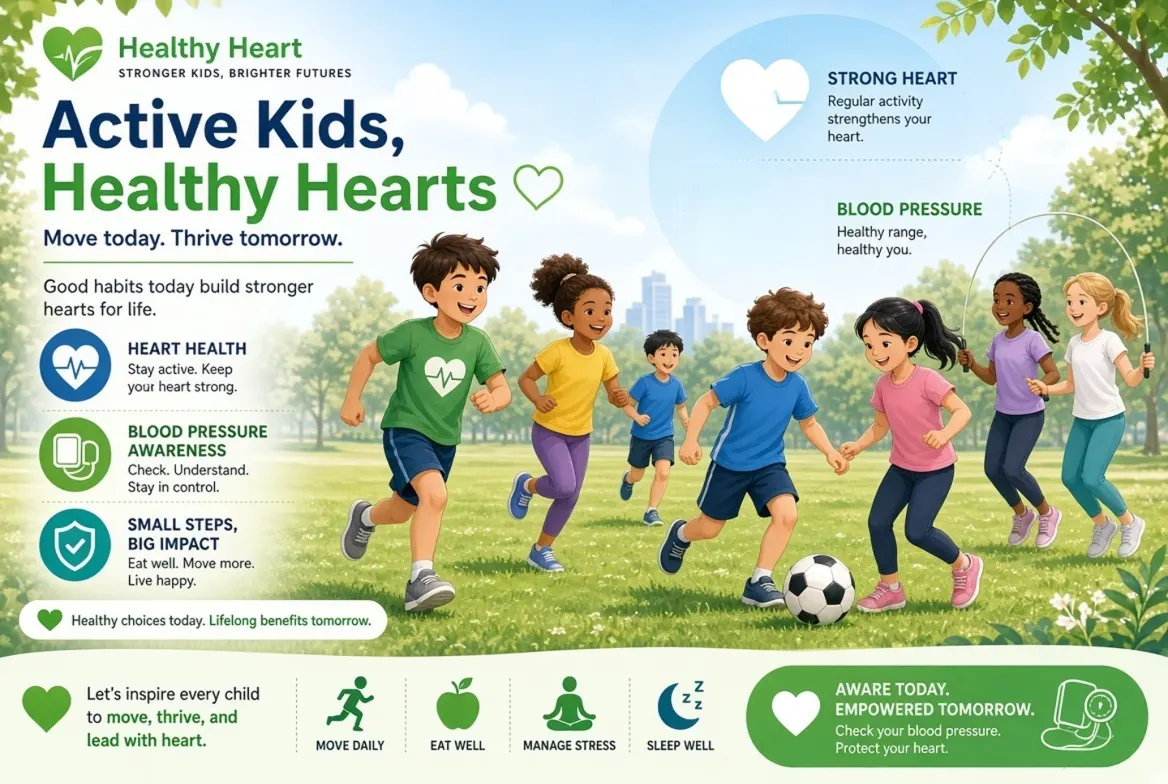
Hypertension in Child :Twelve year old Aarav stopped eating breakfast on Tuesdays. Nobody noticed at first, because Tuesdays were also the day of his weekly math test, and everyone assumed the knot in his stomach was ordinary exam nerves. He complained of headaches that came and went. He seemed tired even after nine hours of sleep. His parents chalked it up to a phone habit that had crept later and later into the night.
Then, at a routine school health camp, a nurse took his blood pressure twice, ten minutes apart. Both readings were high enough that she asked the family to see a pediatrician for a proper check.
Nobody had been looking for that. And that is exactly the point.
Table of Contents
Why This Story Matters
Hypertension in child health is not the topic most parents worry about. We watch for fevers, coughs, screen addiction, falling grades. Blood pressure rarely makes the list, because most of us still think of it as an adult problem, something that shows up decades from now, not in a sixth grader.
But pediatric hypertension is real, it is measurable, and in many cases it is quietly overlooked because nobody thought to check. This article is not meant to alarm you. It is meant to help you notice what is easy to miss, understand what actually raises a child’s blood pressure, and know when a conversation with a doctor is worth having.
What Is Hypertension in Child?
Childhood high blood pressure is not judged the same way as it is in adults. According to the Mayo Clinic, a child’s blood pressure is considered high when it sits at or above the 95th percentile compared to other children of the same age, sex, and height, until the teenage years, when the adult threshold of 130 over 80 mmHg applies. That is why a single high number, taken once, rarely means much on its own. The American Academy of Pediatrics notes that a diagnosis typically requires several elevated readings across separate visits, not one worrying moment at a school camp.
The Mental Troll Nobody Sees
Think of the “mental troll” as the invisible pressure that follows a child through an ordinary day: the comparison scoreboard of social media, the fear of disappointing a teacher, the late night scroll that replaces sleep, the quiet anxiety of not being good enough. It does not announce itself. It just sits there, shaping mood, appetite, and rest, night after night.
This troll does not directly cause hypertension in every child who experiences it, and it would be inaccurate to claim it does. But chronic stress and poor sleep can influence stress hormones and heart rate patterns, and researchers have found meaningful links between children’s sleep habits and blood pressure. A 2024 NHLBI funded study found that children who went to bed earlier and slept longer tended to have healthier readings than those who did not. The mental troll may not pull the trigger alone, but it can load the gun alongside other risk factors.
5 Warning Signals Parents Should Notice About Hypertension in Child
Most children with elevated blood pressure show no symptoms at all, which is why regular checkups matter more than waiting for warning signs. Still, a few overlooked signals are worth watching:
- Recurring headaches, especially in the morning
- Unexplained tiredness that does not improve with rest
- Frequent nosebleeds with no obvious cause
- Trouble concentrating or sudden irritability tied to poor sleep
- Vision changes, such as occasional blurriness
None of these alone points to hypertension. But a pattern, especially combined with excess weight or a family history of high blood pressure, deserves a conversation with a pediatrician rather than a shrug.
What Can Raise Blood Pressure Or Hypertension in Child?
It would be irresponsible to suggest that stress is the main driver of pediatric hypertension. It usually is not. According to the American Heart Association, the condition is most common among children with obesity, and can also stem from kidney disease, heart abnormalities, hormonal disorders, or certain medications. Established contributing factors include:
- Excess weight and low physical activity, the most common driver in older children
- Kidney disease or congenital kidney conditions, more common in younger children
- Genetics and family history of high blood pressure
- Sleep disorders, including obstructive sleep apnea
- Certain medications, such as decongestants, stimulants, or steroids
- High sodium diets heavy in packaged and processed food
Stress and lifestyle sit alongside these, as amplifiers rather than the sole cause.
When Stress Enters the Picture
A child under constant academic pressure, sleeping five broken hours a night, skipping meals, and scrolling until midnight is not automatically developing hypertension. But sustained over months, that combination can quietly nudge weight, sleep, and blood pressure in the wrong direction together. Stress rarely acts alone. It tends to travel with poor sleep, comfort eating, and reduced movement, and it is that whole cluster, not anxiety by itself, that clinicians pay attention to.
The Medical Investigation
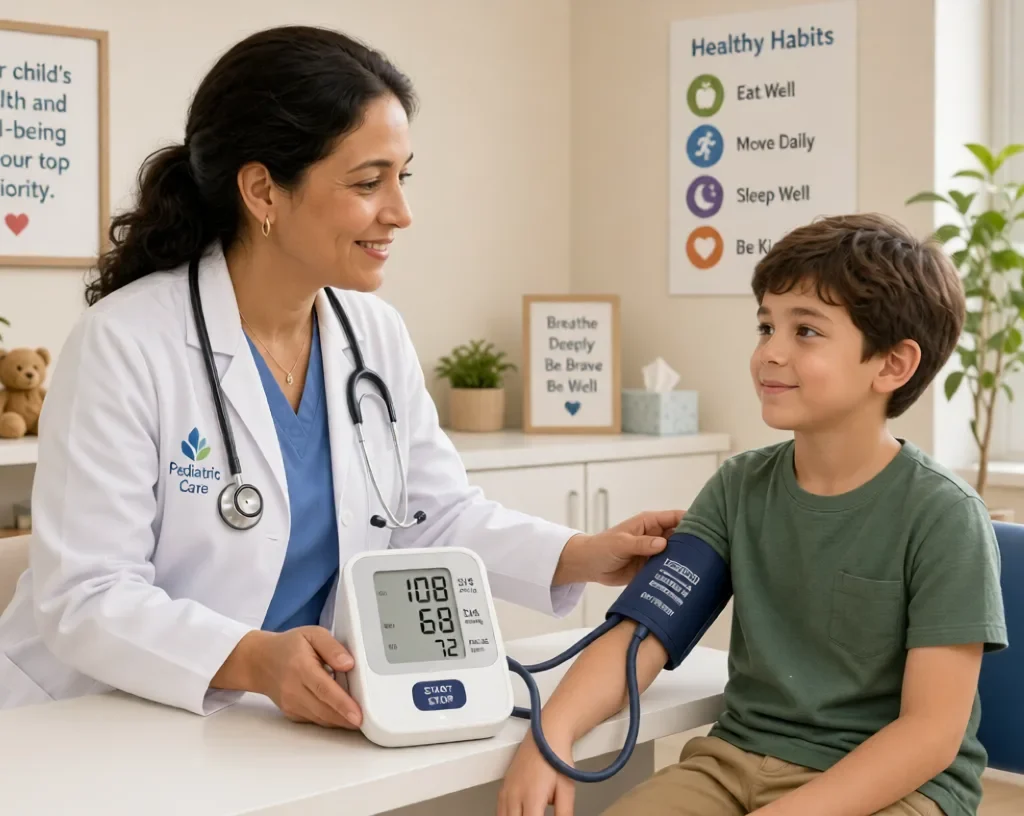
If a child’s blood pressure reads high more than once, a pediatrician will typically repeat the measurement with a properly sized cuff, review family history, check growth trends, and ask about sleep, diet, and activity. Depending on age and severity, further tests such as blood work, kidney function checks, or a 24 hour ambulatory monitor may follow.
The younger the child, the more carefully doctors look for an underlying medical cause. Older children, particularly those carrying extra weight, are more likely to have primary hypertension, meaning no single disease explains it, and lifestyle becomes the main lever for improvement.
A Realistic Case Study
Consider a composite, illustrative scenario built from common patterns clinicians describe, not a real patient file.
Aarav, twelve, had a demanding school schedule with tuition classes most evenings. He slept around six hours a night, often finishing homework or watching videos past eleven. His diet leaned heavily on packaged snacks and sugary drinks, and outdoor play had shrunk to occasional weekends. He complained of headaches and looked tired, which his family attributed to exam stress.
At a school health camp, his blood pressure came back elevated on two readings ten minutes apart. His pediatrician repeated the measurement using a properly fitted cuff, confirmed the pattern, and reviewed his growth chart, which showed a body mass index above the healthy range for his age. Blood and urine tests ruled out kidney involvement.
Guidance focused on less screen time before bed, an earlier bedtime, daily outdoor activity, and home cooked meals with less sodium. No medication was prescribed. At a follow up visit three months later, his readings had moved closer to normal for his age and height, and his energy and mood had visibly improved. This outcome will not be identical for every child, but it illustrates how early awareness and simple changes can matter.
What Parents Can Do Today
You do not need special equipment to start paying attention, just to notice, ask, and act early.
- Notice patterns in mood, energy, and sleep, not just isolated bad days
- Ask your child’s pediatrician to check blood pressure at annual visits, starting around age three
- Reduce screen time in the hour before bed
- Support regular movement, even a daily walk counts
- Discuss family history of high blood pressure openly with your doctor
When Professional Help Matters
Seek medical evaluation if a reading comes back high more than once, if there is a family history of hypertension or early heart disease, if your child carries excess weight, or if headaches, nosebleeds, or vision changes appear alongside fatigue. Early, professionally assessed evaluation beats guessing at home.
Small Changes, Powerful Protection
None of this requires a dramatic overhaul. An earlier bedtime, one more vegetable at dinner, twenty minutes outside, one honest conversation about how school is really going: small, consistent choices build long term protection better than any single dramatic intervention could.
FAQ
Can children really get high blood pressure? Yes. It is less common than in adults, but pediatric hypertension is a recognized and increasingly monitored condition, particularly linked to rising childhood obesity rates.
What counts as high blood pressure in a child? Generally, a reading at or above the 95th percentile for the child’s age, sex, and height, confirmed across multiple visits, or 130 over 80 mmHg or higher in teenagers.
Does stress alone cause hypertension in children? Not on its own, and it is not accurate to claim it does. Chronic stress can influence sleep, appetite, and hormone patterns that contribute alongside other established risk factors.
Can obesity cause hypertension in a child? Excess weight is one of the most consistently identified risk factors for high blood pressure in children, especially in those over age six.
How often should a child’s blood pressure be checked? Most guidance recommends annual checks starting around age three, with more frequent monitoring for children who have risk factors like obesity or kidney conditions.
What are common symptoms of pediatric hypertension? Most children show no symptoms at all. When present, signs may include headaches, fatigue, nosebleeds, or trouble concentrating.
Can screen time affect a child’s blood pressure? Screen time itself does not directly raise blood pressure, but it is closely tied to reduced sleep and physical activity, both of which do matter.
When should parents see a doctor about their child’s blood pressure? After any repeated high reading, or if risk factors and symptoms appear together. A pediatrician can determine whether further evaluation is needed.
Final Takeaway
Sometimes the most dangerous problem is not the one making the most noise. Aarav’s headaches were quiet. His tiredness was easy to explain away. His mental troll never announced itself with a scream, it just sat there, night after night, in a shortened bedtime and a skipped breakfast.
But awareness changes the story. If you take one action after reading this, let it be this: ask your child’s doctor about their blood pressure at the next visit. That single, calm question is how quiet warnings get caught before they become louder problems.