
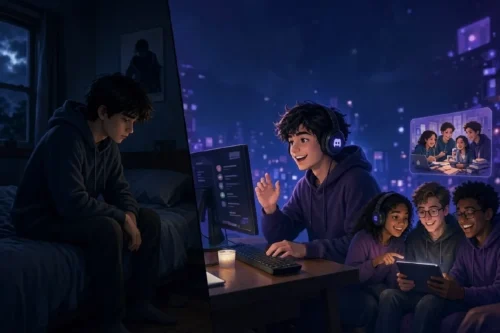
Why teens are on Discord is a question many parents ask only after a frightening story. Here is the best documented one.
In June 2023, NBC News reporters read court records, police statements and news reports from around the world. They found 35 cases over six years in which adults were prosecuted for kidnapping, grooming or sexual assault that allegedly involved Discord. Twenty two came during or after the pandemic. NBC also warned that its count covers only cases that were reported, investigated and prosecuted, so it cannot show how common harm is. It only shows that harm is real. A month later, Discord banned teen dating servers and AI generated child abuse material.
Documented facts: NBC News, 21 June 2023; CNBC, 11 July 2023. No victim details are used here, by design.
That is the dark side. Yet millions of ordinary teenagers log in every evening and never meet it. So what pulls them in?
Table of Contents
What Discord Actually Is
Think of Discord as a shopping mall for people who share an interest. A server is a building: a Minecraft club, a homework group, an art community. Channels are the rooms inside, some for text, some for memes, some for voice. Direct messages (DMs) are private chats between two people or a small group. Voice and video let friends talk while gaming, like sitting in one room.
Public servers open to anyone with a link. Private servers need an invite. Unlike Instagram, there is no endless feed of strangers. Unlike WhatsApp, a teen sits in large rooms with many people, not only phone contacts.
A first visit feels busy. A friend sends an invite, a welcome channel shows rules, dozens of channels appear, and messages scroll fast. Volunteer moderators keep order, so a server is only as healthy as its moderators.
Why Teens Are on Discord: The Real Reasons
Gaming is the door. Belonging is the reason. Pew Research found that 72% of American teen gamers play partly to spend time with others. The rest of this section is my interpretation, not a research finding.
Friendship feels easier. Typing gives a shy teen time to think. A shared game gives an instant topic. There is no eye contact to survive.
Identity is playable. A username, an avatar and a server role let a teenager try out who they are, away from school labels.
It never closes. A voice channel glowing with friends’ names works like a party seen through a window. Fear of missing out turns “five minutes” into two hours.
It feels like theirs. Teenagers want a space adults do not run. Most parents have never seen their child’s servers, which is exactly the appeal.
I know a kid busy on Discord with no identity but a number.He involved with a wrong gang and they exploited him as if he has done a crime.He did many things but panicked to reach himself in hospital .Only then their working parents knew what has happened.So dear parents pls peep into the social media used by your kids for gaming or something absurd.
Illustrative scenario, not a real case. Aarav, 14, joins a coding server through a classmate. Within a month he has a regular voice group and a few late nights. An older member asks him to move to a private chat. Aarav remembers his family’s three rules: no secret chats, no personal details, tell us when something feels odd. He tells his father, and together they block and report the user. The good ending came from a habit, not a ban.
Benefits and Hidden Risks
Benefits: friendship, teamwork, study groups, creative feedback, communication practice and supportive communities for teens who feel isolated offline.
Risks: bullying, unknown adults and grooming, scams and suspicious links, unsuitable material, oversharing, lost sleep, social pressure and spending on subscriptions or digital items.
Risk depends on age, servers, habits and settings. Most servers are harmless. Some are not.
How Discord Compares
| Discord | Roblox chat | Feed based social media | ||
|---|---|---|---|---|
| Structure | Servers and channels | Contacts and groups | Chat inside games | Public feeds and followers |
| Stranger contact | Possible in public servers | Mostly via phone number or group link | Limited by age group after age check | Often public |
| Teen safety tools | Teen by default settings, message requests, content filters | Group and privacy settings | Age check to chat, similar age grouping | Varies by app |
| Strength | Community and voice | Family and friends | Play and creation | Reach and entertainment |
Without comparable evidence, no platform can be called universally safer. What sets Discord apart is that its risk lives in the rooms a teen joins, not in a public feed.
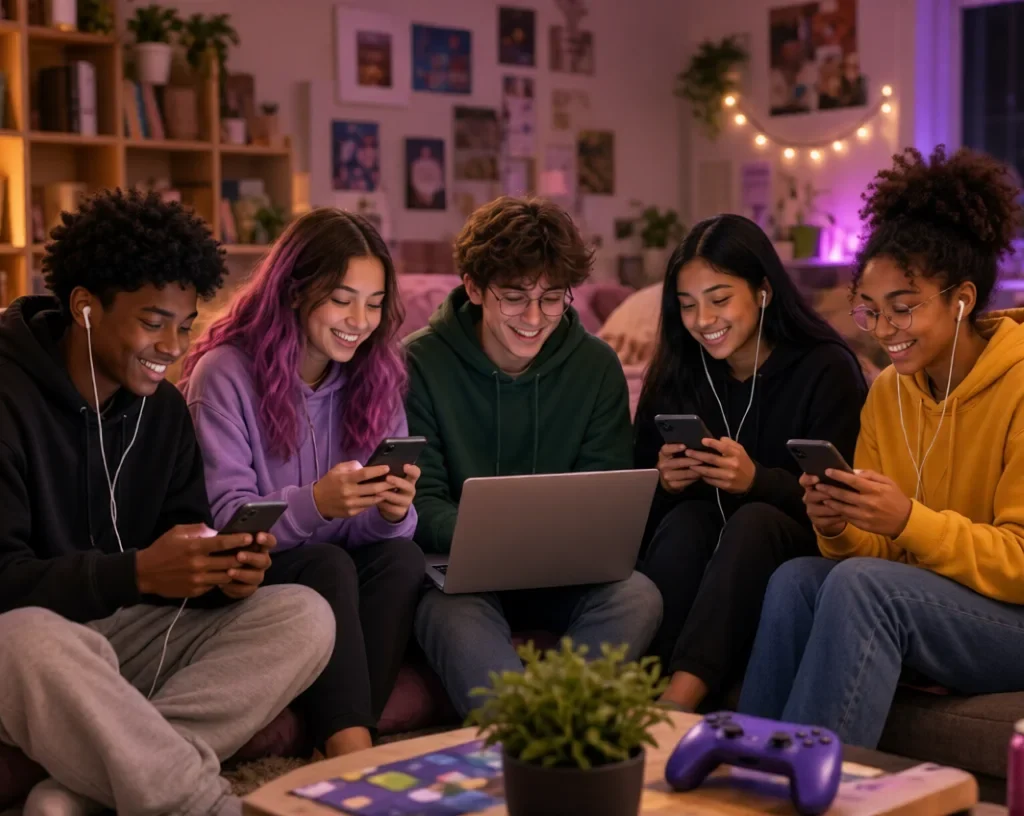
The 5C Discord Safety Check
I created this framework for this article. Talk through it together.
- Community. Know what each server is for and who runs it. Example: a school coding club with named moderators beats a server of thousands with no rules.
- Contacts. Be careful with unknown people. Example: a stranger who is “too friendly” and asks to move to another app is a red flag.
- Content. Spot manipulation, not only bad images. Example: flattery, gifts and “don’t tell your parents.”
- Controls. Learn blocking, reporting and privacy settings.
- Clock. Protect sleep and homework. Example: phones charge outside the bedroom.
Family checklist: Do we know our servers? Does anyone ask for secrecy? Can I block and report? Is sleep protected? Will I tell an adult?
What Parents Should Do
Banning on day one usually pushes use underground. Curiosity and calm questions work better: “Show me your favourite server.”
Family Center is opt in, and both parent and teen must agree. It shows seven days of activity: new friends, servers joined, and who a teen messaged or called. It does not show message or call content, and it cannot read private conversations. Discord says some newer controls exist, so check the Family Center page for the current list.
Warning signs: secrecy about one new friend, gifts or money, requests to switch apps, sudden mood changes, fear of notifications, unexplained purchases.
Report at once if an adult asks for images, secrecy or money. Do not pay a blackmailer. Keep screenshots, block, report on Discord and to the police. In India, use cybercrime.gov.in or helpline 1930, and Childline 1098.
Teachers can run short digital citizenship sessions using the same 5C check.
What the Data Says
Pew Research Center (published 9 May 2024). Survey of 1,453 US teens aged 13 to 17, fielded 26 September to 23 October 2023. Pew found 28% of teens use Discord, and 44% of teen gamers do. Among teen gamers, 47% made an online friend through a game, 41% were called an offensive name, and 8% were sent unwanted sexually explicit material.
What it measures: use of the platform and gaming experiences, as self reported by teens living with parents. Limits: it is American, almost three years old, says nothing about hours spent, and the harassment figures cover gaming in general, not Discord alone. I found no reliable Discord specific teen data for India. Meaning: Discord is common among gamers, friendship is a normal outcome, and bullying is common enough to prepare for.
Common Misconceptions
- “Every teen on Discord is a gamer.” Pew shows many teens play without calling themselves gamers, and study and art servers are common.
- “Online friends are all dangerous.” Many friendships are healthy. Safety depends on behaviour, not on where friends met.
- “Private servers are safe.” Privacy limits entry, not conduct.
- “Controls remove all risk.” They reduce it. Conversation does the rest.
- “A ban solves it.” Teens often move to less visible apps.
What to Do Next
Teens: share no personal details, choose servers carefully, use block and report, and sleep. Parents: learn the platform, ask before you ban, check Discord’s teen settings together. Teachers: teach how manipulation looks and how to ask for help.
Quick checklist: age 13 or older, privacy settings reviewed, message requests on, one trusted adult, a bedtime for screens.
From late September 2026, Discord says it is placing accounts into age groups using account signals, not message content. Teen accounts send messages from non friends to a separate inbox and block age restricted spaces. Rules vary by region, so verify your country’s settings.
FAQ
Why are teenagers using Discord? For friends, games, shared interests and a space that feels their own.
Is Discord suitable for children? Discord requires users to be at least 13 in most places. Younger children should not use it.
What is a Discord server? A community with text, voice and video channels built around a shared interest.
Can strangers contact teenagers? Yes, mainly through public servers and friend requests. For teen accounts, messages from non friends go to a message requests inbox first.
Can parents monitor Discord? Only in a limited way. Family Center shows who and where, never what was said.
What are the warning signs of unsafe use? Secrecy, gifts, pressure to switch apps, lost sleep and sudden fear or mood change.
How can parents help? Stay curious, set simple shared rules, use the 5C check and make telling you feel safe.