
Introduction:-
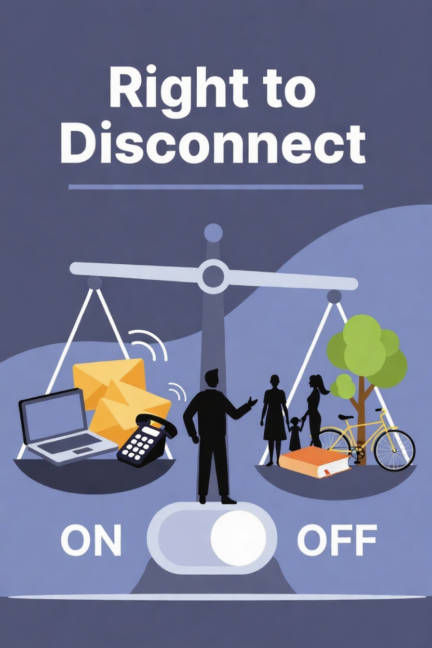
In today’s always-on work culture, protecting personal time is no longer a luxury — it is a workplace right and a strategic priority. The right to disconnect empowers employees and leaders to set and respect boundaries that preserve mental health, prevent digital burnout, and sustain long-term productivity. This article explains practical, research-backed ways organizations and individuals can embed worklife balance into everyday practice, with clear examples, leadership guidance, and legal and cultural perspectives to build trust and authority.
Define the Right to Disconnect Clearly
A strong policy begins with plain-language definitions: when work communications are expected, which channels are covered, and what exceptions (emergencies, on-call duties) exist. Clear definitions reduce ambiguity and protect employee wellbeing. For example, a midsize software firm might specify no after-hours email expectations except for operations alerts, with guidelines for response windows. Harvard Business Review research shows clarity around role expectations reduces stress and increases engagement, supporting both employee wellbeing and productivity.
Lead by Example from the Top
Leaders set behavioral norms. When executives model logging off, pausing after-hours messages, and using scheduled send features, it signals permission for employees to do the same. A CFO who refrains from emailing at 10 pm creates cultural permission for healthy boundaries. Mind Tools highlights that visible leadership behaviors anchor cultural change and make worklife balance initiatives credible.
Implement Structured Communication Protocols
Establish rules for after-hours contact: designate channels for urgent issues, require subject-line tags for time-sensitive matters, and use scheduled deliveries. Practical protocol: reserve instant messaging for critical operations only and route nonurgent matters to collaboration tools during business hours. These protocols preserve response clarity, improve productivity management, and reduce context-switching fatigue.
Offer Flexible Schedules with Guardrails
Flexibility is key to modern worklife balance, but it needs structure. Allow flexible start and end times, compressed workweeks, or remote days while maintaining core hours for collaboration. A marketing team could require overlap between 10 am and 3 pm for meetings while letting employees shift start times around family needs. This supports employee rights and remote work culture while keeping team coordination intact.
Prioritize Digital Detox and Break Rituals
Encourage deliberate disconnection rituals: device-free lunch breaks, walking meetings, and weekly “no-meeting” afternoons. Organizations can sponsor digital detox challenges or provide guidance on sleep-friendly device habits. The World Health Organization recognizes that protecting mental health at work is essential; promoting digital detox practices contributes to burnout prevention and better cognitive performance.
Create Measurable Metrics for Wellbeing and Productivity
Track both hard and soft metrics: meeting hours, email volume, after-hours communications, and employee wellbeing surveys. Use these indicators to spot burnout trends and measure the effectiveness of worklife balance interventions. For instance, a quarterly pulse survey combined with analysis of collaboration tool usage can reveal if reduced meeting times correlate with improved reported wellbeing.
Train Managers on Boundary Setting and Psychological Safety
Managers require skills to enforce boundaries compassionately. Training should cover how to hold teams accountable for response-time expectations, conduct effective one-on-ones about workload, and recognize signs of digital burnout. Psychological safety creates an environment where employees can request accommodations without fear. Forbes and HBR both emphasize manager capability as a critical lever for cultural change.

Provide Resources for Mental Health and Burnout Prevention
Offer accessible mental health resources: employee assistance programs, counseling, and mental health days. Normalize usage through internal communication and testimonials. Real-world example: a financial services firm that introduced confidential counseling and observed a drop in stress-related absenteeism by a measurable margin. Linking benefits to productivity outcomes reinforces the business case for investment in employee wellbeing.
Design Workloads Around Sustainable Productivity
Productivity management should emphasize outcomes over hours. Shift performance indicators from “time logged” to measurable deliverables and impact. Implement sprint planning, prioritized task lists, and capacity-aware scheduling to prevent chronic overload. This approach reduces the pressure to be always available and fosters healthier worklife balance habits.
Prepare for the Future of Remote and Hybrid Work
Remote and hybrid models require new norms for connectivity and disengagement. Anticipate technology shifts and evolving expectations by periodically reviewing policies and soliciting employee feedback. LinkedIn and other platforms show continued growth in remote job listings; organizations that proactively adapt their right to disconnect practices will retain talent and strengthen employer brand.
Practical Examples and Workplace Scenarios
- Scenario: A product manager receives 11 pm emails frequently. Solution: Implement a policy that emails sent after 8 pm will be marked nonurgent and scheduled for delivery the next business day. The manager agrees to triage true emergencies through an on-call rota.
- Scenario: A remote sales team struggles with weekend messaging. Solution: Establish “communication-free weekends” and rotate on-call duties for urgent customer escalations; measure customer satisfaction to ensure service levels remain high.
- Scenario: An IT operations shift requires 24/7 monitoring. Solution: Create clear compensation, time-off compensation, and explicit boundary clauses that differentiate mandatory on-call responsibilities from standard work expectations.
Expert Insights
- Policy alone is not sufficient; cultural reinforcement is crucial. Policies must be paired with visible leadership behavior, manager training, and measurable outcomes.
- Conflicting incentives — such as reward systems favoring responsiveness — undermine worklife balance efforts. Align performance metrics with sustainable productivity to avoid mixed signals.
- Employee rights and employer responsibilities coexist: protecting employee wellbeing reduces turnover and absenteeism while improving long-term performance.
Digital Burnout and Mental Wellness Angles
Digital burnout emerges from continuous partial attention and the pressure to respond instantly. Symptoms include fatigue, reduced concentration, and cynicism. Prevention requires systemic action: workload design, enforced downtime, and mental health support. Practical interventions like mandatory offline time after work hours and company-sponsored mindfulness resources can reduce burnout risk and improve cognitive resilience.
Healthy Communication Practices
- Use a “traffic light” system for messages: green for information, amber for action during business hours, red for urgent escalation.
- Encourage meeting agendas and 15-minute standups to replace long synchronous sessions.
- Promote asynchronous work with clear documentation practices to reduce unnecessary real-time pressure.
Boundary Setting Techniques
- Schedule “do not disturb” hours and include them in shared calendars.
- Use email scheduling and delay-send features to prevent sending messages that create after-hours obligations.
- Normalize boundary conversations in performance reviews: discuss workload, priorities, and personal limits.
Policy and Legal Considerations
Countries and regions are increasingly debating the right to disconnect as a legal entitlement. Employers should monitor local regulations and consult legal counsel when drafting policies. Regardless of jurisdiction, adopting practices aligned with employee wellbeing, such as reasonable response windows and compensation for on-call work, demonstrates a commitment to employee rights and creates trust.
Metrics and Trends
- Organizations report that reducing meeting time can boost focused work by up to 30% in some teams. (Internal industry analyses and HBR commentary.)
- Pulse surveys often show a direct correlation between perceived control over work hours and reported wellbeing scores. Tracking these metrics helps validate policy changes and informs iterative improvements.
FAQ
Q: What is the right to disconnect?
A: The right to disconnect refers to an employee’s ability to refrain from engaging in work-related communications outside of agreed working hours without penalty, protecting mental health and personal time.
Q: How does the right to disconnect improve worklife balance?
A: It reduces after-hours interruptions, lowers stress, improves sleep and recovery, and helps employees maintain clear boundaries between professional and personal life, promoting sustainable productivity.
Q: Are there legal requirements for the right to disconnect?
A: Some countries have implemented laws or guidance; requirements vary by jurisdiction. Employers should consult legal counsel and align policies with local regulations and employee rights.
Q: How can leaders encourage compliance?
A: Model the behavior, set clear policies, train managers, and measure after-hours communications. Leadership signals are essential to create cultural permission to disconnect.
Q: What if my role requires after-hours availability?
A: Define on-call expectations, compensate fairly, rotate duties to distribute load, and make exceptions explicit in policy to balance operational needs with employee wellbeing.
Q: How can remote teams maintain productivity while respecting boundaries?
A: Use asynchronous workflows, prioritize outcome-based metrics, schedule core overlap hours, and document processes to reduce real-time pressure.
Conclusion
The right to disconnect is a practical, humane, and strategic component of modern worklife balance. When organizations pair clear policies with leadership modeling, manager training, measurable metrics, and supportive mental health resources, they protect employee wellbeing and boost sustainable productivity. Embracing these practices reduces digital burnout, honors employee rights, and strengthens organizational resilience. Start by adopting one clear boundary today — schedule a company-wide no-email-after-8pm policy or introduce weekly no-meeting afternoons — and lead the change toward healthier worklife balance habits.
2 thoughts on “7 Positive Worklife Balance Practices:Right To Disconnect”