

Imagine your phone ringing at 3:00 AM. It is your lead security analyst. Your network is completely locked down by ransomware, and the attackers are demanding seven figures.
Now, imagine a completely different morning. You wake up, pour your coffee, and check your dashboard to find that a massive breach was attempted overnight. But instead of a crisis, you see that the threat was detected, isolated, and neutralized in milliseconds—all while your team was asleep.
That is the surprising reality of modern cybersecurity. For decades, we relied on analysts staring at multiple monitors, trying to manually connect the dots. But the volume, speed, and sophistication of attacks have outpaced our physical limitations. If you rely solely on manual intervention today, you are already too late.
Welcome to the era of Zero Human threat management.
This approach changes everything you know about keeping your organization secure. Let’s explore how removing the manual bottleneck can essentially save your business.
What is Threat Management?
At its core, threat management is the ongoing, proactive process of identifying, analyzing, and responding to cyber threats before they can damage your business.
It is not just about installing an antivirus or setting up a firewall. True threat management is a living, breathing ecosystem. It involves hunting down hidden vulnerabilities, assessing operational risks, and continuously improving your defense mechanisms.
Did You Know? According to industry reports, the average time to identify and contain a data breach is 277 days. Traditional, manual threat management allows attackers to dwell inside networks for months.
When you integrate modern Risk Management practices, you transition from playing a reactive game of whack-a-mole to confidently anticipating your attacker’s next move.
Why Zero Human Changes Modern Threat Management
When an alert storms your system, manual triage wastes critical minutes. A Zero Human architecture changes this dynamic completely by automating the detection and initial response phases. This does not mean firing your security team; it means elevating them.
Here is why this shift is absolutely essential:
- Intelligent Automation: Machines can analyze millions of data points across your Cloud Security infrastructure in seconds.
- AI-Driven Response: Artificial intelligence does not just flag a problem; it actively contains the compromised endpoint without waiting for an analyst to click “approve.”
- Human Error Reduction: Alert fatigue is real. When analysts see 10,000 alerts a day, they make mistakes. Automated systems never get tired.
- Operational Resilience: Your business runs 24/7. Your initial threat containment should too.
Expert Insight: “The goal of a Zero Human workflow is not to replace human intelligence, but to reserve it for high-level incident strategy and forensics, rather than manual alert triage.”
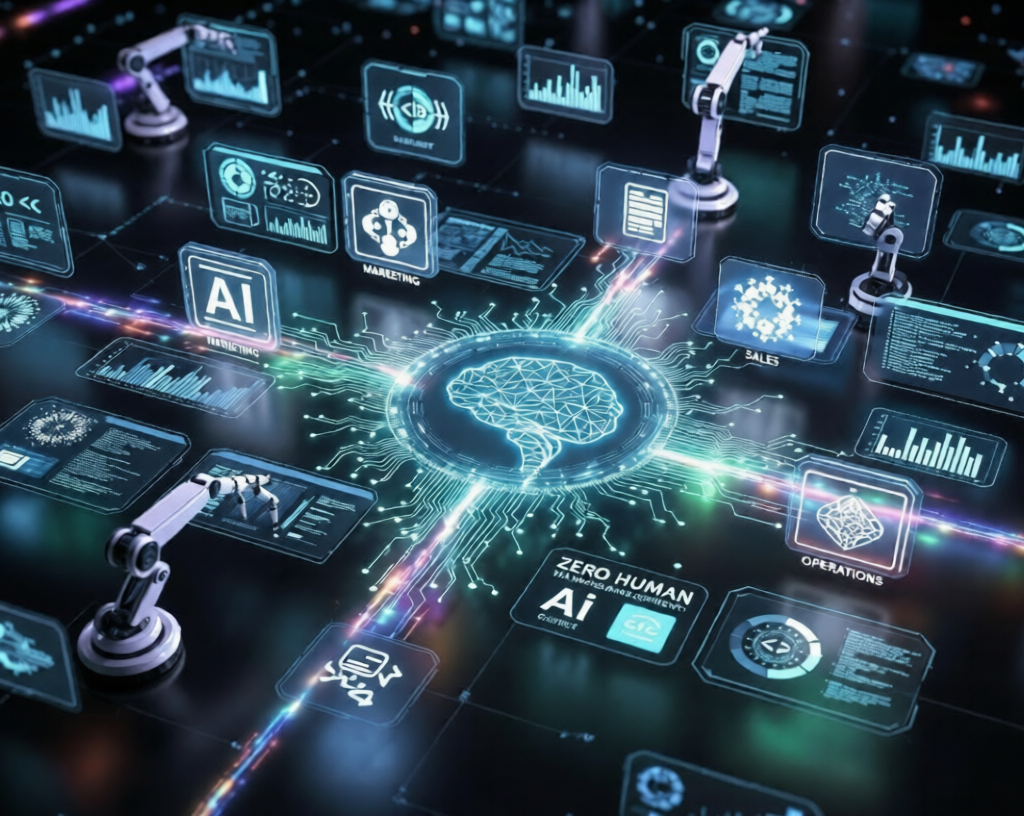
How Organizations Build Zero Human Security Operations
Transitioning to this automated state requires a practical framework. You cannot just buy software and expect miracles. You have to transform your operations.
1. Establish Complete Visibility
You cannot automate what you cannot see. Start by centralizing your telemetry. Consolidate logs from endpoints, networks, and cloud environments into a unified platform.
2. Implement Behavioral Analytics
Move away from signature-based detection. Authentic security relies on establishing a baseline of normal behavior and instantly flagging anomalies.
3. Deploy Automated Playbooks
Build standard operating procedures for common threats. If a user downloads a known malicious payload, your system should automatically isolate that machine from the network.
4. Leverage Authoritative Threat Intelligence
Feed your systems with trusted, real-time data from authoritative frameworks like MITRE ATT&CK and organizations like CISA.
5. Continuous Testing
A reliable Zero Human system must be verified. Regularly run automated breach and attack simulations to ensure your playbooks actually work.
Top Benefits
Let’s look at exactly what happens when you implement this practical framework.
| Benefit | Traditional Approach | Zero Human Approach |
|---|---|---|
| Response Time | Hours to days | Milliseconds to minutes |
| Cost Efficiency | High manual labor costs | Reduced overhead, high ROI |
| Scalability | Requires hiring more staff | Scales instantly with data |
| Consistency | Varies by analyst experience | 100% consistent execution |
Common Mistakes
Even confident leaders stumble during this Digital Transformation. Avoid these critical traps:
- Trusting Automation Blindly: Never deploy an automated block on a critical server without testing it first. You might accidentally shut down your own business.
- Ignoring the Human Element: You still need experts to review the automated actions and adjust the algorithms.
- Fragmented Tools: Bolting together incompatible security tools creates blind spots. Ensure native integration.
Common Myth: Myth: Automation makes security teams obsolete. Fact: It actually makes them more valuable. By stripping away repetitive tasks, analysts evolve into proactive threat hunters.
Real World Case Study: Global Logistics Corp
To see this in action, consider a major logistics company we recently analyzed.
The Problem: They were drowning in 50,000 security alerts daily. Their security operations center (SOC) was exhausted, missing critical alerts, and facing a massive turnover rate.
The Solution: They implemented a Zero Human tier-one triage system using advanced orchestration and automation tools.
The Implementation: They mapped their most frequent alerts to automated playbooks aligned with NIST guidelines. Phishing emails triggered automatic sandbox detonations. Suspicious logins triggered immediate conditional access challenges.
The Results:
- 92% of alerts were handled without any human intervention.
- Mean Time to Respond (MTTR) dropped from 4 hours to 3 minutes.
- SOC retention improved by 40%.
Lessons Learned: The technology was only half the battle. Success required a deep understanding of their own data flows and a commitment to refining their automated rules over time.
Best Practices for Immediate Action
If you want to strengthen your Enterprise Security, start here:
- Start Small: Automate your most repetitive, high-confidence alerts first (like phishing triage).
- Enforce Zero Trust: Require strict identity verification for every user and device, constantly.
- Audit Regularly: Use guidelines from OWASP to routinely check your automated defenses for vulnerabilities.
- Invest in Training: Upskill your current staff to manage and optimize AI-driven security platforms.
Table of Contents
Quick Checklist for Deployment
- Map your top 5 most common security incidents.
- Define the exact manual steps taken to resolve them.
- Select an automation platform capable of executing those steps.
- Run the automation in “monitor only” mode for two weeks.
- Review the results, tweak the logic, and push to active enforcement.
Future Trends
As we look ahead, the intersection of Artificial Intelligence and cybersecurity is expanding rapidly.
We are moving toward predictive threat management. Future Zero Human systems will not just react to an active breach; they will analyze global Technology Trends and patch vulnerabilities in your system before an attacker even writes the exploit. Furthermore, we will see large language models (LLMs) deeply integrated into security tools, allowing teams to query complex network data using simple conversational language.
Conclusion
The reality of modern business is that attacks will happen. But a breach does not have to be a disaster. By shifting the burden of initial detection and response from exhausted analysts to intelligent, automated systems, you regain control.
Mastering a Zero Human strategy is no longer a luxury for the Fortune 500; it is an essential requirement for survival. Implement these practical steps today, protect your data, and transform your security posture from a reactive cost center into a confident, proven business enabler.
Start building your automated future right now.
Frequently Asked Questions (FAQ)
1. What exactly does Zero Human mean in cybersecurity? It refers to automating the initial detection, triage, and containment phases of threat management so that basic cyber threats are neutralized instantly without requiring manual human intervention.
2. Does implementing this mean I can fire my security team? Absolutely not. It removes the tedious, repetitive work (like sorting through false positive alerts), allowing your human experts to focus on advanced threat hunting, strategic planning, and complex forensic investigations.
3. How does Zero Human threat management handle false positives? Modern systems use advanced machine learning to establish highly accurate behavioral baselines. While false positives can occur, they are drastically reduced. Furthermore, you can configure playbooks to require human approval for highly sensitive automated actions.
4. Is this approach safe for critical business operations? Yes, provided it is implemented correctly. Best practice dictates running automated playbooks in “simulation mode” first. This allows you to verify that the automated response will not disrupt legitimate business traffic before you turn on active enforcement.
5. What is the role of AI in a Zero Human environment? AI acts as the analytical brain. It processes vast amounts of telemetry data in real-time, identifies patterns that humans cannot see, and executes automated playbooks to isolate threats the moment they appear.
6. How much does it cost to implement automated threat management? While there is an initial investment in automation platforms and integration, the long-term ROI is incredibly high. You save massive amounts of money by avoiding costly breaches and reducing the manual labor hours required to manage alerts.
7. Can a Zero Human system protect against zero-day attacks? Yes. Because these systems rely on behavioral analytics rather than known malware signatures, they can detect the unusual activities associated with a zero-day exploit—such as an application suddenly trying to encrypt files—and shut it down instantly.
1 thought on “Why 5 Zero Human Strategies Transform Modern Threat Management”