

Introduction
Imagine staring at a screen with forty-seven open tabs. Your mind feels like a computer completely out of memory. Fear sets in as looming deadlines approach. I have been exactly there.
For years, I tried to force my biological brain to remember every brilliant idea, project detail, and meeting note. It was a recipe for total burnout. Then, I experienced a massive breakthrough. I realized our minds are designed to generate ideas, not to store them.
That shift in perspective changed everything. I stopped relying on sheer memory and started building a cognitive partner. You might know this system by its more popular name. Creating a reliable second brain gave me absolute freedom. It became a trusted extension of my thinking.
If you feel overwhelmed by information, you are not alone. Let us discover how to transform that chaos into a proven engine for success.
What is a Cognitive Partner
A cognitive partner is far more than a digital notebook. It is a dynamic, living ecosystem that works alongside you. Think of it as a transparent filter for your daily life.
When you read a respected article or hear a surprising insight, your cognitive partner holds it. It connects scattered dots. It surfaces relevant ideas exactly when you need them.
Most people use basic note-taking apps. A true second brain acts as an active collaborator. It takes over the heavy lifting of memorization. This allows your biological brain to focus entirely on deep, creative work. It is evidence based, highly practical, and completely tailored to how you naturally think.
Why Every Professional Needs a Second Brain
We consume more data in a single day than our ancestors did in a lifetime. You cannot process it all manually. Trying to do so destroys your momentum.
Every modern professional faces massive decision fatigue. When you try to track every moving part in your head, anxiety spikes. You drop the ball on important tasks. You lose those fleeting moments of brilliance.
Building a second brain provides immediate relief. It creates a centralized hub for your knowledge. When you trust your system, you eliminate the constant fear of forgetting. You unlock the capacity to solve complex problems faster. It is the ultimate productivity leverage.
How a Second Brain Changes Thinking
Having a trusted system fundamentally rewires how you approach challenges. You no longer start from scratch.
When you face a blank page, your cognitive partner provides the building blocks. You begin with an arsenal of curated insights. This creates incredible momentum.
You start noticing patterns. An idea from a podcast last month suddenly connects with an email you received today. This is where real innovation happens. Your second brain turns isolated facts into connected wisdom. It replaces reactive panic with calm, proactive confidence.
Benefits of Cognitive Partners
The advantages of this system extend far beyond simple organization. Here is exactly what you gain.
| Benefit | Impact |
| Mental Clarity | Frees biological brain from storing data |
| Faster Execution | Projects start with existing assets |
| Stress Reduction | Eliminates the fear of forgetting |
| Idea Generation | Connects previously unrelated concepts |
| Knowledge Scaling | Compounds your learning over time |
Common Mistakes
Many professionals start building their system but quickly hit a wall. Here are the most frequent pitfalls and how to solve them.
| Mistake | Solution |
| Hoarding Data | Only save what resonates emotionally |
| Complex Folders | Use action-based organization |
| Ignoring Review | Schedule weekly system maintenance |
| Perfect Formatting | Focus on capture speed |
| No Clear Goals | Align notes with active projects |
How AI Becomes Your Cognitive Partner
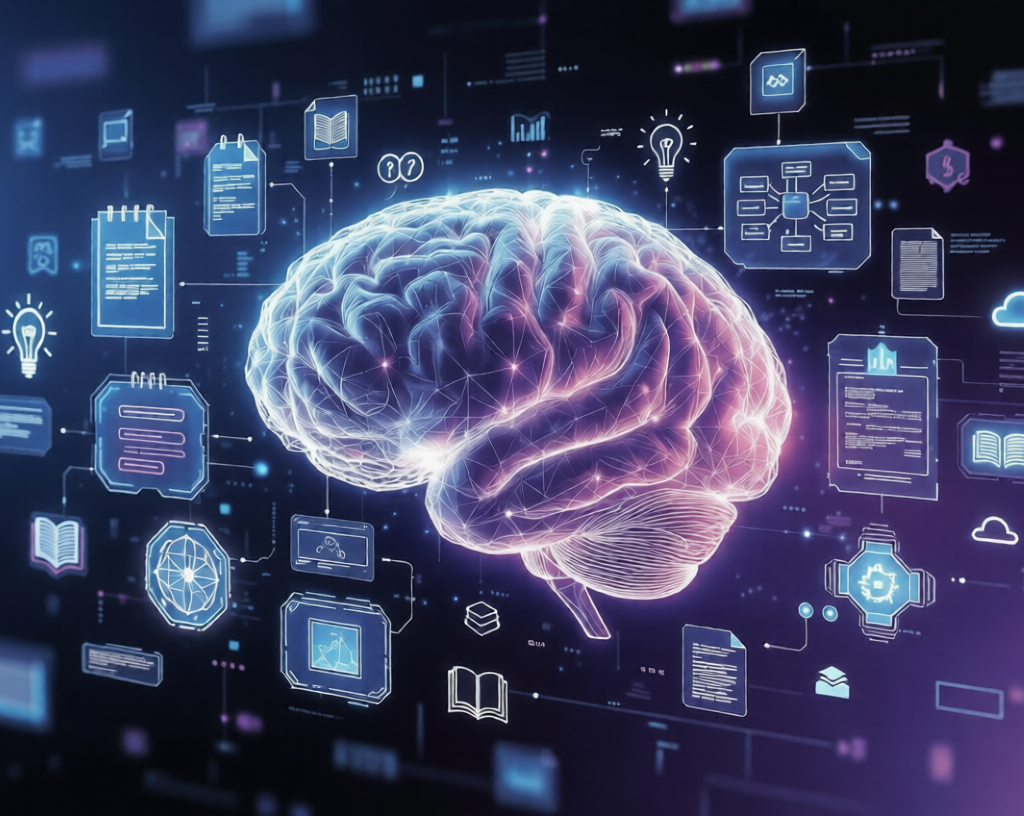
Artificial intelligence has completely transformed knowledge management. We are no longer just storing text. We are interacting with our data.
Modern AI tools act as active thought partners. They can summarize long documents instantly. They find hidden connections between your notes. If you ask a question, the AI scans your second brain to provide a personalized answer.
This is a massive leap forward. You are no longer searching for keywords. You are engaging in a dialogue with your own past thoughts. Leading tech companies are pushing this boundary daily. It makes your system exponentially more powerful and completely authentic to your voice.
Best Second Brain Methods
You need a practical framework to build your system. Two proven methodologies stand out.
The PARA method organizes information by actionability. You divide everything into Projects, Areas, Resources, and Archives. It forces you to focus on what matters right now.
The Zettelkasten method focuses on connecting ideas. You create small, atomic notes and link them together. It mimics how neurons fire in your mind.
I recommend starting with PARA for pure organization. Then, use Zettelkasten principles for your creative output. This hybrid approach is highly credible and easily adaptable.
Table of Contents
Future of Cognitive Partners
The future of work depends on how well we manage information. We are moving toward predictive intelligence.
Soon, your second brain will anticipate what you need before you ask. If you open a project file, your system will automatically surface relevant research, emails, and past meeting notes. It will seamlessly integrate into your daily workflow.
Those who master these tools now will have a massive competitive advantage. They will achieve more while working less. The gap between those with a reliable cognitive partner and those without will only widen.
Expert Tips
To master your system, keep things incredibly simple. Complexity is the enemy of consistency.
Capture ideas instantly. Do not wait until you are back at your desk. Use voice memos or quick mobile widgets.
Use your own words. When you save an article, write a one-sentence summary explaining why it matters to you. This builds genuine understanding.
Finally, do not worry about finding the perfect software. The tool matters far less than the habit. Choose an app you actually enjoy using and stick with it.
Real-World Case Study
Here is how these concepts look in actual practice.
Background
Sarah is a senior marketing director at a mid-sized tech firm. She manages four teams and handles dozens of campaigns simultaneously.
Challenge
Sarah was completely overwhelmed. She spent hours hunting for lost files across different apps. She frequently forgot brilliant campaign ideas she had during her morning commute. Her stress levels were peaking.
Strategy
She decided to build a dedicated second brain. The goal was to centralize her knowledge and separate active projects from general reference material.
Implementation
Sarah chose a unified digital note-taking app. She implemented the PARA method. She set up quick-capture shortcuts on her phone. She dedicated fifteen minutes every Friday to process her inbox and connect her notes.
Results
Within three weeks, Sarah experienced a total breakthrough. Her meeting prep time dropped by fifty percent. She launched a major campaign using ideas she had captured months prior. Her team noticed a drastic improvement in her focus.
Lessons Learned
Sarah realized that saving everything is a mistake. Curating information based on active projects is the real secret. Consistency beats perfection every single time.
Implementation Checklist
Ready to build your trusted system? Follow these essential steps.
- Choose one primary digital tool
- Install the mobile app for quick capture
- Create a simple inbox folder
- Set up your active project folders
- Define your core areas of responsibility
- Schedule a weekly 15-minute review block
- Migrate only essential current files
Actionable Framework
Apply this simple, proven framework to transform how you work today.
- Capture Intentionally: When you find a valuable insight, save it immediately. Add a quick note about why it caught your attention.
- Organize for Action: Move that insight into an active project folder. If it is not actionable right now, place it in a general resource folder.
- Distill for Clarity: Highlight the best parts of the note. Bold the key takeaways. Make it easy for your future self to scan.
- Express and Create: Use your connected notes to write, design, or solve problems. Never start with a blank page again.
Final Thoughts
Building a reliable cognitive partner is one of the highest-leverage investments you can make. It protects your mental energy. It compound your daily learning. It transforms chaos into absolute clarity.
Stop trying to hold the world in your biological memory. Start building a trusted second brain today. Unlock your true creative potential and experience the freedom you deserve. The momentum you will gain is truly surprising.
You have the tools. You have the strategy. Now it is time to take action.
Ready to achieve true mastery? Explore more expert resources, deep dives, and proven productivity strategies right here on kritiinfo.com.
Frequently Asked Questions
What exactly is a second brain?
It is a centralized, digital system used to capture, organize, and retrieve your ideas, notes, and knowledge. It acts as an external cognitive partner to free up mental space.
Do I need to be tech-savvy to build one?
Not at all. The most effective systems are often the simplest. You can start with basic built-in notes apps on your smartphone. The habit matters more than the technology.
How much time does it take to maintain?
A well-designed system requires minimal upkeep. Plan for about 10 to 15 minutes of dedicated review time per week to organize your inbox and connect new ideas.
How is this different from standard note-taking?
Standard notes are often static and easily forgotten. A true cognitive partner is highly connected and action-oriented. It surfaces relevant information when you actually need it.
What is the best app for building this system?
There is no single best app. Popular choices include Notion, Obsidian, Apple Notes, and Evernote. Choose the tool that feels most intuitive and frictionless for your personal workflow.
Can AI help manage my digital knowledge?
Yes. Modern AI tools can summarize long articles, find hidden connections across your notes, and retrieve information conversationally, making your system incredibly powerful.
How do I avoid saving too much useless information?
Practice intentional friction. Before you save something, ask yourself how and when you might use it in the future. If you do not have a clear answer, do not save it.
How does this system improve my daily productivity?
By eliminating the time you spend searching for lost information and allowing you to start new projects using existing, curated assets rather than starting from scratch.
This is exactly the kind of clear breakdown I was looking for.
So many blogs overhype the topic, but you kept it easy to follow.
Thanks for sharing!