
The Silent Drain on Your Business
It was 11 PM on a Tuesday. A marketing director at a thriving tech startup stared blankly at her screen.
She had just invested thousands into an advanced enterprise AI platform. She expected a remarkable transformation in team productivity. Instead, she found her top writers spending hours rewriting instructions, fixing hallucinated facts, and coaxing the machine to generate a simple coherent campaign.
I never realized AI had this hidden risk.
She thought AI was a magic wand. In reality, she had unknowingly introduced a new, invisible layer of friction into her business. Her team was bleeding hours.
Every business leader jumping into the AI revolution must face a critical truth. AI is transforming every industry, but the hidden AI costs are often ignored.
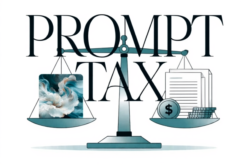
This silent drain on your resources has a name. It is the Prompt tax.
Every AI user must understand it to build smarter systems and secure long term value.
What is Prompt Tax
To understand this concept, we need to look beyond the subscription fees of your AI tools.nty minutes refining a single query to get an acceptable answer, they are paying the Prompt tax.
This invisible burden carries very real consequences for your organization.
- Time cost: Minutes lost writing and rewriting prompts.
- Productivity cost: Deep work interrupted by wrestling with language models.
- Financial cost: Paying highly skilled employees to act as amateur AI whisperers.
- Business cost: Delayed projects and frustrated teams.
Think of it like hiring a brilliant intern who speaks a slightly different language. The time you spend constantly correcting their work is a tax on your own productivity.
Why Invisible AI Risks Matter
Organizations often focus entirely on the opportunity AI brings. They rarely see the invisible risks hiding beneath the surface.
When your team relies heavily on generative tools without a reliable framework, wrong decisions inevitably follow. Employees may blindly trust hallucinated outputs, leading to embarrassing or costly public mistakes.
Compliance problems arise when sensitive client data is carelessly pasted into public AI models to generate a quick summary. Security concerns become a daily threat.
But the most insidious risk is team inefficiency.
Prompt dependency grows when employees forget how to start a blank document. They wait for the AI to do the thinking. This leads to massive productivity loss. These hidden operational expenses quietly eat away at your profit margins.
To protect your business, you need an evidence based approach to identify these leaks.
Major Invisible Risks of AI
To gain a winning advantage, you must recognize where the friction lives. Here are the core areas where the Prompt tax silently accumulates.
Poor Prompt Quality
Vague instructions yield terrible results. When users fail to provide context, the AI guesses. The user then has to rewrite the query, doubling the time spent.
Hidden Prompt Engineering Costs
Many businesses force regular employees to become prompt engineers. This drains focus from their actual expertise.
Employee Overreliance
When teams use AI as a crutch rather than an assistant, critical thinking skills degrade.
Data Leakage
Employees trying to speed up their workflow might feed proprietary code or financial data into public models.
AI Misinformation
Models sound highly confident even when they are completely wrong. Automation without verification is a recipe for disaster.
Model Inconsistency
An instruction that worked perfectly yesterday might produce garbage today due to silent backend model updates.
Rising Prompt Tax
As you integrate more AI tools into your daily operations, the cumulative time lost to tweaking and fixing outputs scales exponentially.
Table of Contents
Real Business Examples
Practical experience shows us exactly how this plays out across different sectors. Discover how various departments pay this tax and how they solve it.
| Industry | The Problem | The Solution | Business Outcome |
| Marketing Agency | Writers spent 2 hours daily fixing generic AI copy. | Created strict prompt templates for brand voice. | Reclaimed 10 hours per writer weekly. |
| HR Department | Hallucinated policies in AI generated employee handbooks. | Instituted mandatory human review protocols. | Eliminated compliance risks and errors. |
| Healthcare Assistant | Inconsistent patient summary formats causing confusion. | Built a standardized prompt library for clinical staff. | Improved patient care coordination. |
| Software Company | Developers pasting proprietary code into public AI tools. | Deployed a secure, internal Enterprise AI sandbox. | Stopped data leakage immediately. |
| Small Business Owner | Wasting hours generating daily social media posts. | Optimized workflows with automated prompt chains. | Boosted overall business productivity. |
Case Study The True Cost of AI Friction
Let us look at a real world scenario demonstrating these hidden costs.
Background
TechFlow Logistics is a mid sized supply chain company. They integrated generative AI across their operations to draft reports, analyze logistics data, and handle vendor emails.
Challenge
Leadership expected a 30% increase in output. After three months, output had actually dropped by 5%. They uncovered a massive, hidden Prompt tax. Employees were spending an average of 8 hours a week fighting with the AI to get the formatting and data analysis just right.
Actions Taken
They needed proven strategies. TechFlow partnered with a technology consultant to rebuild their approach. They developed central prompt libraries. They implemented mandatory employee AI training. They established a reliable framework for quality assurance.
Results
- Reduced AI interaction time by 60%.
- Saved approximately $14,000 per month in lost productivity.
- Increased output accuracy to 98%.
Lessons Learned
Implementing AI without a trusted methodology creates chaos. Proper documentation and standardized workflows are essential to unlock true value.
Practical Strategies to Reduce the Burden
You have the power to fix this. Apply these strategies to reduce your Prompt tax and build smarter systems.
- Deploy Prompt Templates: Stop starting from scratch. Standardize the best instructions for your most common tasks.
- Invest in Knowledge Management: Centralize your best practices. Learn more about effective Knowledge Management on kritiinfo.com to keep your team aligned.
- Build Prompt Libraries: Create a shared repository of tested, highly effective prompts that any employee can access.
- Enforce Human Review: Never publish raw AI output. Make quality assurance a non negotiable step.
- Provide Employee AI Training: Teach your staff how to talk to machines effectively. Clear communication reduces friction.
- Focus on Documentation: Write down what works. Share successful workflows across departments.
- Optimize the Workflow: Integrate AI directly into the tools your team already uses to minimize context switching.
- Commit to Continuous Evaluation: Regularly audit your AI outputs to ensure they still meet your quality standards.
Expert Tips for Sustainable Success
Expert insights reveal that treating AI as a teammate rather than a calculator is the key to sustainable success.
Professional recommendation: Do not let your team wander blindly into generative AI. Give them a map.
A critical mistake to avoid is assuming all AI models act the same way. What works in one tool may fail in another. Always test your instructions rigorously.
Another major error is automation without verification. As noted by the NIST AI Risk Management Framework, human oversight remains paramount. Stay ahead by treating AI as a draft generator, never a final publisher.
Future of Prompt Tax
The future holds incredible opportunity. The AI evolution is moving rapidly toward smarter prompting.
Models are becoming better at inferring human intent, which will naturally lower the Prompt tax over time. We are seeing a massive shift toward Enterprise AI solutions that learn your specific business context, drastically reducing the need for lengthy, complex instructions.
However, this requires strict AI governance. Responsible AI adoption means setting boundaries today so you can scale safely tomorrow. As prompt automation becomes standard, the companies that thrive will be those that have mastered the underlying logic of human machine collaboration.
To explore more about managing these shifts, read our guide on Digital Transformation at kritiinfo.com.
Frequently Asked Questions
What exactly is the Prompt tax?
It is the hidden cost of time, energy, and lost productivity spent trying to get an AI tool to produce the exact output you need.
How does this tax impact my daily productivity?
Instead of doing deep, meaningful work, you spend your mental energy rewriting instructions and fixing AI mistakes. This drains your efficiency.
Why do AI models require so much coaxing?
AI models lack human context. They do not know your brand voice or your specific goals unless you explicitly tell them every single time.
Can Prompt tax be completely eliminated?
Not entirely, but it can be drastically reduced. Using prompt libraries and templates minimizes the repetitive work required to get good results.
Is AI still worth the investment despite these hidden costs?
Absolutely. When managed with a reliable framework, the productivity gains of AI far outweigh the initial friction.
How do I train my employees to reduce this burden?
Start today by providing clear prompt templates and teaching them the basics of context, constraint, and clarity in their AI queries.
What is the biggest security risk of poor prompting?
Data leakage. Frustrated employees might paste confidential company data into public AI models to force a better answer.
Where can I learn more about implementing AI safely?
You can explore comprehensive articles on Cybersecurity and AI on kritiinfo.com to protect your business.
Conclusion Your Next Steps
The invisible Risk of AI is very real, but it does not have to slow you down.
By taking the time to understand the Prompt tax, you unlock a massive opportunity for growth. You can protect your business from hidden inefficiencies, boost productivity, and empower your team to use these powerful tools with absolute confidence.
Take action. Start building your prompt libraries, train your staff, and commit to responsible AI adoption. Improve performance by turning friction into a streamlined workflow.
If you are ready to stay ahead of the curve and build a resilient technological future, explore more expert technology articles on kritiinfo.com to continue your journey.
Master the machine today, so it never masters your time tomorrow.
1 thought on “How 7 Smart Breakthroughs Conquer the Invisible Prompt Tax Risk”