
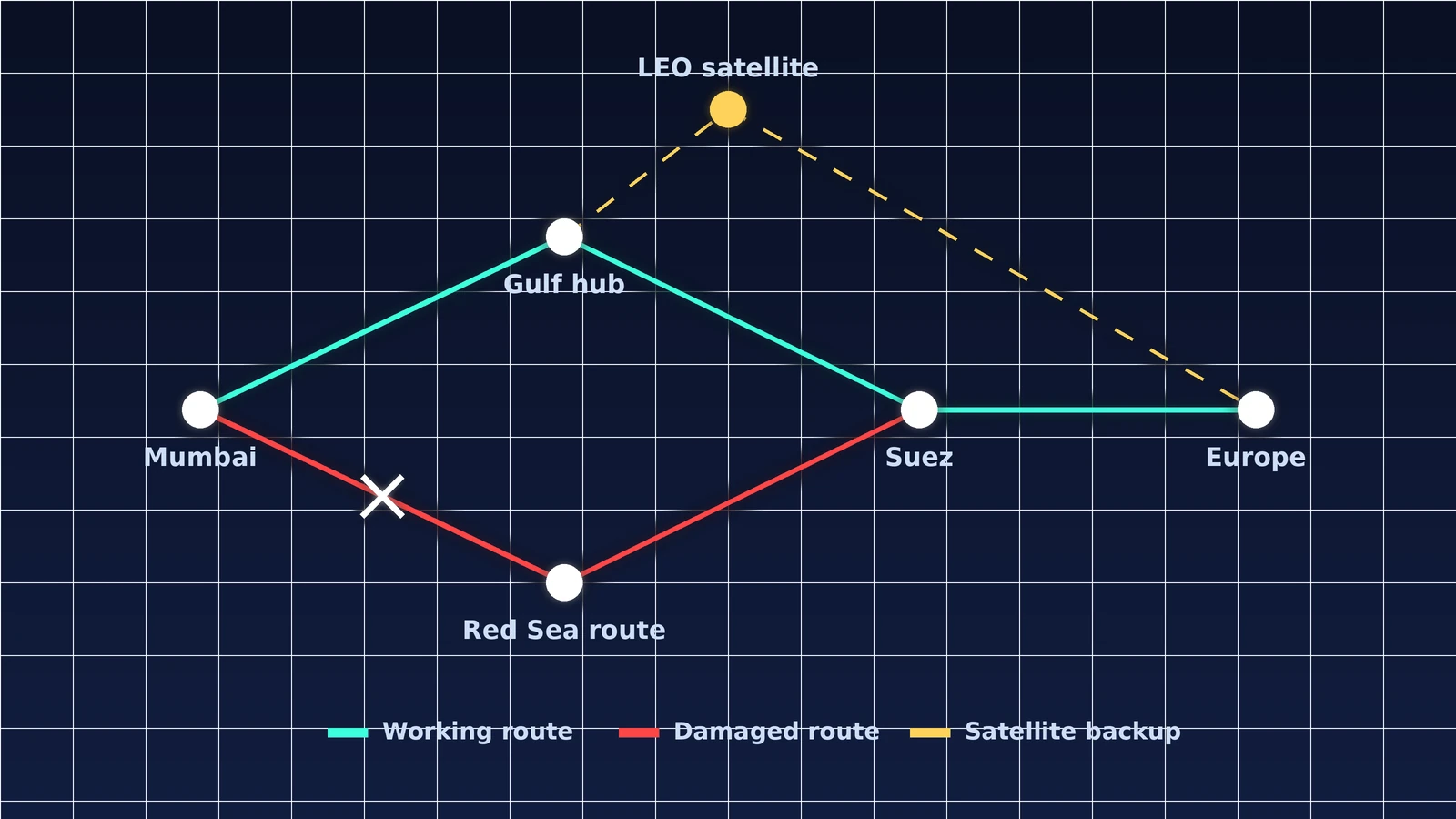
On Saturday, 6 September 2025, at about 05:45 UTC, several undersea cables near Jeddah in Saudi Arabia stopped carrying data. Within hours, Microsoft warned Azure customers to expect higher delays on traffic crossing the Middle East. The monitoring group NetBlocks reported degraded connections in several countries, including India and Pakistan.
Reports named three damaged systems: SEA-ME-WE 4, IMEWE and FALCON, which link South Asia and the Gulf with Europe. Microsoft rerouted traffic through other paths, so services kept running, though some data took longer routes. Early reports did not confirm an official cause.
That is Telecommunication Beyond Borders in a single scene. A shop owner in Pune checking a European order, a student in Karachi joining a lecture and a bank clearing a payment all depended on thin cables on a seabed most people never see.
Table of Contents
What Telecommunication Beyond Borders Really Means
Telecommunication Beyond Borders is the system that lets information leave one country and reach another in a fraction of a second. It is not only international calling. It is the combined work of fibre optic cables, satellites, mobile networks, internet exchange points and data centres.
When someone in India messages a friend in Europe, the words travel as pulses of light through glass threads, usually along the seabed. Satellites help where cables cannot reach, such as ships, aircraft and remote villages.
Why now? Payments, cloud software, online classes and AI tools all assume the network just works. Global connectivity is built, not given: it depends on physical routes, shared rules and cooperation between countries that do not always agree.
How Does a Video Call Cross a Border?
Picture a video call from Pune to Berlin.
- Your phone sends data to a Wi-Fi router or mobile tower.
- Your provider carries it to an international gateway, where its network meets networks abroad.
- At a cable landing station on the coast, such as Mumbai or Chennai, the signal enters a submarine cable.
- The cable crosses the sea and comes ashore in Europe.
- An internet exchange point (IXP, a building where networks swap traffic) and a data centre pass it on to Berlin.
Roaming and eSIM (a digital SIM) let a traveller’s phone join foreign networks. Satellites step in where no tower or cable exists.
The Invisible Highways Under the Sea
According to official data from the International Telecommunication Union (ITU), submarine cables carry more than 99 per cent of international data traffic. They fail mainly because they cross busy waters.
ITU and the International Cable Protection Committee (ICPC) report around 200 faults a year, with over 80 per cent caused by fishing and anchoring. The rest come from earthquakes, storms and strong currents.
Repairs are slow. A specialised ship must find the break, lift the cable, splice it and rebury it, which can take months, according to ICPC figures reported by Recorded Future.
Alternative routes matter because traffic bunches up. An ITU official said Red Sea incidents in 2024 disrupted an estimated 25 per cent of Europe to Asia data traffic. Satellites are a complement here. They carry emergency and remote traffic but do not replace the bulk capacity of fibre.
Telecommunication Beyond Borders: What Works Today and What Is Still Developing
Available now
- 5G: The ITU estimates about 3 billion 5G subscriptions in 2025, roughly one third of mobile broadband subscriptions (subscriptions, not people). 5G improves the local radio link; data still travels over fibre afterwards.
- LEO satellites: Low Earth Orbit constellations fly low enough for shorter delays than older satellites.
- Cloud, SDN and AI: Software defined networking (SDN) lets operators reroute traffic by software. AI tools help predict faults and balance loads. Cloud regions put services closer to users.
- eSIM: Travellers can add a local data plan without swapping a card. Roaming prices still vary.
Rolling out, with conditions
- Non Terrestrial Networks (NTN): 3GPP, the body that writes mobile standards, has been adding satellite support to 5G since Release 17. Real service depends on operators and regulators.
- Satellite broadband in India: Starlink, Jio-SES and Eutelsat OneWeb hold licences, but reports from 2026 say spectrum allocation and security clearances were still pending.
Still developing
- 6G: Reporting on the June 2026 3GPP plenary says Release 21 is the first 6G release, finishing around March 2029. Commercial networks are widely expected near 2030. That is a forecast, not a fact.
Which Technology Powers Telecommunication Beyond Borders? A Comparison
This table shows general engineering characteristics. Real numbers vary by system and provider.
| Factor | Subsea fibre | GEO satellite | LEO satellite | Terrestrial wireless |
|---|---|---|---|---|
| Speed and capacity | Highest | Lower per user | Moderate to high | High within range |
| Latency | Lowest over long distances | Highest (about half a second round trip) | Low, tens of milliseconds typical | Low locally |
| Coverage and remote areas | Between landing points; weak in remote areas | Very wide; strong in remote areas | Wide; strong in remote areas, subject to licences | Limited to tower range; weak in remote areas |
| Reliability | Very high until a cut | Weather sensitive | Improving | Good where towers are dense |
| Deployment cost | Very high upfront, low per bit | High | High | Moderate per site |
| Maintenance and physical dependence | Specialised ships, cables, landing stations | Satellite replacement, ground stations | Constant replacement, ground stations | Field work, towers, fibre backhaul |
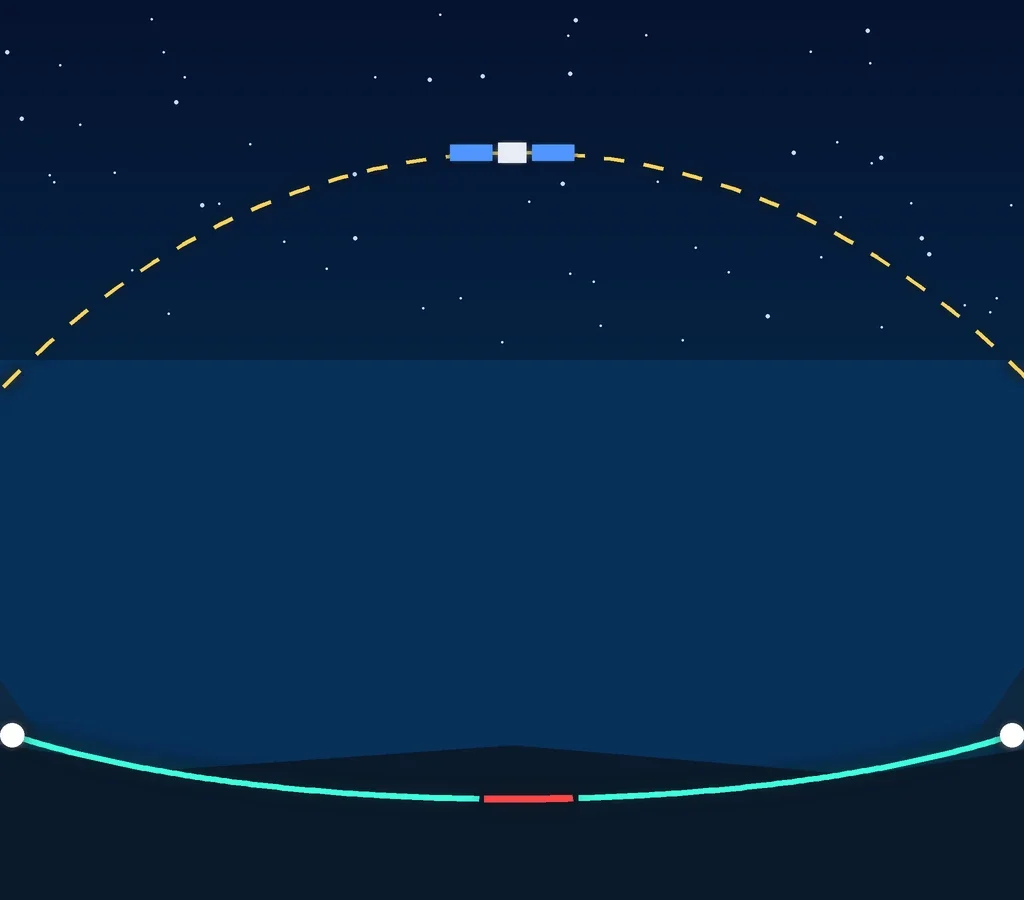
None wins everywhere. Fibre is the backbone, wireless is the last mile, and satellites cover gaps and provide backup. A resilient network uses all three.
The Business Impact of Global Connectivity
Telecommunication Beyond Borders quietly supports international banking, digital payments, remote work, trade and logistics, e-commerce, online education, telemedicine, global customer support, and AI and cloud computing. Distributed teams depend on it daily, as our guide to the distributed and gig workforce explains.
Worked Example (Illustrative, Not a Real Case Study)
Imagine a hypothetical Indian home décor brand selling to customers in Germany and Singapore. Its website runs on cloud servers abroad, its payment gateway talks to overseas banks, its Pune support team takes video calls, and its logistics software tracks parcels with foreign couriers.
Now suppose a major cable route fails, as in the real Red Sea incident. Pages load slowly, checkout times out, payment confirmations arrive late and support calls freeze.
What reduces the damage?
- Multi-region cloud hosting and a content delivery network, so another region or a nearby copy serves customers.
- Payment retry logic and a public status page, so orders are not lost and customers stay informed.
- Two internet providers on different routes, plus a mobile or satellite backup.
Service would still slow down, but orders would keep flowing. Microsoft’s rerouting in 2025 is the large scale, documented version of the same idea.
Hidden Challenges Behind Telecommunication Beyond Borders
This is not a risk free story.
- Cybersecurity: Attackers target networks, cloud accounts and people.
- Privacy and data sovereignty: Countries differ on where data may be stored and who may access it.
- Regulation: India’s satellite wait shows how licences, spectrum pricing and security reviews slow launches.
- Cost: Roaming and international bandwidth can still be expensive for small users.
- Geopolitics: The Red Sea is a crowded corridor. Reports note about 15 cables pass through the Bab el-Mandeb Strait, so one regional crisis can affect many countries.
Balance sheet. Benefits include instant communication, global markets and wider access to education and healthcare. Limits include dependence on a few routes, slow repairs, security risks, uneven national rules and unequal access.
The 5 Pillars of Reliable Cross-Border Connectivity
Reliable Telecommunication Beyond Borders rests on five principles. This framework is the author’s own, a checklist for judging any network or provider.
- Many Paths (infrastructure resilience). Never rely on one cable, provider or region. Ask what happens if the busiest route fails tomorrow.
- One Language (interoperability). Common standards from bodies like 3GPP and ITU let different networks and devices work together.
- Locked Doors (security and privacy). Encrypt traffic, limit access and know where your data sits.
- Open Gates (affordable, inclusive access). A network only the wealthy can use cannot support a whole economy.
- Shared Rules (cooperation). Cable protection, spectrum coordination and fault reporting need countries to work together.
What the Numbers Mean for Telecommunication Beyond Borders
The ITU’s Facts and Figures 2025, published in November 2025, estimates that about 6 billion people, or 74 per cent of the world, used the internet in 2025. About 2.2 billion remained offline. This counts people who used the internet, not coverage, subscriptions or devices.
Use is 94 per cent in high income countries and 23 per cent in low income countries, and about 96 per cent of those offline live in low and middle income countries. In everyday terms, most of the world is connected, but the unconnected live where opportunity is most needed.
My interpretation (not official data):
- Developing economies: Better links help local firms sell abroad only if prices and skills keep pace.
- Rural communities: Satellite and 5G help most where fibre is costly, but affordability matters as much as coverage.
- Small businesses: Cloud and global payments lower export costs. Backup connectivity is now a basic expense.
- Future work: Remote and AI enabled jobs favour places with stable, affordable links.
Common Misconceptions About Telecommunication Beyond Borders
“Satellites will replace undersea cables.” Evidence suggests otherwise: cables carry over 99 per cent of international traffic, and satellites fill gaps.
“5G means seamless global connectivity.” No. 5G is a local radio link; cross border service still depends on fibre and operator agreements.
“Faster means safer.” Speed and security are separate qualities.
“Every country has equal access.” The ITU gap between 94 and 23 per cent shows otherwise.
What Readers Should Do Next
- Individuals and students: Use trusted networks, keep devices updated and compare roaming and eSIM prices before travelling.
- Business owners: List the cloud regions, payment services and providers you depend on. Keep a backup internet route and test it.
- Technology decision-makers: Ask providers about route diversity, incident history and data location. Our piece on AI security platforms is a useful start on the security side.
Conclusion: A Connected Future
Go back to Jeddah, 6 September 2025. The cables were cut, yet most services stayed up because engineers had built other paths. That is the real lesson of Telecommunication Beyond Borders: reliability is designed in advance.
AI will help networks predict problems, LEO satellites and NTN will extend coverage, and 6G may add more near 2030. None of it replaces the fibre on the seabed or the cooperation needed to protect it.
Connectivity is shared infrastructure for a shared digital future. Those who treat it that way will be ready when the next cable fails.
Frequently Asked Questions
1. What does Telecommunication Beyond Borders mean? Communication that crosses national boundaries using cables, satellites, mobile networks and data centres, covering calls, internet, payments and cloud services.
2. How does the internet connect different countries? Mostly through submarine fibre cables that land at coastal stations. Networks then swap traffic at internet exchange points.
3. Why are submarine cables important? They carry more than 99 per cent of international data traffic with high capacity and low delay.
4. Can satellites replace traditional telecom networks? Not at present. Satellites are strong for remote areas, ships and backup, but fibre carries the bulk traffic.
5. How will AI and 6G change international communication? AI can help detect faults and manage traffic. 6G standards are expected around 2029 and commercial use near 2030, a forecast.
6. What are the biggest challenges to Telecommunication Beyond Borders? Cable damage, cyber threats, differing national rules, cost, geopolitical tension and unequal access.