
Imagine staring at the final scoreboard, the devastating rejection letter, or the promotion announcement that does not have your name on it. It hurts. You read every book, studied for hours, and practiced endlessly. You gave it your absolute all, yet someone else walked away with the prize. Why does this happen? Because relying solely on hard work and theory is no longer enough. To achieve a true breakthrough, you need an expert strategy. Discover the incredible power of the 70-20-10 rule. Mastering this proven, research backed framework will completely transform your approach, boost your confidence, and dramatically improve your chances of winning any competition you enter.
What is the 70 20 10 Rule
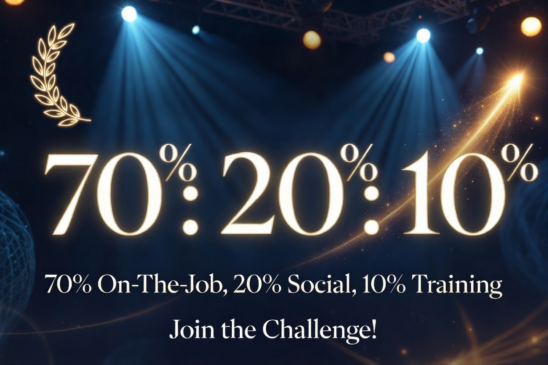
The 70-20-10 rule is a credible learning and development model that explains how successful people truly master new skills. Originally developed by researchers at the Center for Creative Leadership, this reliable framework breaks down the optimal way to absorb information and achieve outstanding results.
Here is the accurate breakdown:
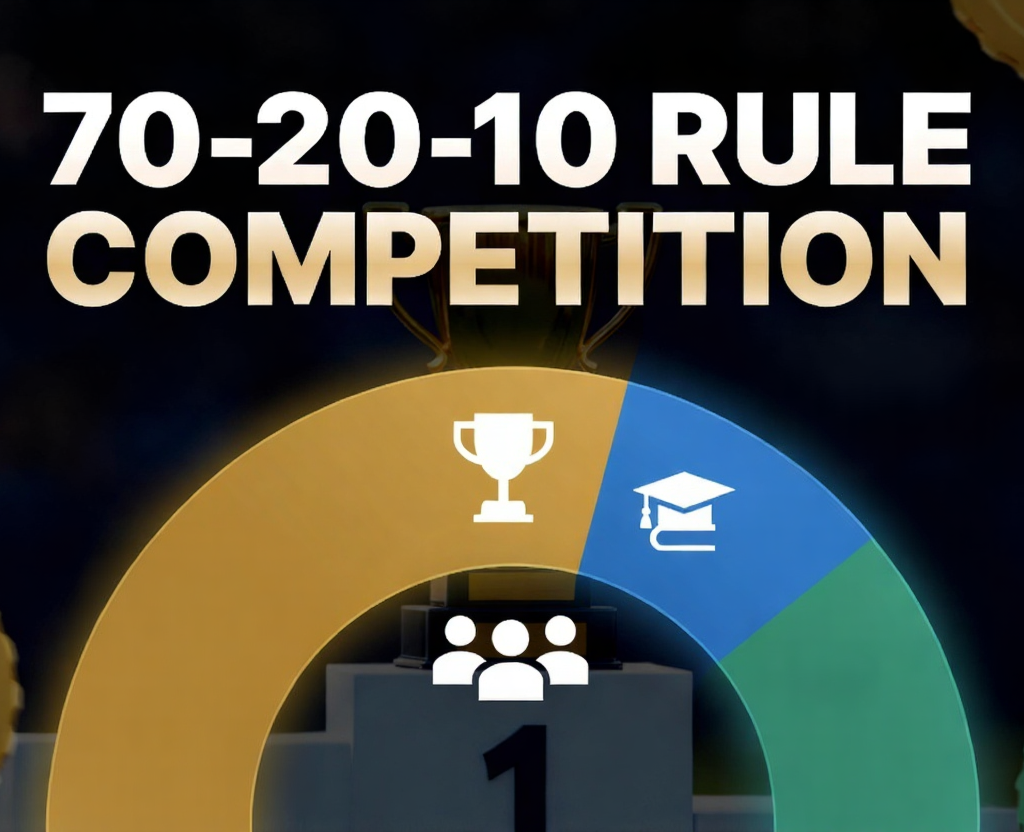
- 70% Experiential Learning: Doing the actual work, making mistakes, and solving real problems.
- 20% Social Learning: Interacting with peers, receiving expert mentorship, and observing others.
- 10% Formal Learning: Reading textbooks, attending lectures, or taking structured courses.
Most people completely invert this model. They spend 70% of their time reading and only 10% actually practicing. If you want to win, you must align your strategy with this evidence based reality.
Why It Matters in Any Competition
Competitions are rarely won in the classroom. They are won in the trenches. Whether you are facing a corporate promotion panel or running a marathon, the environment is unpredictable.
Applying the 70-20-10 rule matters because it builds fearless adaptability. When you spend the vast majority of your time practicing under realistic conditions, you develop muscle memory. You stop overthinking and start reacting accurately. This trusted methodology ensures you are never caught off guard by a curveball question or an unexpected opponent strategy. You become an authentic competitor who operates on pure, deeply ingrained mastery.
How the 70 20 10 Rule Improves Performance
Performance relies on execution under pressure. This powerful framework forces you to get comfortable with discomfort.
When you dedicate 70% of your time to hands on practice, you accelerate your growth. You identify your weak spots immediately rather than waiting for exam day to fail. The 20% social aspect ensures you receive transparent feedback from mentors who have been there before, helping you pivot quickly. Finally, the 10% formal education provides the foundational quality knowledge required to start your journey. Together, these elements unlock peak performance and ensure your success is predictable, not accidental.
Psychology Behind Effective Learning
To truly trust this framework, you need to understand the science. Leading experts from institutions like Stanford and MIT consistently highlight the concept of cognitive load and active recall.
When you passively read a textbook (the 10%), your brain feels a false sense of fluency. You recognize the words, so you believe you know the material. However, when you are tested in a live environment (the 70%), you cannot retrieve the information. Experiential learning forces your brain to build strong neural pathways. Social learning leverages mirror neurons, allowing you to absorb tacit knowledge simply by watching professionals execute. This is an insightful, proven psychological reality that separates the amateurs from the champions.
Practical 70 20 10 Rule Step by Step Framework
Ready to develop a winning routine? Follow these practical steps to implement the strategy today.
Step 1 Build the Foundation
Start with your 10%. Identify the absolute best resources, such as a highly rated Coursera program or an authoritative textbook. Limit your time here. Learn just enough to understand the rules of the competition.
Step 2 Find Your Circle
Develop your 20%. Surround yourself with people who share your motivation. Join masterminds, hire a coach, or find a reliable study group. Ask them to review your work and provide unfiltered, objective feedback.
Step 3 Enter the Arena
Immerse yourself in the 70%. Create mock scenarios that mimic the actual competition. If you are preparing for a pitch, present it to a live audience. If you are taking a test, sit in a quiet room with a timer. Practice relentlessly until the process feels entirely natural.
Common Mistakes When Applying the 70 20 10 Rule
Even with a proven system, competitors stumble. Avoid these dangerous traps:
- Hiding in the 10%: It feels safe to just read another book. Do not let the fear of failure stop you from practicing.
- Ignoring Feedback: The 20% only works if you listen. Pride will ruin your chances of an amazing victory.
- Practicing the Wrong Things: Your 70% must mimic the exact conditions of your competition. Generic practice yields generic results.
Expert Tips for 70 20 10 Rule Mastery
To truly master this method, you must remain incredibly disciplined. Track your hours for a week. Are you actually spending 70% of your time doing the work? Most people are shocked to find they are reading 80% of the time.
Use a timer. Force yourself to close the reference materials and attempt the task from memory. Furthermore, always record your practice sessions. Watching a video of your own performance provides an objective, eye opening perspective that dramatically speeds up improvement. Explore more insights on building flawless routines in the personal development section on kritiinfo.com.
Table of Contents
Real World Applications Across Different Fields
The beauty of the 70-20-10 rule is its universal application. Here is how different competitors use it to achieve remarkable outcomes.
Students
Instead of re-reading lecture notes all night, successful students spend 10% of their time reviewing concepts, 20% discussing complex theories with classmates, and 70% attempting past exam papers under strict time limits.
Job Seekers
Relying solely on an updated resume is a losing battle. The best candidates spend 10% researching the company, 20% networking on LinkedIn to secure referrals, and 70% building a practical portfolio or doing mock interviews.
Entrepreneurs
Founders who win do not write 100-page business plans. They spend 10% on market research, 20% talking to advisors, and 70% launching a minimum viable product to gather real customer data.
Sports
Athletes understand this naturally. A basketball player spends 10% watching film, 20% listening to the coach, and 70% running full speed scrimmages to build endurance and court awareness.
Competitive Examinations
For intense exams, reading the syllabus (10%) and clarifying doubts with mentors (20%) is essential. However, attempting hundreds of simulated mock tests (70%) is what actually guarantees a top percentile rank.
Corporate Professionals
According to Harvard Business Review, future executives do not just take leadership courses (10%). They seek executive coaching (20%) and volunteer to lead high stakes, cross functional projects (70%) to prove their capability.
Remarkable 70 20 10 Rule Case Study
To see exactly how this works, let us look at an authentic example of transformation.
Problem
David was a highly intelligent software engineer competing for a senior developer role at a top tech firm. He had taken multiple edX courses and read every coding book available. Yet, he consistently failed the live technical interviews. He froze under pressure.
Strategy
David realized he was trapped in the 10%. He restructured his preparation completely using the 70-20-10 rule to build confidence and practical competence.
Implementation
- 10% (Theory): He limited his reading of new algorithms to just 4 hours a week.
- 20% (Social): He joined a peer interview platform, spending 8 hours a week conducting and receiving mock interviews with other engineers.
- 70% (Experience): He spent 28 hours a week building complex web applications from scratch without looking at tutorials, forcing his brain to solve errors natively.
Challenges
Initially, David felt immense frustration. Building without tutorials was agonizingly slow. During the peer mock interviews, his ego took a massive hit when strangers pointed out his inefficient code.
Results
Within eight weeks, David’s performance transformed. The live coding environment no longer intimidated him because he lived in it daily. He easily passed the technical interview and secured a lucrative job offer, beating out hundreds of applicants.
Lessons Learned
David learned that theoretical knowledge is useless if you cannot deploy it under pressure. By forcing himself into the 70% zone, he built true, unshakeable mastery.
Actionable 70 20 10 Rule Checklist
Implement this today to boost your competitive edge:
- Audit your current study or preparation routine.
- Calculate the exact percentage of time spent reading versus doing.
- Identify one practical way to simulate your competition environment.
- Find a mentor or peer group for accountability and honest feedback.
- Schedule your 70% practice time blocks in your calendar first.
- Limit your formal learning to strict time constraints.
- Review your progress weekly and adjust the ratios if necessary.
Future Trends in Competitive Strategy
The landscape of competition is evolving rapidly. According to insights from the World Economic Forum, the future of learning and competition will heavily feature artificial intelligence and virtual reality.
Imagine completing your 70% experiential learning inside a hyper realistic VR simulation that perfectly mimics an Olympic stadium or a hostile boardroom. AI mentors will soon provide instant, data driven feedback for your 20%. Those who adapt to utilizing these modern tools within the framework will hold an undeniable advantage.
Final Takeaways
Winning is not an accident; it is the result of a meticulously crafted strategy. When you transition from passive consumption to aggressive, focused execution, everything changes. Applying the 70-20-10 rule requires hard work, humility, and the courage to fail in practice so you can succeed in reality. Embrace the discomfort of the 70%, leverage the wisdom of the 20%, and build upon the foundation of the 10%. Transform your preparation today, step into the arena with absolute certainty, and claim the outstanding success you rightfully deserve.
10 Frequently Asked Questions About the 70 20 10 Rule
1. What exactly is the 70-20-10 rule in simple terms? It is an evidence based learning model suggesting you should obtain 70% of your knowledge from hands on experience, 20% from interacting with others, and 10% from formal education or reading.
2. Can the 70-20-10 rule be applied to academic competitions? Absolutely. While academics feel formal, the rule suggests spending the vast majority of your time doing active recall, solving complex problems, and writing timed essays rather than just passively reading textbooks.
3. Why is the formal learning portion only 10 percent? Formal learning provides the necessary foundation and vocabulary, but human brains retain information best through action and emotional engagement. The 10% gives you the map; the 70% is actually walking the path.
4. How do I find the right people for the 20 percent social learning? Look for individuals who are slightly ahead of you in the competition. Attend industry events, join dedicated online forums, or proactively seek mentorship from credible professionals on platforms like LinkedIn.
5. Does the 70-20-10 rule work for solo entrepreneurs? Yes. Solo entrepreneurs can apply the 70% by building and launching their products, the 20% by gathering customer feedback and speaking with advisors, and the 10% by reading industry reports.
6. Is the ratio strictly fixed at 70, 20, and 10? No, it is a guiding philosophy rather than a rigid mathematical formula. Depending on the complexity of a brand new subject, you might temporarily increase the formal learning to 20%, but the core focus must remain on experiential practice.
7. How does this rule help with performance anxiety? Performance anxiety usually stems from a fear of the unknown. By spending 70% of your time in realistic, simulated environments, you normalize the pressure, making the actual competition feel like just another practice session.
8. What is the biggest challenge when adopting this method? The biggest challenge is overcoming the illusion of competence. Passive reading feels productive and safe. Transitioning to active practice is mentally taxing and exposes your weaknesses, which requires immense resilience.
9. Can corporate teams use the 70-20-10 rule? Yes, leading corporations use this constantly. Managers assign stretch projects (70%), establish peer coaching frameworks (20%), and send employees to targeted workshops (10%) to develop future leaders effectively.
10. How quickly will I see results using this framework? While immediate clarity often happens within days, significant, measurable improvements in competitive environments typically emerge after four to eight weeks of disciplined, consistent application of the 70-20-10 rule.
Key Takeaways
- The 70-20-10 rule shifts your focus from passive reading to active, hands-on execution.
- Simulating real-world conditions (the 70%) is the ultimate secret to overcoming performance anxiety and building unshakeable confidence.
- Feedback from trusted mentors (the 20%) is crucial for continuous, rapid improvement.
- Formal education (the 10%) should be used as a targeted foundation, not the entire preparation strategy.
- Applying this framework guarantees a strategic advantage in academics, sports, corporate environments, and entrepreneurship.
Ready to unlock your full potential? Apply the 70-20-10 rule today, and do not forget to explore more expert resources, practical guides, and authentic success strategies on kritiinfo.com to accelerate your personal and professional growth!
1 thought on “How 7 Powerful 70 20 10 Rule Secrets Win Any Competition”