
Few things are more frightening for parents than the thought of losing a seemingly healthy baby during sleep. A child who was smiling, feeding and behaving normally the previous evening may, in rare cases, die unexpectedly during sleep. This tragedy is commonly known as Crib Death.
Crib Death is a familiar term for Sudden Infant Death Syndrome (SIDS), although the two terms are not always medically interchangeable. SIDS remains a major concern for parents because its exact cause is still unknown. However, research has identified several risk factors, and evidence-based sleeping practices can significantly reduce the risk of sleep-related infant deaths.
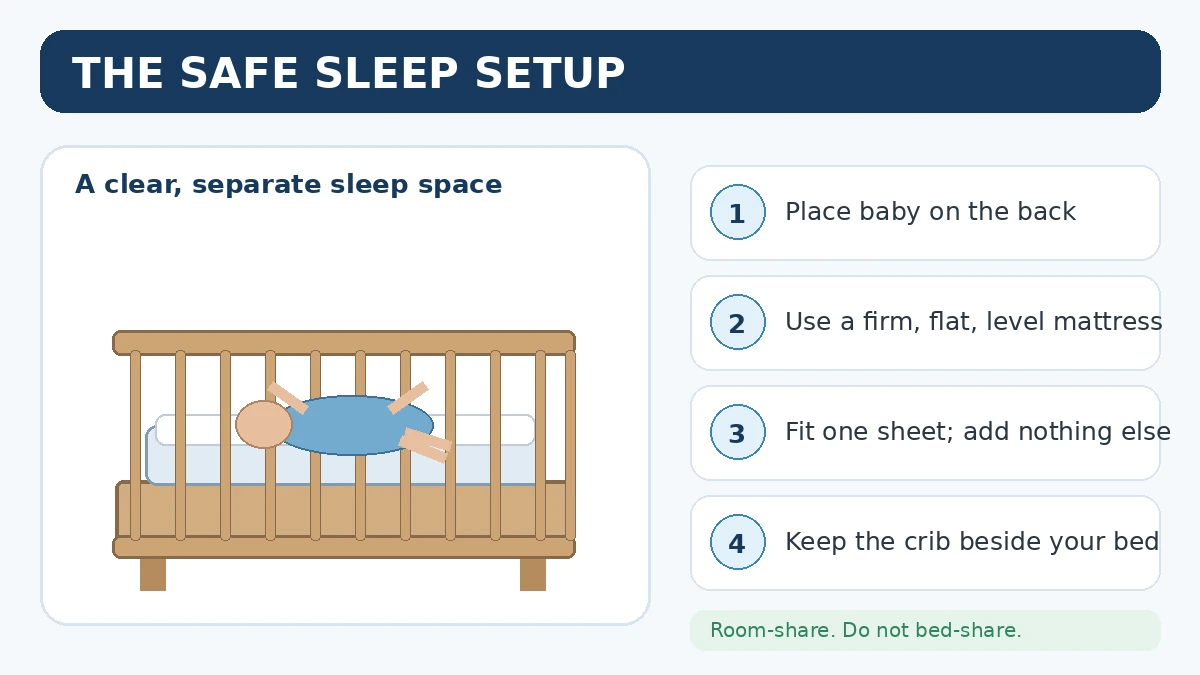
The good news is that parents do not need expensive equipment or complicated routines to create a safer sleeping environment. A few simple, consistent habits can make a meaningful difference.
Let’s understand what Crib Death really means, why it happens, what science has discovered and how families can protect their youngest members.
Table of Contents
1. What Exactly Is Crib Death?
Crib Death is commonly associated with Sudden Infant Death Syndrome (SIDS), which refers to the sudden and unexplained death of a baby younger than one year, even after a thorough investigation.
Such an investigation may include:
- A complete medical and family history.
- An examination of the baby’s sleeping environment.
- A post-mortem examination.
- A review of the circumstances surrounding the death.
If investigators cannot identify a definite cause, the death may be classified as SIDS.
However, there is an important medical distinction parents should understand.
SIDS is only one category of Sudden Unexpected Infant Death (SUID).
SUID is a broader term that includes:
- Sudden Infant Death Syndrome.
- Accidental suffocation or strangulation during sleep.
- Unexpected infant deaths where the cause remains unknown.
For example, if a baby accidentally becomes trapped between a mattress and a wall, the resulting death is not classified as SIDS if the cause is established. It is still considered a sleep-related infant death within the broader SUID category.
This distinction matters because some sleep-related deaths have identifiable environmental causes that can be prevented.
According to the US Centers for Disease Control and Prevention (CDC), approximately 3,400 sudden unexpected infant deaths occurred in the United States in 2024. These included 1,351 SIDS deaths, 1,099 deaths from unknown causes and 947 deaths from accidental suffocation and strangulation in bed.
These are US figures, not worldwide estimates.
2. When Is a Baby Most Vulnerable?
Crib Death can occur during the first year of life, but the risk is not equally distributed across all months.
According to the National Institutes of Health’s Safe to Sleep programme:
- Approximately 90% of SIDS deaths occur before six months of age.
- The highest number occurs between one and four months.
- SIDS can still occur during the remaining months of the first year.
This makes the first six months particularly important.
Parents sometimes believe that a baby who has crossed the newborn stage is no longer vulnerable. Unfortunately, this assumption is incorrect.
Safe sleeping practices should continue until the baby’s first birthday.
The most important lesson is simple: never become careless about sleep safety simply because your baby appears healthy or has been sleeping peacefully for several months.
3. Why Does Crib Death Happen?
One of the most difficult questions for parents is why a seemingly healthy baby can die unexpectedly.
The honest scientific answer is that researchers have not discovered one single cause of SIDS.
However, scientists use an important explanation called the Triple-Risk Model.
According to this model, three conditions may combine to create a dangerous situation.
1. An underlying vulnerability
Some babies may have an undetected problem involving the brain systems that regulate breathing, heart rate, body temperature and waking from sleep.
2. A critical developmental period
During the first months of life, an infant’s nervous system, breathing patterns and sleeping cycles undergo rapid changes.
3. An external stressor
Certain conditions, such as stomach sleeping, exposure to cigarette smoke, overheating or unsafe bedding, may place additional stress on the infant.
The theory suggests that the combination of these three factors may contribute to SIDS.
It does not mean that every baby exposed to one risk factor will develop the condition. Nor can this model predict which individual baby will be affected.
The practical lesson is that parents should concentrate on reducing the external risks that they can control.
4. Eight Proven Ways to Reduce the Risk of Crib Death
There is no guaranteed method of preventing every SIDS death. Nevertheless, strong evidence supports several practical measures that can reduce the risk.
1. Always Place Your Baby on the Back
This is the single most important safe-sleep recommendation.
Place your baby on the back for every sleep, including daytime naps and nighttime sleep.
Do not assume that side sleeping is a safe alternative. Side sleeping is also discouraged because babies can roll onto their stomachs.
Some parents worry that a baby may choke while sleeping on the back. However, medical evidence does not support this common fear as a reason to avoid back sleeping.
Even babies with reflux should generally be placed on their backs unless their treating specialist provides specific medical instructions.
Once babies can independently roll both from back to stomach and from stomach to back, they can generally remain in the position they choose after being placed on their backs initially.
2. Provide a Firm, Flat and Safe Mattress
A baby’s sleeping surface should be firm, flat and level.
Use a safety-compliant crib, bassinet or portable play yard with a properly fitting mattress and a fitted sheet.
Avoid:
- Soft mattresses and memory foam surfaces.
- Pillows and cushions.
- Loose blankets and quilts.
- Stuffed toys.
- Crib bumpers.
- Sleeping wedges and positioners.
- Inclined sleeping products.
A soft surface may allow a baby’s face to sink into the material, increasing the risk of suffocation.
Remember that a beautiful-looking nursery is not necessarily a safe nursery. A simple, empty crib is often the better choice.
3. Share Your Room, Not Your Bed
Parents naturally want their newborn close to them, particularly during nighttime feeding.
However, sharing a room and sharing a bed are two different things.
The American Academy of Pediatrics recommends that babies sleep in the parents’ room, on a separate infant sleep surface, ideally for at least the first six months.
Avoid placing a baby in an adult bed, especially when:
- The parent is extremely tired.
- Someone has consumed alcohol or drugs.
- A caregiver uses medication that causes drowsiness.
- The mattress is soft.
- The baby is younger than four months.
- Loose pillows or blankets are present.
Sofas and armchairs are particularly dangerous places to fall asleep with a baby.
If you accidentally fall asleep while feeding your baby in bed, return the infant to the separate crib as soon as you wake up.

4. Keep the Baby Comfortable Without Overheating
Parents sometimes believe that wrapping a baby in several layers of clothes and blankets will provide better protection.
Unfortunately, excessive warmth can increase the risk of sleep-related death.
Dress your baby according to the room temperature. A useful general guide is to use no more than one additional clothing layer compared with what a comfortable adult would wear.
Look for signs of overheating:
- Sweating.
- Flushed or unusually red skin.
- A chest that feels hot to the touch.
Keep the baby’s head and face uncovered during sleep. Avoid indoor hats unless specifically required for medical care.
A suitable wearable blanket can provide warmth without introducing loose bedding into the crib.
5. Keep the Environment Completely Smoke-Free
Exposure to tobacco smoke is a well-established risk factor.
Smoking during pregnancy can affect the developing baby, while secondhand smoke after birth can also increase the risk of SIDS.
Parents and other household members should avoid smoking or vaping around infants.
Keeping the home and car smoke-free is particularly important.
Avoid alcohol, cannabis, opioids and other impairing substances during pregnancy, and ensure that anyone caring for the baby is not impaired by alcohol or drugs.
6. Consider Breastfeeding and Pacifier Use
Human milk feeding is associated with a lower risk of SIDS.
Health authorities recommend breastfeeding when possible, but parents should not feel blamed or discouraged if breastfeeding is not possible.
Formula-fed babies also benefit from every other safe-sleep precaution.
A pacifier may also help reduce SIDS risk during naps and nighttime sleep.
For breastfed babies, parents can wait until breastfeeding is well established before introducing a pacifier.
Never attach a pacifier to a baby’s clothing, neck or stuffed toy with a cord or strap.
7. Follow Safe Swaddling Practices
Swaddling can make some newborns feel comfortable and settled.
However, an important misconception needs correcting: swaddling does not prevent SIDS.
If parents choose to swaddle, the baby must always be placed on the back.
Stop swaddling as soon as the baby shows signs of attempting to roll over. This may happen around three to four months or earlier.
Weighted swaddles and weighted blankets should not be used for infant sleep.
A baby who rolls onto the stomach while swaddled may have difficulty moving into a safer position.
8. Maintain Regular Healthcare and Immunisation
Safe sleep is important, but infant health involves much more.
Regular prenatal care, routine paediatric check-ups and recommended vaccinations contribute to better infant health.
Vaccinated babies have been found to have a lower risk of SIDS.
Parents should also discuss premature birth, low birth weight, feeding difficulties and any existing medical conditions with their paediatrician.
These babies may require additional individualised care.
5. Common Myths About Crib Death
Misunderstanding can sometimes be as dangerous as ignorance. Let’s examine some common beliefs.
Myth 1: A baby sleeping on the stomach sleeps more comfortably.
Fact: A baby may appear comfortable, but stomach sleeping carries a higher risk of SIDS. Back sleeping is recommended for every sleep.
Myth 2: A healthy-looking baby cannot experience SIDS.
Fact: SIDS can affect seemingly healthy infants. That is why safe-sleep measures remain important.
Myth 3: Expensive baby monitors prevent sudden infant death.
Fact: Home breathing, heart-rate and movement monitors have not been proven to prevent SIDS. They should never replace safe-sleep practices.
Myth 4: A soft pillow makes a baby more comfortable and protected.
Fact: Pillows and soft bedding can increase the risk of suffocation. Babies do not need pillows in their sleeping space.
Myth 5: Once a baby starts sleeping through the night, the risk disappears.
Fact: Risk continues throughout the first year, although it is greatest during the earlier months.
6. A Real-World Example: Small Changes, Better Protection
Consider an illustrative family scenario.
Rahul and Asha welcome their first child, a baby boy. Like many new parents, they are extremely careful about feeding, bathing and keeping their child comfortable.
However, their initial sleeping arrangement includes a soft pillow, a decorative blanket and several stuffed toys.
Their parents and relatives suggest keeping the baby in the adult bed because they believe it makes nighttime care easier.
After discussing infant safety with their paediatrician, Rahul and Asha reconsider their arrangements.
They make several changes:
- They place the baby on his back for every sleep.
- They purchase a suitable firm mattress.
- They remove unnecessary bedding and toys.
- They place the crib beside their bed.
- They explain the same precautions to grandparents and other caregivers.
- They maintain a smoke-free environment.
These changes do not guarantee that Crib Death will never occur. However, they eliminate several avoidable hazards and create a safer sleeping environment.
The important lesson is that infant safety is not the responsibility of one parent alone. Everyone who looks after the baby must follow the same rules.
7. What Should Parents Do During a Medical Emergency?
SIDS is, by definition, unexpected and cannot be reliably predicted through ordinary symptoms.
However, parents should know how to recognise an emergency.
Seek immediate emergency medical assistance if a baby:
- Stops breathing or has severe difficulty breathing.
- Becomes unresponsive.
- Develops blue or grey lips or skin.
- Becomes unusually limp or cannot be awakened.
Do not wait for a baby monitor to alert you.
If the baby is unresponsive and not breathing normally, call emergency services immediately and begin infant CPR if you are trained, following the emergency dispatcher’s instructions.
Remember that these are signs of a possible medical emergency, not warning symptoms that reliably predict SIDS.
8. What Parents Should Remember
The prevention of Crib Death is not about buying more products or constantly monitoring every movement.
It is about developing safe habits and following them consistently.
Before putting your baby to sleep, use this simple checklist:
- Baby is placed on the back.
- Mattress is firm, flat and level.
- Only a fitted sheet is present.
- No pillows, toys or loose blankets are inside the crib.
- Baby sleeps on a separate surface.
- Room temperature and clothing are comfortable.
- The sleeping environment is smoke-free.
Ask every caregiver, including grandparents and babysitters, to follow the same routine.
Frequently Asked Questions (FAQs)
1. What is the main cause of Crib Death?
The exact cause of SIDS remains unknown. Researchers believe that a combination of biological vulnerability, developmental changes and external stressors may contribute to it.
2. At what age is Crib Death most common?
Most SIDS deaths occur before six months of age, with the highest incidence between one and four months. However, it can occur during the entire first year.
3. Can Crib Death be completely prevented?
No. There is no guaranteed method of preventing SIDS. However, following evidence-based safe-sleep recommendations can reduce the risk of SIDS and other sleep-related infant deaths.
4. Is stomach sleeping dangerous for newborns?
Yes. Stomach and side sleeping increase the risk of SIDS. Babies should be placed on their backs for every sleep until their first birthday.
5. Do breathing monitors prevent Crib Death?
No. Consumer breathing and heart-rate monitors have not been shown to prevent SIDS. They should not replace a safe sleeping environment.
6. Is breastfeeding important for reducing SIDS risk?
Yes. Feeding human milk is associated with a reduced risk of SIDS. However, parents who cannot breastfeed should continue following all other recommended safe-sleep practices.
7. Should parents use pillows for newborn babies?
No. Pillows, cushions, soft toys and loose bedding should be kept out of an infant’s sleeping area.
Conclusion: Safe Sleep Is a Responsibility We Share
Crib Death remains a serious concern because even modern medicine cannot explain every sudden infant death.
Nevertheless, parents are not powerless.
Scientific research has given families clear guidance on safer infant sleeping arrangements. Placing babies on their backs, providing a firm and empty sleep surface, sharing a room without sharing a bed and avoiding smoke exposure are practical measures that matter.
Perhaps the most important message is that safe sleep should become a family habit rather than an occasional precaution.
Educate grandparents, babysitters and every other person who cares for your baby. Avoid misleading product advertisements and follow advice supported by qualified medical professionals.
A baby cannot create a safe sleeping environment independently. That responsibility belongs to the adults around them.
A few simple precautions, practised consistently, can make every sleep safer.
Disclaimer: This article is intended for general educational purposes. It does not replace individual medical advice, diagnosis or treatment. Consult a qualified paediatrician about your baby’s specific health and sleeping needs.