
A calm parent gently cleaning a baby’s diaper area with lukewarm water and a soft cloth, how to treat diaper rash at home
It is 2 a.m. A baby who was happy at bedtime is now crying every time the diaper is touched. The skin underneath is bright red and shiny, and the parent is too tired to think. This scene is an illustrative scenario, not a reported case, but almost every family meets it. Diaper rash is one of the most common skin problems in babies, and it can turn a calm night into a stressful one.
The good news is that most diaper rash is mild and clears in a few days with simple care. The harder part is knowing which kind of rash you are looking at, because the wrong cream can leave a rash exactly where it was. This guide gives you a clear system, real examples, and honest limits, so you can act with confidence and know when a doctor should step in.
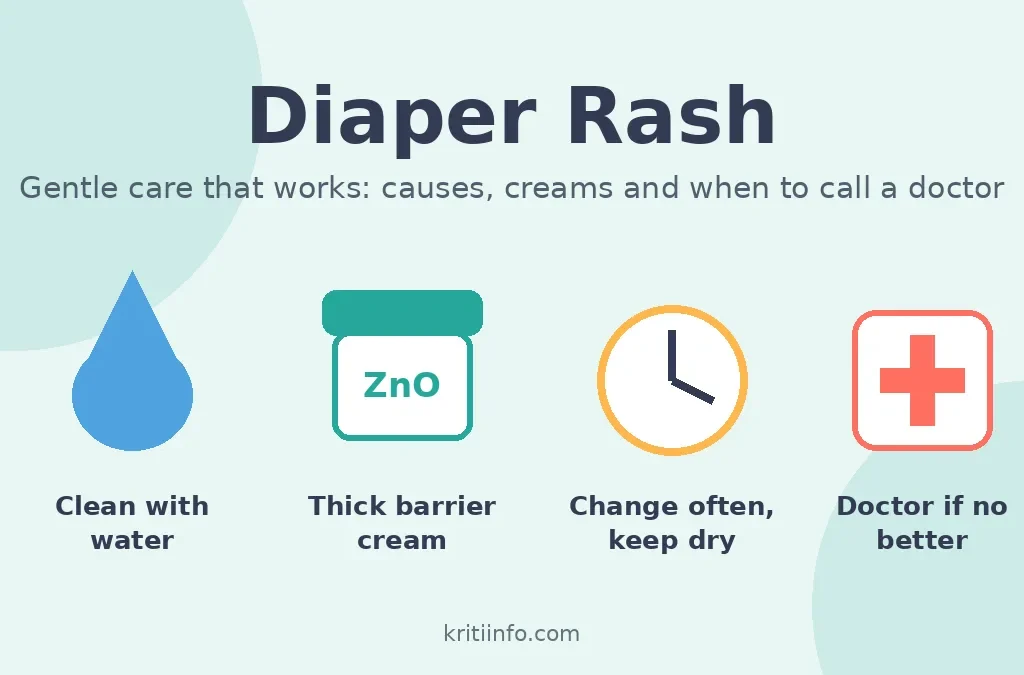
Quick answer: Keep the skin clean and dry, cover it with a thick layer of zinc oxide or petroleum jelly, check for signs of yeast or infection, and call your doctor if the rash is not better after a few days.
Table of Contents
What Is Diaper Rash and Why Does It Happen?
Diaper rash is red, sore, inflamed skin in the area a diaper covers: the buttocks, thighs and genitals. Babies often fuss, cry or pull away during changes because the skin is tender. According to the American Academy of Pediatrics, it usually comes from irritation, infection or allergy.
It is very common. Family medicine resources note that it appears most often in babies between 4 and 15 months old.
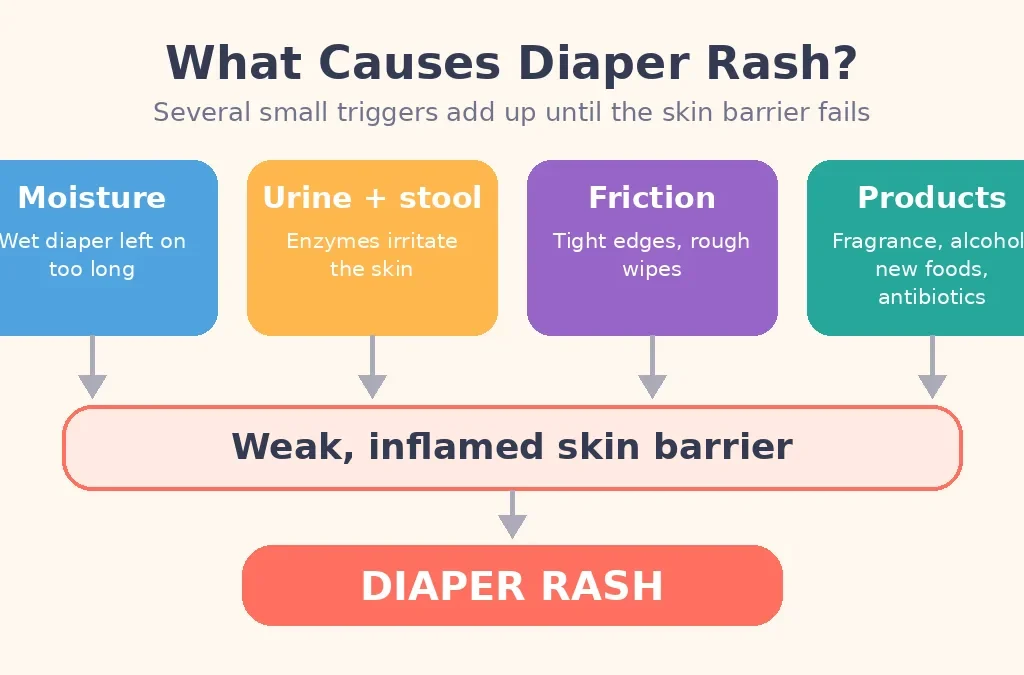
A diaper creates a warm, damp, closed space. Skin that stays wet becomes weak, and urine and stool make it worse. Stool contains enzymes that break down skin, and when urine and stool mix, skin irritation rises. Add friction from the diaper edges, and the skin barrier starts to fail.
The most common triggers include:
- A wet or dirty diaper left on too long
- Loose stools or diarrhea, which irritate skin quickly
- Fragrance or alcohol in wipes, soaps or lotions
- New foods, since stool changes when a baby starts solids
- Antibiotics, which can upset the gut and also allow yeast to grow
Illustration showing how moisture and friction cause diaper rash on baby skin
Types of Diaper Rash: Know What You Are Treating
This is the part many articles skip, and it matters most. Different rashes need different treatment.
| Type | What it looks like | Usual cause | Main treatment |
|---|---|---|---|
| Irritant rash | Red, shiny or dry patches, often on raised areas and sparing the skin folds | Wetness, stool, friction | Frequent changes, zinc oxide or petroleum jelly |
| Yeast (Candida) rash | Bright red, with smaller red spots around the edges, often in skin folds | Candida fungus in warm, moist skin | Antifungal cream, usually advised by a doctor |
| Bacterial infection | Yellow crusts, blisters or pus filled sores, sometimes fever | Bacteria entering broken skin | Doctor visit, prescription treatment |
| Allergic or contact rash | Red patches where a product touched the skin | Reaction to wipes, soap or diaper material | Remove the trigger, doctor advice if it persists |
| Seborrheic dermatitis | Greasy, scaly patches that may also appear on the scalp | Not fully understood | Often settles on its own, doctor can guide |
One detail is worth remembering. A zinc oxide cream protects the skin, but it does not kill yeast. If the rash has bright red spots at the edges and does not improve, yeast may be the reason, and a pediatrician can prescribe an antifungal cream.
The 4D Check: A Simple System for Diaper Rash
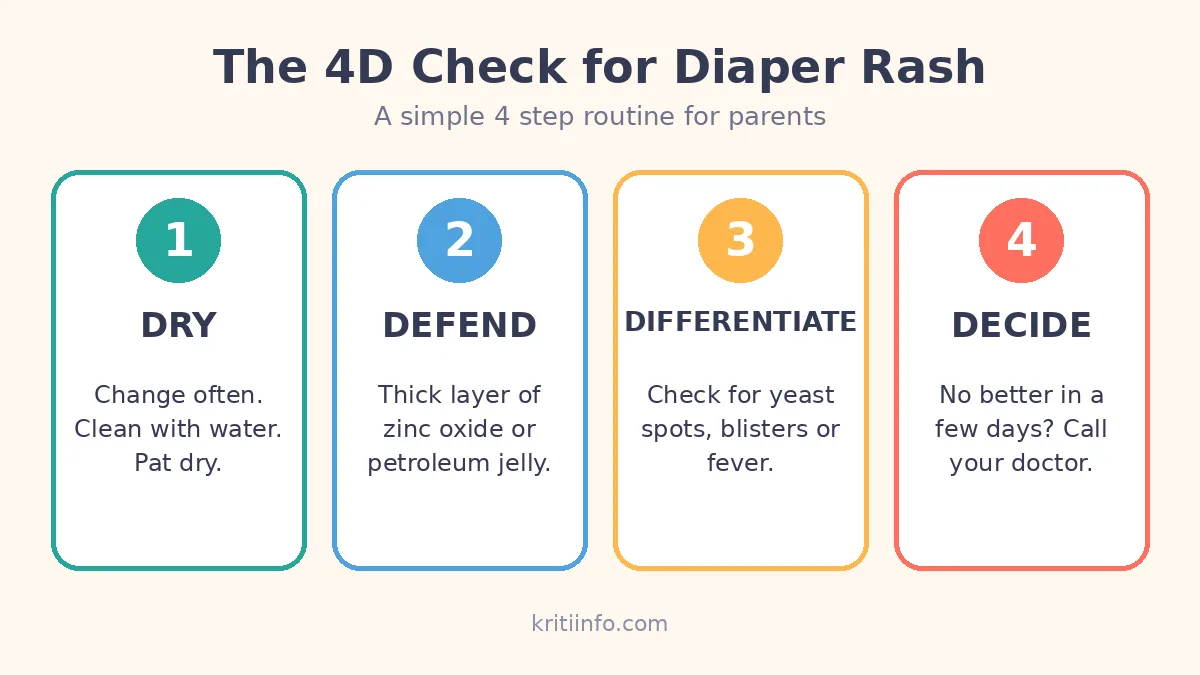
To keep care simple at 2 a.m., use this original four step system. Think of it as the 4D Check: Dry, Defend, Differentiate, Decide.
Step 1: Dry the Skin
Moisture is the root of most diaper rash, so drying comes first.
- Change diapers as soon as they are wet or soiled. During a rash, do not wait for a full diaper.
- Clean gently with plain lukewarm water or a fragrance free, alcohol free wipe. For a sore rash, water and a soft cloth are kinder than wipes.
- Pat dry. Do not rub.
- Give the skin some time without a diaper. Lay your baby on a clean towel for a few minutes after each change when possible.
- Make sure the diaper fits. A diaper that is too tight rubs the skin and traps heat.
Baby lying on a soft towel getting diaper free air time to help heal diaper rash
Step 2: Defend with a Barrier
After cleaning and drying, protect the skin. Zinc oxide and petrolatum (petroleum jelly) are the two ingredients most pediatric sources recommend. Fragrance free products are best.
Apply the cream thickly, like cake icing, at every diaper change. You do not need to scrub off every trace of the old layer at the next change. Wiping hard removes the barrier and hurts the skin. Gently clean off stool, then add fresh cream on top.
| Zinc oxide paste | Petroleum jelly | |
|---|---|---|
| How it works | Thick shield that repels moisture, with mild soothing effect | Seals the skin and locks out wetness |
| Texture | Thick, white, can be hard to spread | Smooth, easy to apply |
| Best for | Active rash, loose stools | Prevention, mild redness |
| Watch out for | Needs thick application to work | Less protective on very wet, raw skin |
Both are good choices. Pick one that your baby tolerates and use it consistently.
A note on powders: talc is generally discouraged because babies can inhale fine powder. If you wonder about cornstarch or any other powder, ask your pediatrician first.
Step 3: Differentiate the Rash
After a day or two of Dry and Defend, look closely. Ask five questions:
- Are there bright red spots outside the main patch, or is the rash deep in the skin folds? This can point to yeast.
- Are there blisters, pus, yellow crusts or open sores? This can point to a bacterial infection.
- Did the rash start after a new antibiotic, food or product? Make a note of it.
- Does the baby have a fever or seem unusually unwell?
- Is the rash getting worse even with good care?
If you answer yes to any of these, move to Step 4. If none apply and the rash is slowly fading, continue as you are. Many mild rashes improve within three to four days of consistent care.
Step 4: Decide When to Get Help
Home care is enough for most babies. Call your child’s doctor if:
- The rash has not improved after a few days of good home care
- The rash is spreading, or the skin is bleeding, blistered or oozing
- There is fever, or your baby seems very unwell
- The rash looks like yeast
- Your baby is a young newborn with a rash
- The rash keeps coming back
Do not use hydrocortisone or other medicated creams on a baby’s diaper area unless a doctor tells you to. Steroid creams in this area can thin the skin and may worsen some infections. A doctor may prescribe an antifungal, an antibiotic or a mild steroid after seeing the rash.
Checklist graphic of the 4D Check for diaper rash: Dry, Defend, Differentiate, Decide
Real World Example: Two Babies, Two Different Rashes
The following is a composite, illustrative example created for teaching. It is not a case study of real patients.
Two babies in the same daycare room both develop red bottoms in the same week.
Baby A had loose stools after a mild stomach bug. His skin was red and shiny across the areas that touched the diaper, with no spots outside the main patch. His caregivers changed him more often, cleaned with water, and used a thick layer of zinc oxide paste. In three days, the redness faded. This is a classic irritant rash, and the Dry and Defend steps were enough.
Baby B had finished a course of antibiotics for an ear infection. Her rash was bright red, with small red spots around the edges and deep red color in the skin folds. Her parents used zinc oxide diligently for four days, and the rash did not improve. At the pediatrician visit, the doctor suspected yeast and prescribed an antifungal cream. The rash then settled.
The lesson: the same care does not fit every rash. When a rash does not respond to good barrier care, the problem is often the diagnosis, not the effort.
Diaper Rash Beyond Babies: Toddlers, Children and Teenagers
Because this topic sits in the Children and Teenagers category, it helps to widen the view. Diaper rash is not only a newborn issue.
- Toddlers and potty training: Rashes can appear during the switch to underwear or training pants. Skin may stay damp after accidents, and sweaty skin folds can break down. Change wet clothing quickly and use a barrier cream on sore areas.
- Children who wear nighttime pull ups: Long hours in a wet or warm garment can irritate skin. Wash the area gently each morning and let it dry fully.
- Children with medical conditions that need diapers or incontinence products: These children can get the same rashes for longer periods, and skin care becomes a daily habit. Talk with the care team about the best routine.
- Teenagers and adults who use incontinence products: Causes and treatments are similar to those in infants, and a persistent rash deserves a doctor’s review.
Toddler in training pants with parent preparing a gentle skin care routine
Four Myths About Diaper Rash
- “A rash means you are a careless parent.” No. Even well cared for babies get diaper rash. Teething, diarrhea, antibiotics and new foods can all trigger it.
- “More wipes means cleaner skin.” Heavy wiping can hurt inflamed skin. Water and a soft cloth are often gentler.
- “Zinc oxide cures every rash.” It protects skin. It does not treat yeast.
- “A stronger medicated cream will heal it faster.” Unneeded medicated creams can do harm. Ask a doctor first.
Frequently Asked Questions About Diaper Rash
1. How long does diaper rash last? Mild irritant rash usually improves within three to four days of consistent care. If it has not improved after a few days, speak to your doctor.
2. What is the best cream for diaper rash? Zinc oxide and petroleum jelly are the two most recommended ingredients. Choose a fragrance free product and apply it thickly.
3. How can I tell if it is a yeast rash? Yeast rash is usually bright red with smaller red spots around the edges, and it often sits in skin folds. A doctor can confirm it and prescribe an antifungal.
4. Should I use baby powder? Talc is generally discouraged because of the risk of inhaling fine particles. Ask your pediatrician before using cornstarch or any other powder.
5. Does diaper rash mean an infection? Not usually. Most rashes come from irritation. Signs that suggest infection include blisters, pus, yellow crusts, bleeding or fever.
6. Can older children and teenagers get diaper rash? Yes. Children who use pull ups or incontinence products can get the same type of rash, and the same Dry and Defend steps apply.
Final Thoughts
Diaper rash is common, treatable and rarely dangerous. The most useful habit is to treat the cause and not just the redness: keep skin dry, defend it with a thick barrier, check what kind of rash it is, and decide early when help is needed.
If your baby’s rash is not improving, do not wait and wonder. A short visit with your pediatrician can save days of discomfort.