
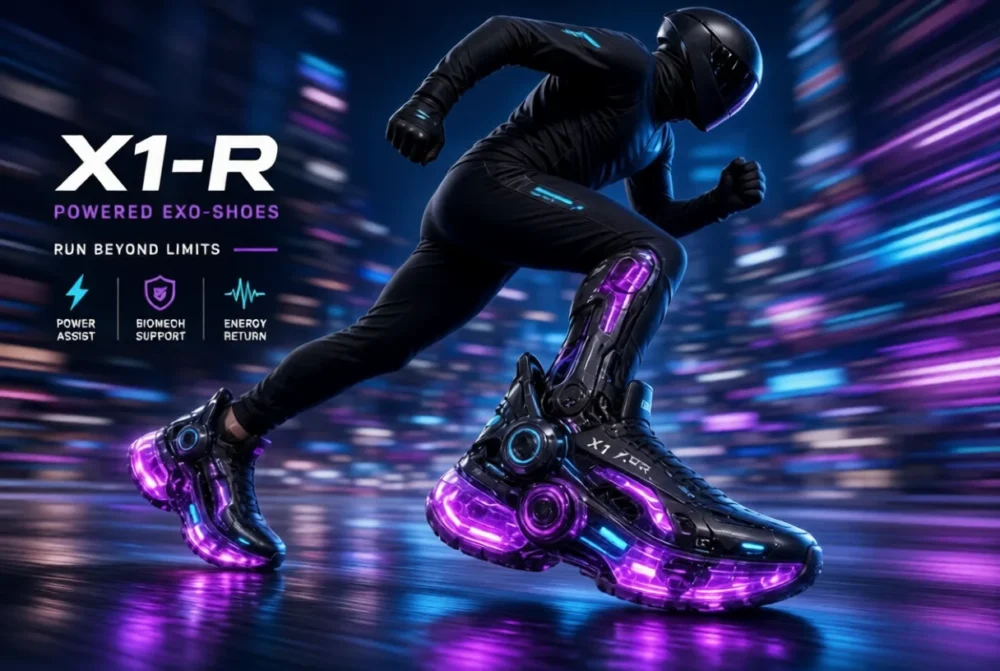
Picture a busy urban intersection. The pedestrian light turns green. A person steps off the curb to cross the street. Today their legs feel profoundly heavy. The pavement below seems uneven and unforgiving. Balance begins to fail. A sudden wave of uncertainty washes over them. Every single step becomes an intense struggle against gravity. Then a quiet mechanical system activates inside their footwear. Hidden sensors instantly detect the microscopic hesitation in their stride. Tiny internal motors respond in a fraction of a second. The next step feels surprisingly completely different. The fear of falling vanishes. The walk across the street becomes confident and secure.
Could intelligent footwear genuinely change the way humans walk, recover, work, and live? We are entering a fascinating era where emerging technology is reshaping human potential. The development of Robotic Walking Sheos could soon redefine personal mobility for millions of people. This scenario is rapidly moving from science fiction into demonstrated research. The profound fusion of advanced artificial intelligence, biomechanics, and wearable technology is transforming ordinary footwear into powerful assistive devices.
Table of Contents
What Are Robotic Walking Sheos?
To fully understand this breakthrough, we must look beyond standard orthopedic sneakers. Robotic Walking Sheos are intelligent wearable devices meticulously designed to actively assist human movement. Unlike passive gel insoles that merely cushion the bottom of the foot, these advanced systems provide actual mechanical energy to the wearer.
They function as miniaturized external support systems worn on the feet and lower legs. They blend seamlessly with daily clothing while quietly housing complex arrays of miniature computers and mechanical components. The ultimate goal of this technology is to grant freedom to those who struggle with daily mobility. By providing a calculated physical boost, these devices help individuals move with greater ease and reduced physical strain.
How Do They Work?
The precise engineering required to fit active robotics into a comfortable shoe is astonishing. A highly orchestrated sequence of events happens with every single stride you take.
Sensors and Motion Detection
First, wearable sensors capture precise data about your movement. These components measure the exact angle of the ankle, the pressure striking the heel, and the acceleration of the foot. This data gathering happens continuously.
Artificial Intelligence Systems
Next, sophisticated motion detection algorithms process this massive amount of information. The artificial intelligence acts as a digital brain. It anticipates the exact millisecond the wearer needs a physical push. The system learns your unique walking style to provide customized support.
Actuators and Real Time Assistance
Small motors or actuators then engage instantly. These tiny mechanisms physically pull internal cables or turn joints to provide a burst of power right as the foot pushes off the ground. A lightweight battery system powers the entire operation. Continuous gait analysis ensures that the real time assistance feels completely natural instead of jerky or forced.
Why Every Step Matters
Walking is a complex mechanical action that many people take entirely for granted. However, the ability to walk easily connects directly to a sense of independence and deep personal confidence. When walking becomes a massive physical chore due to aging, injury, or neurological conditions, a person’s world suddenly shrinks. People may avoid leaving their homes. Social isolation often follows closely behind.
This is where the promise of Robotic Walking Sheos offers a profound sense of hope. By restoring the physical ability to explore the world, this wearable technology also helps restore emotional well being. A confident step translates to a much more active, engaged, and fulfilling life. It takes immense courage to navigate the world when your body struggles to cooperate. Technology that honors and supports that courage is a true transformation.
5 Ways They Could Help
The practical applications for powered footwear extend far beyond simple convenience. Researchers have demonstrated several highly practical uses that could soon benefit the public.
1. Mobility Assistance
For the elderly population or individuals dealing with chronic muscle weakness, these shoes can provide the extra strength required to cross a room or walk down a grocery aisle safely. They bridge the gap between walking independently and needing a wheelchair.
2. Rehabilitation Support
Physical therapy clinics are actively exploring how wearable robotics can help stroke survivors or those recovering from spinal injuries relearn how to walk. The shoes gently guide the foot into the correct anatomical position. This repeating action promotes neuroplasticity and speeds up recovery times.
3. Reduced Walking Fatigue
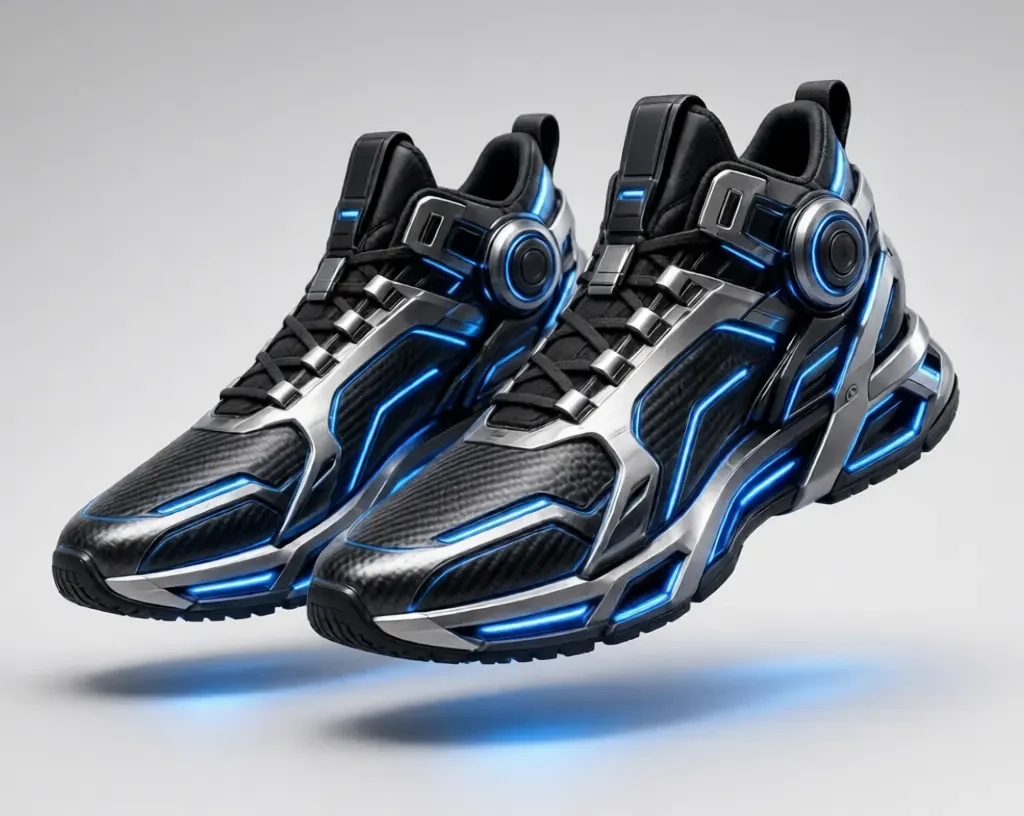
People who experience severe chronic fatigue from conditions like multiple sclerosis might eventually find tremendous relief. The mechanical assistance actively takes over a portion of the heavy workload from human muscles. This allows users to walk further distances before exhaustion sets in.
4. Balance and Gait Assistance
By providing immediate mechanical stability at the exact moment a person might stumble, these shoes could prevent devastating falls. Fall prevention is one of the most critical goals in geriatric medicine today.
5. Assistance for Demanding Occupations
Nurses, warehouse workers, and mail carriers spend punishing hours on their feet. While medical applications remain the absolute priority, industrial workers could eventually use this technology to reduce physical burnout and protect their joints over a long career.
It is highly important to note that while the potential is massive, developers do not claim these devices can treat or cure underlying diseases. They are assistive tools designed to improve the quality of life.
The Technology Behind the Step
Creating an intelligent shoe involves overcoming massive engineering hurdles. The technology must be exceptionally lightweight. If the footwear is too heavy, the user burns more metabolic energy lifting their foot than the motor actually saves. Furthermore, the shoes must be responsive enough to adapt to stairs, steep ramps, and completely uneven sidewalks.
Safety is absolutely paramount. A sudden software malfunction could easily cause a dangerous trip. Therefore, manufacturers must ensure extreme reliability before these products ever reach the public. The integration of advanced materials like aerospace carbon fiber and highly compact lithium batteries is making these ambitious engineering goals a tangible reality.
Case Study: The Stanford Exoskeleton Boot
To understand the true potential of this technology, we can examine a genuine breakthrough from Stanford University. Researchers at the highly respected Stanford Biomechatronics Laboratory successfully developed an untethered exoskeleton boot designed specifically to provide walking assistance out in the real world.
The developers wanted to address the fundamental problem of walking fatigue for people with mobility impairments. The device worked by using an electric motor to pull a supportive cable attached to the heel. This mechanism provided a strong upward pull precisely when the human calf muscle naturally fires.
What researchers found was truly remarkable. The boot utilized a machine learning model to adapt directly to the specific walking style of each individual user. It reduced the metabolic energy required to walk by an impressive nine percent. Users reported that walking with the device felt like finally taking off a heavy backpack.
While some limitations remained regarding the slightly bulky appearance, the case matters deeply. It proved that personalized robotic assistance could independently function outside a controlled clinical laboratory setting. This specific research paves the way for the sleeker, more refined Robotic Walking Sheos we anticipate seeing in the future.
The Hidden Challenge
Despite the incredible promise, responsible innovation requires us to closely examine the current limitations. Weight remains a persistent issue for hardware engineers. Battery life must improve significantly before users can safely rely on these devices for an entire day of travel.
Cost is perhaps the absolute largest barrier to entry. Advanced medical devices are rarely affordable when they first hit the open market. Comfort and daily maintenance also present highly practical challenges. Users will inevitably face a steep learning curve as they learn to trust a machine to help them balance. Furthermore, while the current technology is extremely promising, we still have limited long term evidence regarding the biomechanical consequences of using them over decades.
Could They Become Everyday Shoes?
The transition from clunky laboratory prototypes to standard consumer closets is inevitable but gradual. We will most likely see these advanced devices first adopted in specialized rehabilitation hospitals. As the underlying technology shrinks and global manufacturing scales up, they will become much more accessible to the public. Eventually, putting on a pair of Robotic Walking Sheos might become as thoroughly ordinary as putting on a pair of prescription reading glasses. They will simply become another trusted tool we use to successfully navigate the physical world.
What Users Should Know
If you or a beloved family member are evaluating emerging mobility technology, you must remain cautiously optimistic. Always verify marketing claims through credible medical professionals. You should strictly avoid exaggerated marketing campaigns that promise miraculous cures for complex physical conditions.
Look for products that have been independently tested by reputable scientific institutions. True medical breakthroughs always prioritize transparency and measurable safety over flashy advertising. Take the time to understand the technology, question the data, and learn exactly what these devices can and cannot do.
FAQ
What are robotic walking shoes?
They are highly intelligent pieces of footwear equipped with hidden sensors and micro motors designed to physically assist the act of walking.
How do Robotic Walking Sheos work?
They use artificial intelligence to constantly analyze your gait and provide mechanical energy to your legs just as your foot pushes off the ground.
Can robotic walking shoes help people walk more easily?
Yes. Clinical research has clearly demonstrated that they can reduce the metabolic energy required to walk, thereby reducing severe physical fatigue.
Are Robotic Walking Sheos available today?
While some highly specialized medical models and industrial prototypes currently exist, widespread consumer availability in local stores is still a few years away.
Are robotic walking shoes safe?
Safety is a major priority for all credible developers. The internal algorithms are specifically designed to respond smoothly to uneven terrain to actively prevent falls.
How much could Robotic Walking Sheos cost?
Early medical versions are quite expensive due to the advanced components. Prices will likely remain high until mass production makes them significantly more affordable for average families.
Could robotic footwear become mainstream?
As advanced batteries become smaller and electric motors become lighter, it is highly likely that intelligent footwear will become a completely common mobility aid globally.
Conclusion
Let us return to that crowded street intersection. The dangerous hesitation is completely gone. The heavy, exhausted limbs feel incredibly supported. The deep fear of falling is permanently replaced by a profound sense of true freedom.
The future of human mobility may not always arrive looking like a large, cumbersome machine or a traditional wheelchair. Sometimes, a genuine physical breakthrough begins with something as wonderfully ordinary as a simple shoe. As we watch this remarkable technology evolve, we strongly encourage you to actively follow credible research and evaluate emerging developments carefully. Discover the possibility. The journey toward far better mobility is happening right now, one successfully supported step at a time.
1 thought on “How 7 Powerful Robotic Walking Sheos Innovations Offer Hope for Every Step”