
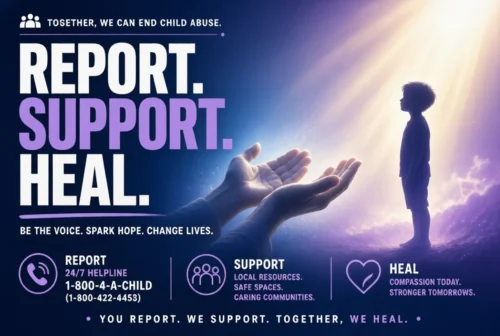
Mrs. Rao noticed that Dev, a cheerful ten year old, had stopped raising his hand. He flinched at the school bell and stayed at his desk long after the class left. She first thought it was exam stress. Then one afternoon he asked quietly, “If someone tells a secret, do they get in trouble?”
She did not push. She sat beside him and said, “I am here whenever you want to talk.” That calm sentence opened a door.
Child abuse means harming a child, or failing to protect one, in a way that damages their health, safety, growth or dignity. It is often hidden, because children may feel afraid, ashamed or confused. Informed adults can change that. This guide explains the signs, a simple five step response, and where to get help.
Table of Contents
What Is Child Abuse?
Child abuse can take several forms:
- Physical abuse: hitting, shaking, burning or any force that hurts a child.
- Emotional abuse: constant insults, threats, shaming or rejection.
- Sexual abuse: any sexual act or contact with a child, or showing a child sexual material.
- Neglect: not giving food, care, medical help, schooling or safety when the caregiver is able to.
- Exploitation: using a child for work, money or sex, including online.
- Digital abuse: grooming (slowly building trust to cause harm), blackmail or pressure through phones, games and social media.
Abuse is often done by someone the child knows, such as a relative, neighbour, coach or older teenager. Not every angry moment or parenting mistake is abuse. A warning sign is a reason to look closer. It is not proof.
Warning Signs Of Child Abuse ,Adults Should Not Ignore
- Body: injuries with no clear reason, or explanations that keep changing.
- Feelings and behaviour: sudden fear of one person or place, severe withdrawal, anger, sleep or appetite changes, falling school marks.
- Sexual signs: sexual knowledge or behaviour that is far beyond the child’s age.
- Basic needs: constant hunger, unwashed clothes, untreated illness, repeated absence from school.
- Online: secret phone use, distress after messages, gifts from unknown “friends”, fear of losing a device.
Each sign can have another cause. Patterns matter more than single moments. Observe calmly. Do not accuse anyone and do not question the child like a detective.
Ordinary Stress or Deeper Warning?
| Often temporary | Needs closer attention |
|---|---|
| Upset for a few days after a move or exam | Fear of one person or place that stays |
| One explained bruise from play | Repeated injuries with changing stories |
| Normal teenage mood swings | Sudden, lasting withdrawal |
| A child who freely shares worries | A child who hints at a secret or harm |
This table is for learning. It is not a test for diagnosis.
Why Children Stay Silent
Children may fear threats, feel shame, depend on the adult, still love that person, or worry that nobody will believe them. Some seem happy and normal. Not every child reacts in the same way. Watching behaviour has limits, so trained professionals must assess any serious concern.
What the Evidence Says
The World Health Organization (WHO) reports that about six in ten children under five, roughly 400 million worldwide, regularly suffer physical punishment or psychological violence from parents or caregivers. This measures harsh treatment at home. It does not count every form of abuse. WHO also says child maltreatment is often hidden.
The US Centers for Disease Control and Prevention (CDC) says at least one in seven American children experienced abuse or neglect in the past year. This comes from self reported data and is likely an underestimate.
Definitions and surveys differ between countries. Reported cases are always fewer than real cases. These figures do not describe India alone.
The Five Step Protection Framework
1. Notice. A teacher sees a student flinch at one particular pickup person for two weeks. She writes down dates and facts, not guesses.
2. Listen. Choose a private, calm moment. Say, “You can tell me anything.” Do not interrupt or judge.
3. Reassure. Say, “This is not your fault. You did the right thing by telling me.”
4. Protect. If danger is immediate, keep the child with a safe adult. Do not confront the suspected person. That can raise the risk for the child.
5. Report. Contact child protection professionals, the police or a child helpline. Do not promise to keep it secret. Say, “I may need to tell people whose job is to keep you safe.” Do not investigate on your own.
An Illustrative Example
This example is fictional.
Sunita noticed that her twelve year old daughter Anaya now felt “sick” every Thursday, the day of her tuition class. Anaya also turned her phone face down whenever Sunita walked in.
Sunita did not accuse anyone. Over tea she said, “You seem different lately. You will never be in trouble for telling me something.” After a few days Anaya said an older student kept messaging her and told her to keep it secret.
Sunita thanked her and said, “It is not your fault.” She kept the messages without forwarding them. She did not confront the boy or his family. She called Childline 1098 and informed the school’s safeguarding lead.
Lesson: early attention and a safe response can help a child reach protection and support.
When a Child Tells You
- Stay calm and take the child seriously.
- Thank the child for speaking up.
- Say clearly that the child is not responsible.
- Ask only simple, open questions such as “Can you tell me more?” Avoid leading or repeated questions.
- Do not promise secrecy or a particular outcome.
- Write down the child’s exact words, with date and time.
- Report through the proper channel.
You do not need proof. Trained professionals investigate.
How Each Group Can Help
Parents: Make home a place where fears and mistakes can be shared without punishment. Teach body safety and that no adult should ask a child to keep secrets about touch.
Teachers: Follow school safeguarding steps, record facts and pass concerns to the designated person.
Teenagers: Threats, pressure and blackmail are never your fault. Save messages, block the sender and tell a trusted adult.
Communities and organisations: Set clear safeguarding policies, train staff, supervise responsibly and provide safe reporting routes.
Preventing abuse is the duty of adults and institutions, not children.
Common Misconceptions
- “Only strangers abuse children.” Often it is someone the child knows.
- “A child will tell immediately.” Many wait years, or never tell.
- “A happy child cannot be abused.” Children can hide pain.
- “One sign proves abuse.” It does not.
- “Repeated questions reveal the truth.” They can confuse and distress a child.
- “I must investigate before reporting.” You do not.
- “Online abuse is not real.” It can lead to blackmail, real meetings and lasting harm.
Benefits and Limits of This Guide
Early recognition can stop harm sooner and connect children with care. But an article cannot confirm abuse, replace a clinical assessment, investigate allegations or give legal advice for your area.
What to Do Next
Learn the warning signs. Talk with children often, in age appropriate ways. Teach personal boundaries. Review online safety. Know your local reporting steps.
In India: Childline 1098 is the national helpline for children in distress, supported by the Ministry of Women and Child Development. Under Section 19 of the POCSO Act, anyone who knows or fears that a sexual offence against a child has happened must inform the police or the Special Juvenile Police Unit. Rules can change, so check the official Ministry of Women and Child Development website. Readers in other countries should contact their local child protection authority.
If a child is in immediate danger, contact local emergency services at once. You do not need to handle this alone.
Frequently Asked Questions
1. What is child abuse? It is any harm to a child under 18, through action or neglect, that damages health, safety, growth or dignity.
2. What are common warning signs? Unexplained injuries, sudden fear, severe withdrawal, age inappropriate sexual behaviour, unmet basic needs and secretive online behaviour. No single sign is proof.
3. Can it happen in a trusted relationship? Yes. Abuse is often committed by someone the child knows.
4. Why might a child stay silent? Fear, shame, threats, confusion, dependence on the adult, or worry about not being believed.
5. How should I respond to a disclosure? Listen calmly, thank the child, say it is not their fault, avoid pressing questions, do not promise secrecy and report.
6. What if I suspect abuse but have no proof? You do not need proof. Share your concern with a child protection professional or helpline. They will assess it.
7. How can parents reduce online grooming risk? Talk openly about online friends, set clear device rules, explain that no adult should ask for secrets or private pictures, and promise the child will not be punished for telling.
Conclusion
Child abuse thrives in silence, but small acts can break it. Notice changes, listen without blame, reassure, protect and report. One calm adult can change a child’s future.