
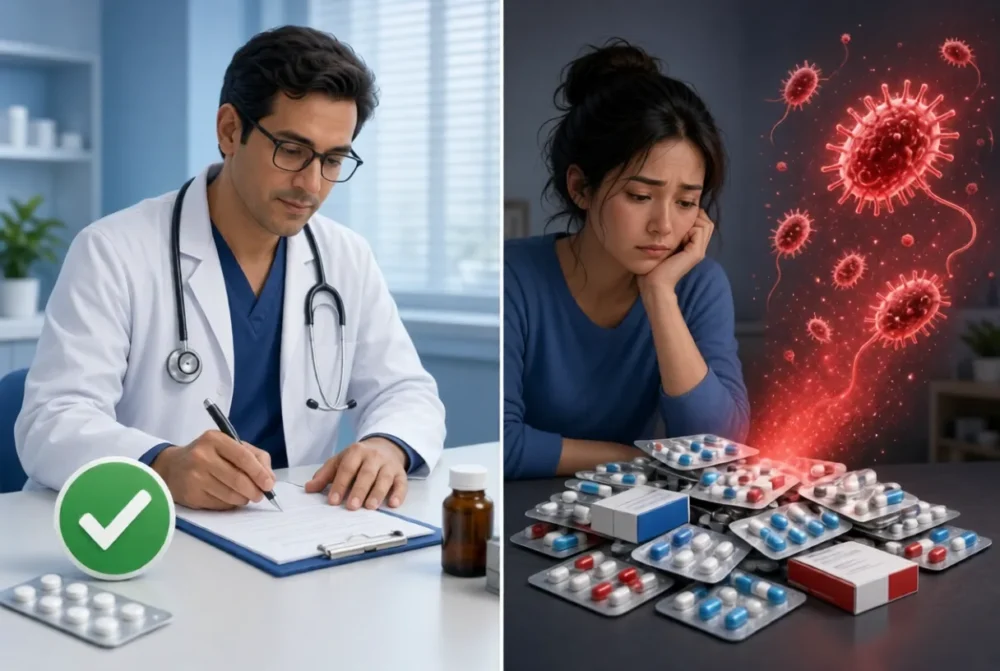
A minor scrape from a garden thorn. A routine visit to the local clinic. A prescription given to clear things up quickly. Within days, the redness fades and the pain disappears. You return to your daily life, entirely convinced the danger has vanished.
But deep inside the body, a silent war has just begun.
The medicine wiped out the weakest bacteria, leaving behind a microscopic fraction that simply refused to die. These survivors are now quietly mutating in the shadows. They multiply, share their genetic armor with other microbes, and prepare for their next strike. When the infection returns, the original medicine will do absolutely nothing. This is not a scene from a science fiction movie. It is a biological reality happening right now in homes and hospitals worldwide. The overuse of powerful antibiotics is driving this invisible evolution, turning easily treatable illnesses into absolute nightmares.
Welcome to the era of antimicrobial resistance.
Table of Contents
The Invisible Enemy
Antimicrobial resistance occurs when bacteria, viruses, fungi, and parasites change over time and no longer respond to medicines. This makes infections significantly harder to treat and increases the risk of disease spread. According to the World Health Organization, this phenomenon is one of the top global public health threats facing humanity.
When we talk about this invisible enemy, we are talking about drug resistant bacteria. These organisms have learned to outsmart the very drugs created to destroy them. The overuse of powerful antibiotics gives these superbugs the exact training ground they need to evolve. Instead of curing the patient, the medicine inadvertently selects the strongest microbes to survive and conquer.
Why Powerful Antibiotics Can Backfire
To understand this thriller playing out under the microscope, we must look at a biological concept called selective pressure.
Imagine a forest filled with different types of plants. If you spray a harsh chemical, most plants will wither. However, a few weeds with a natural immunity to that specific chemical will survive. With all the other plants gone, these resistant weeds now have limitless space and nutrients to take over the entire forest.
Bacteria operate the same way. The overuse of powerful antibiotics acts like that harsh chemical. Every time you take these medications, they destroy the vulnerable bacteria. But the rare, resistant mutants survive. By eliminating their competition, we accidentally give resistant bacteria the perfect environment to thrive. The medicine we trust to save us ends up backfiring, creating a much stronger enemy.
The Overuse Problem
How did we reach this critical point? The overuse of powerful antibiotics does not happen maliciously. It happens through a combination of fear, misunderstanding, and systemic pressure.
Several common scenarios accelerate this crisis:
- Taking antibiotics for viral illnesses like the common cold or flu, where they are completely useless
- Taking medication without professional medical guidance
- Using leftover pills from a previous illness
- Stopping the treatment early because you feel better
- Using broad spectrum medications when a targeted, narrow option is appropriate
- Pressure from patients who demand a quick fix from their doctors
It is vital to note that patients are not the only ones responsible. The overuse of powerful antibiotics is heavily driven by agricultural practices, lack of access to rapid diagnostic testing, and healthcare systems where doctors are pressured to prescribe just in case.
The Night the Medicine Stopped Working
Consider this educational case study based on real clinical patterns documented by the CDC and public health agencies.
A patient in her early sixties was admitted to a local hospital for a routine surgical procedure. Following the surgery, she developed a mild urinary tract infection. In the past, she frequently demanded medication for every minor cough and cold. Over the years, her personal overuse of powerful antibiotics had silently altered her internal microbiome.
Her doctors prescribed a standard treatment. Two days later, her fever spiked dangerously high. The infection had spread to her kidneys. The laboratory results revealed a devastating truth. She was infected with Carbapenem resistant Enterobacteriaceae. This is a family of germs notoriously difficult to treat because they have high levels of resistance to antibiotics.
The doctors escalated to the strongest drugs available. The medicine failed. They tried an older, highly toxic medication as a last line of defense. The clinical challenge was immense, requiring weeks of intensive care, severe side effects, and astronomical hospital bills before she finally stabilized.
The lesson learned was chilling. The medicine stopped working because the bacteria had already seen our best weapons and learned how to defeat them.
Why “Stronger” Does Not Always Mean “Better”
There is a common misconception that a more aggressive medicine guarantees a faster cure. In reality, medical guidance relies heavily on clinical judgment and appropriate treatment rather than raw power.
Antibiotics are categorized by how many types of bacteria they can kill. A narrow spectrum drug targets a specific type of bacteria like a sniper. A broad spectrum drug wipes out a massive variety of bacteria like a grenade. The overuse of powerful antibiotics, specifically the broad spectrum variety, destroys the helpful bacteria in your gut that naturally protect you from disease.
Responsible prescribing means choosing the right drug at the right dose for the right duration. Using the strongest option available when a simple one would work is exactly how we lose our most valuable medical tools.
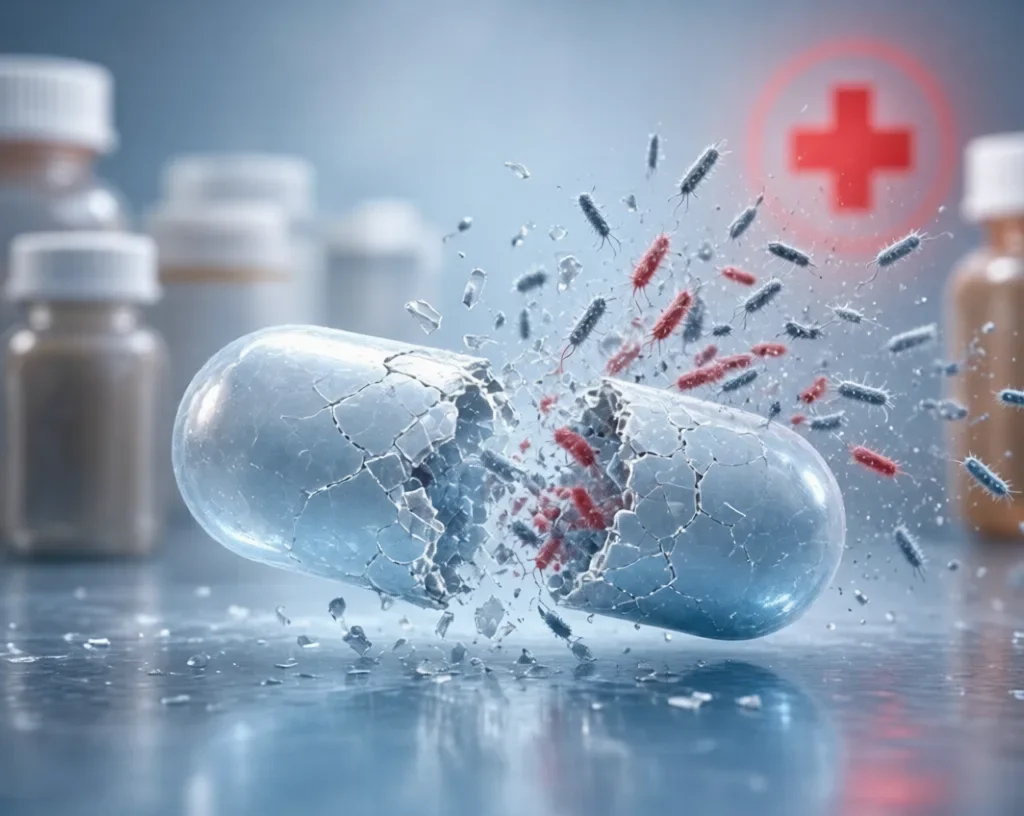
The Chain Reaction
Antimicrobial resistance is not just an individual problem. It is a highly contagious threat.
When a patient develops a resistant infection due to the overuse of powerful antibiotics, they carry that superbug with them. They touch a doorknob at home, passing it to their family. They visit a grocery store, spreading it into the community. If they enter a hospital, that resistant organism can spread to vulnerable patients recovering from surgery or chemotherapy.
This chain reaction demonstrates why infection prevention is crucial. A single case of antibiotic resistance can ripple outward, ultimately threatening the entire healthcare system and turning ordinary spaces into zones of hidden danger.
What Happens When Antibiotics Lose Their Power?
The consequences of this fragile protection breaking down are staggering. If the current trajectory of antimicrobial resistance continues, we face a very dark reality.
When the overuse of powerful antibiotics renders our treatments useless, patients experience significantly longer illnesses. A minor wound could lead to prolonged hospitalization. The cost of medical care will skyrocket because doctors will need to run extensive diagnostic testing and utilize expensive alternative medicines.
Furthermore, modern medicine relies on effective infection control. Without it, the risk of severe outcomes during routine procedures becomes unimaginable. Chemotherapy, joint replacements, C sections, and organ transplants all depend on our ability to prevent and treat infections. If the medicine fails, these life saving procedures become dangerously risky.
7 Smart Ways to Protect Antibiotics
We are currently in a race against time, but we are not helpless. You can actively participate in antibiotic stewardship to preserve these vital medicines. Here are seven actionable ways to protect yourself and your community:
- Use medicines exactly as prescribed by a qualified healthcare professional.
- Never demand antibiotics for viral illnesses like colds or the flu.
- Do not use leftover antibiotics from a previous illness.
- Never share your prescription with family members or friends.
- Complete your exact treatment plan unless your doctor explicitly changes it.
- Prevent infections before they start through regular hand hygiene, safe food preparation, and staying updated on vaccinations.
- Educate others about the dangers of the overuse of powerful antibiotics.
Always seek professional guidance when you feel unwell. No article on the internet should replace the clinical assessment of a doctor who understands your specific medical history.
[Suggested internal link: Relevant KritiInfo article on immunity and natural infection prevention strategies]
The Bigger Picture
To truly combat this unexpected failure of modern medicine, we must embrace the One Health concept.
The World Health Organization India and other recognized scientific organizations emphasize that human health, animal health, and our shared environment are deeply connected. A massive portion of global antibiotic consumption happens in agriculture, where drugs are given to livestock to promote growth and prevent disease in crowded conditions.
This agricultural overuse of powerful antibiotics creates resistant bacteria that contaminate our food systems and water supply. Therefore, solving this crisis requires a coordinated global effort. Farmers, veterinarians, doctors, policymakers, and ordinary citizens must work together to reduce unnecessary drug usage across all sectors.
The Hope
Despite the severity of this warning, there is substantial scientific evidence pointing toward a hopeful future.
Advances in medical research are leading to the development of new treatments and alternative therapies. Better diagnostic testing is allowing doctors to identify the exact bacteria causing an illness within minutes, completely eliminating the need to guess which drug to prescribe. Increased global surveillance helps public health experts track resistant infections before they trigger massive outbreaks.
Most importantly, public awareness is growing. As more people understand the catastrophic impact of the overuse of powerful antibiotics, patient behavior is slowly changing for the better.
Final Verdict
The medicines that revolutionized human health in the twentieth century are slowly losing their power. The invisible enemy is adapting, learning, and waiting.
However, we have the knowledge and the tools to fight back. Protecting these incredible medical advancements is not merely a task for scientists in laboratories or doctors in emergency rooms. It is a shared responsibility. Every time you wash your hands, every time you choose to rest instead of demanding a pill for a viral cold, and every time you advocate for patient safety, you are defending our last line of defense.
The overuse of powerful antibiotics created this crisis. Our collective commitment to responsible behavior will be the cure.
Frequently Asked Questions
What is antimicrobial resistance? It is a natural process where bacteria, viruses, fungi, and parasites change over time so that they no longer respond to the medicines designed to cure them. This makes infections harder to treat and increases the risk of severe illness.
How does the overuse of powerful antibiotics cause resistance? When these medicines are used unnecessarily, they kill off the weak bacteria but leave behind the strong, mutated ones. These survivors multiply and spread, creating an entire population of bacteria that the medicine can no longer harm.
Can antibiotics stop working completely? Yes. In some severe cases, patients develop infections caused by superbugs that are resistant to every available medication, making the infection nearly impossible to treat with current medical science.
Are powerful antibiotics always better? No. Using a broad spectrum medication when a targeted one would work destroys your body’s helpful bacteria and accelerates the development of resistant superbugs. Treatment should always be based on diagnostic evidence and clinical judgment.
Can I take leftover antibiotics? Never. Leftover medication might not be the correct treatment for your current illness. Taking inappropriate medicine contributes directly to the overuse of powerful antibiotics and worsens the global resistance crisis.
Do antibiotics work against viral infections? No. They only kill bacteria. Taking them for viral infections like a cold, the flu, or most sore throats will not cure the illness, will not keep other people from catching your virus, and will only cause harmful side effects while driving up drug resistance.
How can people help prevent antibiotic resistance? You can help by only taking these medicines when prescribed by a doctor, completing the full course of treatment, never sharing pills, and preventing infections through good hygiene and vaccination.
Is antimicrobial resistance reversible? While it is very difficult to reverse completely, we can significantly slow it down through global antibiotic stewardship, responsible prescribing, and reducing the overuse of powerful antibiotics in both healthcare and agriculture.
1 thought on “How the Overuse of Powerful Antibiotics Awakens 7 Silent Threats”